Copper Tile Bathroom Ideas That Feel Warm, Not Flashy
Copper tile is the rare bathroom material that can look glamorous and slightly archaeological at the same time. One piece catches the light like a new penny; another has brown shadows, charcoal freckles, or blue-green marks that suggest it has survived a century in a shipyard. That variation is the point. A copper bathroom should not look as though every surface arrived shrink-wrapped on Tuesday.
The trick is knowing where to let copper speak and where to ask it to lower its voice. Across every wall, bright metal can become harsh and restless. Used as a vanity backsplash, shower-niche lining, tub-surround detail, or compact feature wall, it gives the room warmth without turning the morning routine into a visit to a casino.
Products sold as "copper tile" may be solid copper, copper-faced, copper-look porcelain, or printed vinyl. Those categories age, clean, install, and tolerate water differently. Read the technical sheet for the exact product.
1. Make One Dark Copper Wall the Main Event
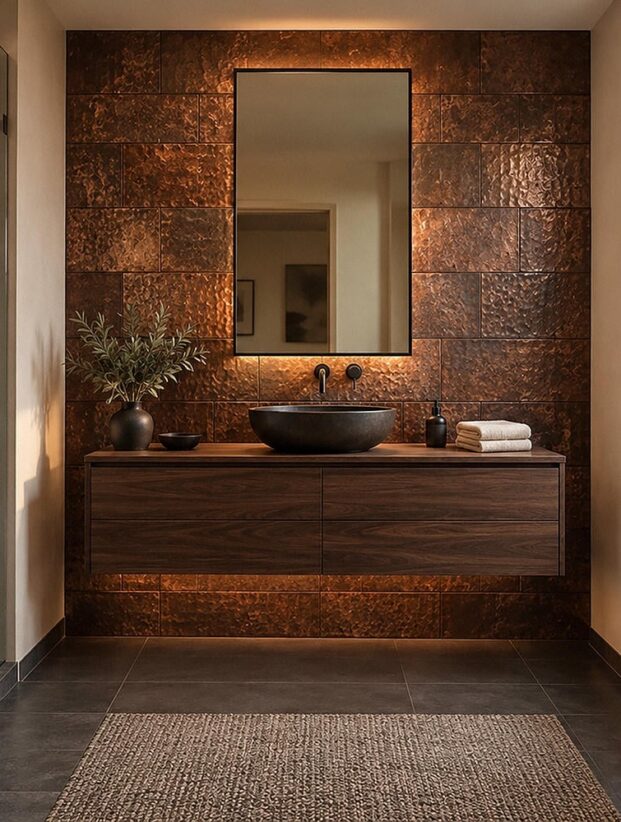
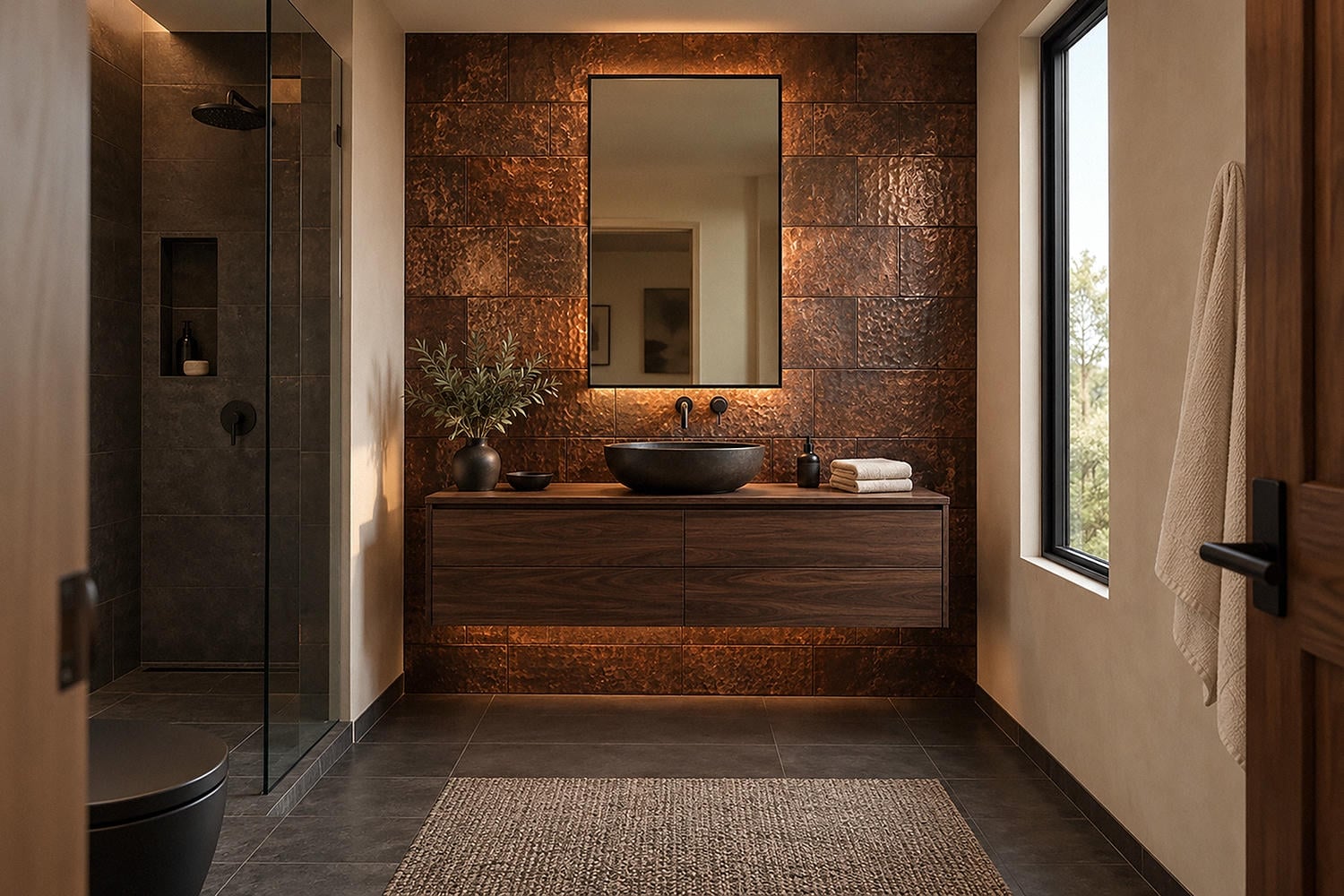
Modern dark copper bathroom designs work best when the metal is allowed to act like a large piece of art. Try a wall of smoke-brown rectangular copper tiles behind a floating vanity, then keep the remaining surfaces quiet: charcoal porcelain underfoot, warm off-white plaster elsewhere, and a mirror with a thin black frame.
Bright orange copper bounces light around with comic enthusiasm; an antiqued finish reveals texture more slowly. Dark copper is especially persuasive in a powder room, away from daily shower spray.
Use wide grout joints only if you want a visible grid. Before ordering, inspect several pieces together; variation that charms on one sample can become stripes across a wall.
2. Frame the Vanity With Copper Bathroom Wall Tile
A vanity wall is one of the most forgiving places for real copper bathroom wall tile. It receives occasional splashes rather than constant saturation, and it stays at eye level where hammered, brushed, or ribbed surfaces can be appreciated.
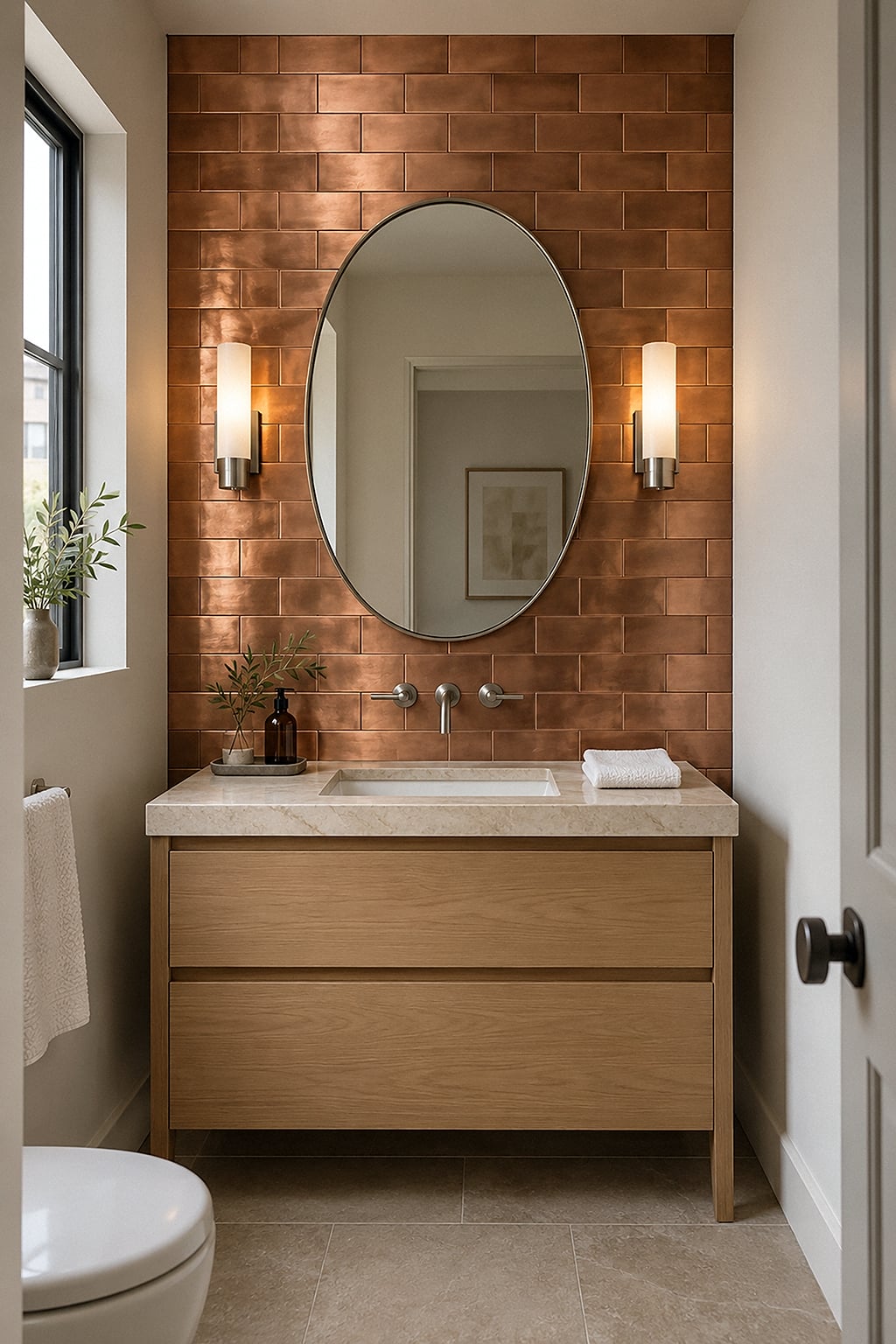
Run the tile from counter to ceiling behind the mirror, or create a panel slightly wider than the vanity. Finish exposed edges with compatible trim. A metal edge that catches a sleeve is no longer beautiful.
Pair copper with a simple sink and a restrained faucet. Mixing metal finishes is completely acceptable, but make the choice obvious. A soft brushed nickel faucet can cool down the copper; aged brass joins its warm side; matte black supplies a clean outline. Trying to find five "almost copper" fixtures usually creates more mismatch than harmony.
3. Treat a Metallic Copper Shower Niche as a Technical Detail
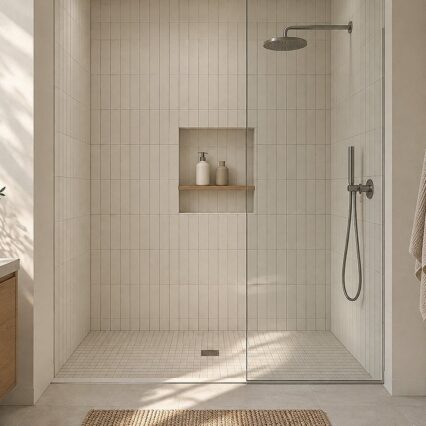
A metallic copper shower niche is a small idea with a large visual return. It creates a glowing pocket inside a field of stone-look or cream porcelain and gives shampoo bottles a rather grand address.
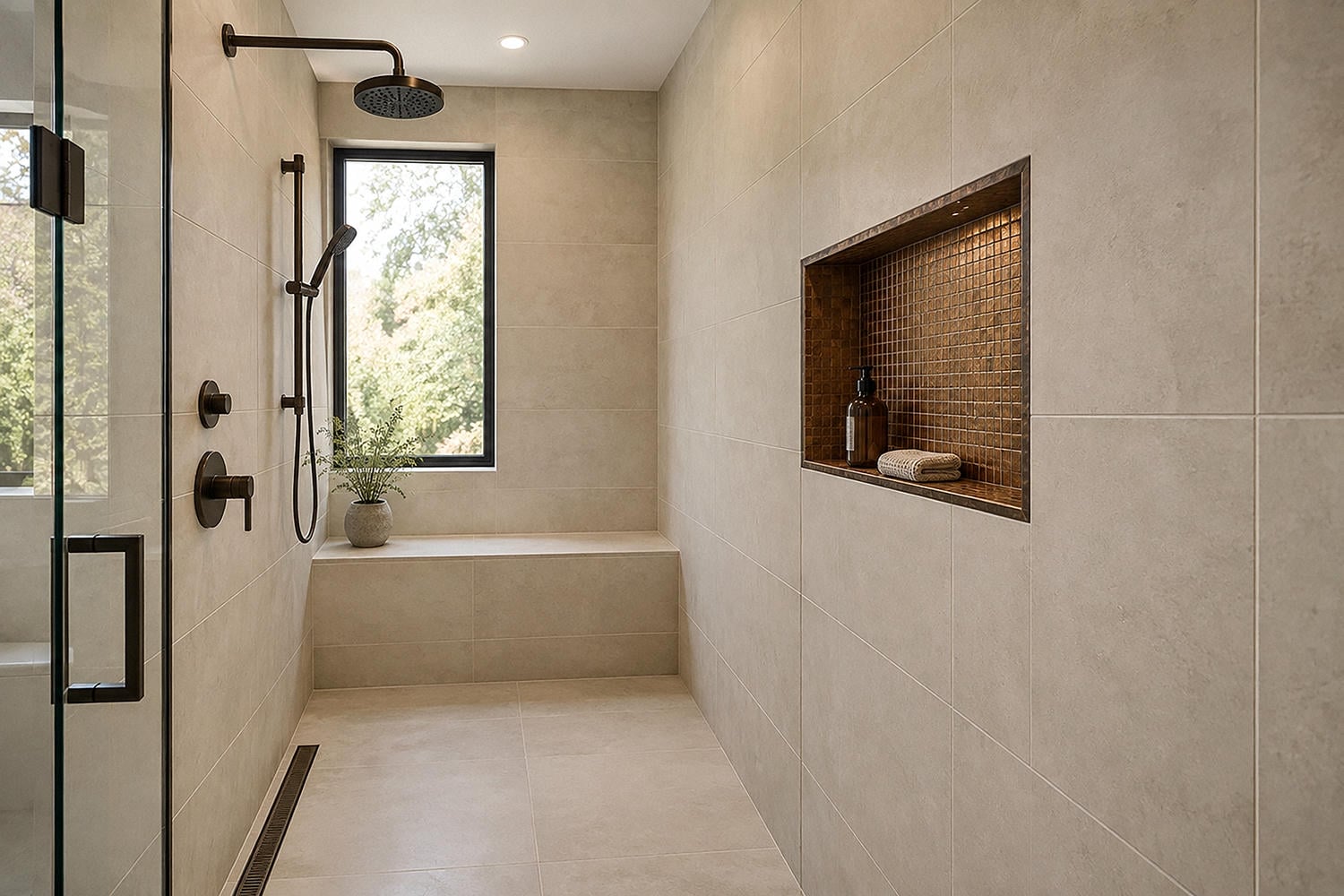
It is also a wet-area assembly, not a craft project. Confirm in writing that the exact tile, backing, adhesive, grout, edge treatment, and any protective coating are approved for direct shower exposure. Use a shower assembly with an approved waterproofing method, and make sure the backing, membrane, setting materials, and tile are compatible as specified by their manufacturers. In other words, shiny tile does not make the cavity waterproof.
Slope the bottom of the niche toward the shower so water does not sit against the metal. Keep cut edges protected, and avoid pairing copper with cleaners or setting products that its manufacturer has not approved. If a real-copper tile is not rated for the niche, use copper-look porcelain there and save the genuine metal for the dry vanity wall.
4. Let Patina Copper Tile Behave Like Patina
Patina copper tile is not a single color. Fresh copper commonly moves through warm orange, russet, chocolate, and nearly black tones as its surface reacts with moisture and other substances. Green or blue-green can appear under the right conditions, but an indoor bathroom will not necessarily copy the green roof of an old civic building.
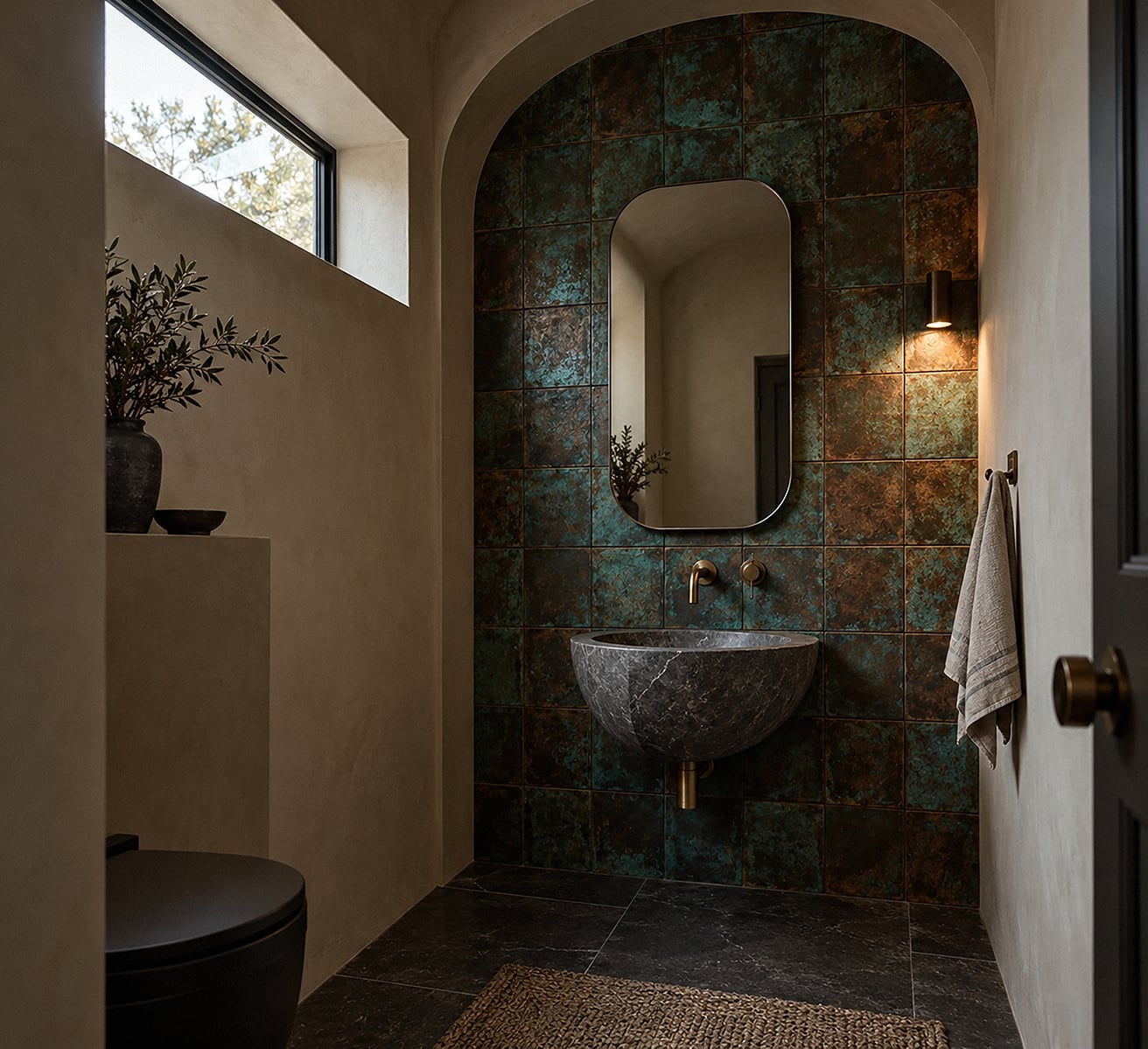
The Copper Development Association explains that copper's color change comes from surface oxidation influenced mainly by moisture and corrosive elements in the atmosphere. Its overview of copper facts also distinguishes this protective patina from the destructive flaking associated with iron rust.
Decide whether change is welcome before installation. If yes, choose uncoated copper and accept that soap, fingerprints, hard water, and cleaning habits may make the patina uneven. If no, choose a factory-finished product with a stated care system. A clear coating can slow change, but it may alter the sheen, show wear, and eventually need renewal. "Never changes" deserves proof in a warranty, not faith in a product-page adjective.
5. Use Copper Penny Tile Bathroom Details in Small Doses
Copper penny tile bathroom mosaics carry a lot of visual information: many circles, many grout lines, and many tiny reflections. That is why a modest area often looks richer than an entire room.
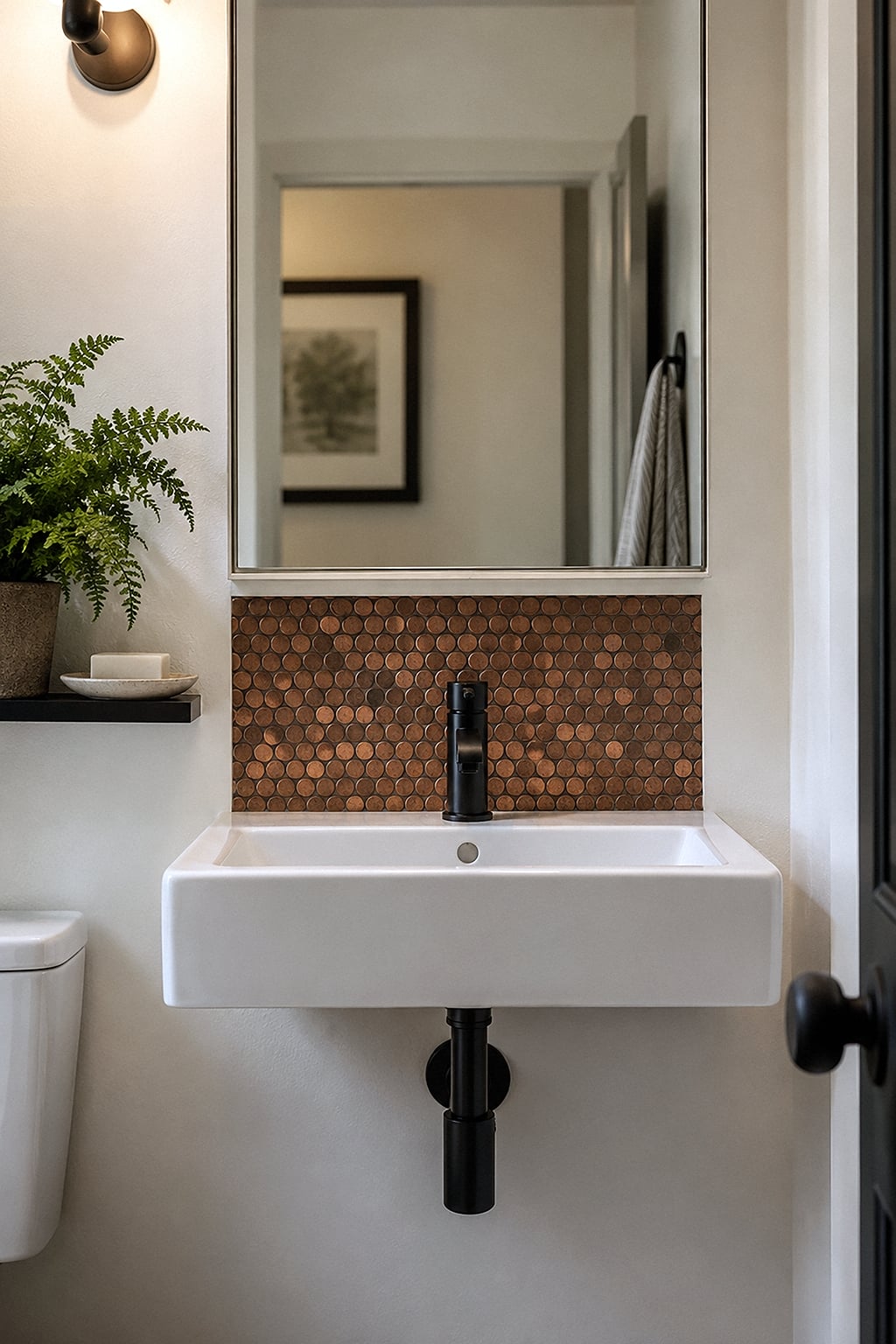
Try a round-mosaic splash behind a wall-mounted basin, a stripe beside the mirror, or the back of open vanity cubbies. In contemporary rooms, keep the other geometry blunt and simple.
Check whether the "pennies" are real copper, copper-faced pieces, or glazed ceramic. Then use grout and installation tools that will not scratch the finish. Some metal mosaics call for non-sanded grout, but the product maker's instructions win. Do not generalize from ceramic penny rounds merely because the pieces share a shape.
6. Give a Powder Room a Copper Tile Backsplash
A copper tile backsplash for powder room use is the safest place to take a design risk. There is no shower steam, floor traction, or standing-water puzzle to solve, so the copper can be brighter, more textured, or more irregular.
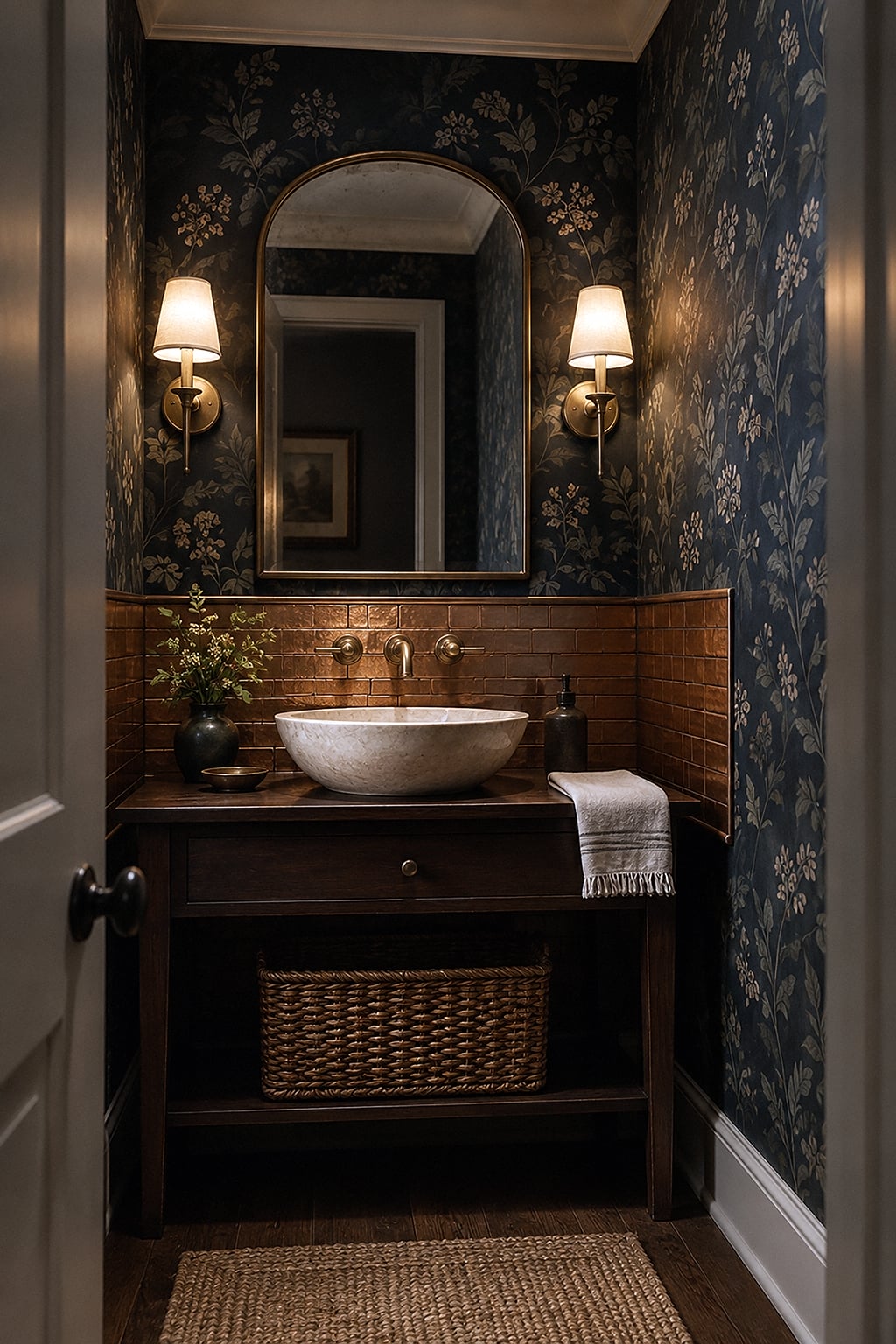
Try narrow tiles behind a stone basin, a hammered panel under a vintage mirror, or a low backsplash wrapping two walls. Dark wallpaper makes copper jewel-like; cream limewash keeps it earthy. Warm shaded sconces reveal texture better than icy white bulbs.
This is also the best setting for peel-and-stick copper-look panels, provided the manufacturer approves bathroom humidity and the substrate is smooth, clean, dry, and stable. Keep them away from direct water unless that specific product explicitly permits it.
7. Build Vintage Copper Tile Bathroom Accents Around Age
Vintage copper tile bathroom accents need companions with a little visual weight. Dark oak, unlacquered brass, milk-glass shades, aged mirror, and deep green paint all understand copper's mood. A high-gloss white vanity with blue-white lighting may make the same tile look more orange than intended.
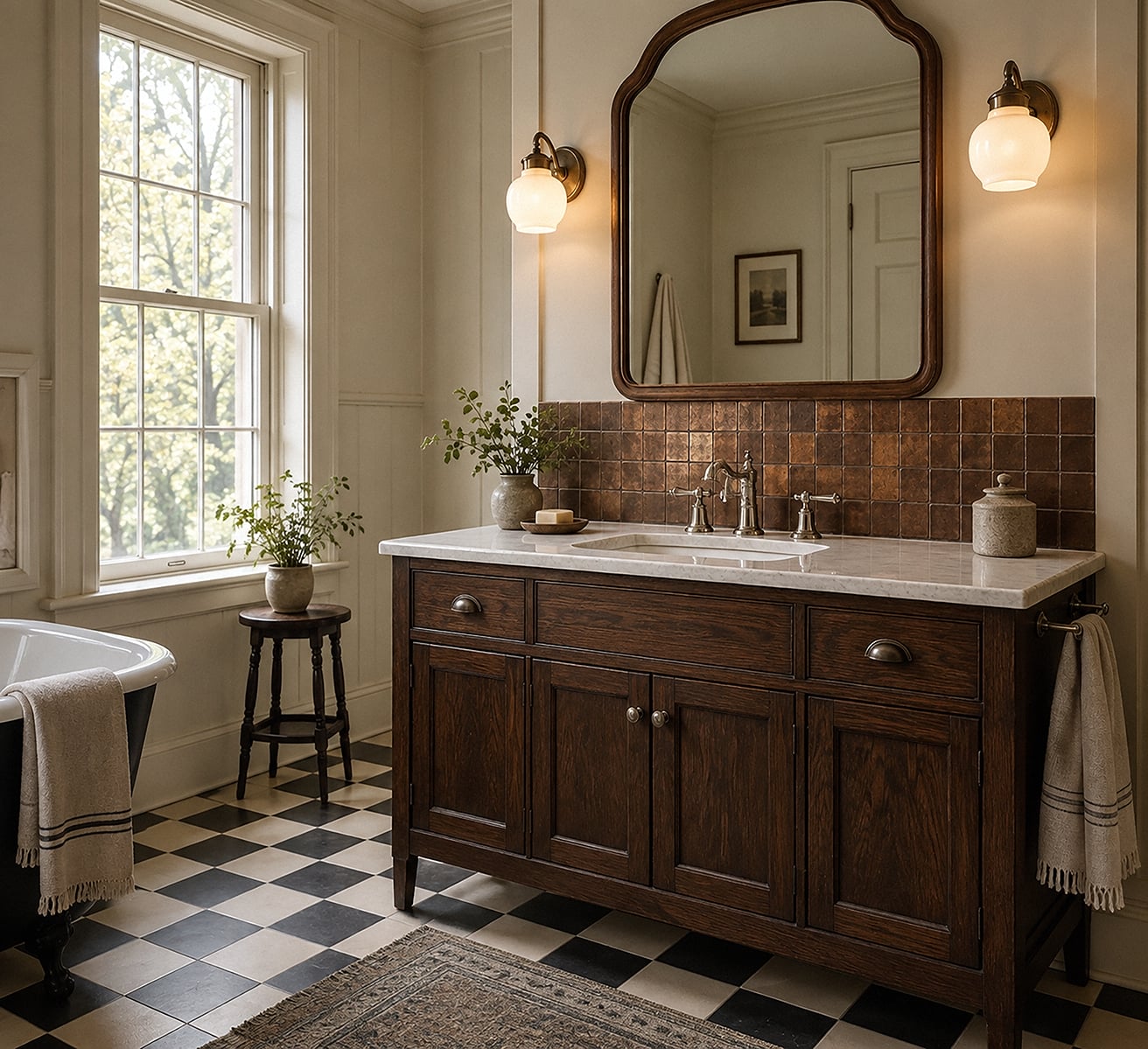
One old-fashioned form is enough: a curved mirror, turned wood vanity, or shaded sconces. Add a clean-lined sink and plain linen towels. Copper also pairs well with cream zellige-style tile and dark wood. Two lively materials can converse; five start interrupting one another.
8. Keep a Copper Mosaic Tile Tub Surround Out of Standing Water
A copper mosaic tile tub surround can be handsome around the outer face of a freestanding or drop-in bath, where it reads like metalwork on furniture. It is a better use of many real-copper products than lining the wet walls directly above the tub.
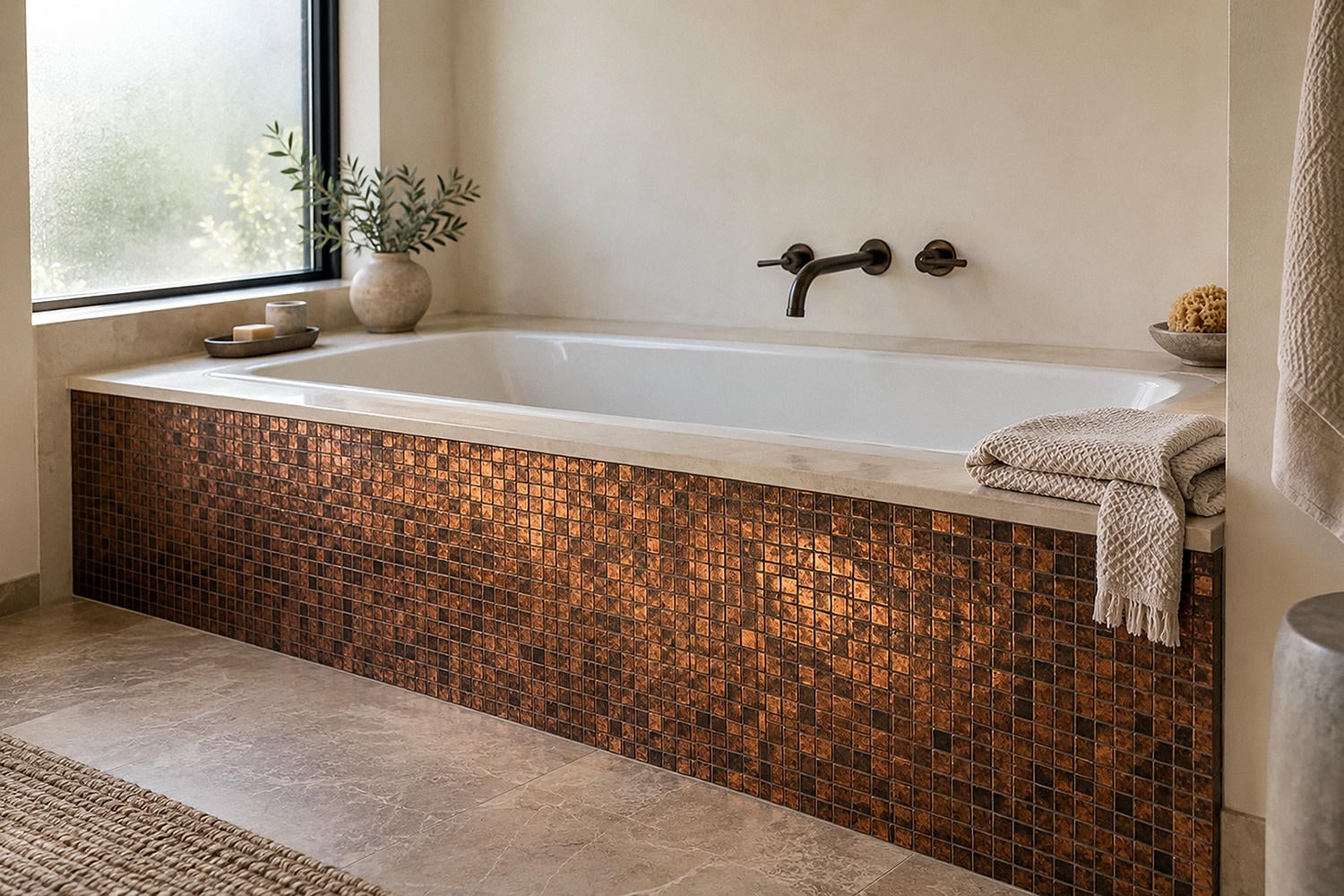
An apron receives wipeable drips; a shower-over-tub surround receives repeated spray and soap. For a combination bath-shower, use only a tile assembly approved for that wet location. Otherwise, reserve real copper for the apron and use copper-look porcelain above.
Finish the top edge carefully. Water should not be able to enter behind the mosaic, and the tile should not create a sharp lip where someone steps into the bath. This is exactly the kind of small junction worth drawing before the installer opens the adhesive.

9. Be Skeptical of Brushed Copper Bathroom Floor Tiles
Brushed copper bathroom floor tiles sound luxurious. Real metal under wet bare feet is less romantic. A floor tile must be approved for foot traffic, cleaning, wet exposure, and the intended level of slip resistance. Decorative wall tile cannot simply migrate south because it looks good in a sample board.
For an ordinary bathroom floor, copper-look porcelain is usually the sensible answer. It supplies brown, bronze, and oxidized effects while offering published floor-use data. For a shower floor, the criteria become stricter: proper slope, drainage, and grip matter. Daltile's floor-tile guidance recommends small mosaics for shower floors because the extra grout joints add grip and make the slope easier to form; it also advises checking a product's wet-use slip data.
If you find real brushed copper tile marketed for floors, ask for its technical sheet and wet-area limitations. No sheet, no bare feet. That rule lacks romance but prevents a far more memorable kind of bathroom experience.
10. Choose Colors That Let Copper Change
What colors go best with copper bathroom tiles? Start with the tile's least obvious undertone rather than its brightest orange flash.
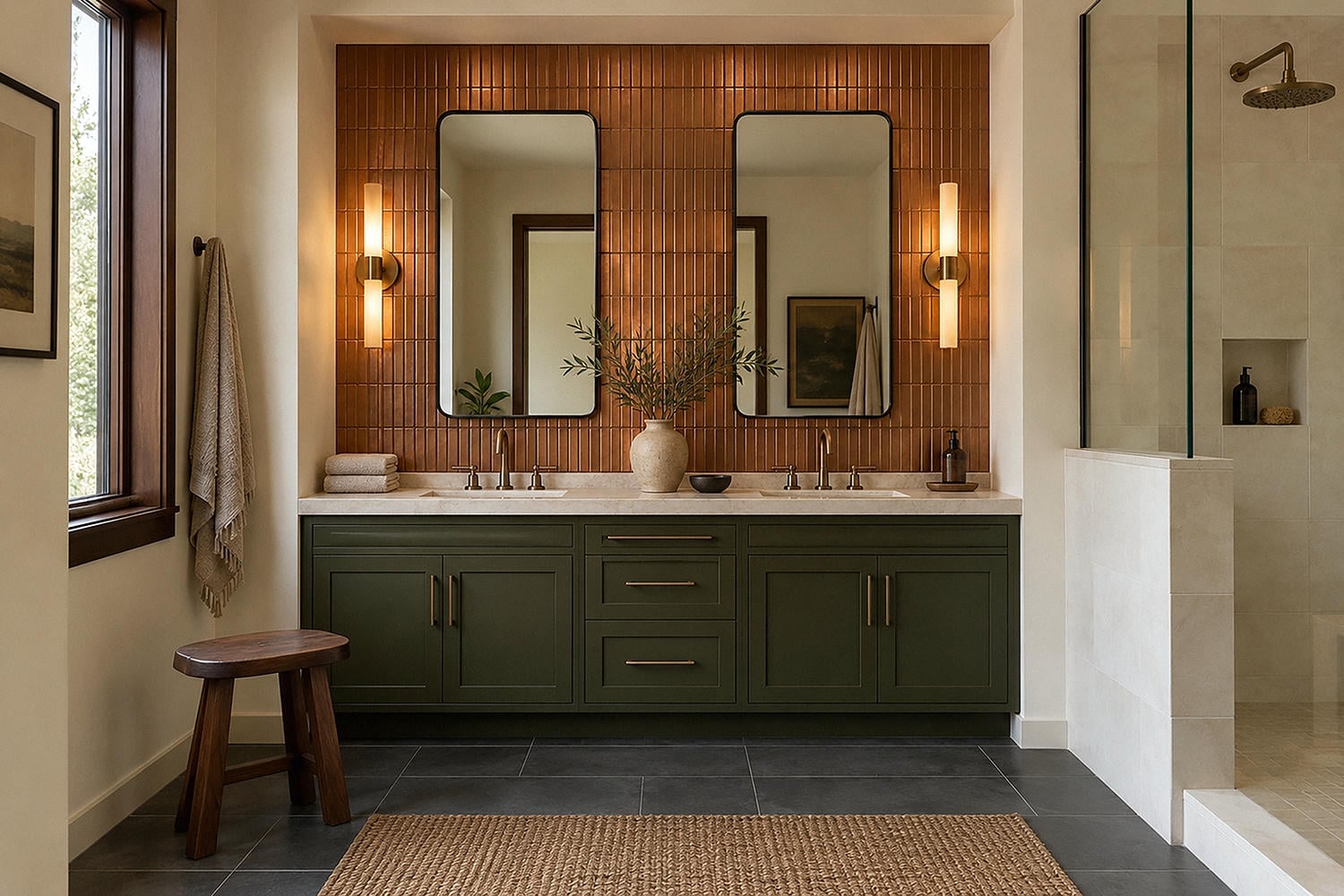
- Deep olive and forest green echo natural patina without demanding that the metal turn green.
- Cream, putty, and warm white bring out copper's rosy side.
- Charcoal and near-black make polished or hammered copper look controlled and graphic.
- Dusty blue cools the room and works especially well with medium brown copper.
- Dark walnut and smoked oak support antiqued finishes, though pale oak is better when the bathroom lacks daylight.
Test the actual tile beside every major finish under permanent lighting. Copper reflects neighboring colors, so peach paint can become aggressively apricot across polished metal. Samples need to meet in the room, not exchange profile pictures online.
How to Seal and Clean Copper Bathroom Tile
There is no universal sealer for metal tile. Some copper arrives lacquered, waxed, chemically patinated, or deliberately raw. Applying a generic stone sealer may do nothing useful or may damage the factory antiquing. Maniscalco's care instructions for copper mosaics warn against acids, corrosive or abrasive cleaners, ammonia-based products, and solvent-based sealers that can remove an antiqued finish. The company also directs buyers to the usage table for each product.
For routine cleaning, begin with the tile maker's directions. A neutral tile cleaner, soft cloth or sponge, clean-water rinse, and soft-cloth drying are common recommendations for copper mosaics. Marazzi's broader metallic tile care guide similarly advises a liquid non-abrasive cleaner and says to avoid ammonia, bleach, abrasive products, scouring pads, and steel wool.
To slow tarnish, manage the room rather than attacking the metal. Run the exhaust fan during bathing and afterward, wipe standing water from vulnerable areas, fix drips, and keep harsh products away. If the finish uses wax or a clear coating, follow its stated renewal schedule. Do not improvise with vinegar, lemon, or a metal polish unless the tile manufacturer specifically approves it; those products can strip or spot a finish that was meant to remain dark.
Frequently Asked Questions
Does copper tile turn green in a bathroom?
It can, but green is not guaranteed. Real copper naturally oxidizes and may move through brown, black, blue, or green tones depending on moisture, salts, cleaning products, air, and the original finish. Indoor bathroom copper often darkens before it ever looks green. Copper-look porcelain or vinyl will not develop a true patina.
How can you prevent copper tiles from tarnishing in showers?
Choose a factory-finished product rated for direct shower use, follow its exact cleaning instructions, reduce lingering moisture, and renew any approved coating when required. Even then, a finish warranty may allow some change. If an unchanging orange-copper color is essential, use a copper-look porcelain tile rather than raw metal.
Can you use copper peel-and-stick tile in a bathroom?
Usually on a dry vanity backsplash or powder-room wall, yes, if the product permits bathroom humidity. Direct shower spray is a different category. One peel-and-stick manufacturer, Smart Tiles, describes its panels as humidity resistant but advises against installation where they contact water directly. Read the instructions for your exact product rather than treating "water resistant" as "shower approved."
What colors go best with copper bathroom tiles?
Warm white, putty, deep green, charcoal, dusty blue, dark walnut, and pale oak are reliable partners. Match them to the copper's actual finish: pink-orange polished copper likes cooler neighbors, while blackened or brown copper can carry cream, green, and dark wood without becoming loud.
Is copper tile waterproof enough for shower floors?
That is the wrong test. Tile is the wear surface, while a properly specified membrane and drain assembly provide the waterproofing below. The tile must also be approved for shower-floor use, have suitable wet traction, tolerate the planned cleaners, and work with the setting and grouting system. Most decorative real-copper wall tiles are poor candidates. A shower-rated copper-look porcelain mosaic is generally the safer way to get the color.
Copper is most convincing when it is treated as a living finish, not a promise of permanent orange shine. Give it one well-chosen job, respect the product's wet-area limits, and the bathroom can feel warm, storied, and pleasantly unlike everyone else's.