I used to file scenic wallpaper under "beautiful in a manor house, risky everywhere else." I was wrong. The good rooms aren't trying to impersonate a palace; they're using one wide wall to create distance, mood, and a tiny bit of make-believe.
That distinction matters. A mural should give your eye somewhere to wander without making the sofa look like it was abandoned in a stage set. Choose the view first, then let the room become its quiet foreground.
Start With the Feeling, Then Choose the View
A scenic wall has a job beyond filling blank plaster. Decide if you want the room to feel deeper, darker, calmer, or gloriously strange before comparing forests with mountains.
Transportive scenic wallpaper works when the emotional temperature matches the room's actual use. A misty lake can slow down a bedroom; an emerald jungle gives a powder room some nerve; a pale pastoral view makes a dining room feel as though dinner might continue for another hour. Mood first. Always.
Scale changes the effect. Broad tree trunks, loose clouds, and distant hills read clearly from across a room, while tiny cottages and hairline branches can dissolve into visual static behind furniture. If you have to lean in to understand the scene, it may be better suited to a smaller panel or alcove.
And watch the horizon line. A low horizon can make the ceiling feel loftier to my eye, while a high one wraps the room in foliage or sky. Tape a rough line on the wall and view it from the doorway; this very unglamorous trick can save you from spending years staring at a mountain range that appears to grow directly out of someone's head.
Let the Wall Tell You Which Mural It Can Handle
The right wall has enough uninterrupted area for the scene to breathe. Long walls behind a sofa, bed, dining table, or freestanding tub tend to offer a readable canvas, provided tall furniture doesn't chop the main view into accidental postcards.
Sightlines come next. Stand at the room's usual entrance and from the adjoining hall. The mural's clearest moment should appear early in that view: a break in the trees, the brightest patch of sky, or a river bend that seems to pull you forward.
Room function matters too. A detailed forest can reward slow looking in a dining room or reading corner. In a busy entry, one bold slope or oversized palm canopy lands faster. You only get a few seconds there, usually while hunting for a shoe that was absolutely by the door five minutes ago.
Furniture obstruction isn't automatically bad. A low headboard or slim console can ground a scene, almost like a dark line beneath a drawing. Tall cabinets, chunky shelving, and wide television screens ask much more of the image, so place the visual action above or beside them rather than directly behind.
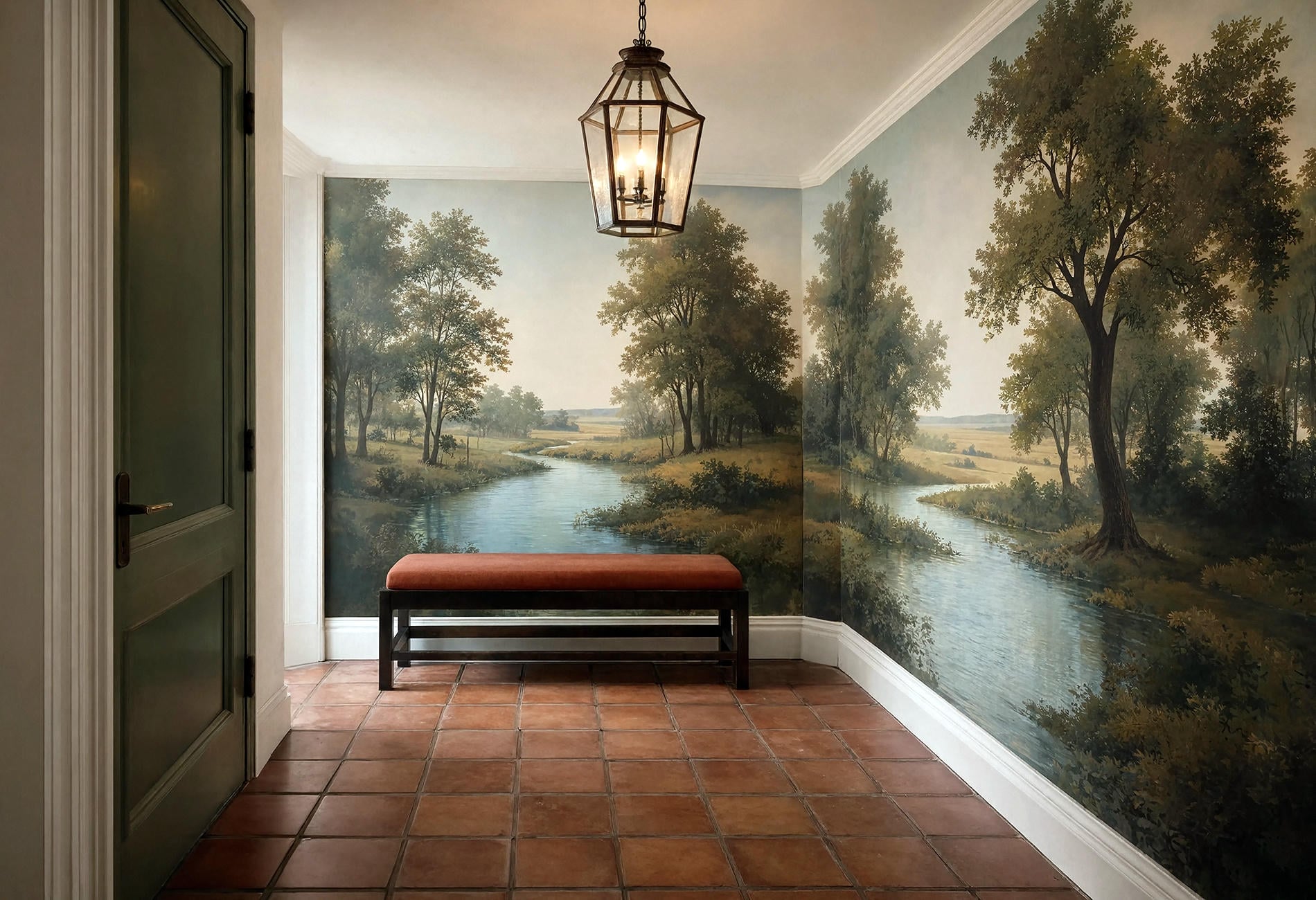
Quick wall test: Photograph the empty wall straight on, sketch the largest furniture shapes over it, and check how much scenery remains visible. Crude is fine. You're testing composition, not applying to art school.
Five Scenic Directions With Very Different Personalities
Landscape Murals Need a Clear Focal Distance
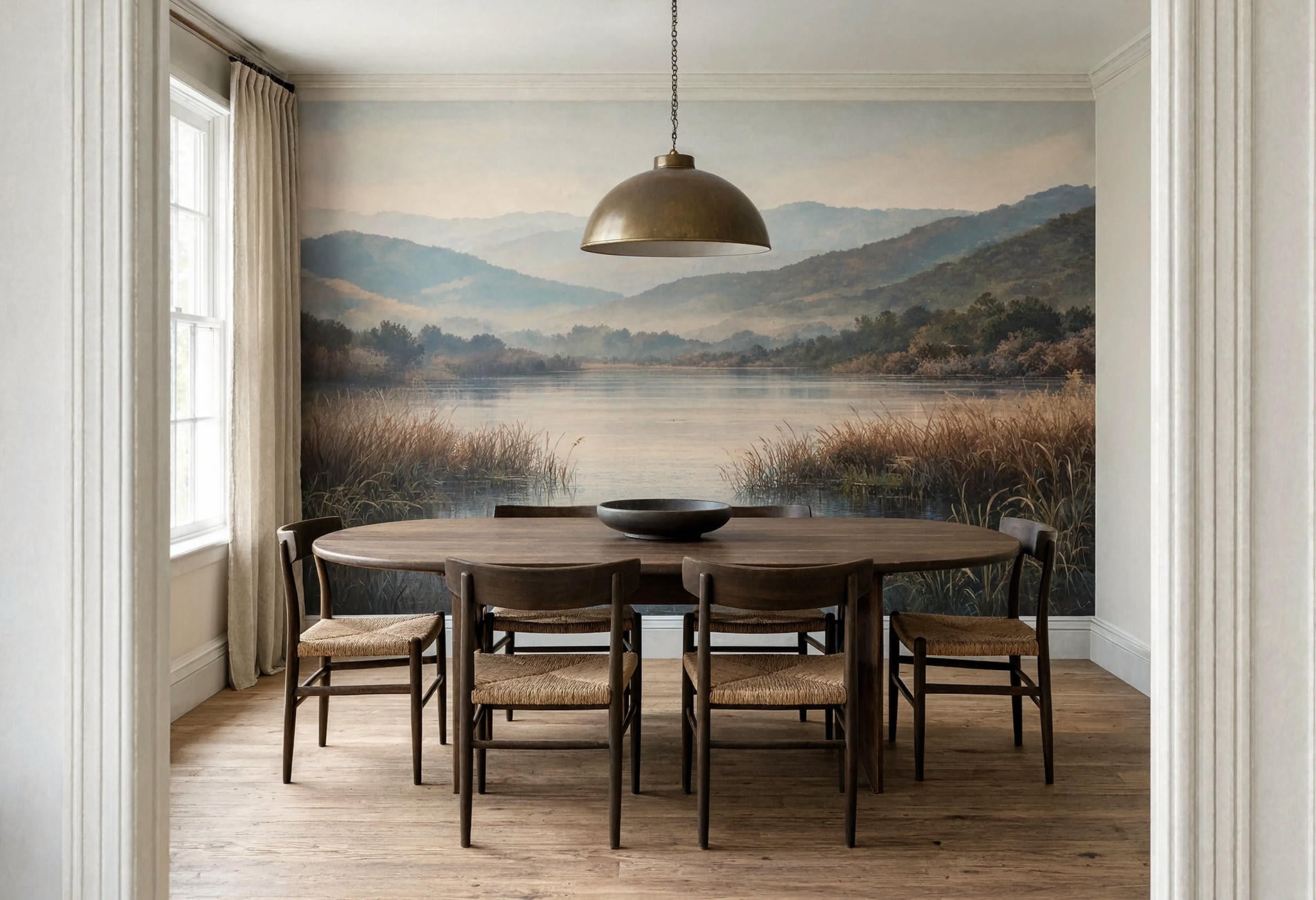
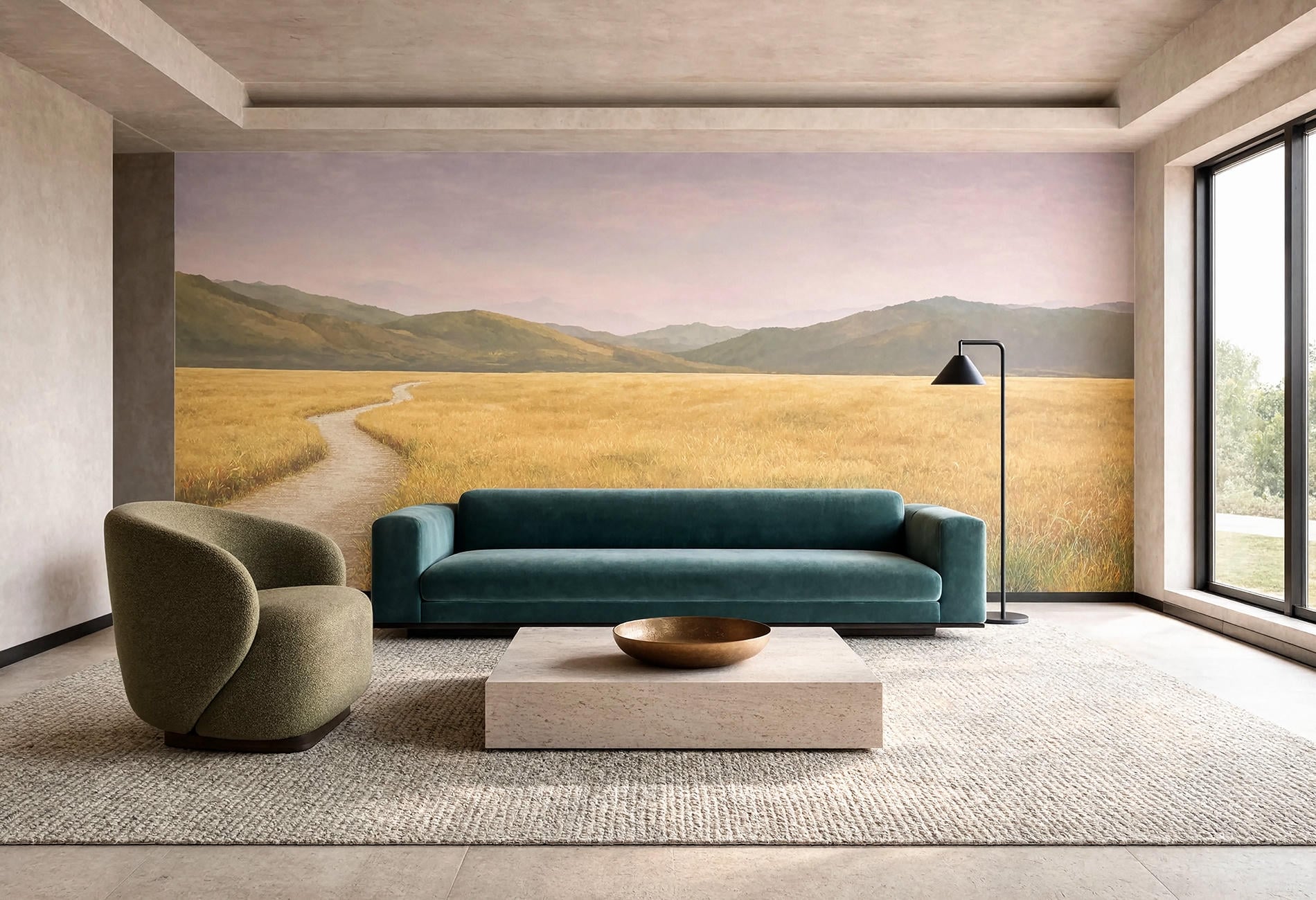
A landscape mural can visually push a wall outward because the eye reads foreground, middle distance, and sky. For my money, the strongest versions leave one area quiet enough to sit behind the room's largest furniture piece.
Look for a path, shoreline, or valley that leads inward from one side instead of dead center. That slightly off-kilter movement feels more natural around a sofa or table. Keep upholstery mostly solid, then borrow one earthy color from the foreground for a rug or curtain.
Etched Forests Bring History Without the Costume Drama
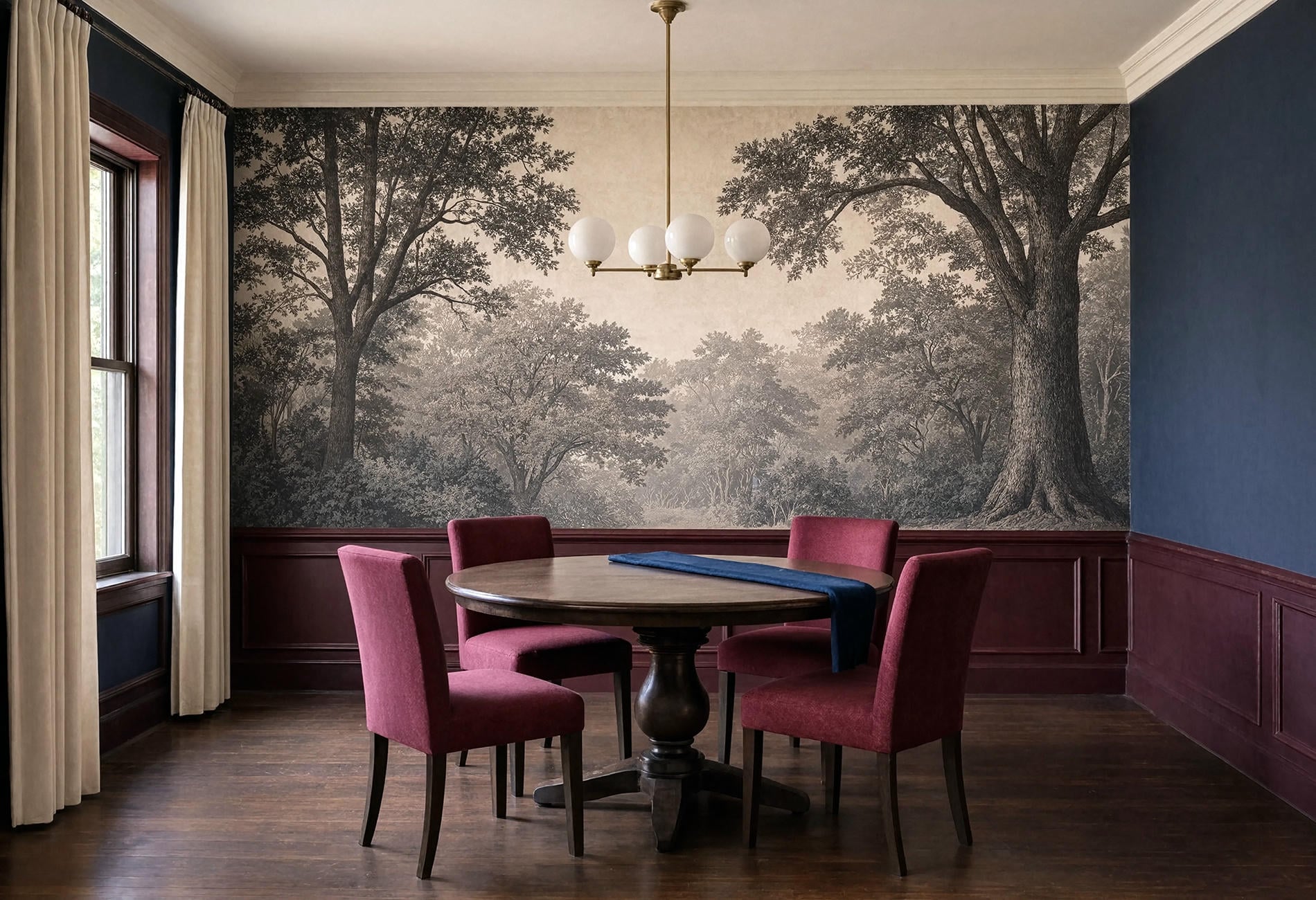
Vintage etched forest scenic wallpaper has a dry, inky character that suits paneled dining rooms, narrow entries, and bedrooms with simple wood furniture. Sepia, charcoal, and faded indigo can all work; the paper should feel like an old illustration viewed at room scale, with broad masses rather than fussy pen marks.
I like an etched forest with a limited palette and a generous pale sky. Too much dense linework can make the wall look furry from a distance. That is rarely the brief.
Pair it with matte finishes: worn oak, linen, unlacquered-looking metal, or a wool rug with little contrast. A single glossy surface can be useful, perhaps a dark side table catching window light, but the forest should keep its soft, chalky authority.
Watercolor Mountains Prefer Air Around Them
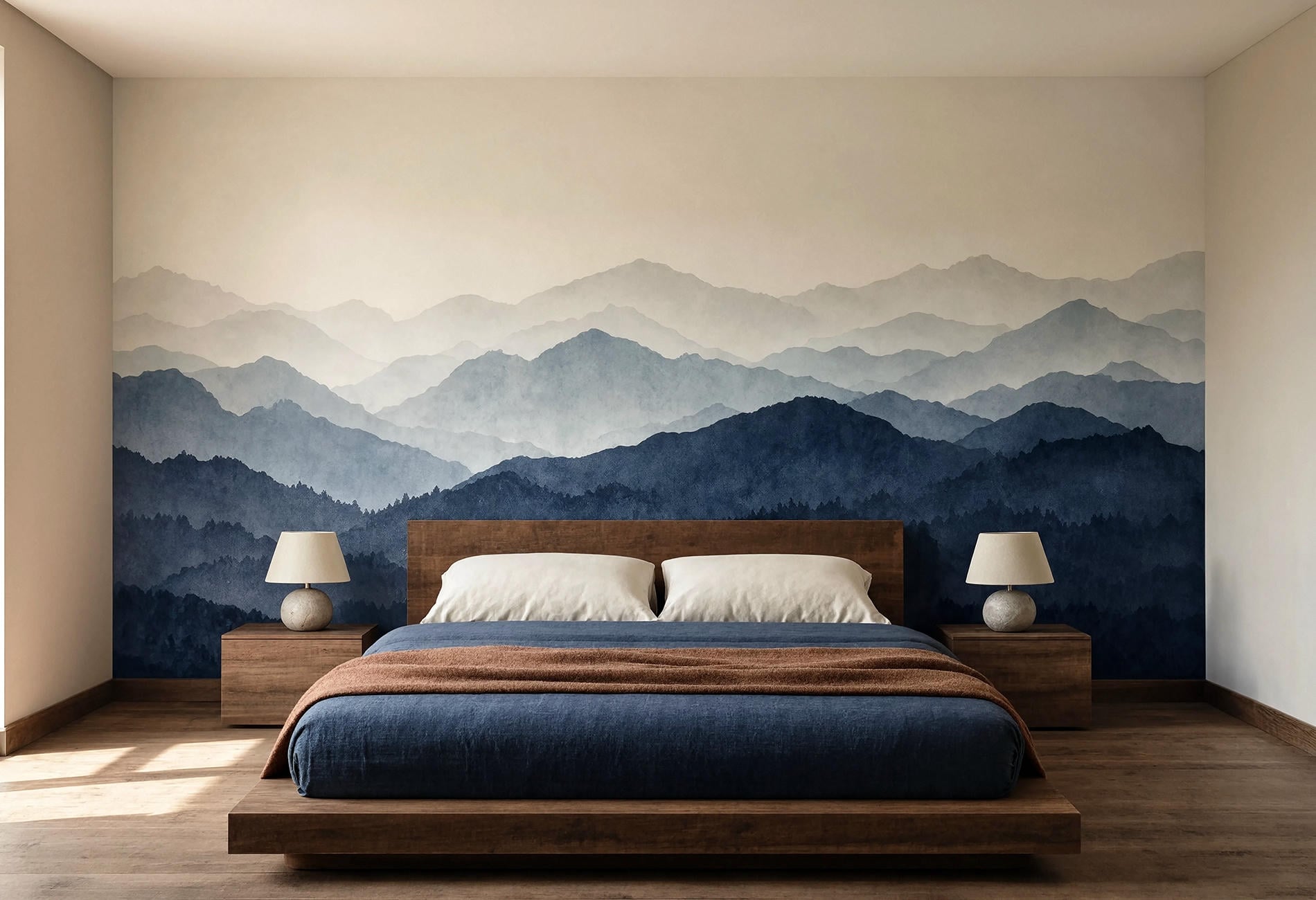
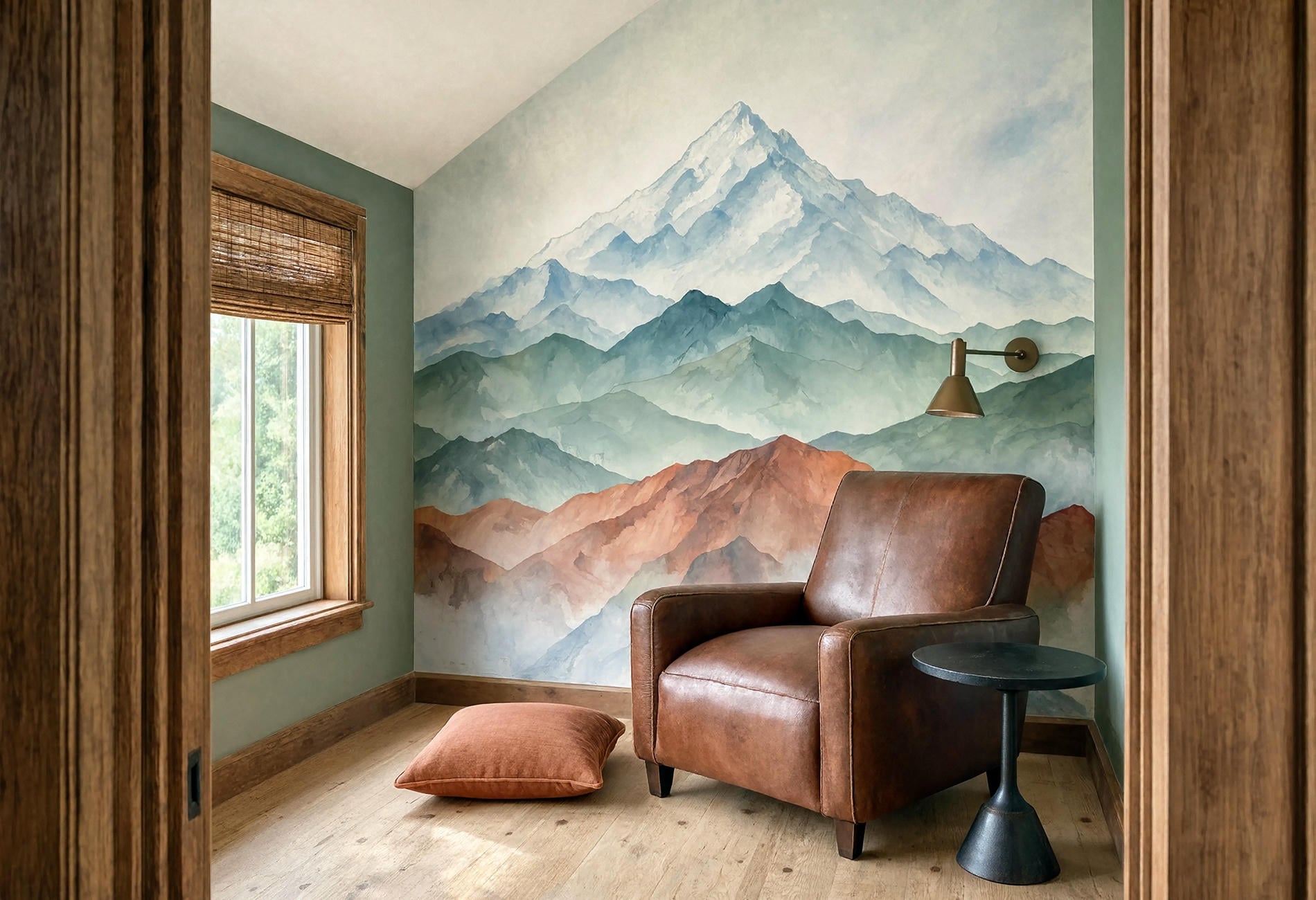
A watercolor mountain range mural belongs in rooms that can support softness without becoming sugary. Dusty blue, mineral green, clay, and milky grey give the peaks enough structure; watery pastels alone may fade into one big sigh.
Keep the lower portion relatively calm if a bed or console will sit in front. The most interesting ridge should rise above the furniture, and some open sky should survive near the ceiling. Linen bedding, pale timber, and one tobacco-colored bench give those translucent edges something solid to play against.
This is a lovely choice for a room with shifting daylight. Morning light can pick up blue washes, while late afternoon may reveal warmer pigment along the ridges. The wall seems to move a little, although nothing has changed except the sun.
Romantic Landscapes Want Restraint Nearby
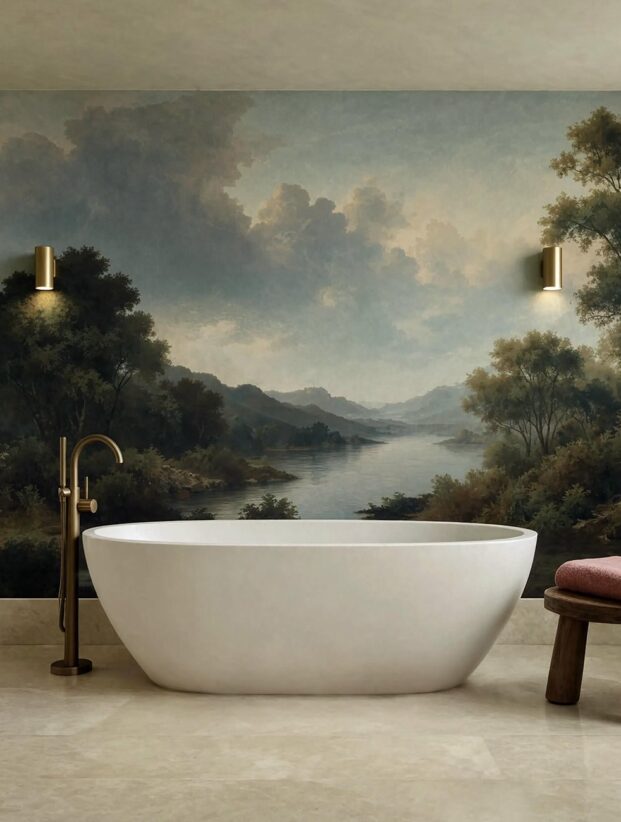
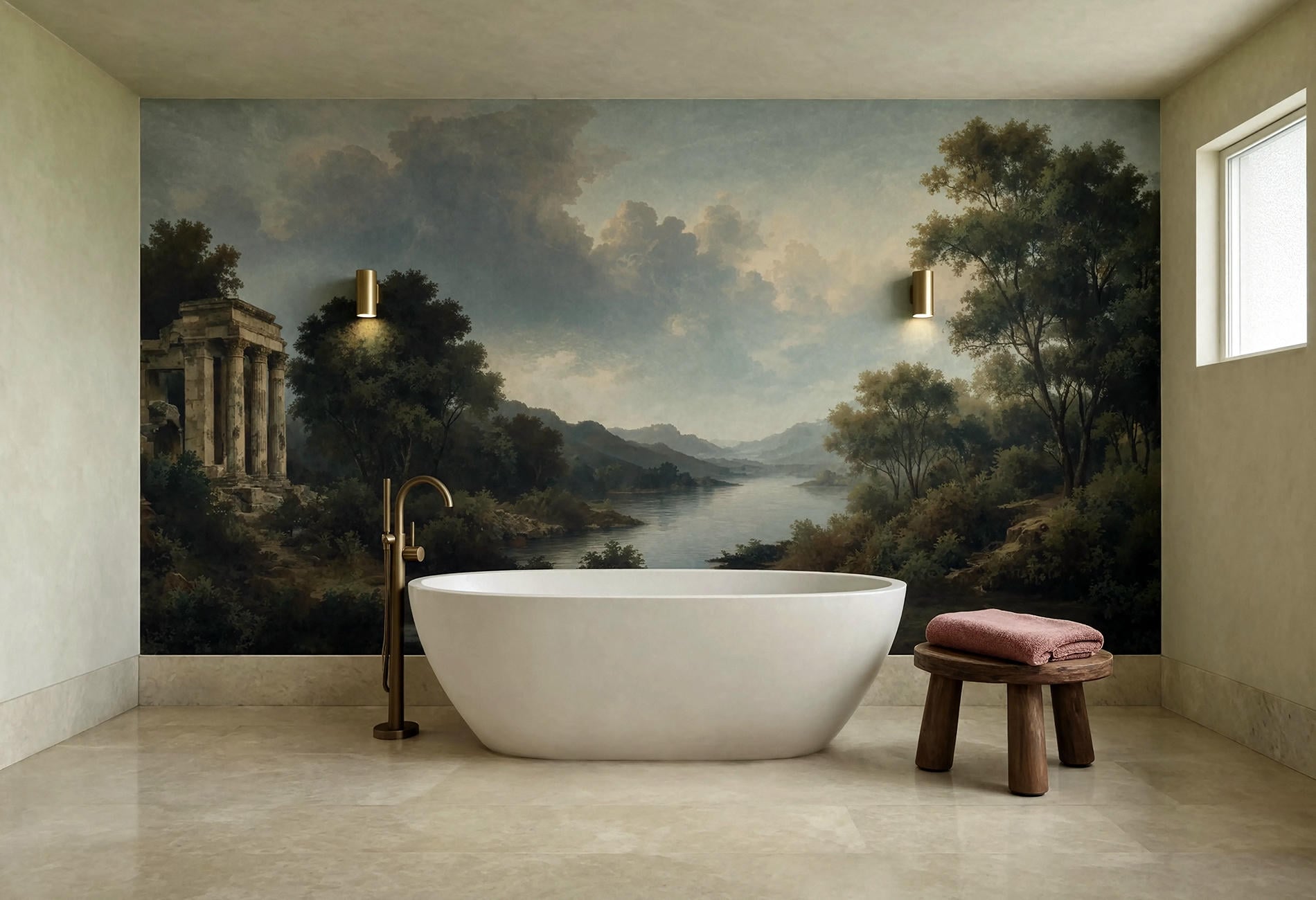
Classical romantic landscape wallpaper brings cloud banks, ruins, rolling trees, and the occasional improbable waterfall. I adore it most when the room around it refuses to audition for the same historical drama.
Choose furniture with clean outlines and substantial materials. A plain oval table, a skirted sofa in one solid color, or a dark timber bed can hold its own without adding another story. Keep ornate carving, patterned upholstery, and glittering accessories on a very short leash.
Color gives you the bridge. Pull the mural's smoky green into a chair, its warm stone into curtains, or its muddy rose into one folded textile. Repeat two or perhaps four hues across the room, with plenty of visual quiet between them.

Jungle Murals Need One Place to Roar
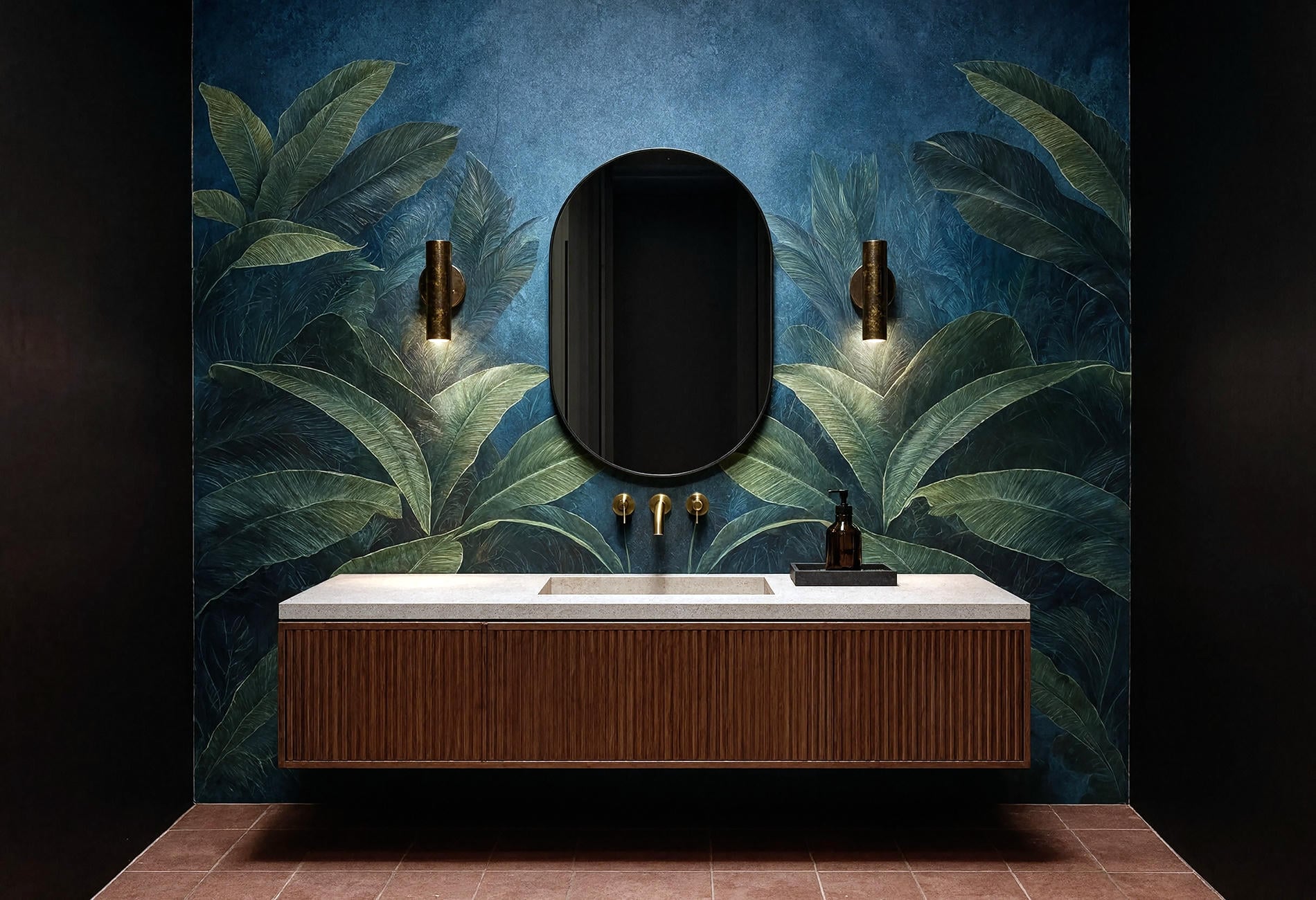
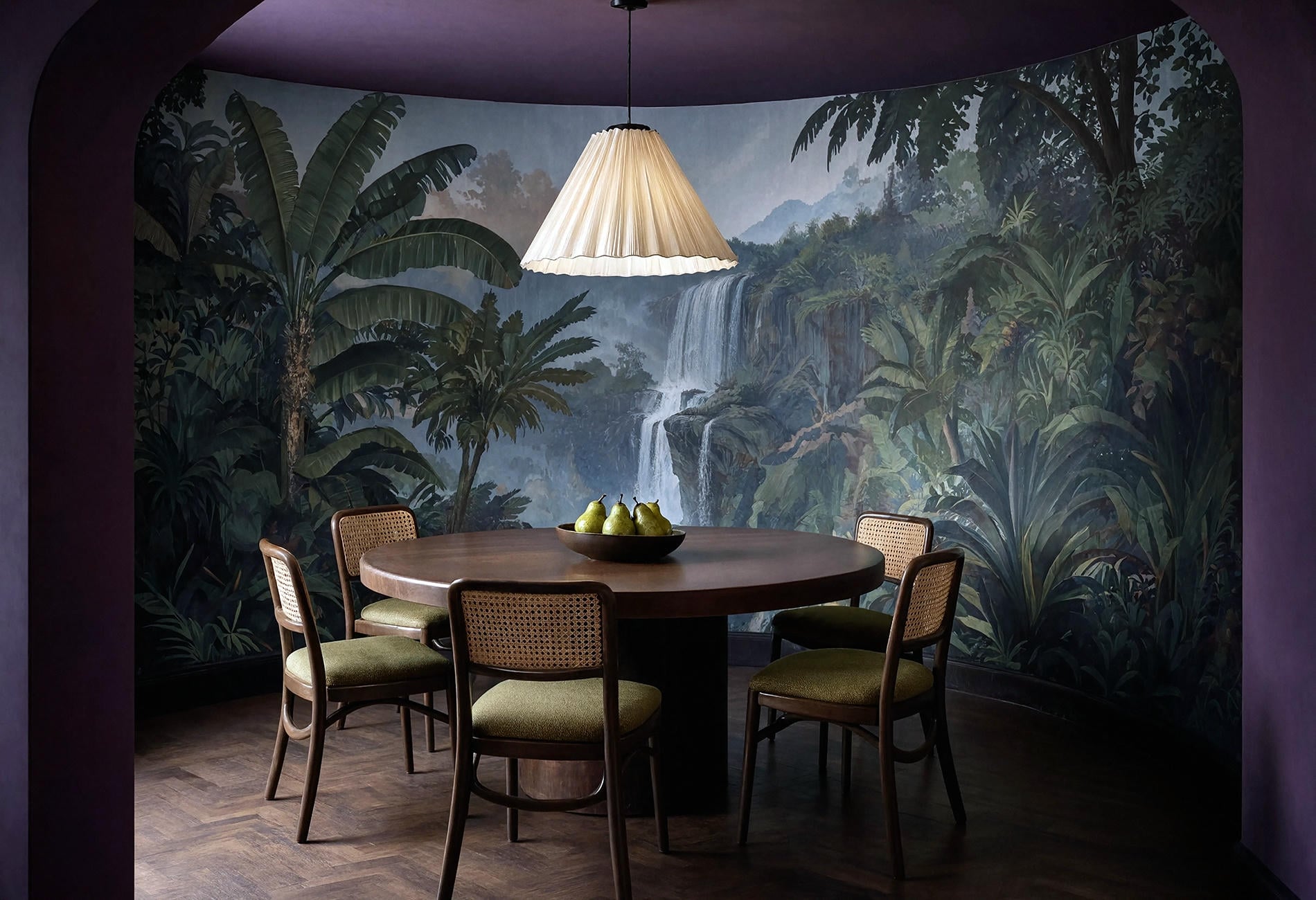
A tropical jungle mural can be magnificent in a powder room, home bar, or compact dining nook because the enclosure intensifies it. Big banana leaves, arching palms, and a deep teal distance render more convincingly than a thicket of tiny flowers and miniature birds.
Let the foliage cover one complete wall or wrap a corner where the seams make visual sense. Against it, choose broad blocks of rust, black, ochre, or dark wood. The room can be colorful. It just shouldn't look as if every object is yelling over rainfall.
In a larger living room, give the jungle some daylight and breathing room at floor level. A low sofa and bare stretch of wood or stone help the scene feel intentional. Add one more organic texture, such as woven cane, then stop before the ficus starts requesting a supporting role.
Decorate Around the Mural, Gently
Begin with the wallpaper's palette instead of bringing a separate color plan to the wall. Pick its dominant color, one shadow color, and perhaps two small accents; repeat those through upholstery, curtains, a rug, or a metal finish. Exact matching can feel stiff, so aim for neighboring shades.
Reduce competing wall objects. If the mural carries a whole valley, it doesn't need a cluster of frames nailed through the clouds. Sconces can work when they're simple and placed over low-detail areas, though hardwired installation belongs with a licensed electrician. A plain mirror on an adjacent painted wall is often plenty.
Materials should echo the atmosphere in a low voice. Etched forests like linen and dark timber; watery mountains enjoy pale oak and nubby wool; tropical foliage can take aged brass or woven cane. Repeat only a few mural colors and materials, and vary their scale so the room doesn't become a matching set.
Then edit. Clear the top of the console. Remove the extra patterned cushions. Look from the doorway again. Scenic wallpaper is generous, but it will happily take every inch of attention you give it and ask for dessert.
Questions People Ask Before Committing to a Scenic Wall
Where should you put scenic wallpaper?
Choose a wall with a strong entry sightline, enough uninterrupted area to read the view, and furniture low enough to leave the focal scene visible. Match the image complexity to the room function: quiet detail suits rooms where you linger, while broader forms read better in pass-through areas.
Is scenic wallpaper out of style?
No, though some versions age more gracefully than others. To my eye, broad painterly scenes and restrained etched views have more staying power than hyper-detailed novelty murals because they behave like atmosphere instead of a visual punch line.
How do you decorate around scenic wallpaper?
Let the mural lead the palette, reduce other wall objects, and repeat only a few of its colors or materials elsewhere. Keep the largest furniture silhouettes simple so the room has a foreground and the scene remains legible.
Can scenic wallpaper work in a small room?
Yes. A small powder room, entry, or dining nook can carry an enveloping scene beautifully when the print uses broad forms and the surfaces stay fairly clear. The real point isn't to make a room pretend it's somewhere else. It's to give home another layer of feeling -- a view beyond the wall, and a reason for your eye to linger there.