A bathroom ceiling shouldn't be the room's apology. To my eye, it's the most underused patch of design real estate in the house, especially in a powder room where the floor plan is tiny and a little nerve goes a long way.
Wallpaper overhead can pull your gaze upward and give plain tile a point of view. Five ordinary minutes at the sink become a small, strange pleasure. The material can also peel or bubble, sometimes revealing a weak paint layer when the product and bathroom conditions don't agree.
Before you fall for a midnight-blue botanical or a sky full of clouds, check the wallcovering maker's bathroom guidance, approved substrates, paste requirements, curing time, and cleaning directions. Keep wallpaper outside direct shower and wet-zone exposure unless the maker explicitly approves that use. Persistent dampness, mold, or a leak needs proper assessment before anything decorative covers it.
Start With The Bathroom, Then Choose The Paper
Steam behaves differently in a rarely used powder room than it does in the only bathroom shared by four people. A windowless bath with long showers asks more of every finish, too. Look first at exposure and ventilation, then notice how long moisture hangs in the air after the door opens.
Then inspect the ceiling itself. Wallpaper depends on the layer beneath it, so flaking paint, chalky residue, stains, uneven patches, or a soft spot deserve attention first. A sound, smooth, properly prepared substrate gives the covering a fair chance; decorative paper can't rehabilitate a ceiling that's already letting go.
"Moisture resistant" is useful product information, yet it isn't a universal promise. Different wallcoverings, coatings, adhesives, paints, and substrates behave differently, and the maker's instructions should settle any disagreement between a clever online tip and the actual material in your hand.
Short version: the driest, best-ventilated bathroom is the friendliest candidate. A powder room is often the least complicated place to make the ceiling the star.
Let One Pattern Run Across The Ceiling And Walls
Running one wallpaper across the bathroom walls and ceiling can feel like stepping inside a patterned box, which is exactly why it works in a room that otherwise has nowhere to go. I like this move with a broad, low-contrast motif: loose leaves, a cloudy marble effect, soft brushy checks, or a generous vine broken by plenty of open ground.
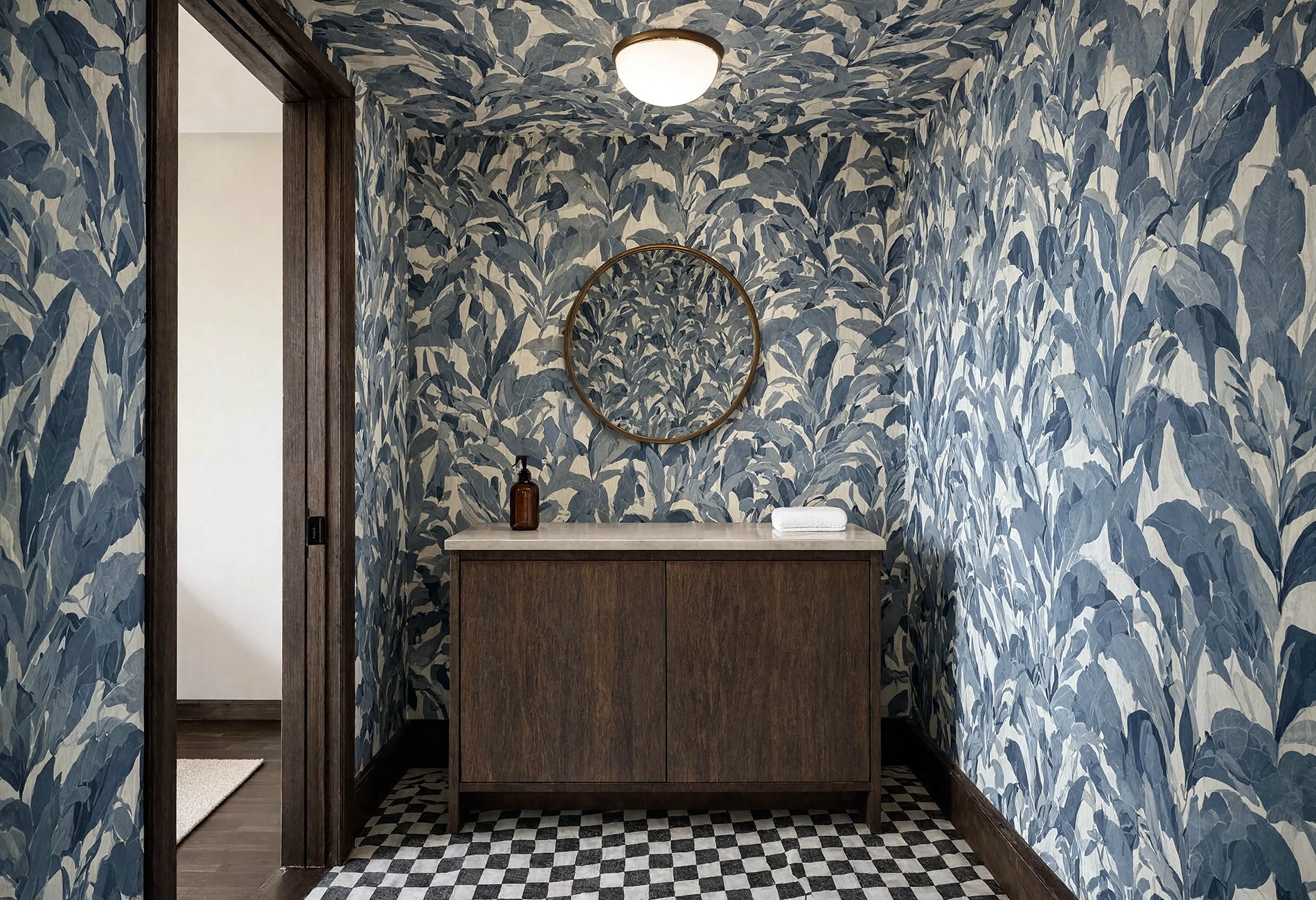
The wall-to-ceiling corner becomes part of the picture rather than a hard visual stop. In a powder room, that continuous field can make an awkward jog or off-center window feel less bossy. Your eye reads the whole envelope before it starts measuring imperfections.
Restraint matters elsewhere. Keep the mirror and vanity fronts plain. Leave the counter almost bare, because a patterned shell plus twelve tiny objects starts to look like the room swallowed a gift shop.
If full coverage feels too intense, paper only the ceiling and repeat one color from the print on the walls. A mineral blue leaf on warm white paper, for example, can sit above dusty blue walls without turning the room into a theme.
Pick A Pattern That Knows What Job It Has
Pattern scale changes the mood more than people expect. Tiny repeats can get visually noisy overhead, particularly around vents, trim, wall edges, and light fixtures. For my money, larger shapes with clear breathing room photograph better and feel calmer in daily life.
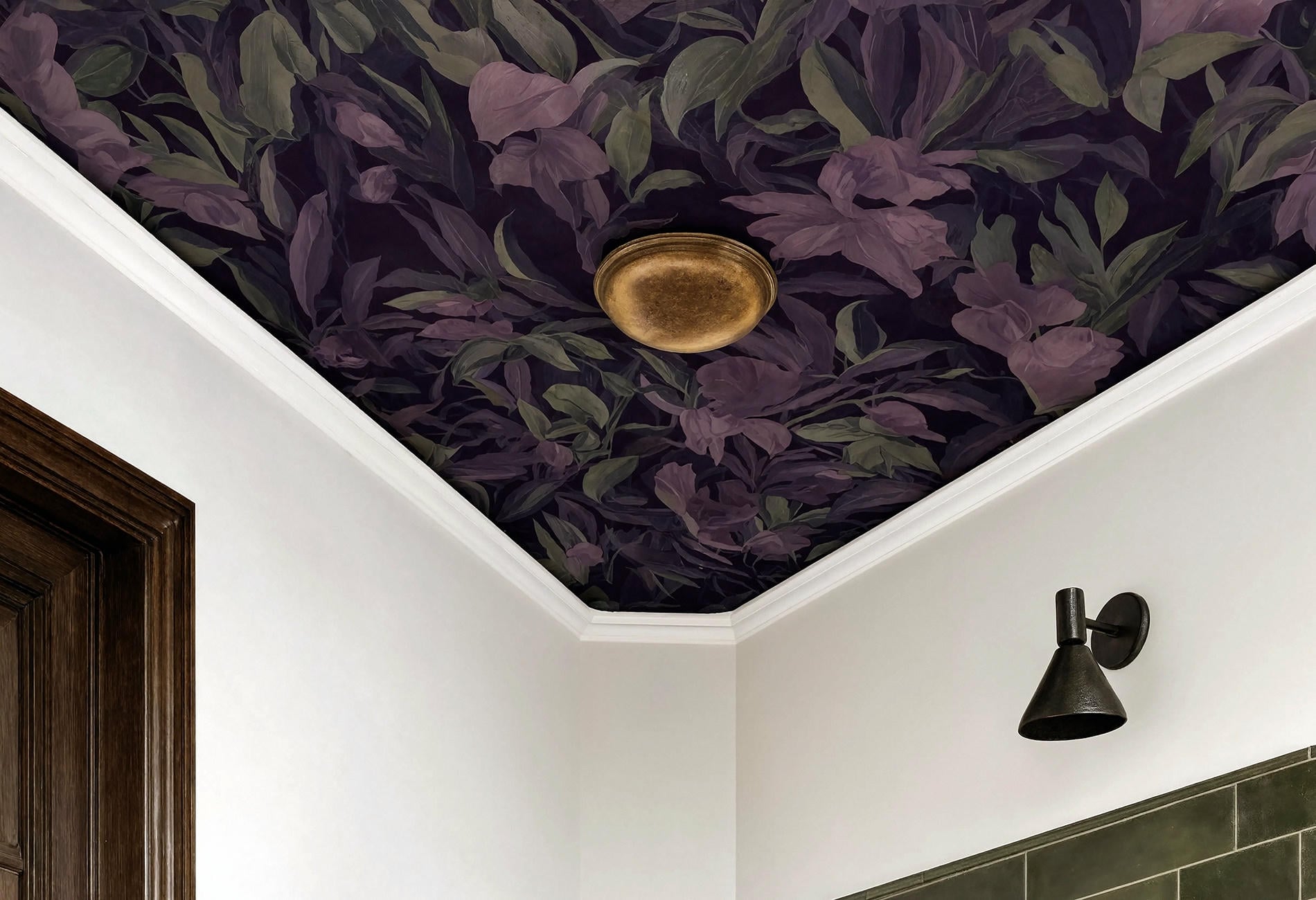
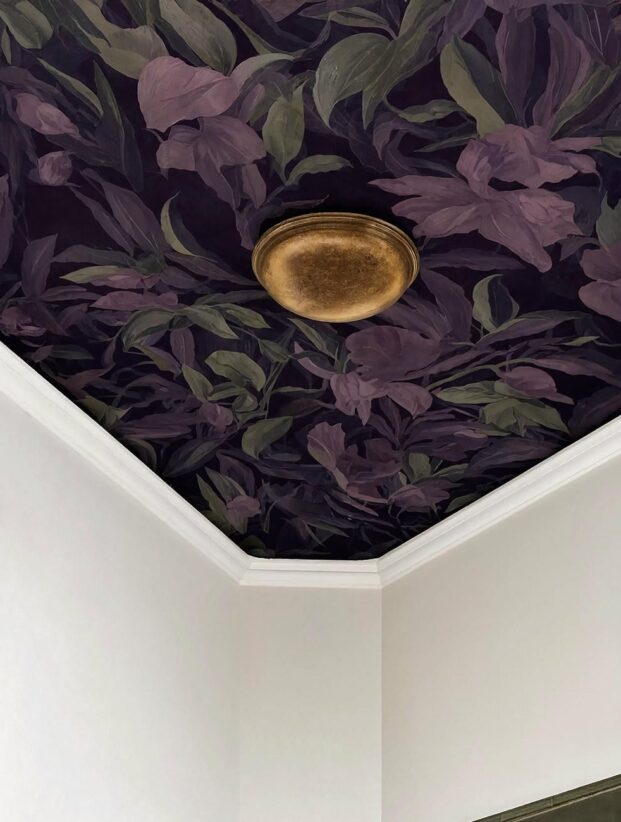
A dark botanical ceiling gives a plain bath an instant canopy. Look for deep green, ink blue, plum, or tobacco brown with leaves large enough to read from the doorway. Pair it with warm white walls, dark wood, pale stone, or aged metal so the print feels grounded rather than theatrical.
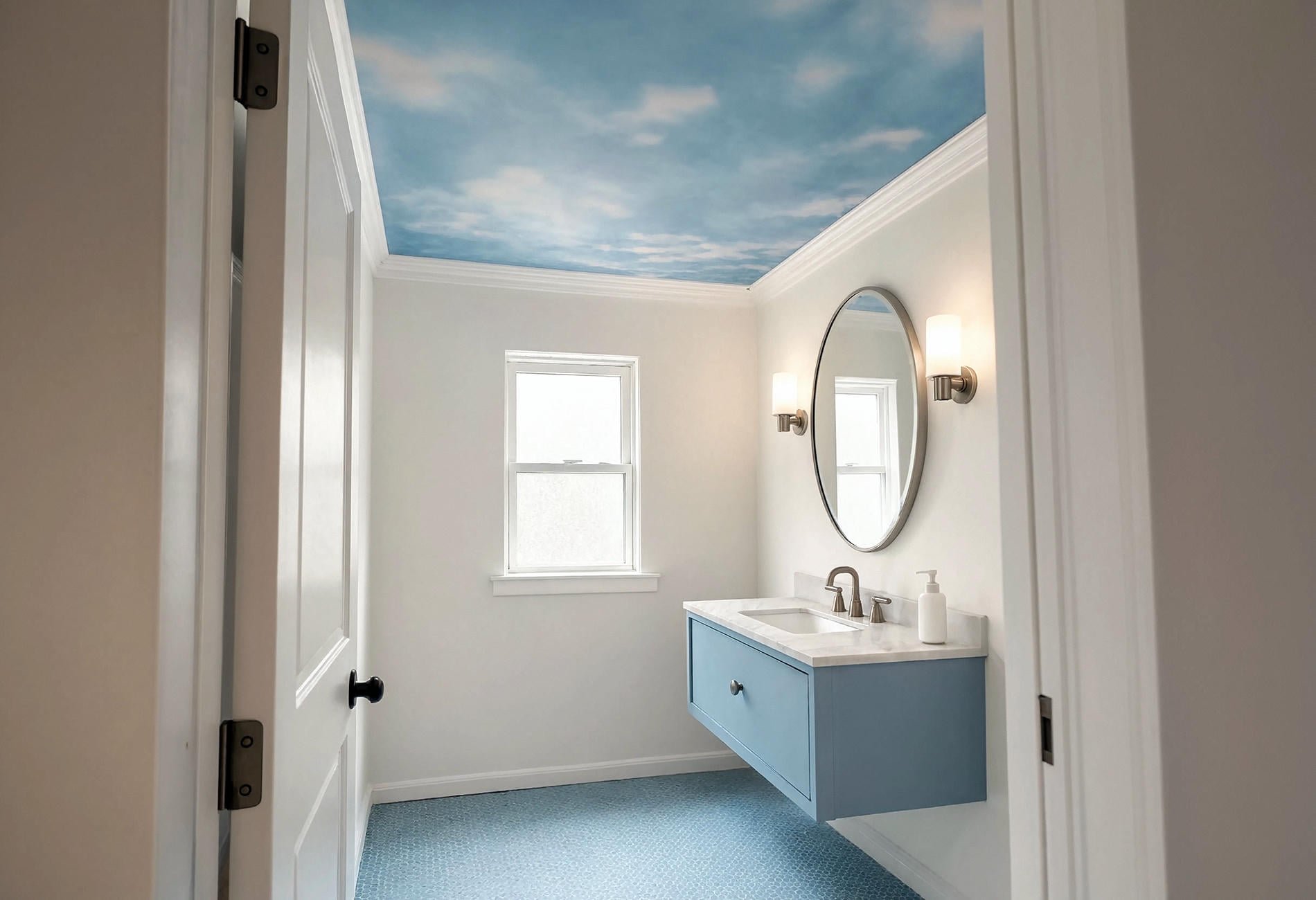
Sky and cloud wallpaper has a softer trick. Skip cartoon-blue skies if you want longevity and lean toward chalky blue-grey with cream, letting loose cloud forms do the work. Morning light on a cloud ceiling can look almost silvery; by evening, it settles into something moodier and quieter.
Geometric ceiling wallpaper suits a small bath when the lines are broad and the repeat stays legible. A loose checkerboard, overscale fan, blocky stripe, or wide lattice can sharpen a simple vanity. Fine grids are fussy little tyrants overhead (there, I said it).
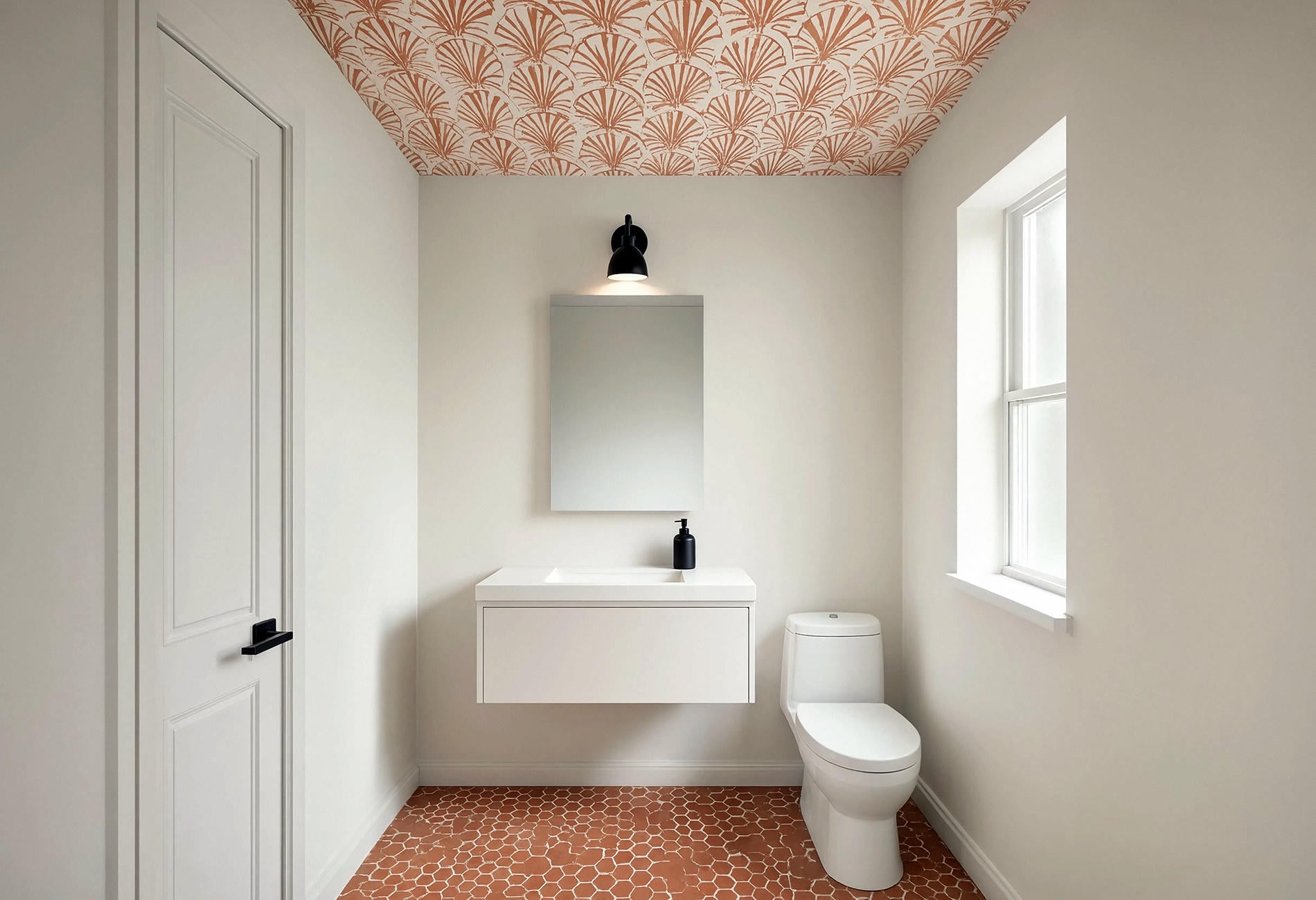
And traditional bathrooms don't need timid paper. A blocky vine or generous medallion above painted paneling can feel established and a bit eccentric, like the room has been collecting opinions for years.
Use Shiplap As The Quiet Half Of The Pairing
Wallpaper with shiplap works when each surface gets a separate role. Let the ceiling carry movement; let the horizontal boards supply rhythm and a calm color field below. I prefer a visible shift in texture over an exact color match.
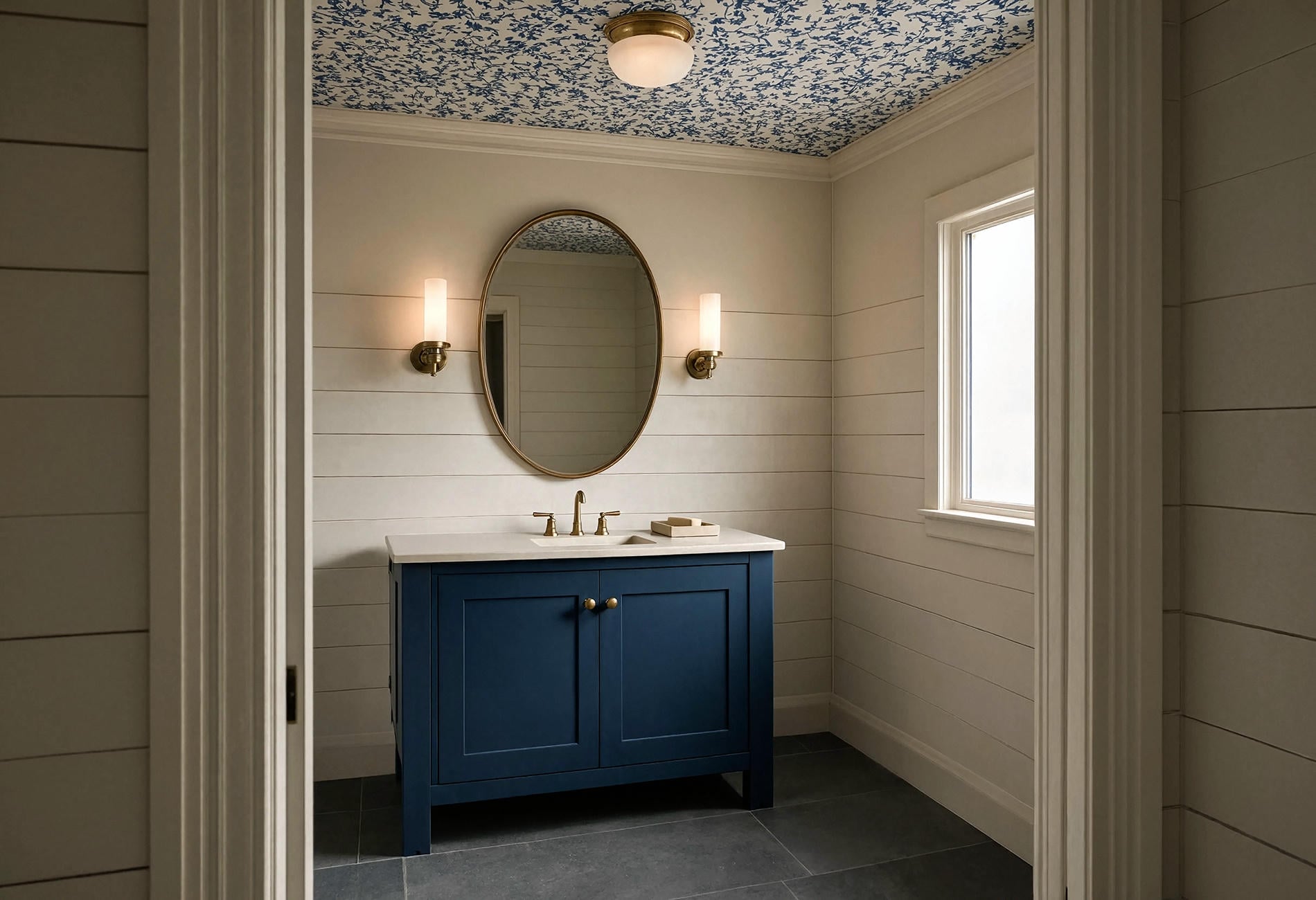
Warm white shiplap makes a navy botanical feel crisp. Mushroom-painted boards soften a rust-and-cream print. Deep green boards under a pale climbing-vine ceiling can be wonderful in a powder room, though I'd keep the vanity and mirror visually spare so the joinery still reads.
Pay attention to the top edge. Crown molding or a clean trim line can frame the change, depending on the room and the way the existing ceiling meets the wall. If adding or altering substantial millwork touches the building's structure, have an experienced professional assess the plan.
Shiplap also gives you a practical stopping point. Paper stays overhead while washable painted boards hold the lower walls; tile remains wherever water exposure demands it. The bathroom still feels composed instead of divided into a stack of unrelated samples.
For Low Ceilings, Direct The Eye Instead Of Making Promises
Wallpaper can encourage your gaze upward or change how you read a low room, though it can't guarantee an illusion of extra height. Ceiling height and wall color participate, along with contrast, light, and pattern direction.
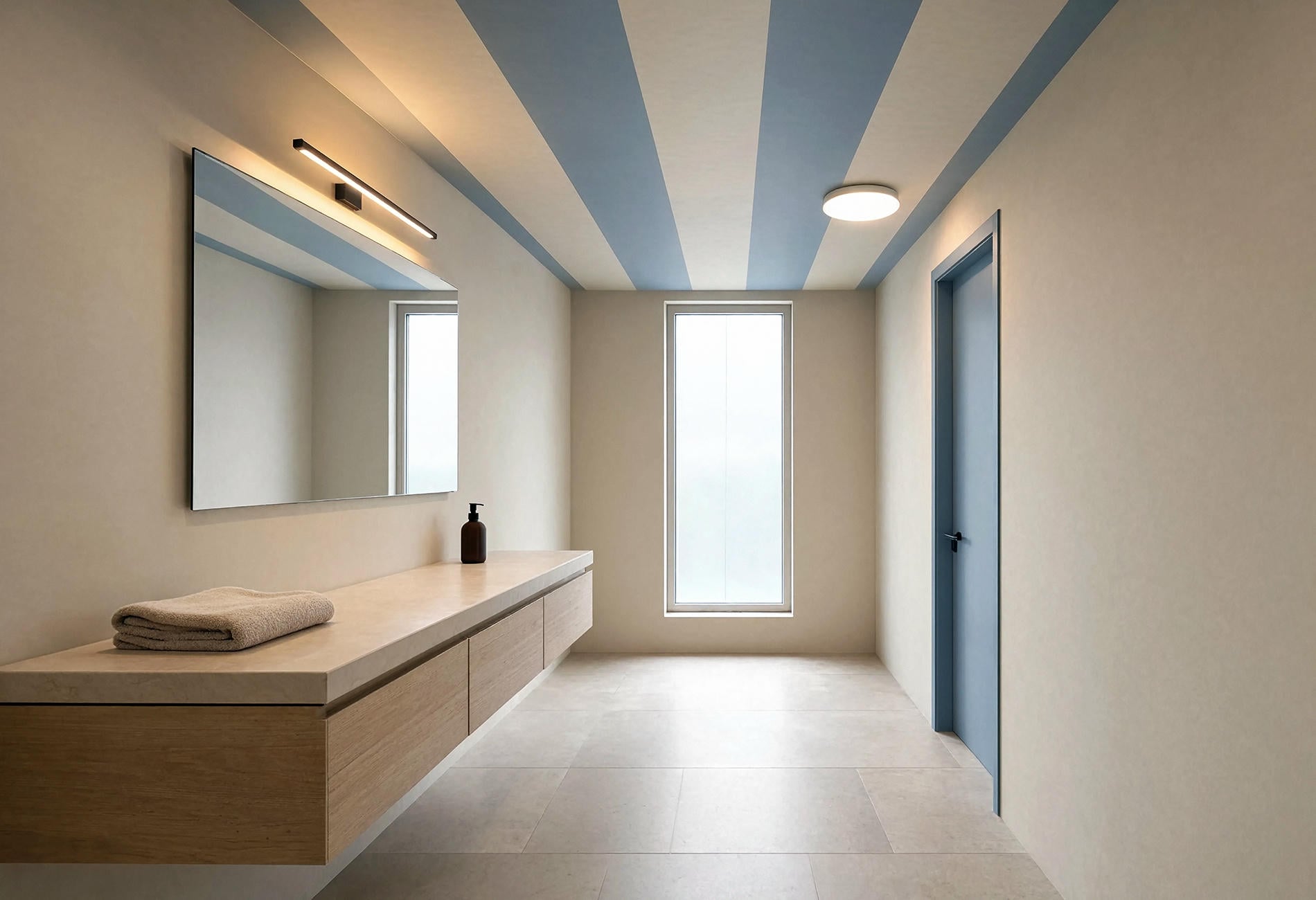
In a low bath, try a pattern with a gentle lengthwise movement toward the far wall or window. Keep the ceiling-to-wall contrast modest if you want a softer boundary. A very dark ceiling against brilliant white walls may feel cozy and intentional; to my eye, it usually emphasizes the plane overhead rather than making it disappear.
Scale deserves a sample. Tape a generous piece overhead and view it from the doorway and sink. Then stand where you usually pause, because a motif that looked politely medium on a screen can become a dinner plate once it's six feet above your head.
Small rooms can take boldness. They just need clarity.
Make A Powder Room The Place You Take The Risk
A powder room doesn't have to behave like the sensible cousin of the main bath. It can wear the dark botanical, an oxblood ground, a chalky cloud print, or the peculiar bird-and-branch pattern you can't imagine committing to across a bedroom wall.
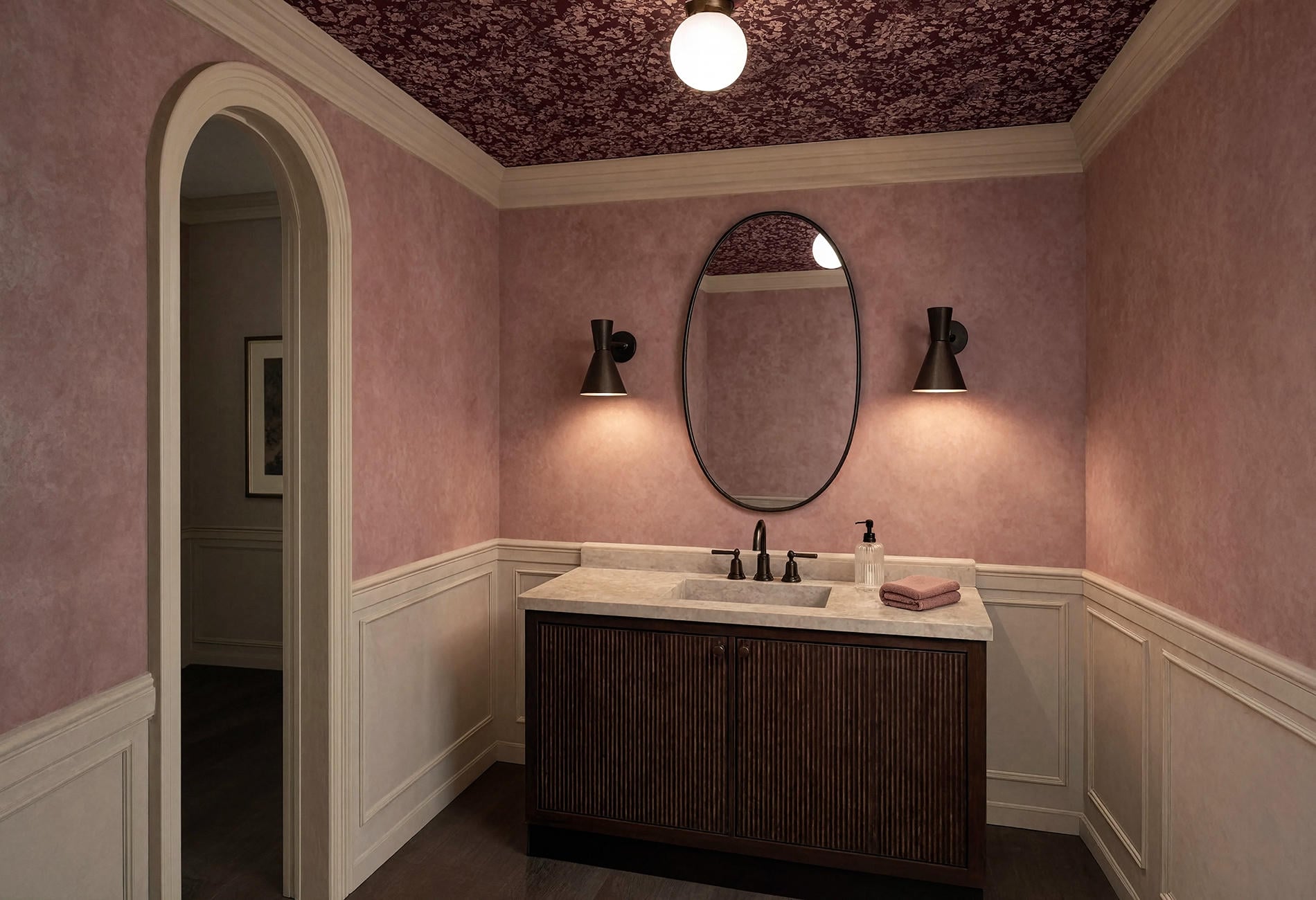

Because the room is experienced in short visits, an enveloping pattern can feel delightful instead of exhausting. Pair it with a simple oval mirror and one solid vanity color. Leave the counter mostly clear, perhaps with a plain soap dispenser and a folded hand towel, and let the ceiling do the gossiping.
This is also where budget choices can be strategic. A small ceiling may require less material than a full wall scheme, though actual quantities depend on the ceiling dimensions, repeat, roll width, matching allowance, and mistakes. Measure according to the maker's guidance and account for pattern matching before ordering.
For a bathroom ceiling wallpaper idea on a budget, spend the visual energy overhead and simplify everything else. Existing paint, a clean mirror, hardware you already like, and the light that's already there may be enough. Expensive-looking rooms are often just rooms with the confidence to stop.
Renters Need Permission And A Real Exit Plan
Peel-and-stick paper sounds tailor-made for renters, yet removal can still lift paint, expose weak patches, leave residue, or resist a clean release. Lease terms and landlord approval come first. Fully cured, well-bonded paint matters, and an inconspicuous test can reveal compatibility before an entire ceiling is involved.
Follow the product maker's substrate and removal guidance closely. Don't assume a removable label means damage-free on every painted surface; paint age, sheen, preparation, humidity, and prior repairs can change the outcome.
If permanent overhead wallpaper isn't allowed, sample the idea without attaching anything to the ceiling. Use a large printed swatch temporarily at eye level to judge color, then bring that pattern energy into a removable shower curtain or a floor textile outside the wet zone. A frameless fabric panel can work too when it's secured in a landlord-approved way; the ceiling fantasy can wait for a room that signs the consent form.
Treat Peeling As A Clue, Not A Cosmetic Annoyance
A lifting seam is a clue, so find the likely cause before reaching for more adhesive. Moisture and poor ventilation can contribute, along with weak paint, dusty preparation, incompatible paste, an unsuitable substrate, or a leak.
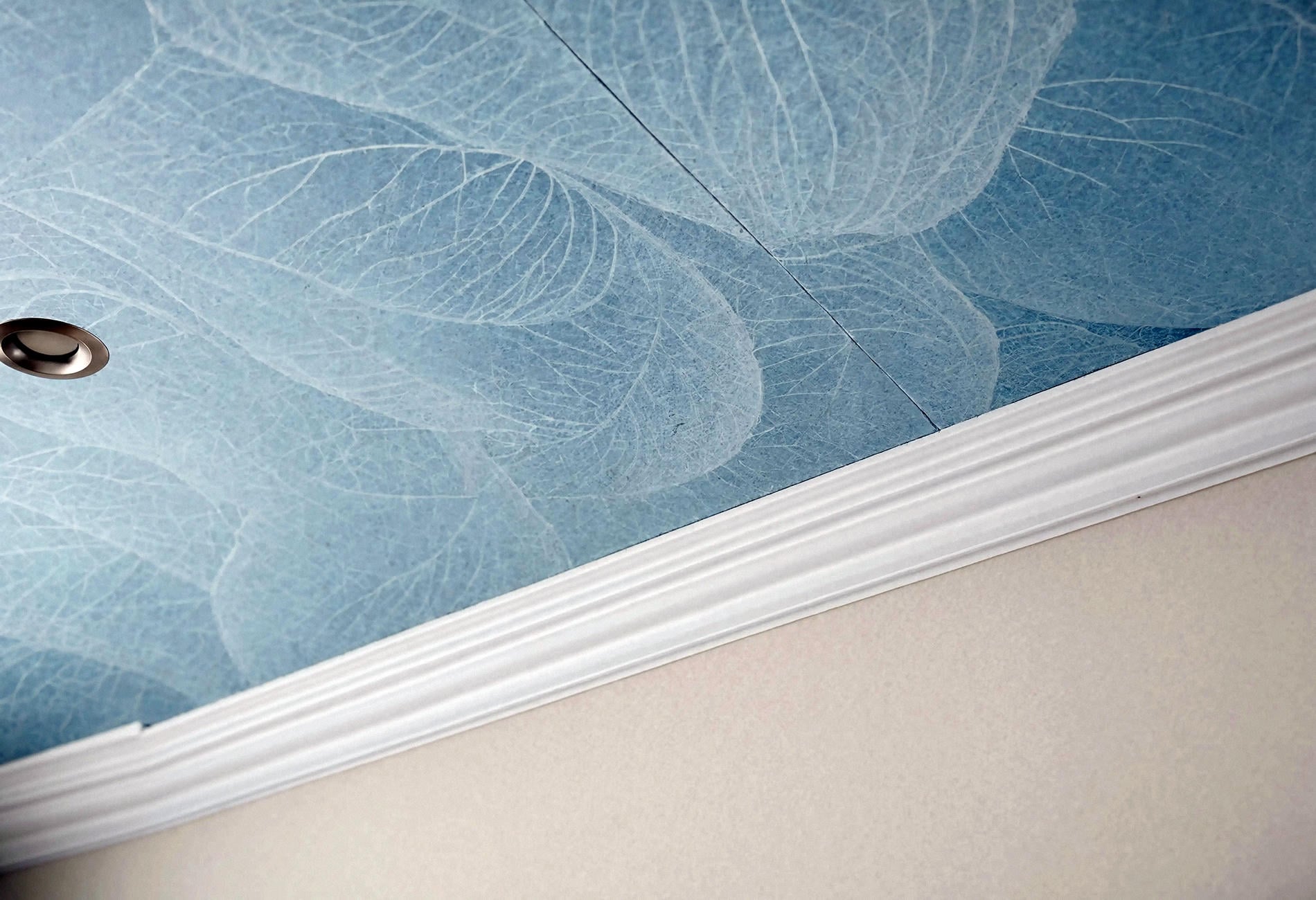
A lifting seam after steamy showers points to a different problem than broad areas pulling away with paint attached. Persistent dampness, staining, mold, or recurring failure deserves appropriate assessment; covering it again merely hides the evidence for a while.
For a new project, follow the wallcovering maker's directions for preparation, primer if specified, paste, curing, ventilation during curing, and cleaning. Ceiling work is physically awkward, and long wet strips can be difficult to align while gravity behaves like a smug little supervisor. A second person or an experienced installer may be the sensible choice, especially with patterned paper that demands accurate matching.
The bigger idea is simple: a home feels considered when every surface is allowed to contribute. A wallpapered ceiling earns its place when that fifth wall makes the room feel more like yours, while the materials and the building underneath are treated with respect.
Bathroom Ceiling Wallpaper Q&A
Is it hard to wallpaper a bathroom ceiling?
It can be physically demanding because you're working overhead while aligning material and managing adhesive. The product, ceiling condition, and pattern match affect the difficulty, so consider a second person or an experienced installer and follow the maker's installation guidance.
What wallpaper works best on a bathroom ceiling?
Choose a wallcovering whose maker approves it for your bathroom conditions and ceiling substrate. Moisture-resistant descriptions can help narrow the options, though exposure, ventilation, adhesive compatibility, and cleaning guidance still matter.
Can bathroom ceiling wallpaper go above a shower?
Keep wallpaper outside direct shower and wet-zone exposure unless the wallcovering maker explicitly approves that placement. If dampness, leaks, or mold are present, get the underlying issue assessed before covering the ceiling.
Why is my bathroom ceiling wallpaper peeling?
Peeling may come from moisture, weak paint, poor surface preparation, incompatible adhesive, or inadequate ventilation. Recurring failure, staining, mold, or a soft ceiling needs investigation rather than another cosmetic patch.