One Tile Bathroom Ideas for a Calmer, Bigger-Looking Space
Using one tile throughout a bathroom sounds like the simplest possible design decision. Then the samples arrive. The floor needs grip, the shower needs drainage, the walls need a sensible layout, and the grout color suddenly has the emotional weight of a major life choice (right up there with choosing your starter Pokémon or naming a firstborn).
The idea is still excellent. A continuous material can make a small room feel less chopped up, quiet a complicated floor plan, and put the emphasis on shape, light, and fixtures. The trick is to treat "one tile" as a visual strategy, not permission to ignore technical ratings.
These one tile bathroom ideas show how to build continuity while keeping the room safe, serviceable, and interesting.
Decide What "One Tile" Means for Your Project
A true one-tile bath uses the same product on floor and walls. A visual one-tile bath uses the same color and finish family in formats suited to different jobs. The second approach is often more practical.
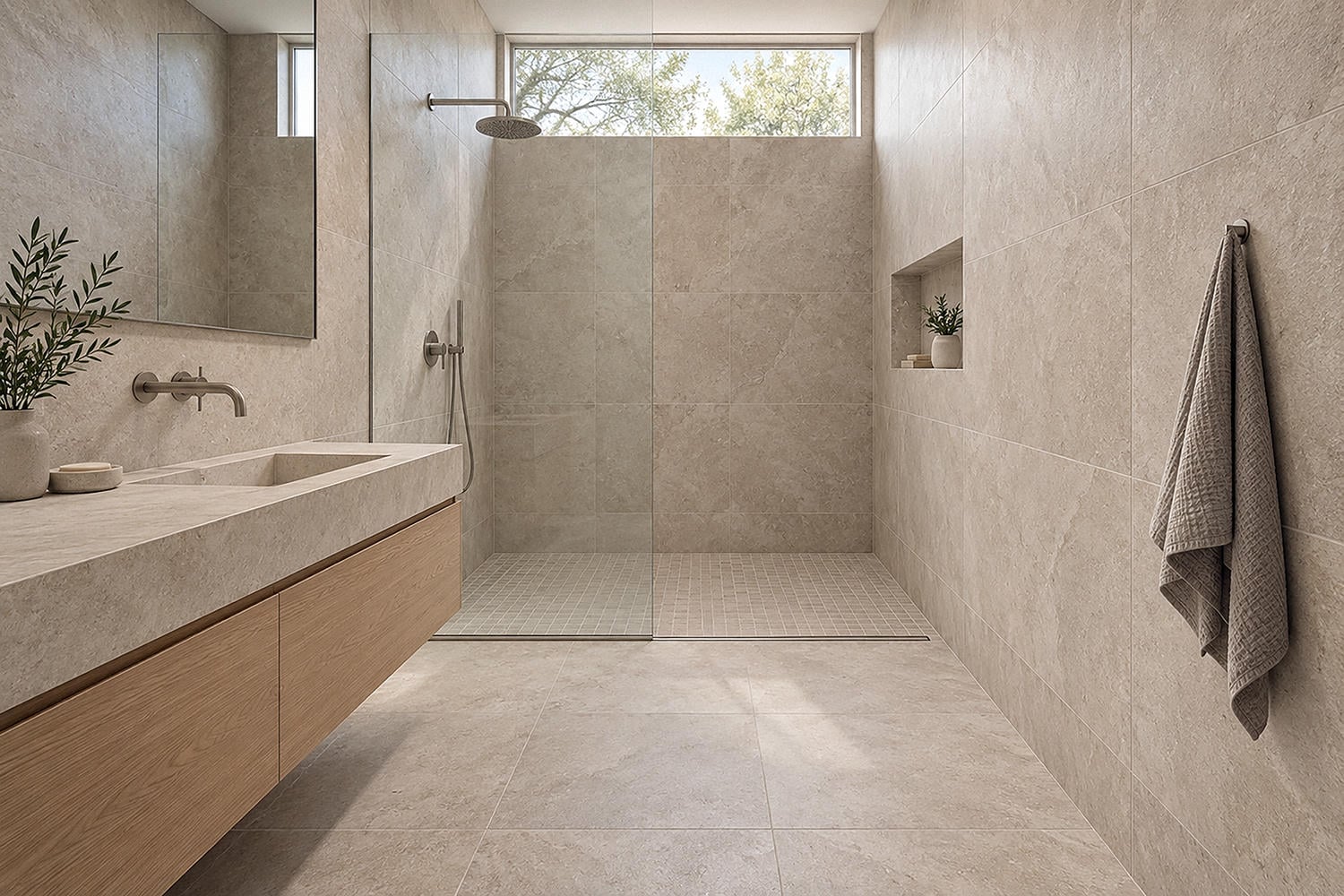
For example, a large-format porcelain slab or 24-by-48-inch tile can cover the walls, while a matching 2-inch mosaic handles the shower floor. The color stays continuous, but the extra grout joints help the smaller pieces follow the slope and can make the sloped layout easier to execute.
That distinction solves many design arguments before they begin. You are aiming for one visual field, not forcing a wall tile into a job it was never made to do.
Does Using One Tile Make a Bathroom Look Bigger?
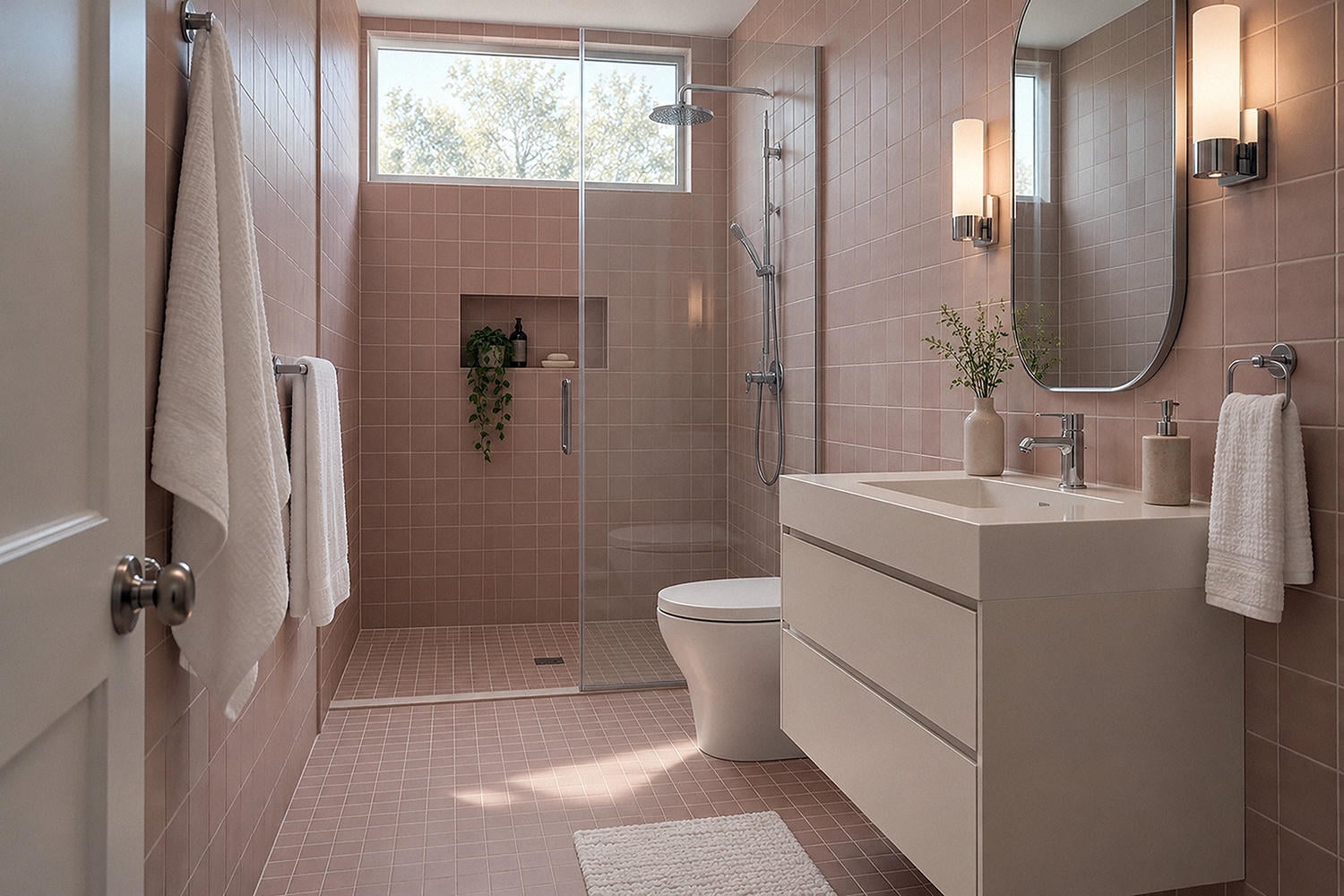
It often can. Repeating one surface reduces visual boundaries, especially when the floor runs into a curbless shower and the wall tile reaches the ceiling. Your eye notices the room's full envelope instead of stopping at every material change.
The effect is strongest when grout contrast is low and tile cuts are planned cleanly. It weakens when niches, ledges, corners, and half-walls introduce a thicket of tiny pieces. Large tile is not automatically better, either. A giant format with awkward slivers at both ends can make the room look poorly measured.
Before ordering, ask the installer for a scaled tile layout showing the main sightlines, drain, niche, curb, and plumbing wall.
The Best One Tile Small Bathroom Strategy
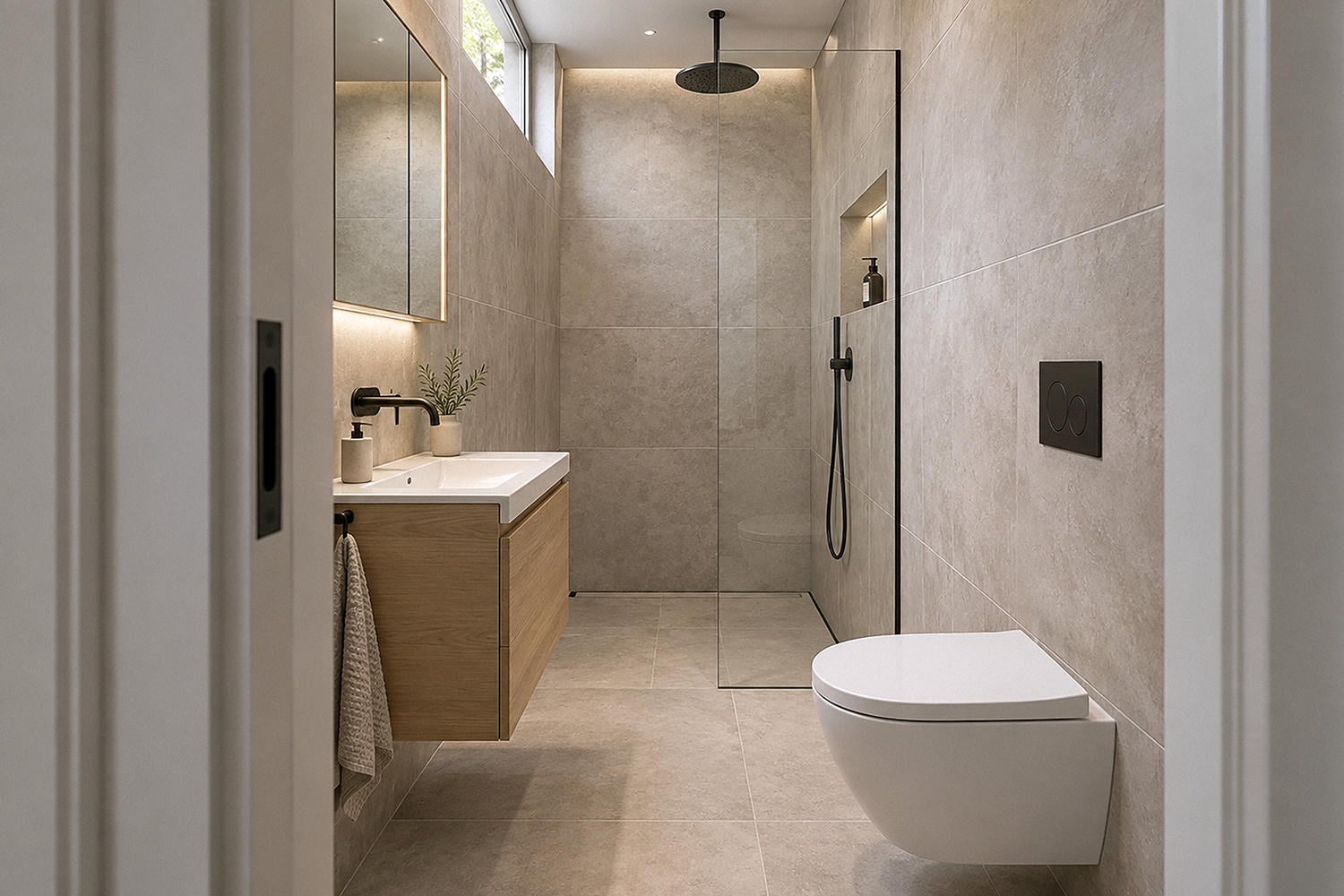
In a compact bath, choose a surface with quiet movement and enough variation to stay forgiving. Warm limestone-look porcelain, soft terrazzo, pale concrete, and clouded gray-green all work well. Highly directional veining can look dramatic, but it makes every cut and alignment more noticeable.
Run the tile to the ceiling in the shower. Elsewhere, either tile full height or stop at a deliberate architectural line, such as a window sill. An arbitrary shoulder-height stop can divide the room even when the material matches.
Keep the vanity visually light. A wall-mounted cabinet or open-legged console reveals more floor and strengthens the continuous effect. One mirror and a compact light fixture are usually enough; the tile already supplies texture.
Can the Same Tile Be Used on Floor and Wall?
Yes, if the manufacturer rates that exact product for both locations. Many porcelain floor tiles can go on walls, subject to weight, substrate, and installation requirements. The reverse is not automatically true: a wall-only tile may lack the strength, wear classification, or slip characteristics needed underfoot.
Wet walking surfaces deserve particular care. The Tile Council of North America explains that a wet dynamic coefficient of friction value is one part of evaluating level interior floors, not a promise that any surface is slip-proof. Confirm the intended application with the tile manufacturer and installer rather than relying on appearance alone. TCNA's DCOF guidance is a useful starting point.
Shower floors also slope, involve soap and bare feet, and may need smaller pieces to conform neatly around the drain. Treat them as a separate application even when the color is identical.
Make a Single Tile Wet Room Feel Intentional
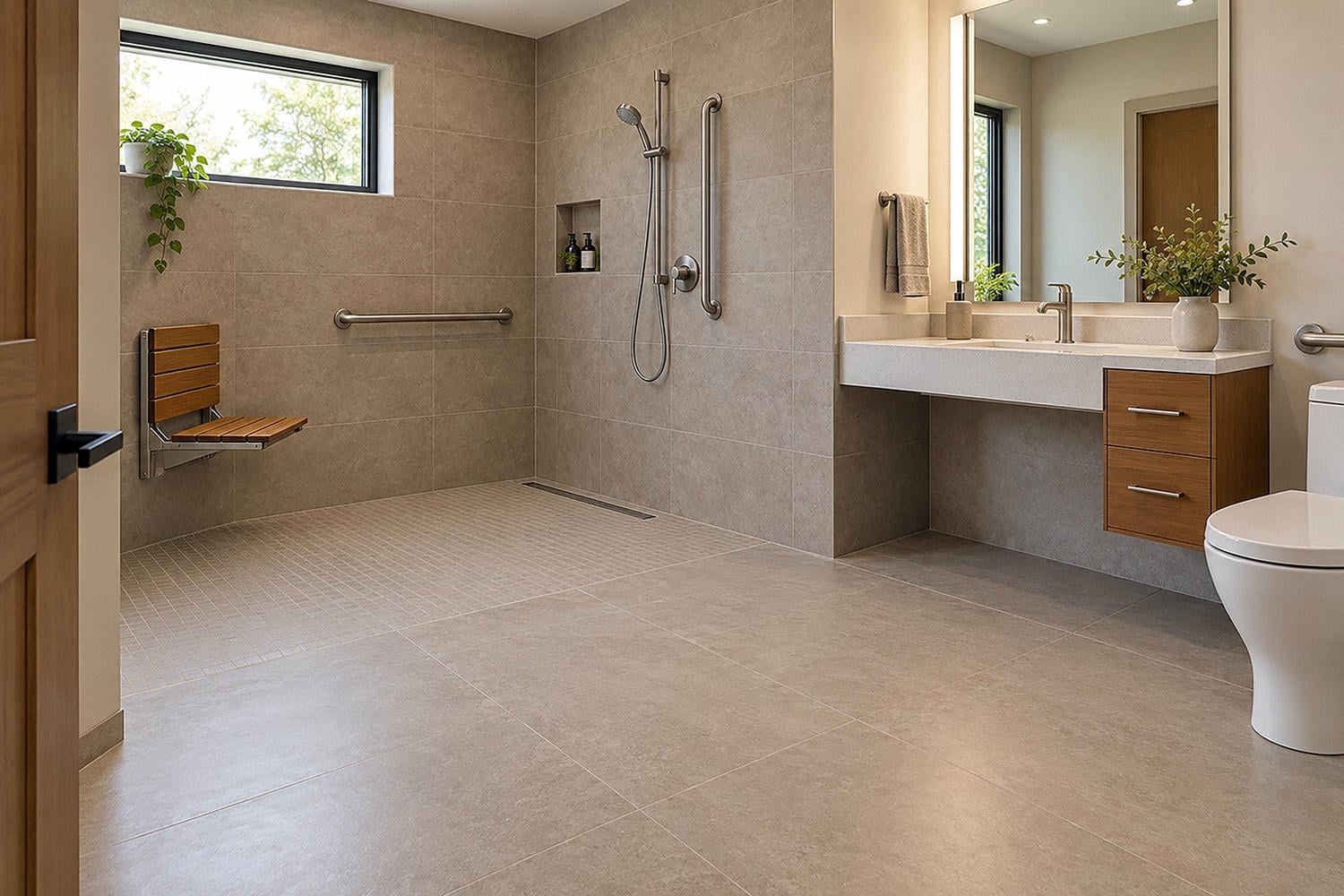
A single tile wet room can feel wonderfully calm because the shower is part of the room rather than a cubicle dropped inside it. Continue the wall tile across the shower, carry the floor tone through, and use a fixed clear glass panel only where splash control requires it.
The hidden work matters more than the visible simplicity. Tile and grout are not the waterproofing system. TCNA specifically notes that grout joints are not waterproof and that wet-area protection must come from the approved method and substrate. TCNA's ceramic tile FAQ makes that distinction clear.
Drainage, slope, waterproof transitions, movement joints, glass placement, and ventilation should be designed as a system by qualified professionals. A minimal room is not a minimal construction project.
Use Large Format Tile Throughout the Bathroom Carefully
Large format tile throughout a bathroom reduces grout lines and shows off a stone or concrete look. It can also reveal walls that are not flat. The bigger the tile, the less willing it is to disguise bumps, bows, and careless preparation.
Plan where full tiles land at the doorway and on the main vanity wall. Centering every wall independently can create misaligned joints at corners, while wrapping the layout around the room may require more cuts. There is no universal rule; there is only a plan that prioritizes the views you see most.
For the shower floor, the large format may need to give way to a matching mosaic unless the drain and slope system are designed for it. A linear drain can permit larger pieces in some layouts, but the installer must confirm the tile, substrate, slope, and drain details together.
Try a Seamless Concrete Look Tile Bathroom
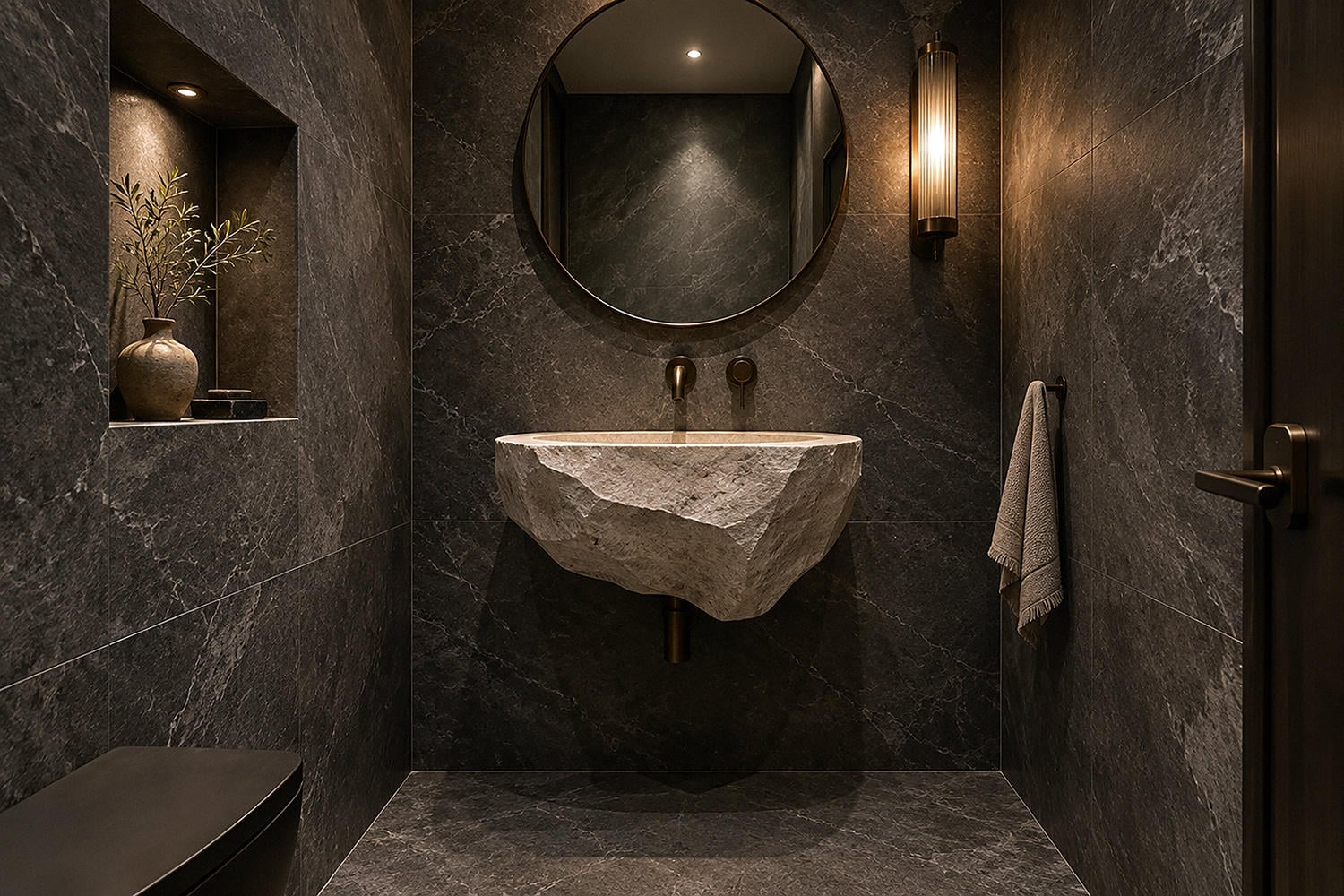
The phrase "seamless concrete look tile bathroom" describes an appearance, not a grout-free installation. Soft gray, sand, mushroom, or clay-toned porcelain can create a nearly continuous shell while retaining the performance and serviceability of tile.
Choose a tile with several printed faces so repeated patterns do not announce themselves. Review multiple pieces in person, rotate them during a dry layout, and avoid placing identical marks side by side. A warm gray often feels kinder in morning light than a blue industrial gray.
Add one tactile counterpoint: a white oak vanity, ribbed glass, a linen shade, or aged brass. The room can remain monochromatic without becoming cold.
Build Rhythm With a Vertical Stack Single Tile Shower
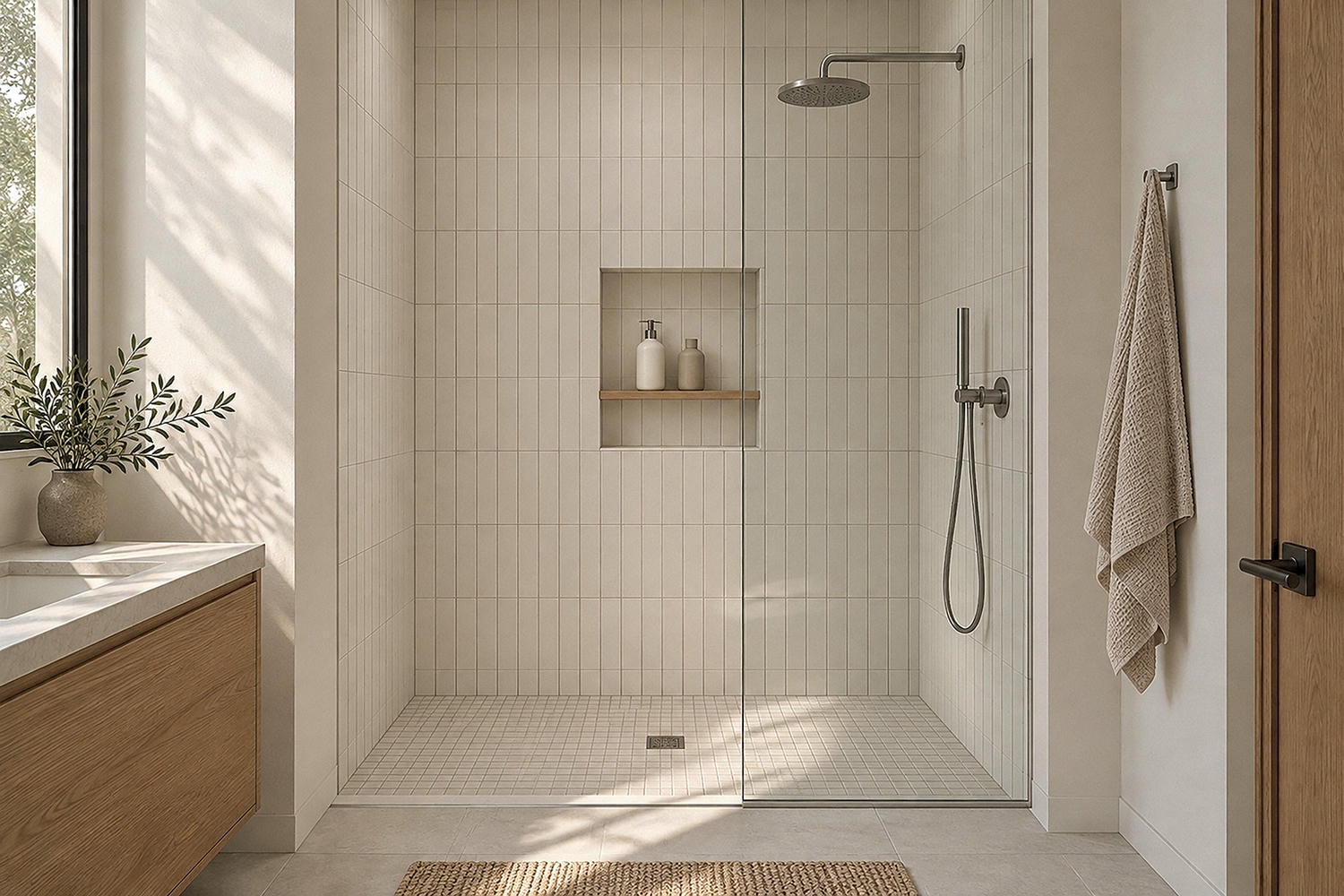
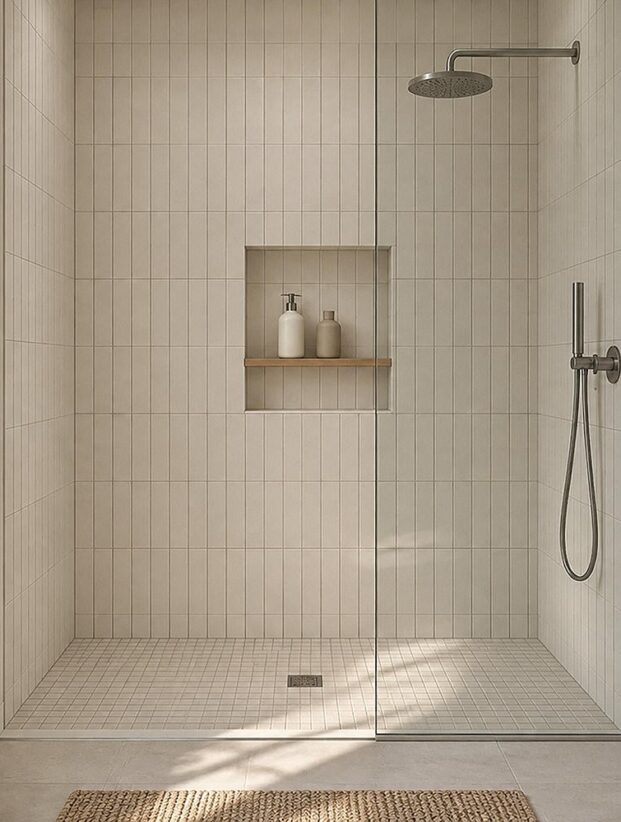
A vertical stack single tile shower gives a familiar rectangle a taller, cleaner rhythm. It works especially well with narrow tile in a low-ceiling room. Straight joints look crisp, so small size variations will be visible; handmade or irregular tile creates a looser line.
Use the same tile horizontally on the floor only if it is rated for that use. Otherwise, choose a matching mosaic or related floor format. The orientation can change while the material family remains consistent.
If every wall receives a vertical grid, align niches and valves with the pattern where practical. Tiny cuts around a niche can interrupt the calm more than a contrasting niche ever would.
Choose Grout as Part of the Surface
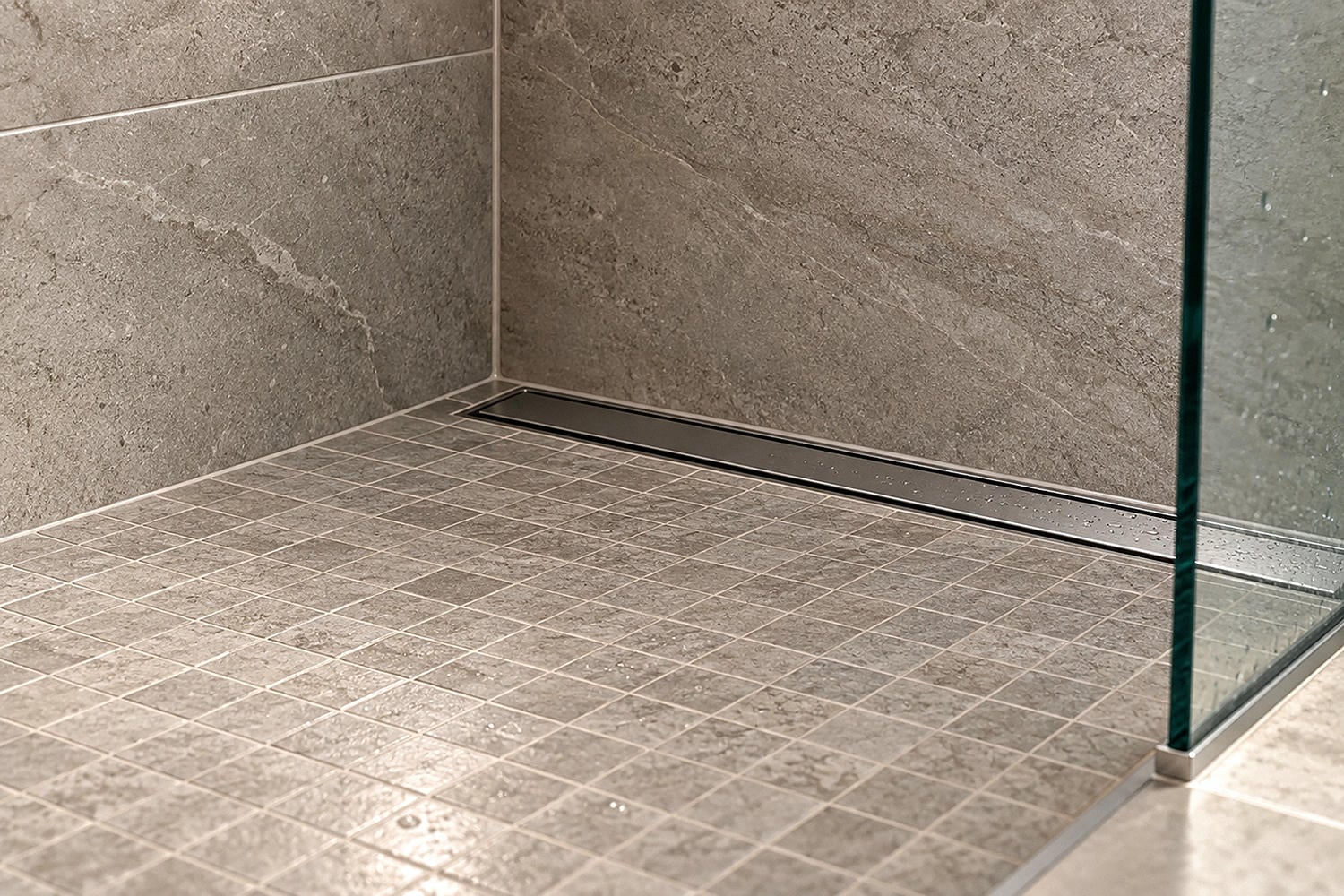
Grout variation in a one-tile bath can be subtle or strategic. A close match makes the tiled plane read as one field. A slightly darker grout defines the grid and can be more forgiving on floors. High contrast turns the layout into the main event.

How do you choose grout for a single tile bathroom? Test actual grout samples against several tiles, not one hero sample. Handmade and stone-look products may contain enough color variation that one grout looks perfect beside half the batch and wrong beside the rest.
You can also use different grout colors with the same tile: a pale match on walls and a deeper tone on the floor. Confirm product compatibility, joint width, sealing needs, and wet-area suitability with the tile and grout manufacturers.
Prevent a Monochromatic Bathroom From Feeling Flat
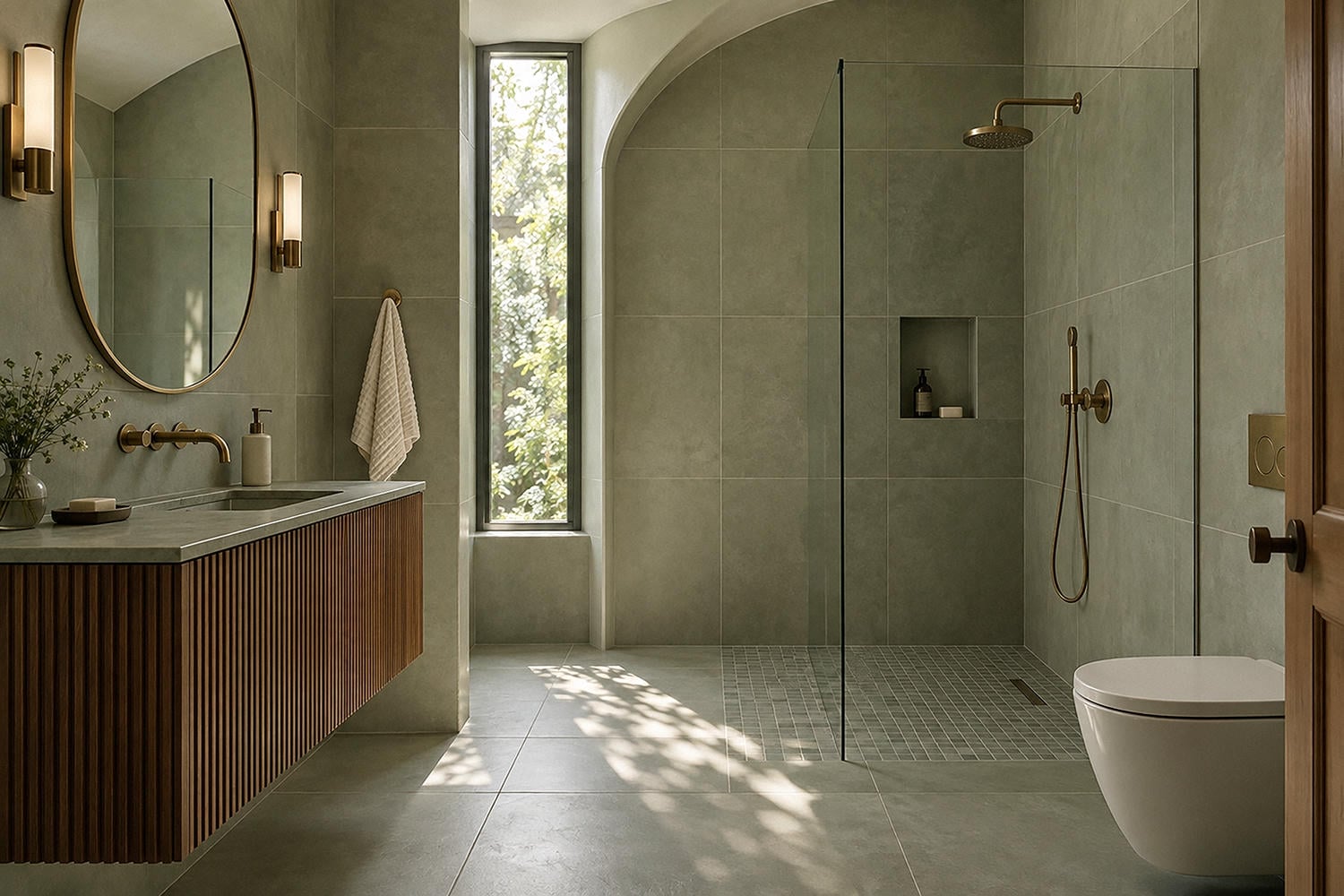
Does a one tile bathroom look boring? It can, if everything else is equally flat. The answer is not necessarily another tile. Use light, shadow, metal, wood, glass, and changing planes.
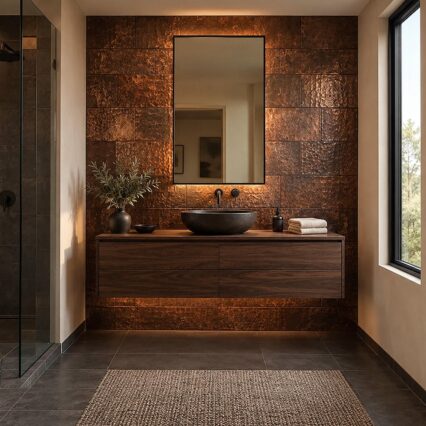
Wash a textured wall with a ceiling light. Float the vanity so the floor continues underneath. Recess a medicine cabinet. Choose a sculptural basin or a mirror with an assertive outline. Let towels introduce the softest color.
Even the same tile can look different when one wall catches daylight and another sits in shade. A honed-looking surface on the walls and a coordinating textured finish on the floor adds useful variation without breaking the palette.
Match Shower and Floor Tile Without Losing Safety
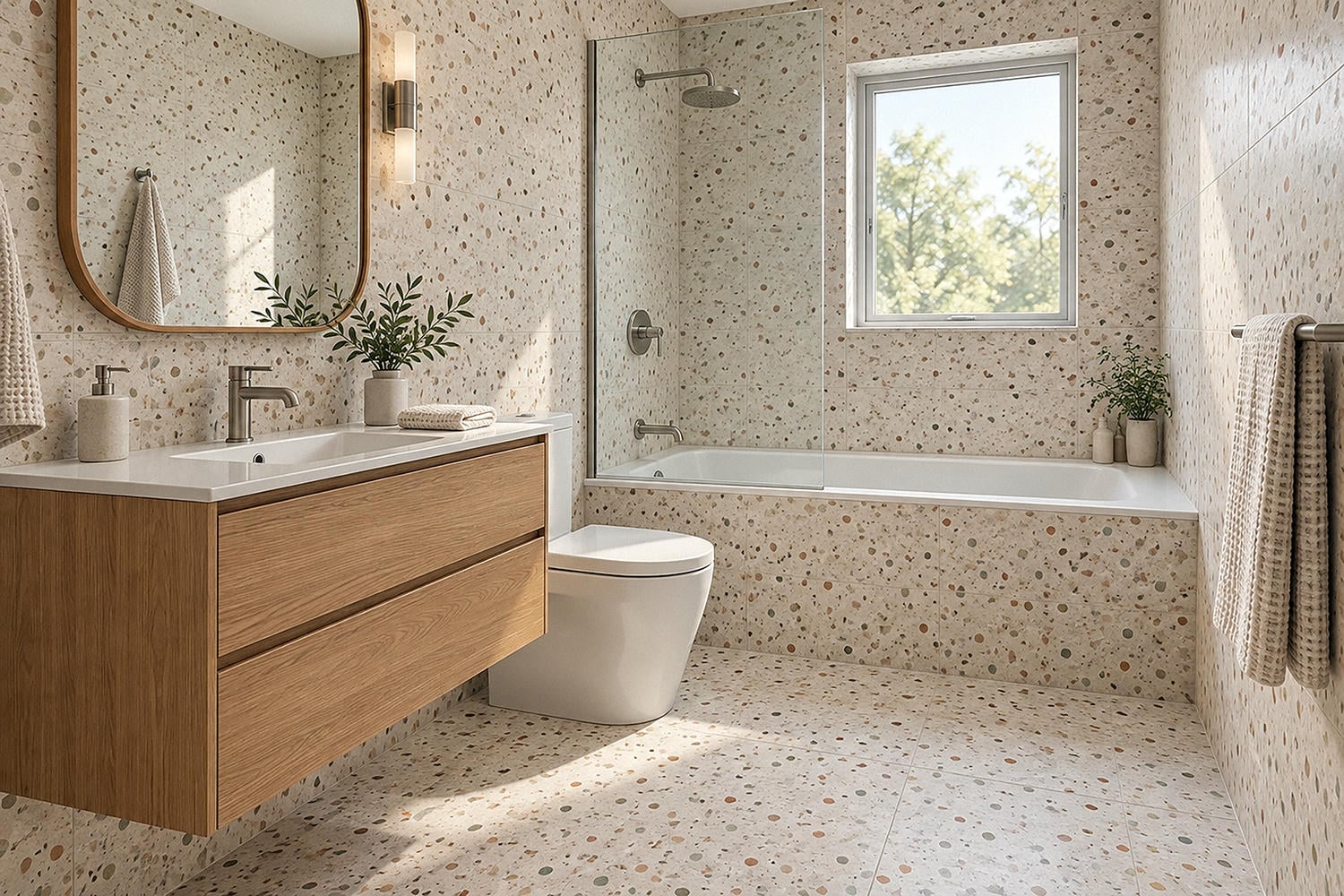
Matching shower and floor tile works best when "matching" means coordinated. Ask whether the range includes a mosaic, textured finish, or smaller format intended for shower floors. Check published application guidance and discuss traction in the actual conditions of use.
No tile is slip-proof, and a number cannot account for every factor. Soap, slope, drainage, cleaning residue, footwear, and user mobility all matter. If accessibility is a priority, involve the appropriate designer or occupational professional early and avoid treating a glossy photograph as safety evidence.
Is a One Tile Bathroom Cheaper to Install?
Not necessarily. One tile can simplify ordering and reduce transitions, but full-height coverage uses more material. Large tile may require flatter substrates, specialized handling, and more cutting. An intricate wet room or book-matched layout can cost more than a conventional bath with two straightforward tiles.
It may reduce waste if the same tile and offcuts can serve several areas. Ask for an itemized estimate that includes substrate preparation, waterproofing, edge profiles, drilling, layout labor, setting materials, grout, and overage. Tile price per square foot is only one line in the real budget.
Frequently Asked Questions
What is the best tile size for a one tile bathroom?
There is no single best size. Medium or large formats reduce visual interruption on walls, while smaller matching pieces often suit sloped shower floors. Base the choice on room dimensions, drain design, tile rating, and planned cuts.
Should bathroom wall and floor grout match?
They can, but they do not have to. A close wall match keeps the room quiet; a slightly darker floor grout can define joints and disguise everyday soil. Use compatible products intended for each location.
Can I use glossy tile everywhere?
Glossy tile may be appropriate on walls, but do not assume it belongs on wet floors. Check the manufacturer's use rating and traction data for the exact product and application.
Does one tile work in a traditional bathroom?
Yes. Try honed marble-look porcelain, a warm stone effect, or a small square in a restrained color. Traditional fixtures, wood cabinetry, and tailored lighting can provide the period character.
Where should a one-tile bathroom stop?
Use architectural boundaries: the ceiling, shower enclosure, window sill, full wall, or a precisely designed wainscot line. Avoid stopping because a box of tile happened to run out.
One material can make a bathroom look effortless, but the best versions are deeply considered. Keep the visual language simple and let the technical specification do its serious work out of sight.