Door Materials Guide: Choose the Whole Door, Not Just the Pretty Slab
Most door shopping begins with color and ends with a surprise. The handsome wood slab needs more shelter than the entry provides. The steel door dents. The fiberglass grain looks convincing from the sidewalk and slightly theatrical from six inches away.
Material matters, but it isn't the whole decision. The frame, core, glass, seals, finish, threshold, hardware, exposure, and quality of installation can matter just as much as the skin you touch. This door materials guide starts with the life the door will have, then works backward to the label.
Quick honest note: I'm not a door installer, contractor, or security professional, and this isn't installation advice. Exterior doors affect weather resistance, energy performance, egress, security, and sometimes code compliance, so have a qualified local professional verify the complete unit and installation.
Start With Exposure and Climate
A deeply covered north-facing entry asks less of a door than an uncovered west-facing doorway taking hard sun and driving rain. Coastal salt air, freeze-thaw cycles, humidity, intense heat, and wide seasonal swings all change the maintenance conversation.
Don't choose the best door material for climate by material name alone. Look at the complete door's tested performance and whether it is certified for your climate zone. ENERGY STAR recommends using its climate-zone information and the product's performance label when comparing exterior doors, windows, and skylights.
Also look upward. A generous overhang can protect paint, stain, seals, and glass details from direct weather. If the entry has no cover, ask specifically how the finish warranty treats sun and rain exposure.
Fiberglass Is the Flexible All-Rounder
Fiberglass exterior doors usually place a molded skin over an insulated core. They can be smooth and painted or formed with a wood-like grain. Their appeal is easy to understand: modest upkeep, many styles, and less sensitivity to moisture than a solid wood slab.
In a fiberglass vs. wood front door decision, fiberglass often suits the homeowner who wants a wood-adjacent look without adopting wood's finishing schedule. It can work particularly well at an exposed entry where humidity or rain makes a natural timber door more demanding.
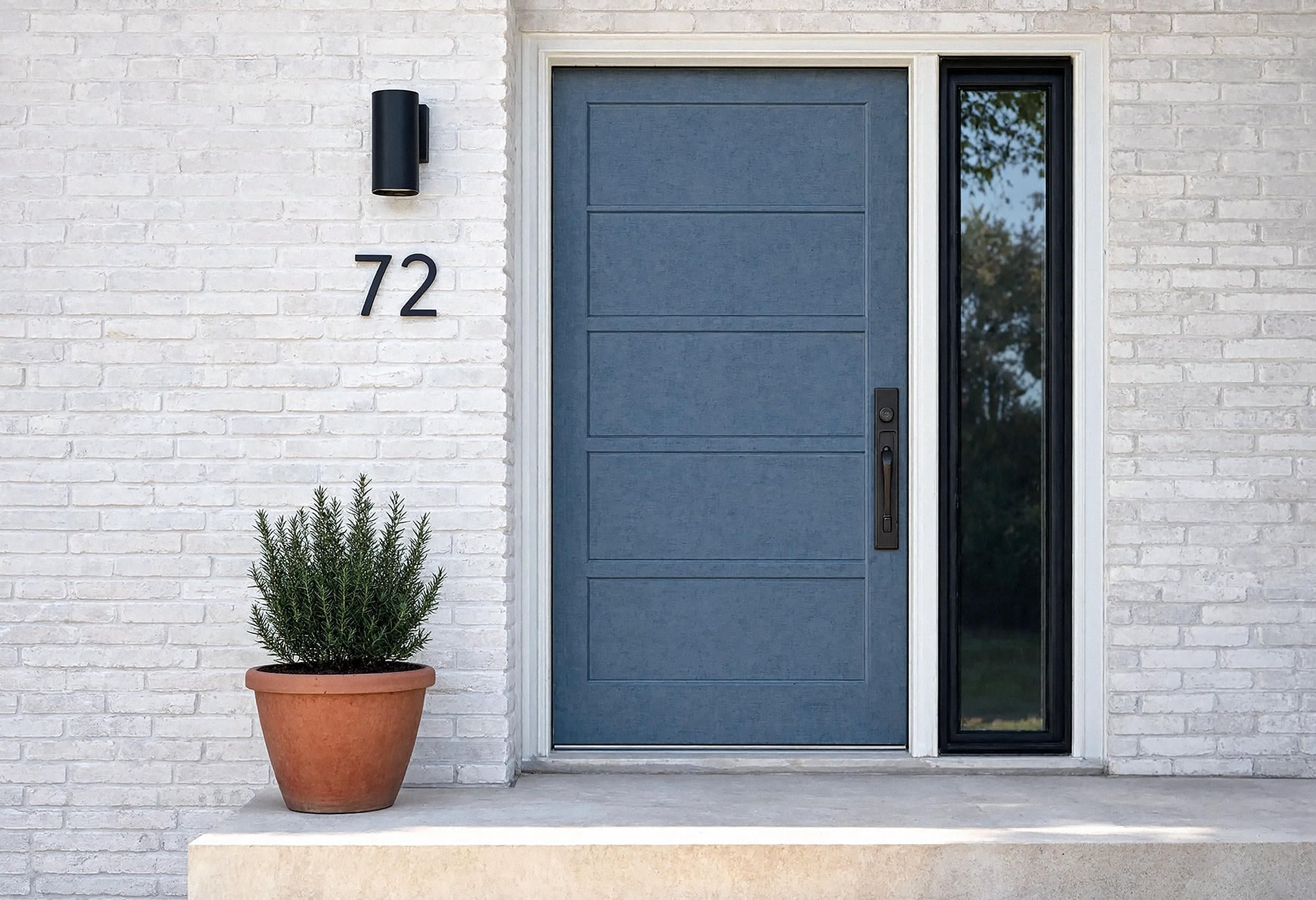
The drawback is feel. Some molded grains look excellent; others repeat too evenly or feel shallow up close. Inspect a full-size sample in daylight and touch the surface. A front door is one of the few design objects you shake hands with every day.
Fiberglass can crack or be damaged by a hard impact, and repair quality depends on the surface and severity. I'd compare the actual unit, warranty, frame, and finish rather than assuming every fiberglass door performs alike.
Steel Makes Sense When You Want a Crisp Painted Surface
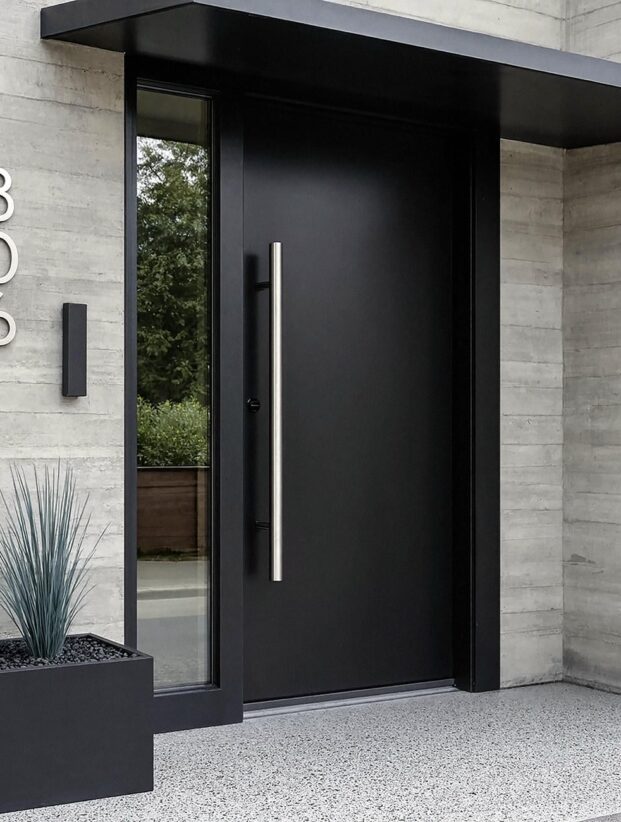
Steel entry doors generally use a metal skin over a core rather than a solid chunk of steel. The good ones can look clean, slim, and satisfyingly plain, especially on a modern or utility-focused exterior.
The steel front door pros and cons are straightforward. Steel accepts paint well and can offer a firm feel at a reasonable price tier. On the other side, it can dent, scratches can expose metal, and neglected damage may invite corrosion depending on the environment.
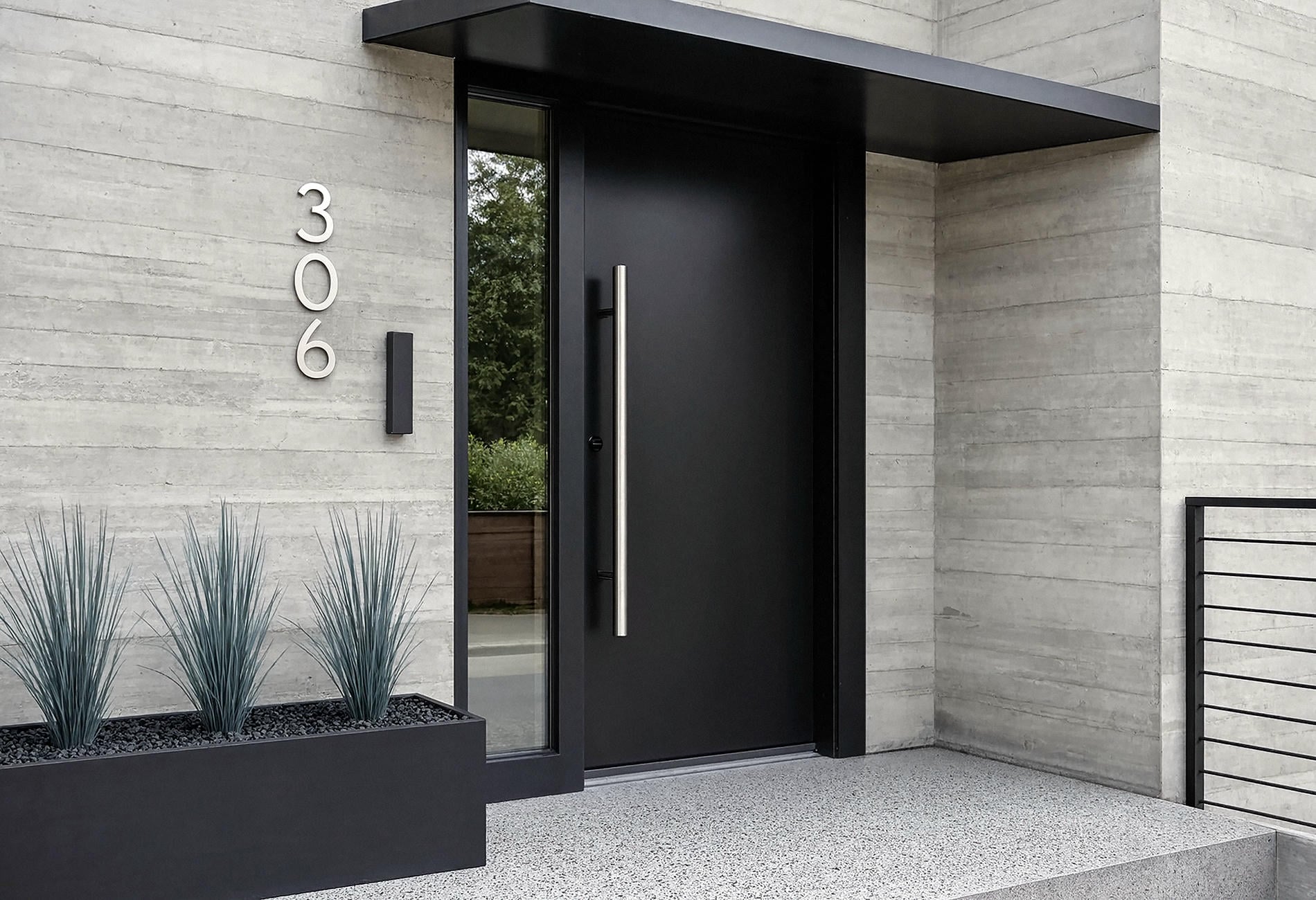
Near salt air or persistent moisture, ask how the complete door and finish are protected. Under strong sun, darker paint can become visually and physically intense. Follow the door maker's finish and exposure requirements rather than treating any dark exterior paint as universal.
Which is better, fiberglass or steel? Fiberglass may be easier to live with when moisture resistance and a wood look lead the brief. Steel may suit a crisp painted appearance and a firm, straightforward slab. The better unit is the one whose construction, certification, exposure rating, and upkeep match the doorway.
Real Wood Has Character and a Maintenance Contract
Wood doors bring grain depth, edge detail, repairability, and the subtle variation manufactured skins try to copy. They also move with moisture and temperature, and the finish is doing real protective work.
Common wood door types include oak, fir, pine, cedar, walnut, and tropical hardwoods. Species is only part of the story; engineered construction, veneer thickness, joinery, finish, and exposure affect how the door behaves.
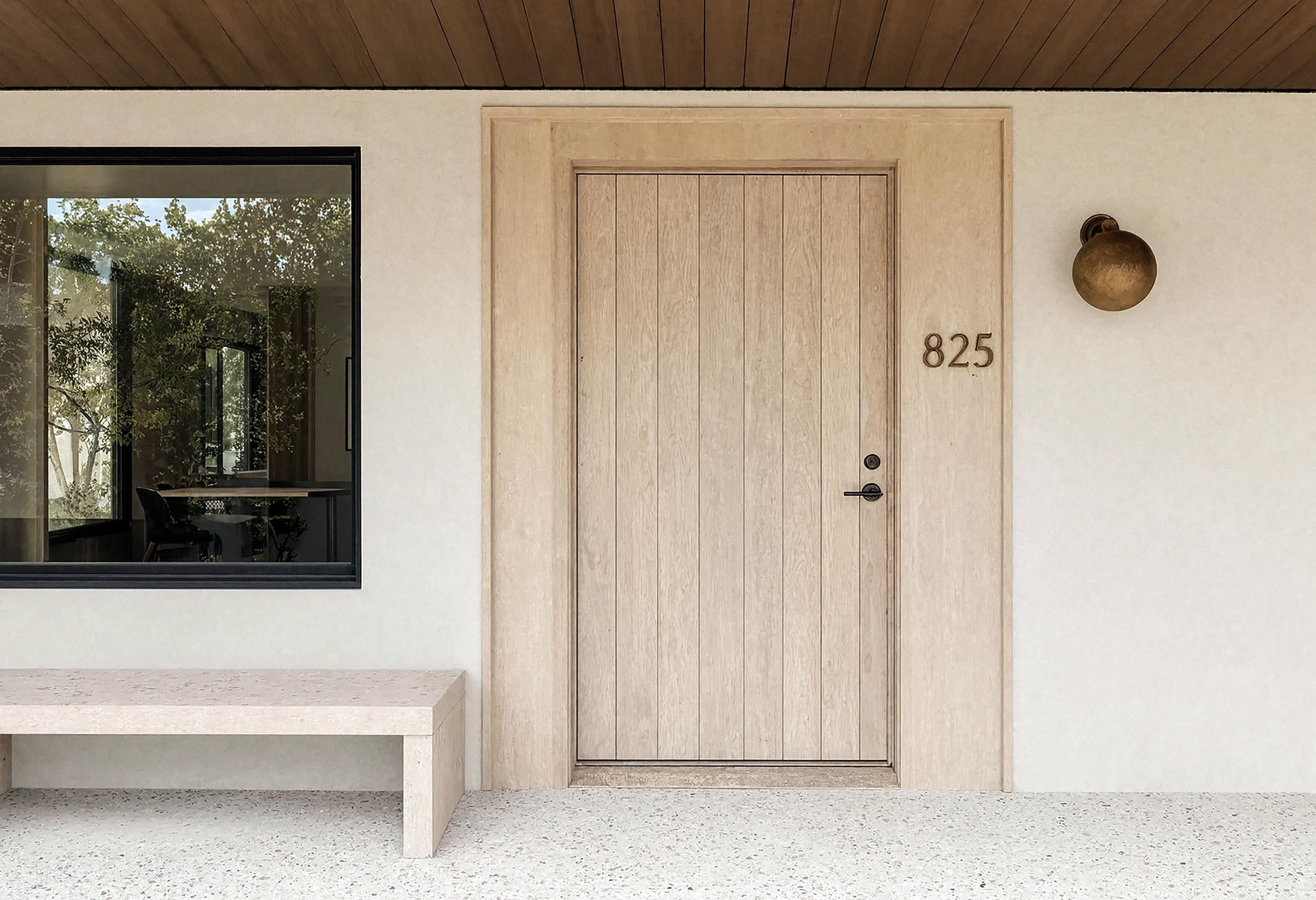
Mahogany wood door pros and cons deserve special attention because the name covers more than one source and quality level. The material can offer rich color, stable-looking grain, and a substantial presence. It may also carry a higher price, require ongoing finish care, and raise sourcing questions, so ask for the exact species and responsible sourcing documentation.
I would choose real wood where its tactile beauty is central to the architecture and the entry provides reasonable protection. On an unsheltered facade that gets punished by afternoon sun, I'd think very carefully before signing myself up for romance with a maintenance calendar.
Composite Doors Combine Materials for a Specific Job
Composite door ideas range from engineered wood products to multi-material exterior units with reinforced skins, insulated cores, and weather-resistant frames. The word "composite" is a category, not a performance guarantee.
Ask what each layer is, how the edges are sealed, whether the frame is included, and what repair looks like. One composite may prioritize moisture resistance; another may chase the weight and surface character of wood.
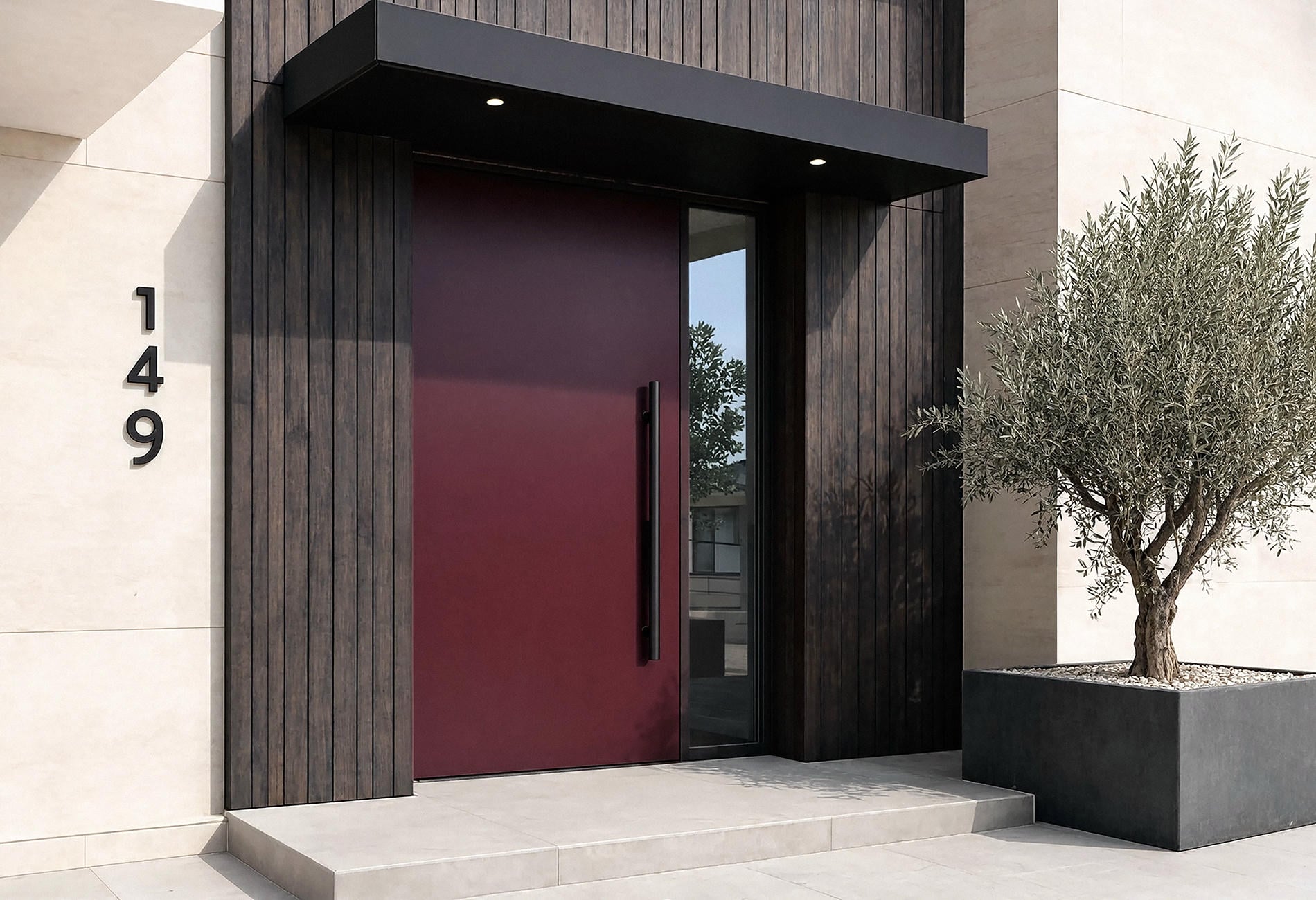
Design-wise, composite construction can support broad flush panels, deep paint colors, and convincing grain finishes. It can be a useful middle route when you want a particular appearance without choosing a single traditional material throughout.
Aluminum Exterior Doors Belong to Modern Glass-Heavy Openings
Aluminum exterior doors often appear as slim-framed glazed entries, sliding systems, or broad pivot doors. The metal can carry clean lines and large glass areas without looking bulky.
Metal conducts heat readily, so the frame design and thermal break matter more than the word aluminum. ENERGY STAR notes that aluminum window frames typically use thermal breaks to reduce conductive heat loss; the same principle is worth asking about in glazed door systems.
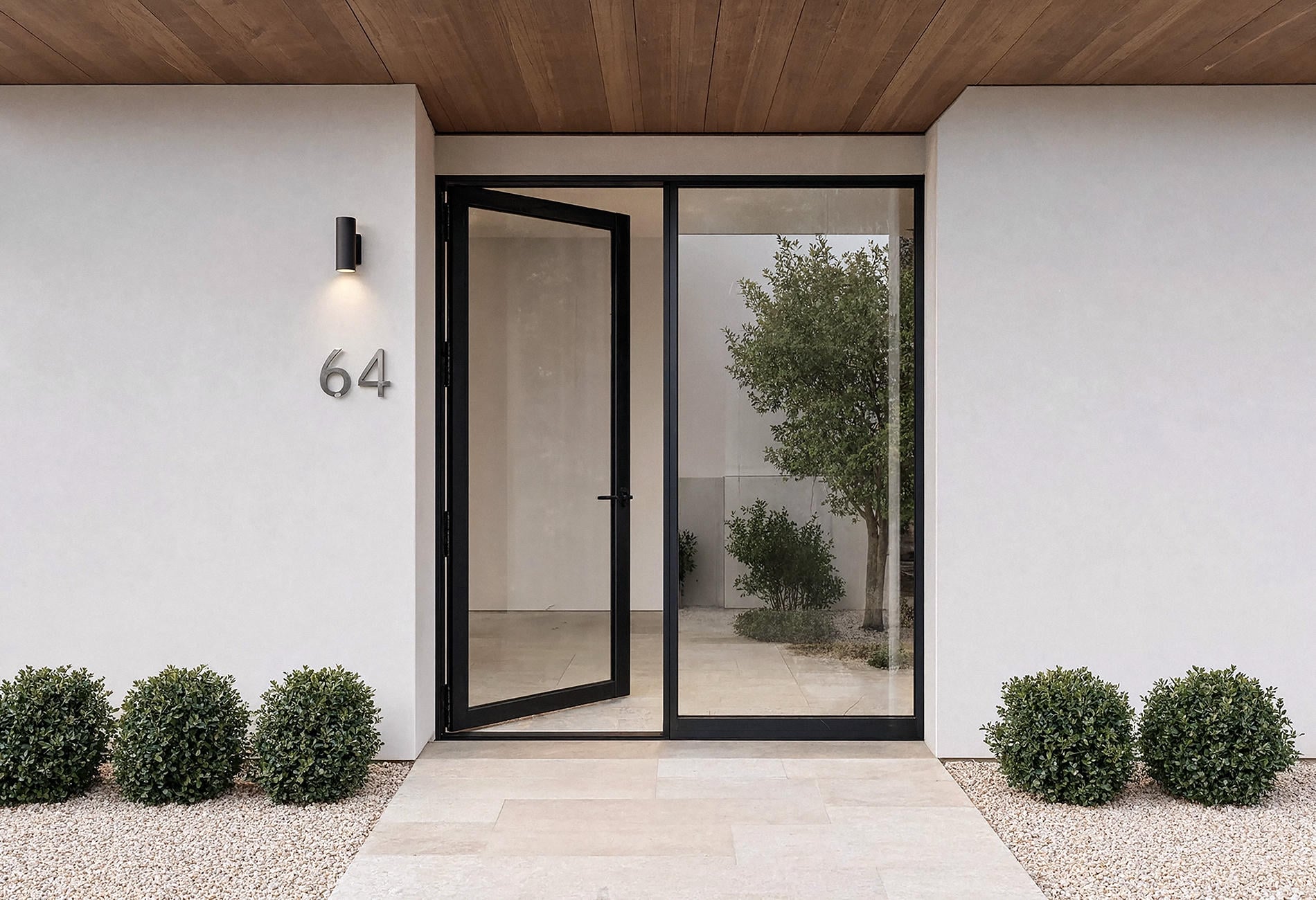
Glass selection, frame finish, drainage, seals, and climate certification should be evaluated as one system. A gorgeous black frame with the wrong glass or weak weather detailing is still the wrong door.
Vinyl Patio Doors Are Practical, but Scale Matters
Vinyl patio door materials are common because the frames require little surface maintenance and can offer good insulation. Quality, reinforcement, color stability, and frame bulk vary.
On a large opening, inspect the meeting rails and sightlines from inside. A thicker frame may be perfectly acceptable when efficiency and budget lead; it may feel visually heavy in a room designed around a barely-there garden view.
White and light neutral vinyl are familiar choices. Darker finishes can look sharper, but ask how the color is produced and warranted for your exposure before choosing it solely from a rendering.
Solid Core and Hollow Core Describe Interior Construction
The solid core vs. hollow core door comparison usually applies to interior doors. A hollow-core door uses a lightweight internal structure beneath thin faces. It is easy to operate and generally budget-friendly, but it feels light and usually provides less sound reduction than a heavier solid-core unit.
A solid-core interior door has a dense engineered or mineral core. The added mass can provide a more substantial swing and may reduce sound transfer, depending on the entire opening, gaps, frame, and seals. It also weighs more, so hinges, frame, and installation need to suit it.
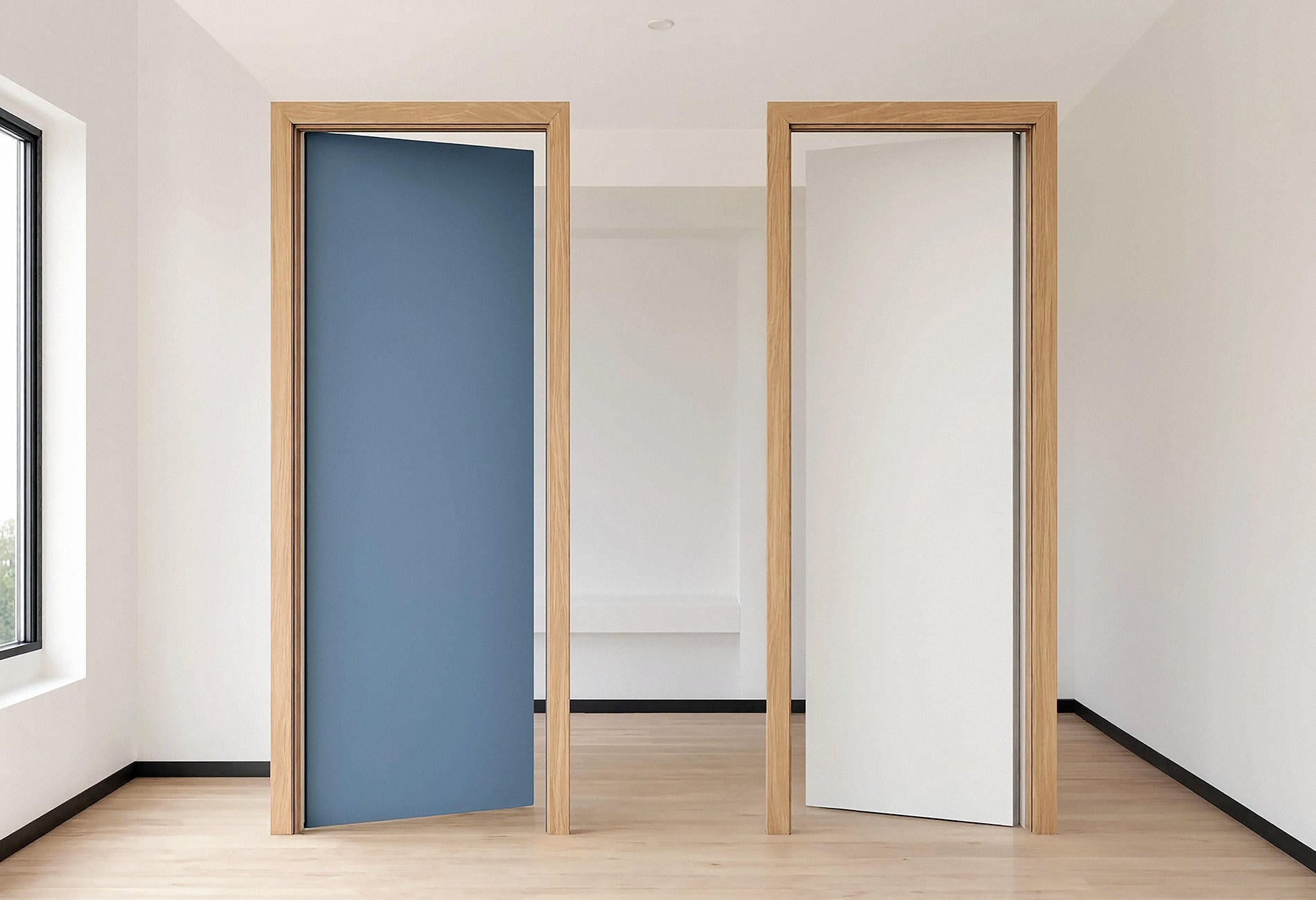
How can you tell if a door is solid core? Start by checking the specification or label. Without paperwork, weight and the sound from a gentle knock may offer clues, though neither is definitive because construction varies. A professional can identify the unit if the decision affects hardware or replacement planning.
What Is the Most Durable Front Door Material?
There is no universal winner. Fiberglass can be an excellent low-upkeep choice in varied weather. Steel can be durable when its coating remains intact and the environment suits it. Protected, well-finished wood can last beautifully with care. Quality composite and aluminum systems can perform well when their construction matches the climate.
Durability belongs to the complete assembly: slab, frame, threshold, finish, glass, seals, hardware, exposure, and installation. Buy the system, not the adjective.
Door Material Questions
Which is better, fiberglass or steel for a front door?
Fiberglass may suit moisture exposure, lower upkeep, and wood-like finishes, while steel may suit a crisp painted look and firm feel. Compare the actual door systems, warranties, climate certification, and exposure requirements rather than the skin alone.
What is the most durable front door material?
No material wins in every climate and doorway. A well-made fiberglass, protected steel, properly maintained wood, or tested composite unit can all be durable when the frame, finish, seals, and installation are appropriate.
Is mahogany a good material for a front door?
It can offer rich grain and a substantial appearance, especially at a sheltered entry. Confirm the exact species, sourcing, finish requirements, and exposure warranty before buying.
How do you tell if an interior door is solid core?
The specification, label, or product paperwork is the most reliable source. Heavier weight and a denser knock can suggest a solid core, but construction varies and those clues aren't definitive.
What door material is best for a harsh climate?
Choose a complete unit tested and certified for the local climate zone, then match the surface and finish to sun, moisture, salt, wind, and shelter. Climate-specific performance documentation matters more than a generic material ranking.