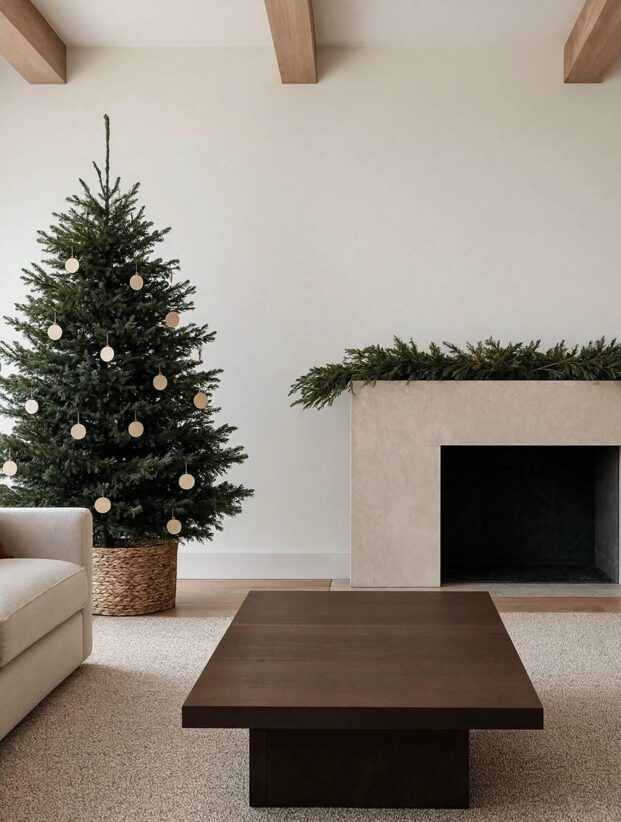
I keep noticing the holiday rooms I want to linger in have one thing in common: you can still see the room. The mantel has a single cedar branch, the tree carries a few wooden ornaments, and the table has enough bare surface left for an actual dinner.
A pared-back Christmas isn't a vow of seasonal seriousness. It is editing with a little pine scent attached. You choose the parts that create the feeling -- greenery, candlelight, ribbon, wood, perhaps one ridiculous red bow -- and let the rest stay in the box.
Pick One Holiday Gesture Per Surface
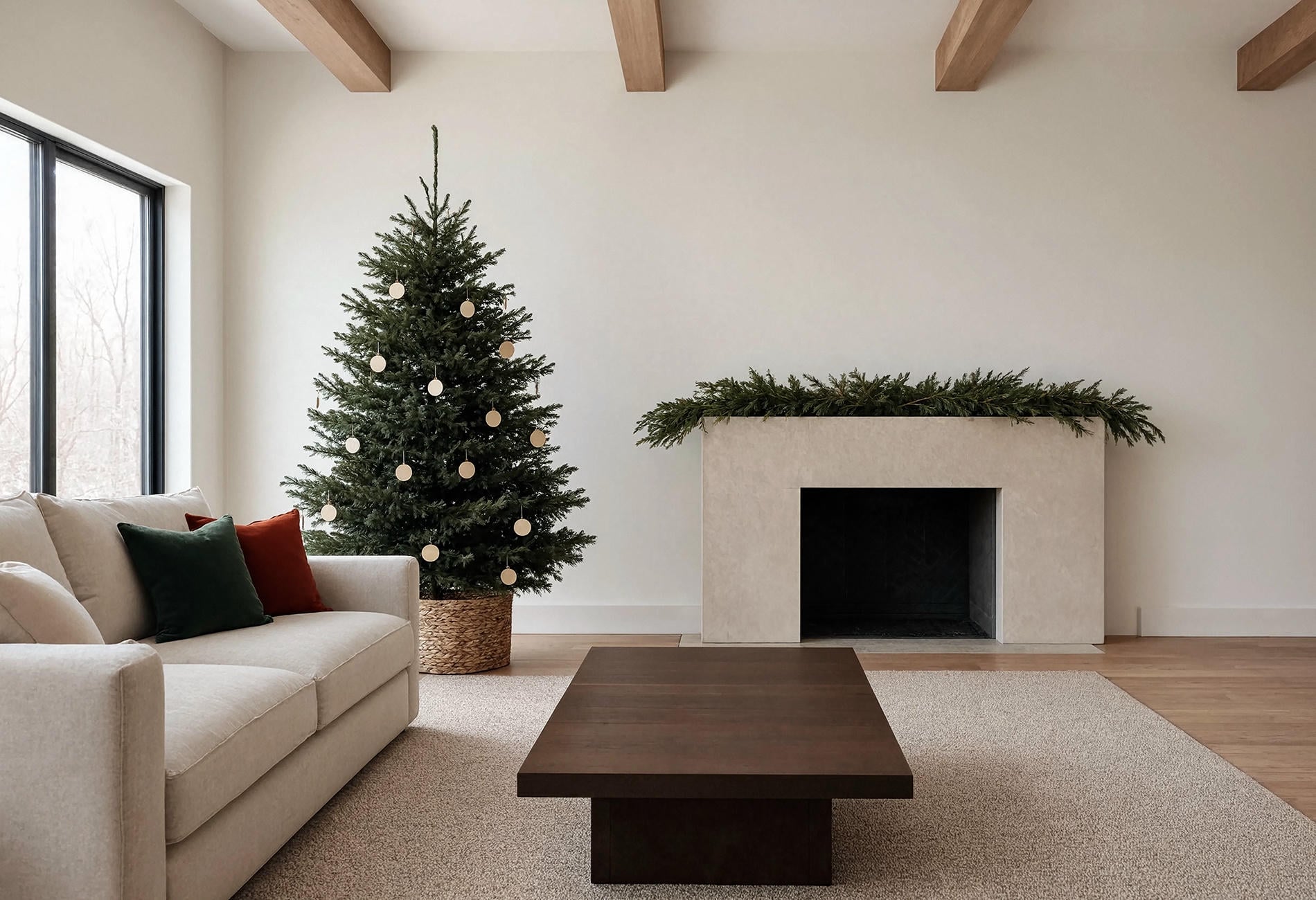
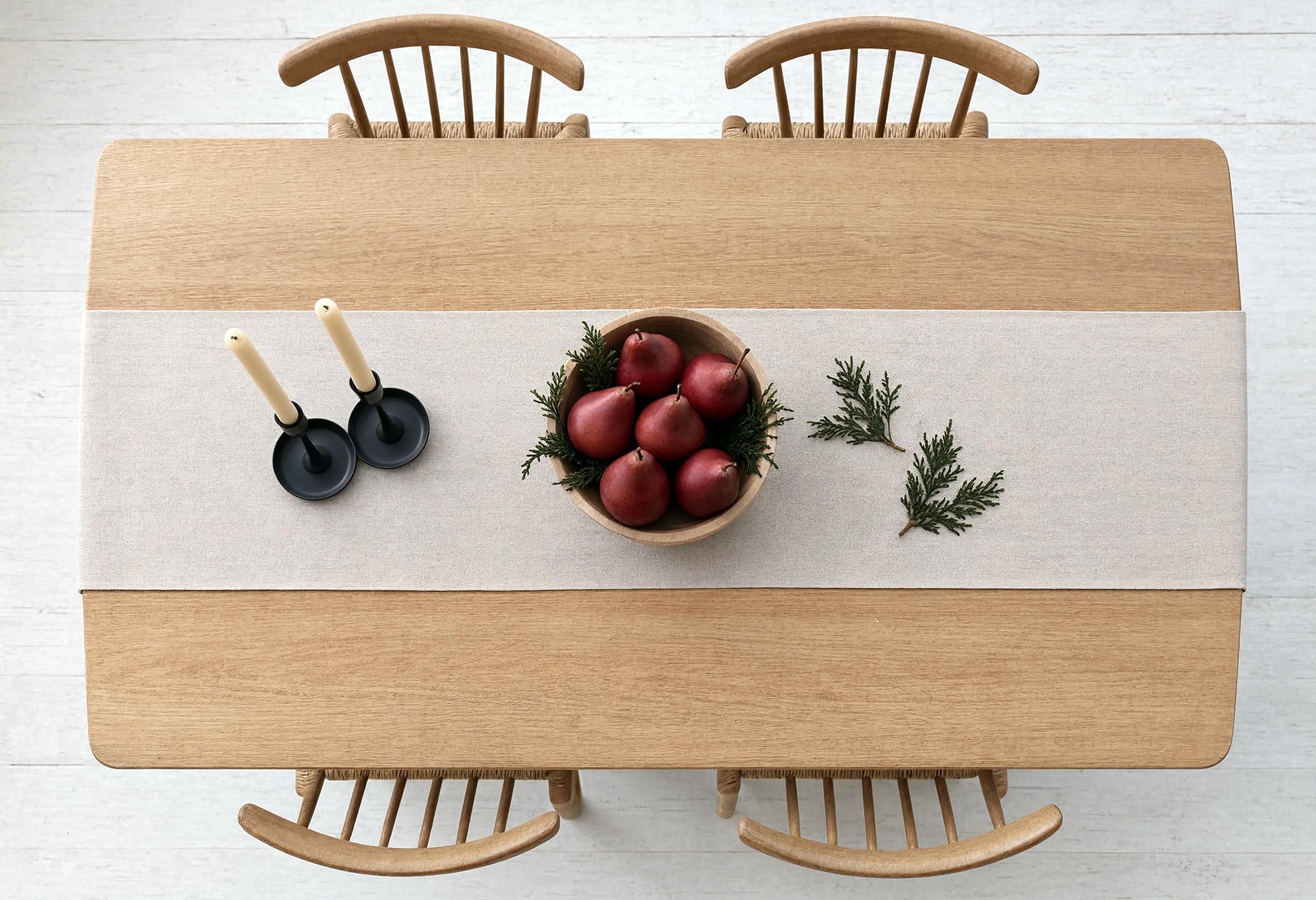
Give each visible surface one clear job. The mantel gets a long branch. The console gets a low wooden nativity. The dining table gets a shallow bowl of pears with cedar tucked beneath it.
Then stop. A surface doesn't need a garland, village, candle row, figurines, framed sign, and three trees to prove December has arrived. It has a calendar for that.
This simple rule makes Christmas decor without clutter much easier: one substantial gesture reads more clearly than many small objects. It also leaves room for keys, serving dishes, and the mug that follows you around the house.
Let the Tree Show Its Shape
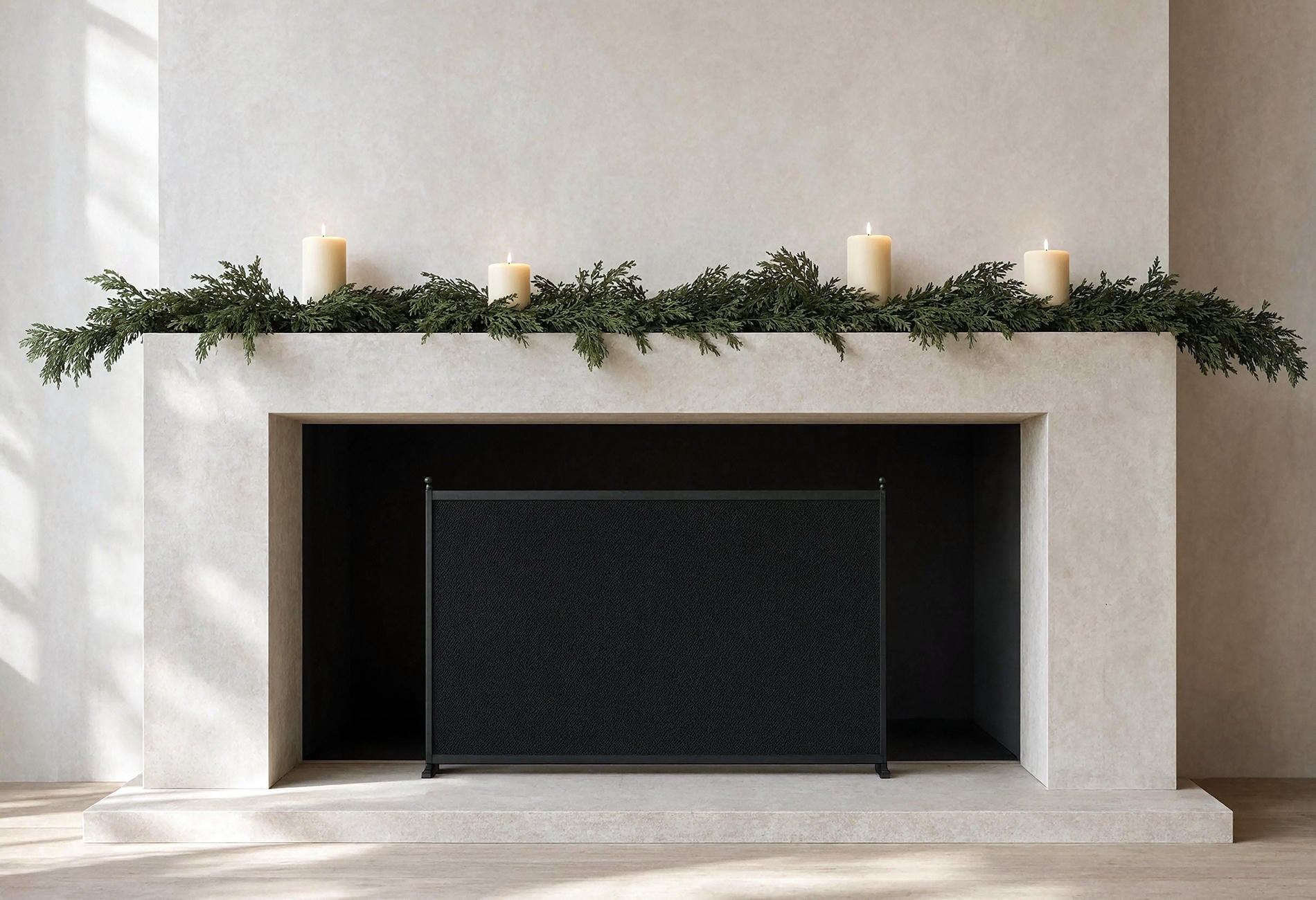
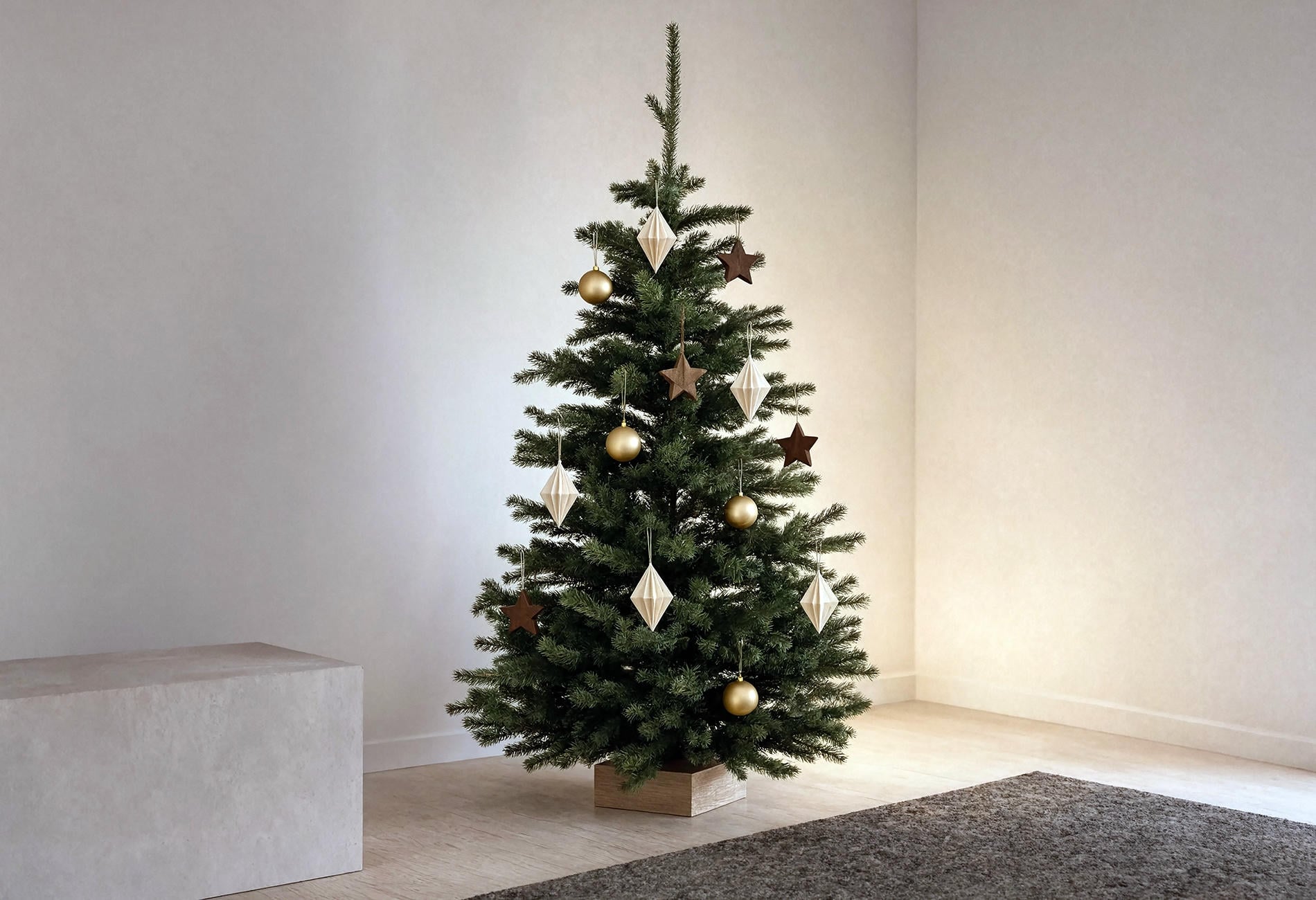
On a restrained tree, the branches, spacing, and silhouette remain visible after the ornaments go on. The tree can be full or sparse, green or bare, lit or unlit.
Use fewer ornaments at larger scale. Wooden discs, folded paper diamonds, matte metal stars, or simple glass spheres create rhythm without visual static. Leave real gaps between them.
For my money, an unlit sparse fir tree can feel more magical in daylight than one blinking hard enough to communicate with passing aircraft. Add a broad linen ribbon or a few warm-white lights if evening glow matters to you.
Bare Branches Can Carry the Whole Room
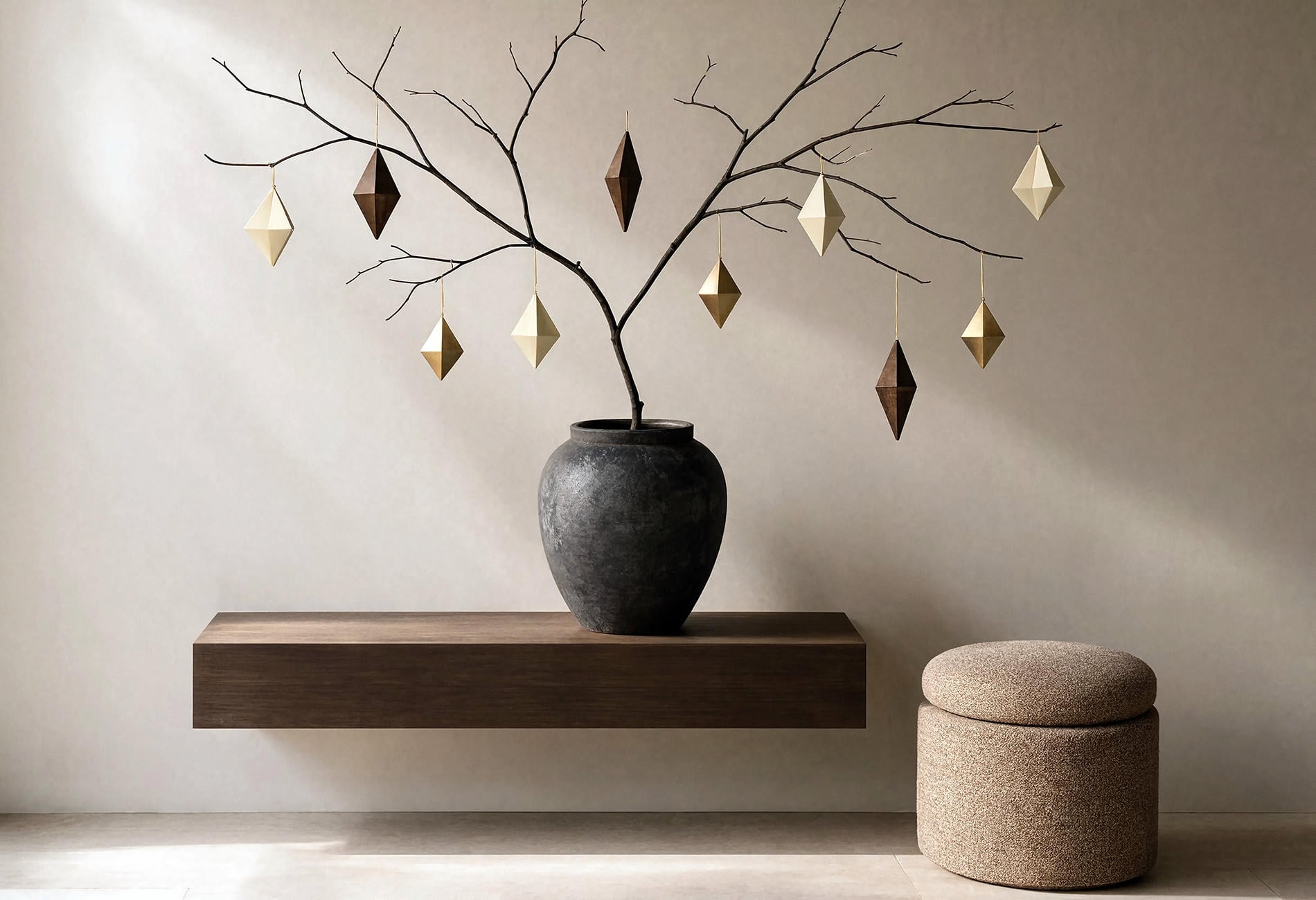
A bare branch arrangement works beautifully in a small apartment, dining room, or entry. Place one sculptural branch in a heavy stone crock, then hang a restrained set of ornaments where the branching pattern is strongest.
The container needs enough visual weight to balance the height. Dark stone, matte ceramic, or a broad wood base keeps the arrangement grounded.
Use the branch exactly as it is rather than forcing it into a perfect triangle. The crooked side is usually the interesting part. Nature has never once asked to be centered over the sideboard.
Scandinavian Christmas Color Is Warmer Than Plain White
A Scandinavian holiday palette often begins with warm white, pale wood, flax, muted red, forest green, and charcoal. Texture carries much of the mood: wool, felt, paper, linen, and rough evergreen needles.
White Christmas decor can still have contrast. Pair chalky ornaments with dark branches, cream candles with a black metal holder, or pale wood against deep green fir. Without value changes, all-white pieces can disappear into the wall like holiday camouflage.
I like one traditional red note in an otherwise neutral room. A rust-red wool ribbon or single painted stool gives the eye somewhere cheerful to land.
Geometric Ornaments Need Breathing Room
Simple geometric ornaments look clean because their shapes are easy to read. Folded paper diamonds, brushed-brass circles, wood stars, and matte ceramic bells work especially well on sparse trees.
Choose one or two shape families. A tree covered with every geometry lesson from primary school starts to feel less minimal and more like a very festive exam.
Repeat material rather than exact color if you want variety. Pale wood stars and dark wood circles can belong together while keeping the palette quiet.
A Modern Wooden Nativity Can Stand Alone
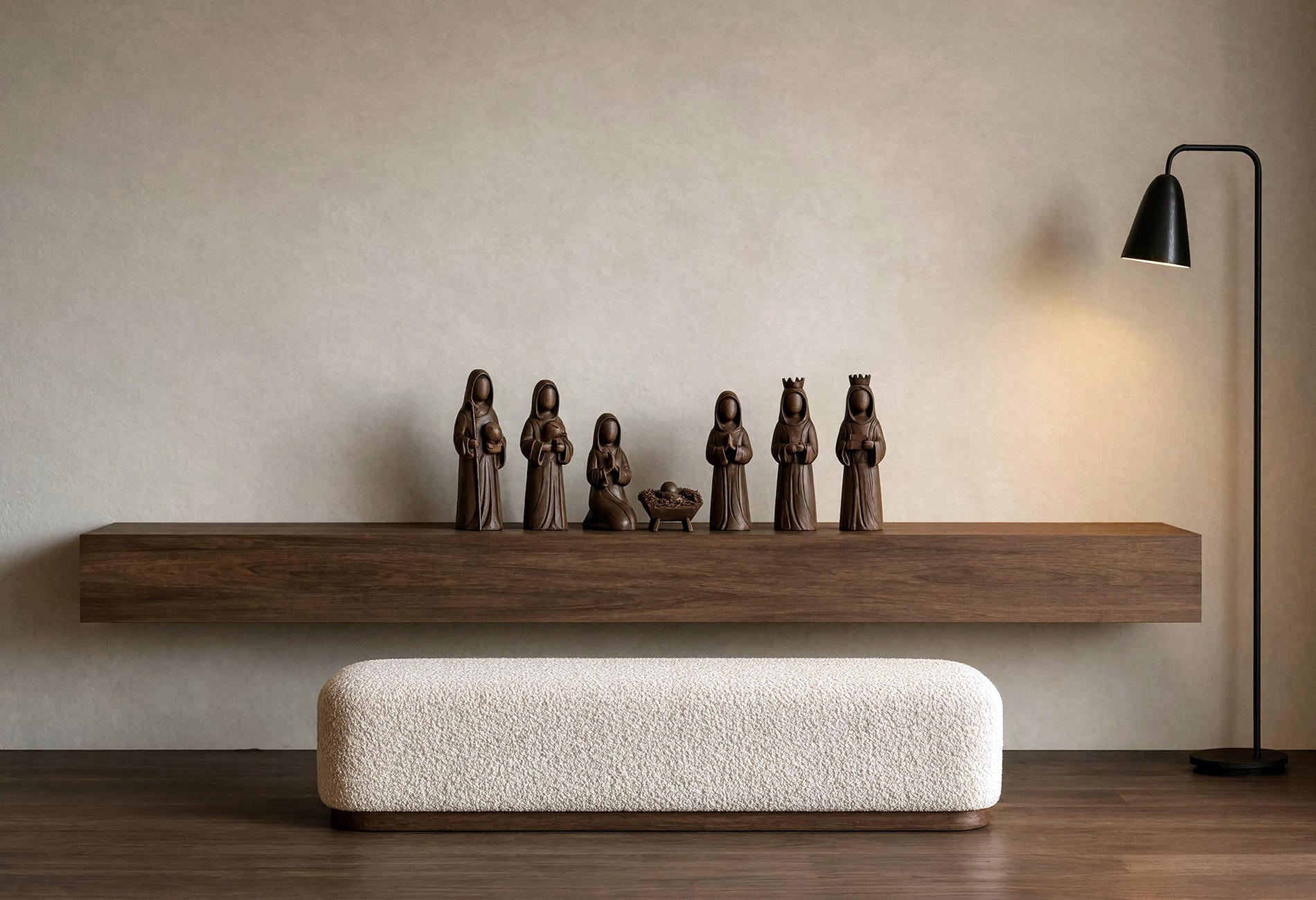
A modern wooden nativity needs clear surface around its simplified figures. Place the group on a low console or wide window ledge, and leave the rest of the top bare.
The wood itself supplies color. Pale maple feels soft and Scandi; walnut gives the figures more shadow; painted black wood becomes graphic against cream plaster.
Keep the grouping intact rather than scattering figures across several shelves. The scene reads at a glance, and nobody has to wonder why one camel has wandered onto the kitchen counter.
Choose a Palette Before You Open the Boxes
Pick one pale base, one dark grounding color, and one holiday accent. Warm white, charcoal, and forest green make a crisp natural set. Cream, walnut, and rust red feel softer. Pale wood, indigo, and parchment move in a cooler direction.
The palette is a filter rather than a shopping list. When you open a box, ask whether each piece belongs to one of those colors or carries enough personal meaning to ignore the rule. Sentimental objects get diplomatic immunity; the glittered foam reindeer with one remaining antler can make its own case.
Keep shiny finishes to one material family. Brass circles may sparkle against matte paper and wood, while too many glossy colors can make the room busier than the object count suggests.
Use Light as One of the Decorations
Warm light can provide the holiday feeling that objects usually carry. A small tree with a simple strand, one plug-in window candle, or a table lamp beside cedar may be enough after dark.

Keep cords gathered along furniture edges and follow the product's safety directions. Don't overload outlets, place hot bulbs against dry greenery, or leave burning candles unattended. Battery candles are useful where a real flame would sit too close to branches, fabric, children, or pets.
I prefer fewer light sources with a steady glow over a room full of competing blink patterns. Your Christmas tree doesn't need to look as if it has received breaking news.
Give the Entry One Clear Welcome
A single wreath, one evergreen branch on a bench, or a dark pot with a small fir can establish the mood before anyone reaches the living room. Keep the walking area clear and choose a piece that fits the door or wall rather than swallowing it.
For a neutral entry, deep green against warm white may be enough. Add a rust ribbon if the room needs warmth, or leave the wreath bare when the branch structure is doing the work.
That first restrained gesture also makes the rest of the house easier to edit. Once the entry has whispered Christmas, every nearby surface doesn't need to repeat the announcement.
Make a Small Apartment Feel Festive at the Edges
In a small apartment, use vertical and perimeter areas without crowding the walking path. A branch tree on a console, one wreath on a door, a folded holiday textile on the sofa, and a narrow windowsill arrangement can be enough.
Use the same two materials in several places. Pale wood and deep green might repeat in the tree, table, and entry; rust wool and cream paper could carry a warmer version.
Storage matters after the season. Flat paper ornaments, one ribbon spool, nesting candleholders, and a small set of wooden pieces are kinder to a compact closet than a village with its own municipal zoning problem.
Questions People Ask About Minimal Christmas Decorating
How do you decorate for Christmas minimally?
Choose a limited palette and one substantial holiday gesture per surface. Use greenery, simple ornaments, natural materials, and warm light while leaving visible bare areas around each arrangement.
What is a minimalist Christmas tree?
It is a tree with a visible silhouette and enough open branch area for each ornament to read clearly. Sparse firs, bare branches, and fuller trees can all work when the ornament count stays restrained.
How do you create a Scandinavian Christmas theme?
Combine warm white, pale wood, deep green, charcoal, and a small muted-red accent. Use linen, wool, paper, felt, and simple candlelight rather than many small themed objects.
Can minimalist Christmas decor still use color?
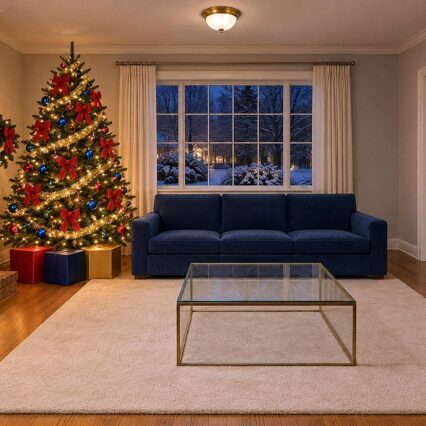
Absolutely. Choose one leading color such as forest green, rust red, or indigo and keep the supporting palette quiet. At night, a little color beside the dark window and one warm pool of light can feel like the whole holiday.