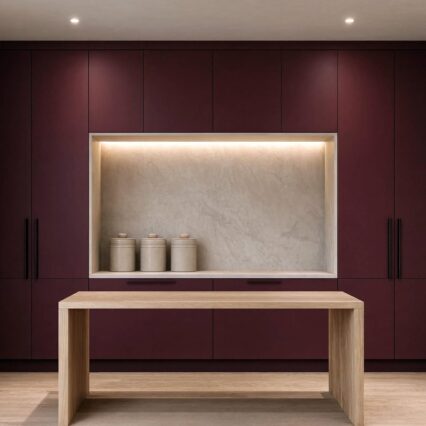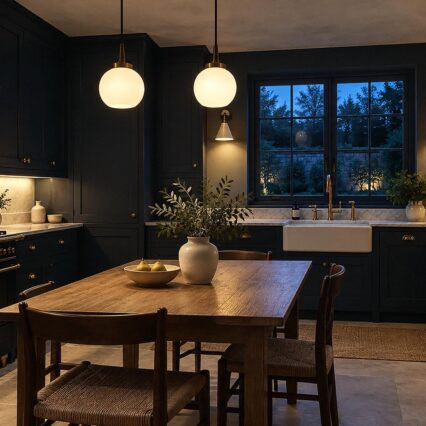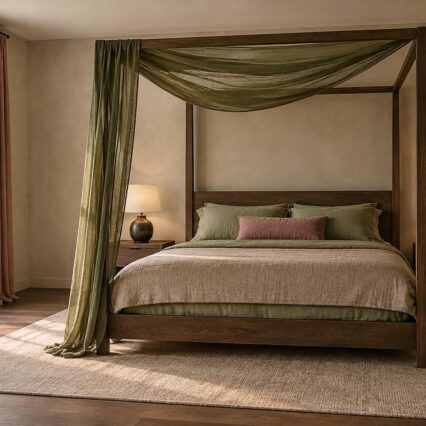
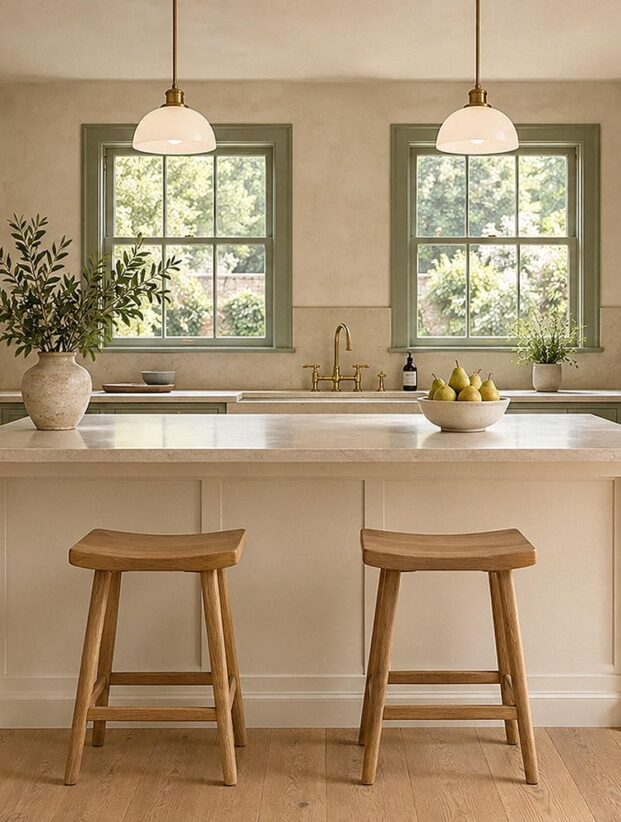
Sage green and cream kitchen ideas endure because the palette behaves like a landscape: foliage, limestone, old plaster, linen, and soft daylight. It brings color into the room without requiring every visitor to have an opinion about it.
Still, not every sage-and-cream combination works. A gray sage beside yellow cream can look tired. A minty sage beside a pink cream can feel confectionary. The most convincing pairings share an undertone, then gain definition from wood, metal, black, terracotta, or stone.
The guiding rule is contrast with manners. Sage should be visibly greener or deeper than the cream, but the two colors do not need to glare at each other from opposite sides of the paint deck.
1. Match Undertones Before Matching Samples
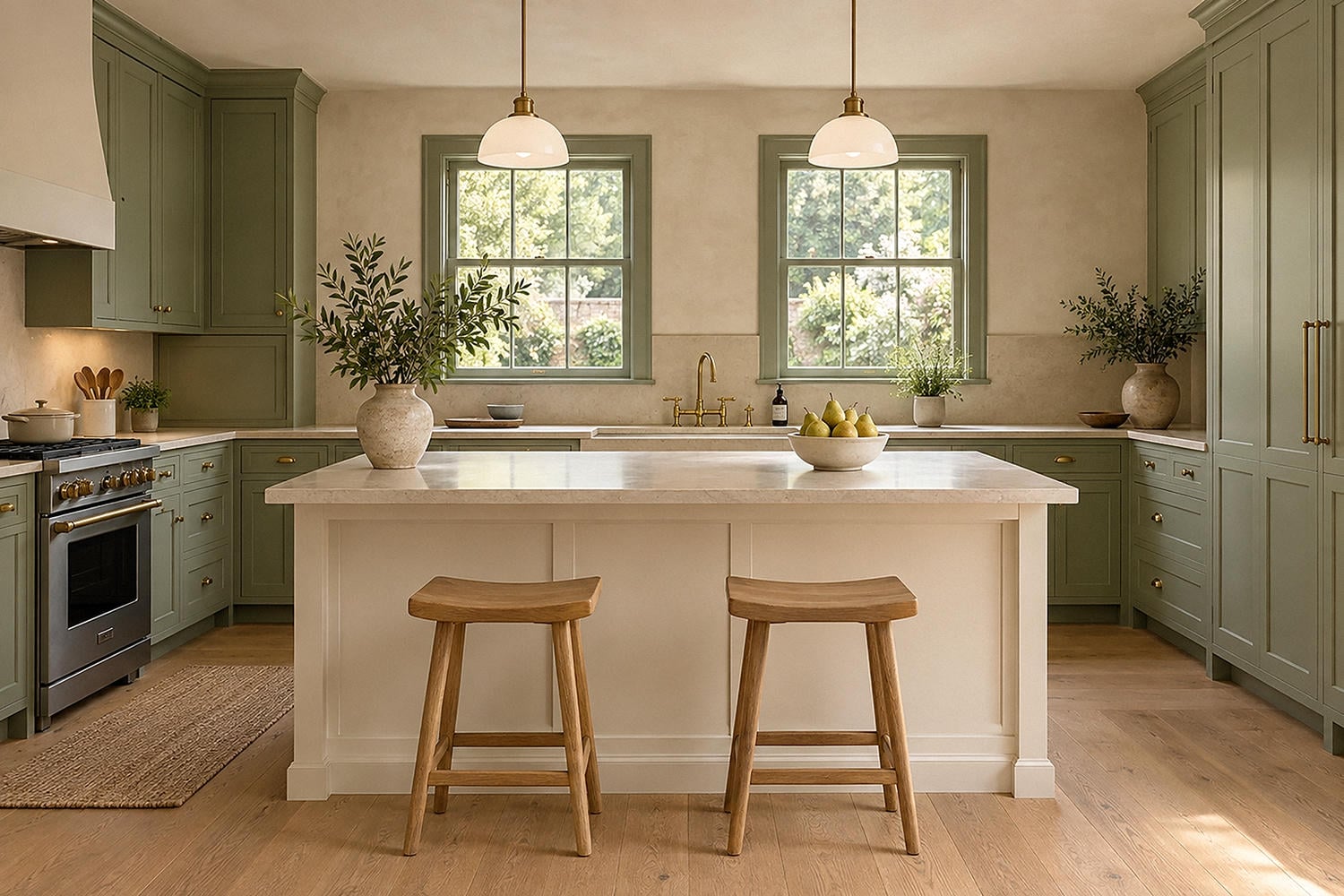
Sage contains green plus a noticeable amount of gray, brown, yellow, or blue. Cream contains white plus yellow, beige, gray, peach, or pink. Put a yellow sage beside a cool gray cream and both colors may look dirty. Pair that same sage with warm plaster and it suddenly makes sense.
Test cabinet and wall samples vertically beside the actual counter, backsplash, and flooring. Check them in direct morning light, cloudy daylight, and under the fixtures used at night. The phrase "sage green" is not a color specification; it is a family reunion with several relatives who should not sit together.
If the room faces north or receives limited daylight, a warmer sage with olive or yellow undertones can prevent the palette from becoming chilly. In a bright south-facing room, a grayer sage may remain calmer.
2. Decide Which Color Owns the Cabinets
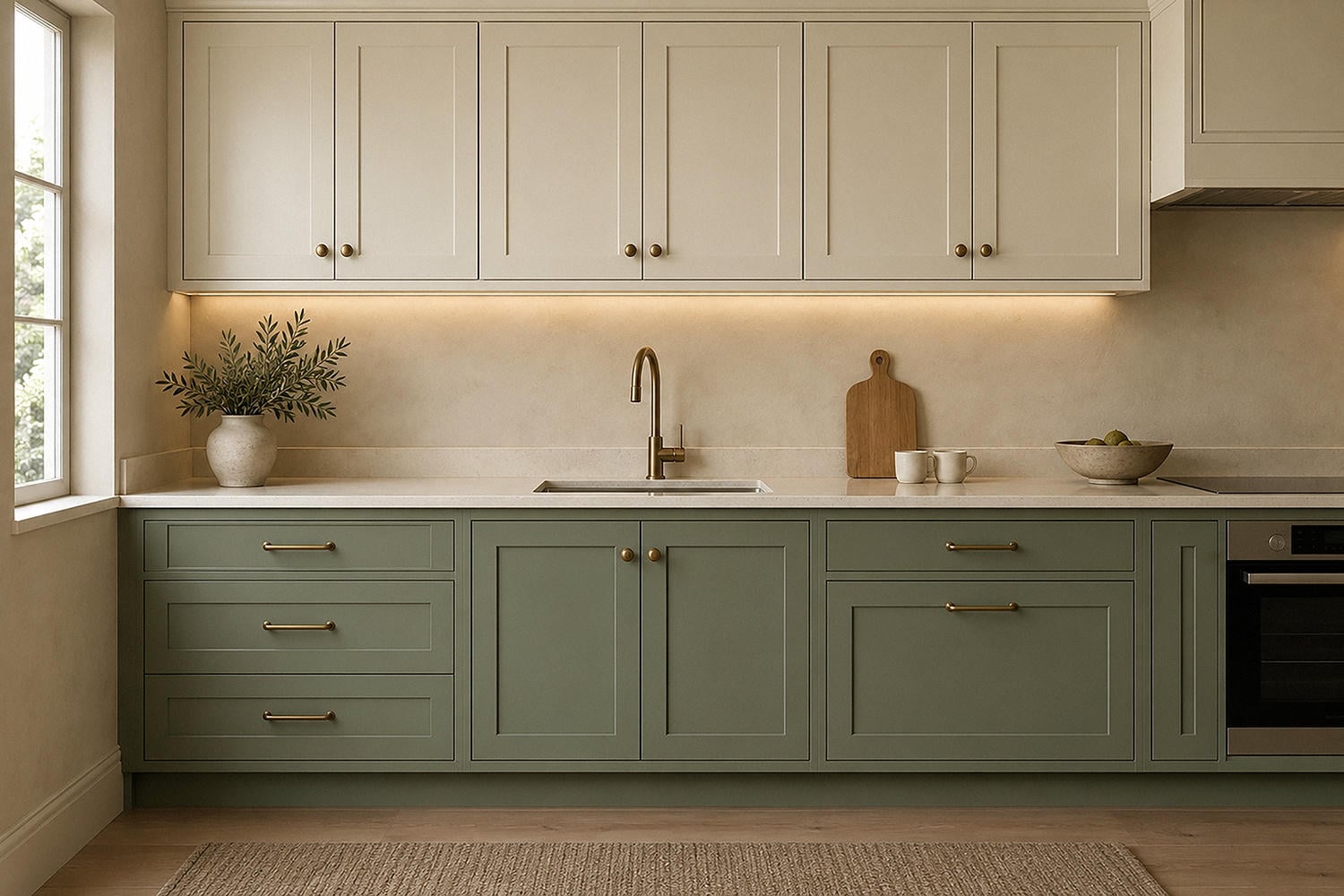
Sage green and cream two tone kitchen schemes need hierarchy. The simplest arrangement uses sage green lower cabinets with cream uppers. The darker base gives the room weight while the lighter upper field keeps the walls open.
Another approach is a cream kitchen with a sage green island. The island becomes the colored furniture piece, and the perimeter remains quiet. Repeat sage once on a door, roman shade, or small pantry wall so the island does not look like it rolled in from another project.
For a sage green and cream kitchen with more depth, use dark sage on one full cabinet wall and cream on the island. Keep the division architectural: separate zones, not alternating doors.
3. Use Cream Countertops to Clarify Sage Cabinets
Sage green kitchen cabinets with cream countertops create a soft but readable transition. Warm white quartz, cream quartzite, pale limestone, marble, and solid-surface materials can all work. Look for a background that relates to the cabinet undertone rather than a bright white with icy blue flecks.
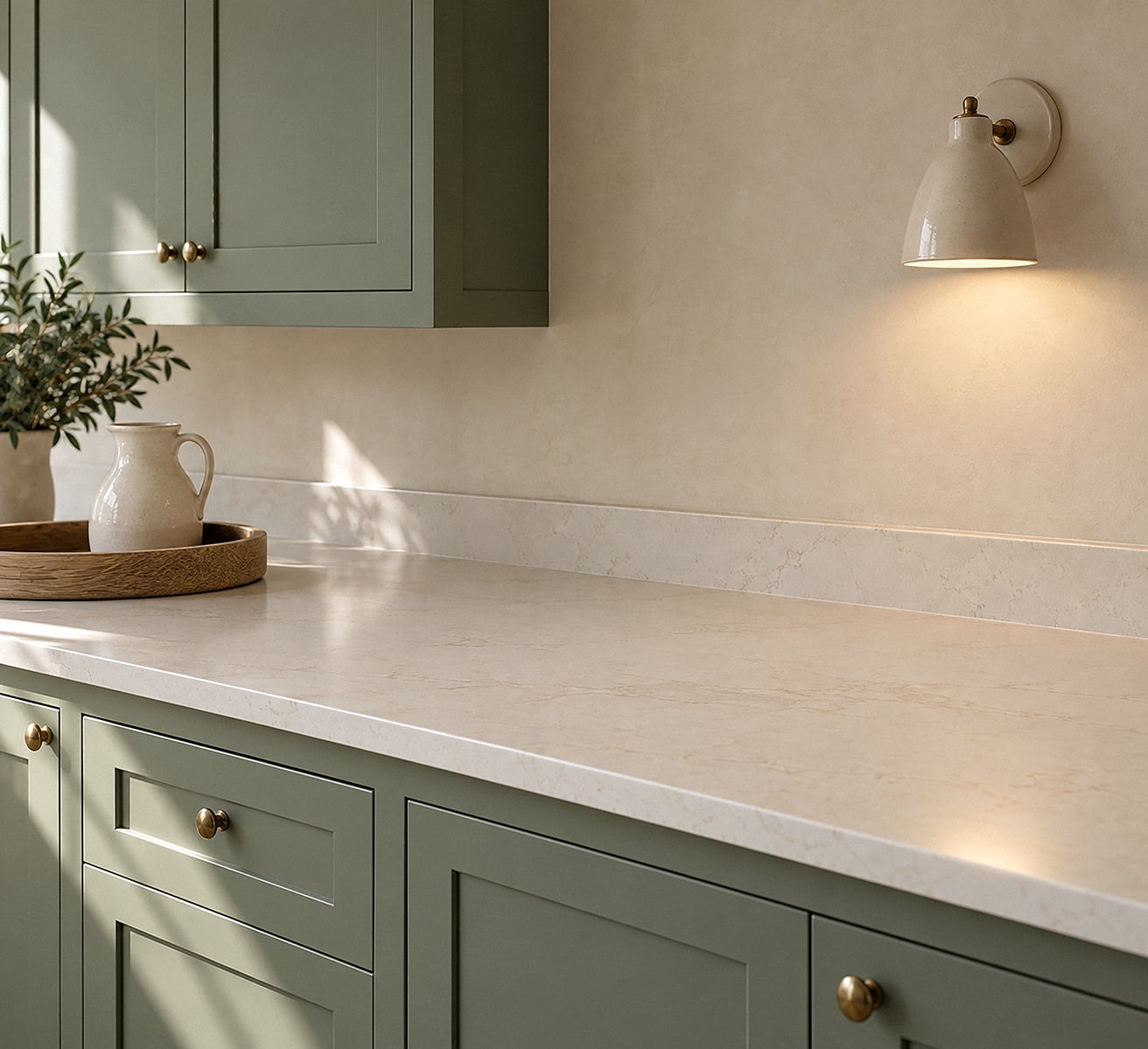
Cream quartz countertops with sage cabinets are practical for owners who want a relatively consistent pattern, but every product has its own care, heat, and warranty requirements. Compare a large sample horizontally beneath the painted cabinet board. Small upright showroom chips can disguise how white, busy, or reflective the counter will appear across several feet.
A softly veined counter can connect sage to brass, oak, or terracotta. If the backsplash will also carry movement, let one of the two surfaces remain quiet.
4. Give an English Country Kitchen One Crisp Detail
An English country sage green kitchen can include inset cabinets, a farmhouse sink, aged brass latches, open shelves, a plate rack, and warm stone flooring. The danger is adding every charming feature at once until the room looks like a catalog index.
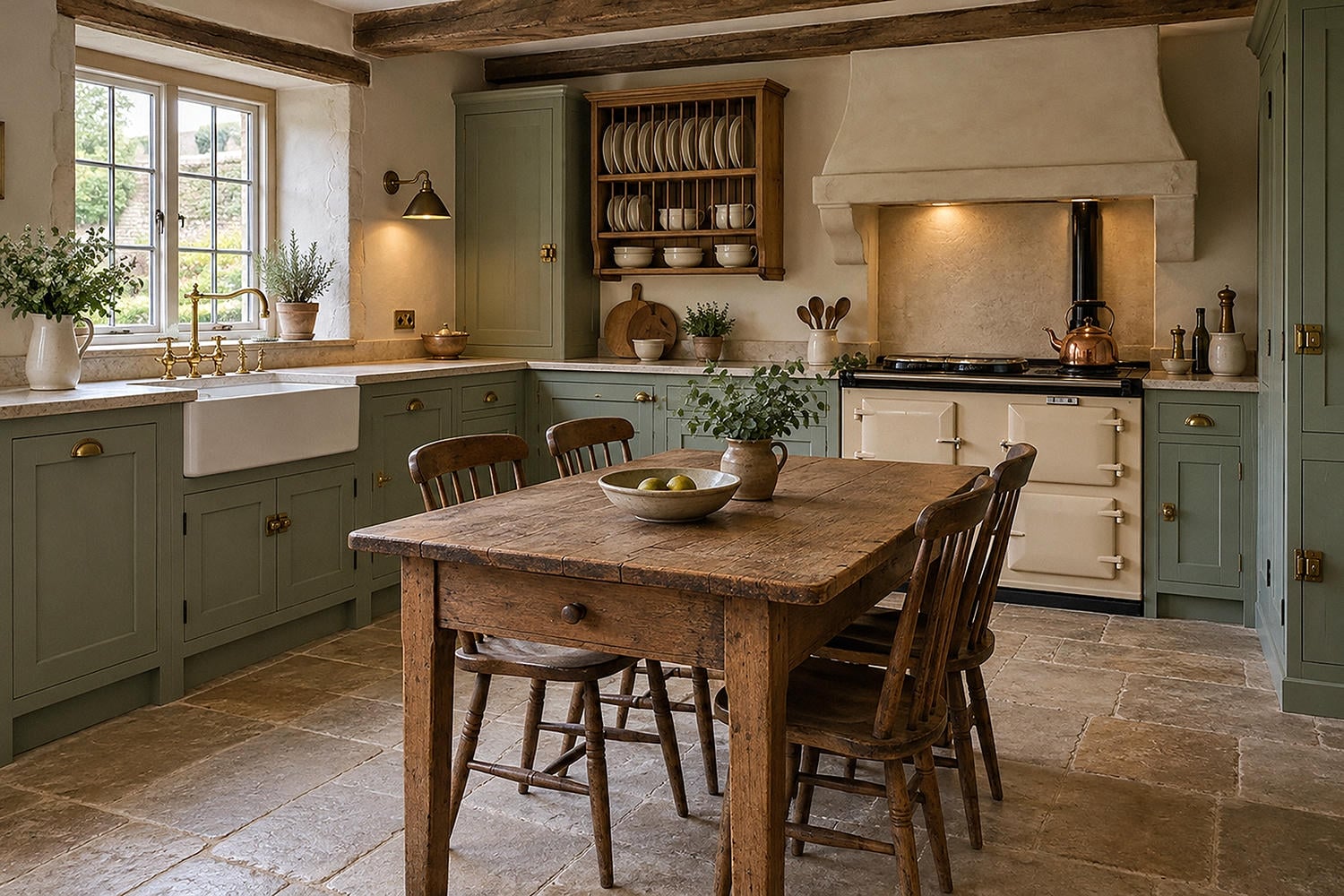
Choose two or three cottage elements, then sharpen them with one cleaner move: a simple plaster hood, plain cream walls, slab stone backsplash, or contemporary pendant. The contrast keeps the room rooted in the present without erasing its warmth.
Painted sage cabinetry beside an old pine table is often enough to establish the country note. Not every cabinet needs a latch, bead, bracket, and decorative toe kick.
5. Make the Backsplash the Bridge
A sage and cream kitchen backsplash can connect the two cabinet colors rather than introduce a third main event. Cream handmade tile with faint sage variation, warm white zellige, sage-gray stone, or a quiet checkerboard all work.
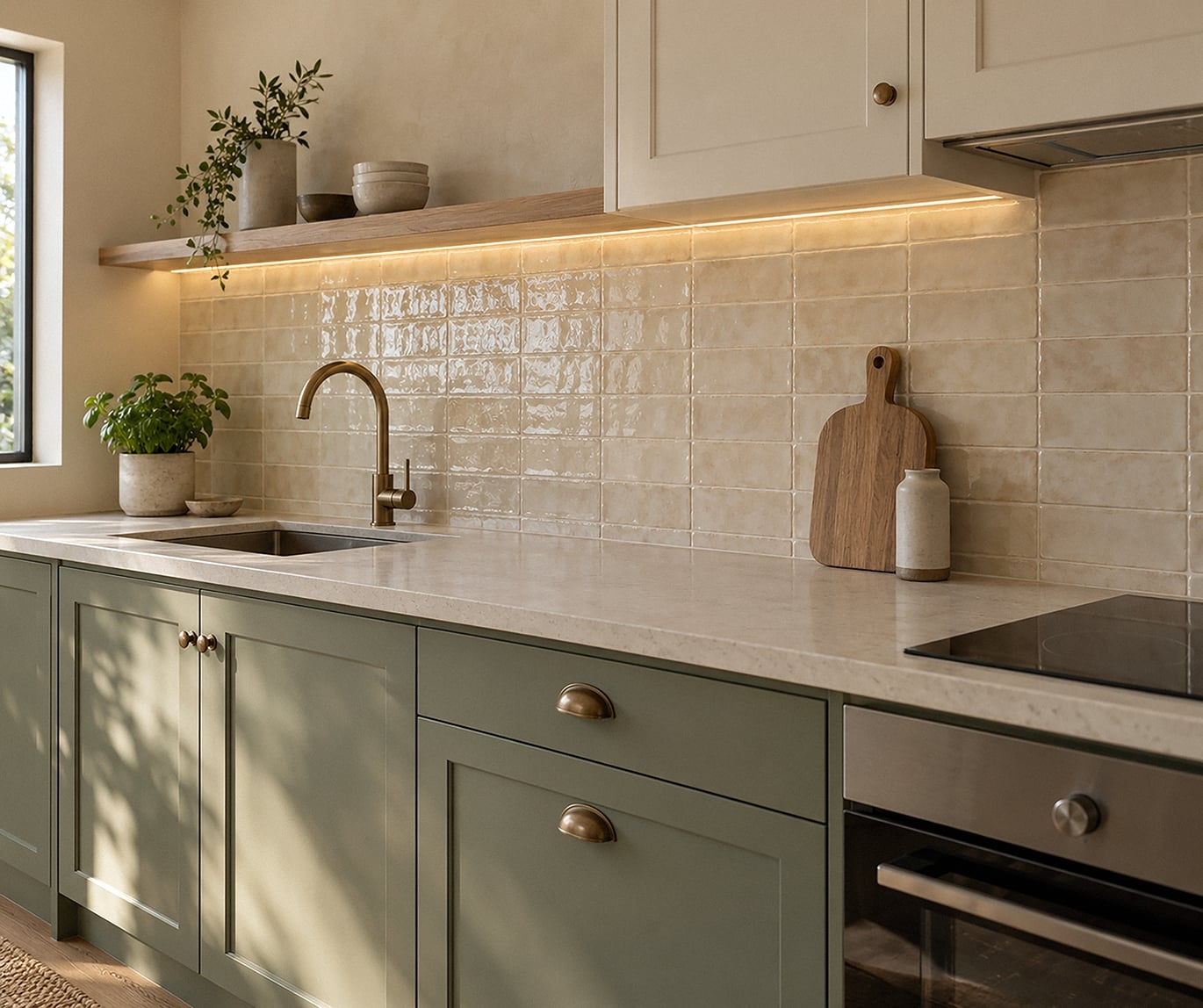
When the cabinets are two-tone, a single backsplash across both zones helps unify them. Match grout to the tile for a calm field or choose warm gray for subtle definition. Bright white grout can make cream tile appear yellow and outline every joint more strongly than expected.
For a more current look, use a larger tile, slim vertical stack, or short stone upstand. Traditional color does not require a traditional installation pattern.
6. Choose Brass or Silver Hardware Deliberately
Sage green kitchens with brass hardware feel warm and familiar. Antique or satin brass relates to olive undertones, cream, and natural wood. Keep the shapes straightforward if the cabinetry already has inset panels and visible hinges.
Can you use silver hardware with sage green? Absolutely. Aged nickel, pewter, stainless steel, and satin chrome can make sage feel cleaner and less nostalgic, particularly when the appliances are stainless. Silver metal is especially useful with cooler gray-green cabinets and cream containing a slight gray undertone.
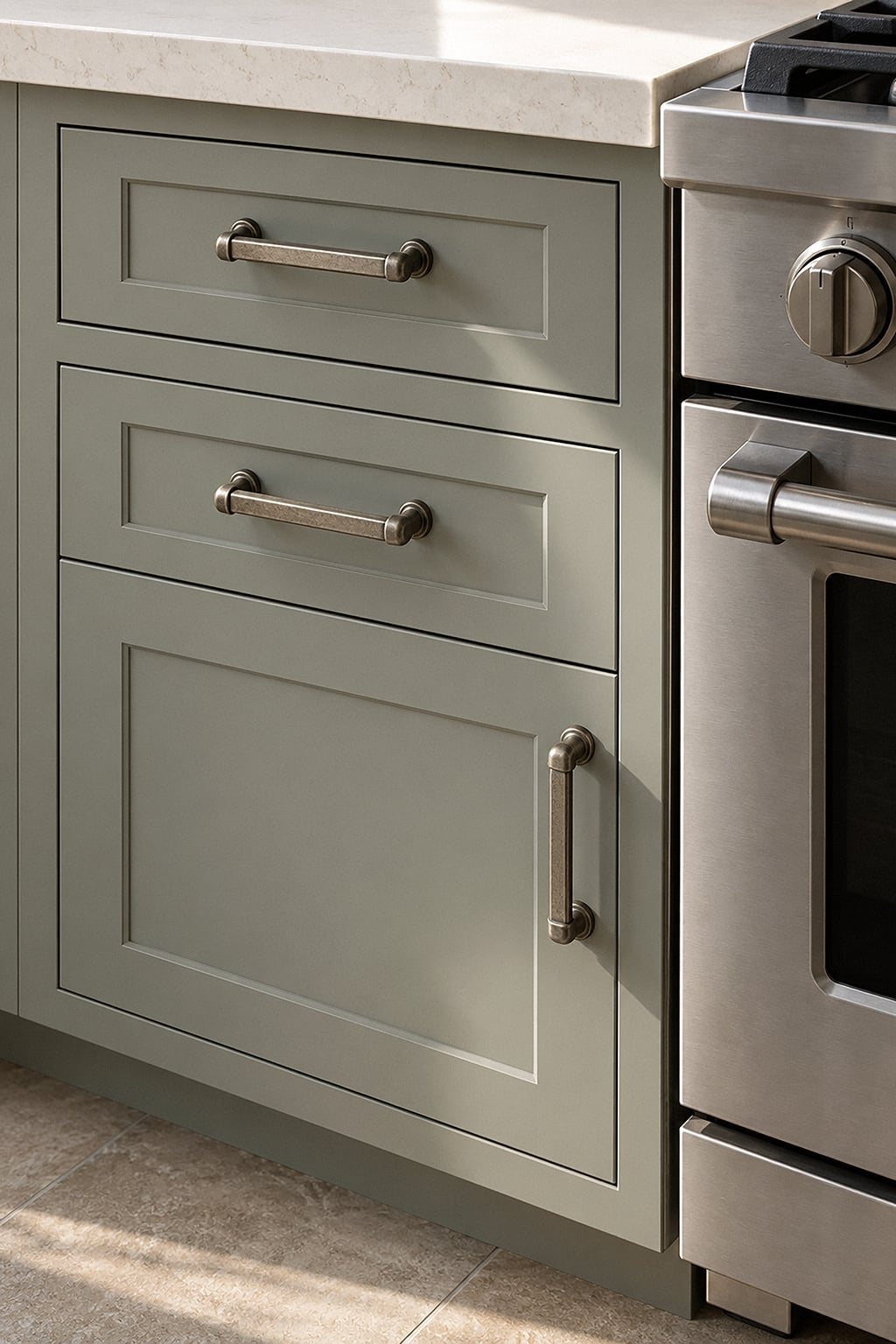
Do not mix metals by accident. If the faucet is silver and the cabinet pulls are brass, repeat each finish or give one a strong functional reason. Black can act as a minor third finish through a range, window frame, or stool legs.
7. Use Flooring to Set the Temperature
What flooring looks best with sage and cream? Natural oak, medium walnut, terracotta, warm limestone, pale terrazzo, and putty-colored porcelain are all strong choices. Flooring determines whether the palette leans country, modern, Mediterranean, or quietly transitional.
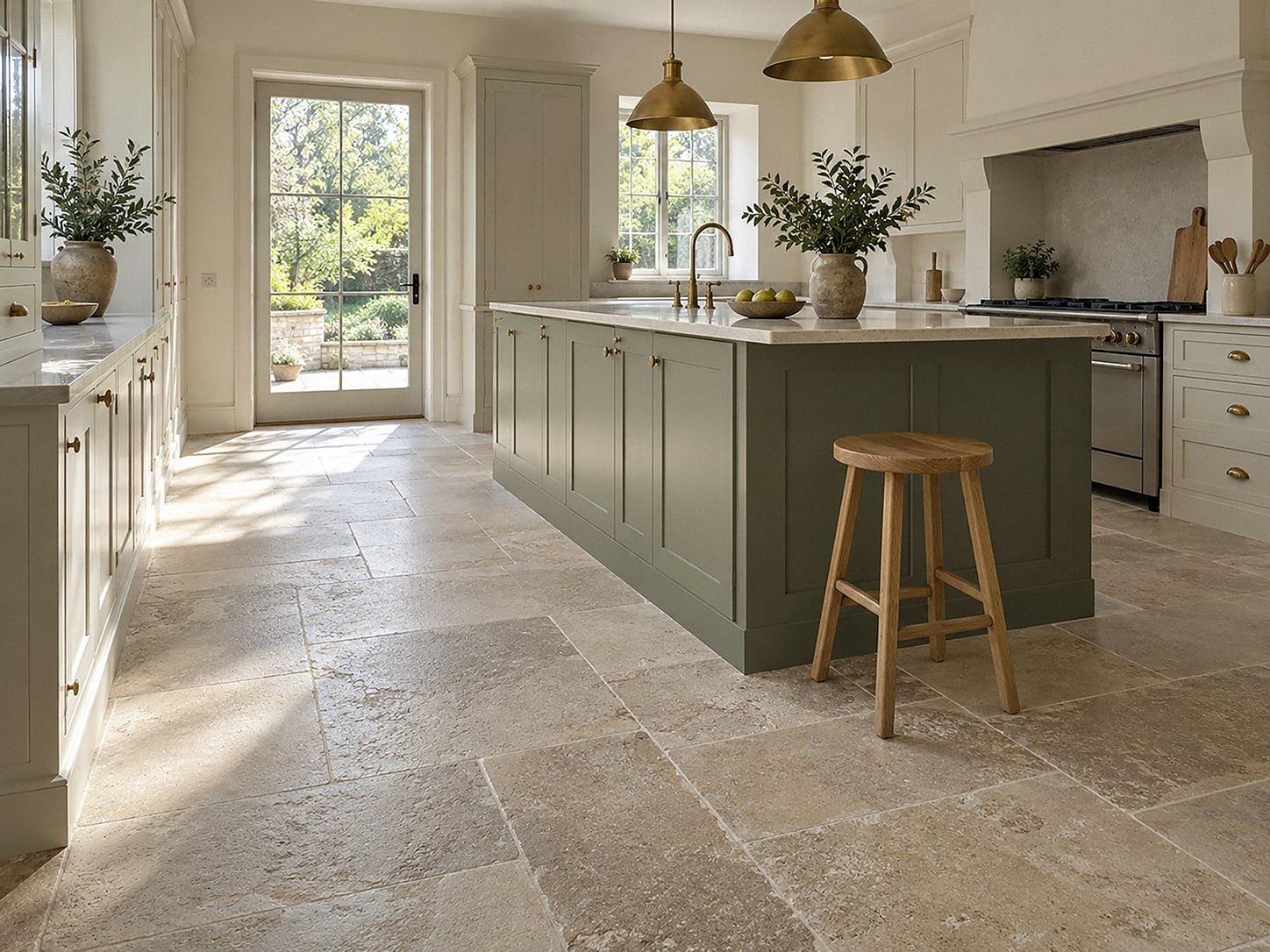
Oak makes the room lighter and more casual. Walnut adds depth. Terracotta pulls sage toward the garden and cream toward old plaster. Limestone is calm and substantial. A gray floor can work, but it should contain enough warmth to avoid turning sage blue.
If the cabinets are natural wood inside, compare that tone with the floor as well as the exterior paint. Two competing oaks can be more distracting than two different colors.
8. Add a Runner for Pattern and Scale
Sage green kitchen rug runners can introduce rust, faded red, ochre, navy, or deeper green. A runner also provides a long horizontal pattern that breaks up a plain floor without affecting permanent finishes.
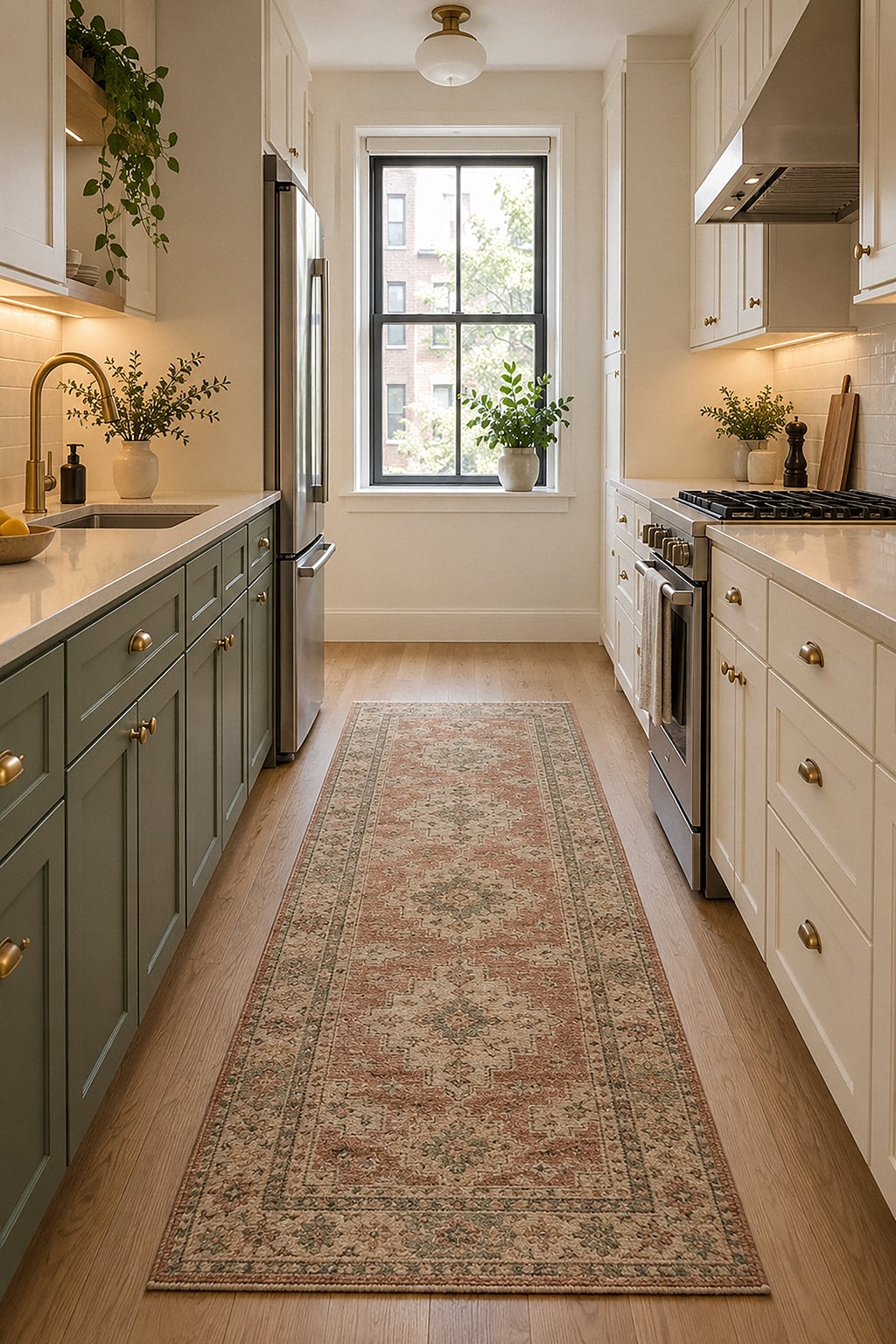
Choose a size that does not catch door swings or stop awkwardly in the middle of a work zone. Use a suitable non-slip pad, make sure the runner stays securely in place, keep edges flat, and follow the rug maker's cleaning guidance. Kitchens are not improved by a beautiful runner that behaves like a banana peel.

Vintage-style pattern is often more forgiving of crumbs and wear than a solid pale rug. Keep the color relationship clear: the runner should repeat at least one room color and add only one or two new notes.
9. Make Sage Green Feel Modern Through Shape
How do you make a sage green kitchen feel modern? Simplify the silhouettes. Use slab-front cabinets, narrow shaker rails, integrated or restrained hardware, a clean hood, fewer upper cabinets, and one continuous backsplash. The color can remain soft while the lines become precise.
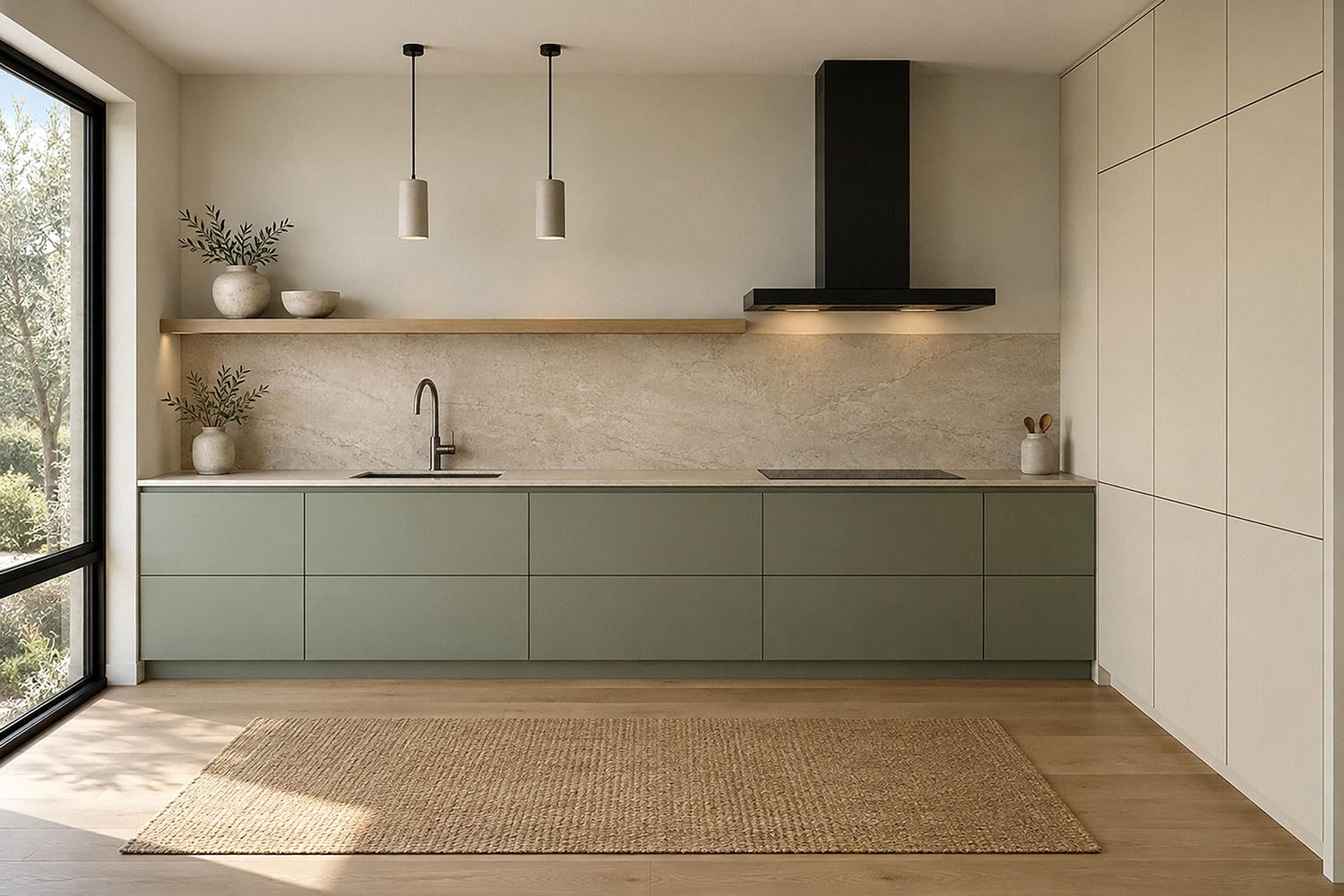
A light sage and cream small kitchen benefits from broad connected color fields and fewer visual interruptions. Use one cabinet profile, one metal finish, and a pale counter. Dark sage green and cream kitchens can handle more contrast, but should preserve good task lighting and some visible wall or ceiling.
Lighting is part of the modernization. Combine ambient, task, and accent light instead of relying on a grid of equally bright ceiling spots. Lutron's layered-lighting guide notes that under-cabinet fixtures are particularly useful for kitchen work surfaces.
Is a Sage and Cream Kitchen Timeless?
No color combination is outside history, but sage and cream have useful staying power because both behave as softened natural colors. They work with several woods, metals, and architectural styles. The palette is most adaptable when expensive surfaces are quiet and the exact green lives mainly on paintable cabinetry or walls.
Avoid attaching every trend of one period to the same room. Sage cabinets, heavily distressed wood, patterned encaustic floor, scalloped tile, fluted island, and four kinds of brass can date as a group even if each feature works alone.
Frequently Asked Questions
Is a sage and cream kitchen timeless?
It has good staying power because both colors are softened and nature-based. Simple cabinet profiles, restrained permanent surfaces, and real wood make the palette easier to adapt than a room built around several short-lived decorative features.
What flooring looks best with sage and cream?
Natural oak, medium walnut, terracotta, warm limestone, pale terrazzo, and putty porcelain all work. Choose flooring that shares the warmth or coolness of the paint pairing without almost matching the cabinets.
Can you use silver hardware with sage green?
Yes. Aged nickel, pewter, stainless steel, and satin chrome give sage a cleaner, less nostalgic direction. They pair especially well with gray-green paint, cream stone, and stainless appliances.
How do you make a sage green kitchen feel modern?
Use simpler cabinet shapes, restrained hardware, fewer upper cabinets, a continuous backsplash, and layered lighting. Keep decorative motifs limited and let the green occupy a broad, uncluttered field.
What backsplash works with sage and cream cabinets?
Cream handmade tile, warm white zellige, sage-gray stone, and quiet checkerboard tile can bridge both colors. Use low-contrast grout and avoid adding a competing pattern if the countertop already has strong movement.
Sage and cream do not need to behave timidly. Give the colors enough separation to read, choose a floor that sets the right temperature, and use metal and shape to decide whether the room feels country or modern. Calm is not the absence of a point of view; it is a point of view with excellent manners.