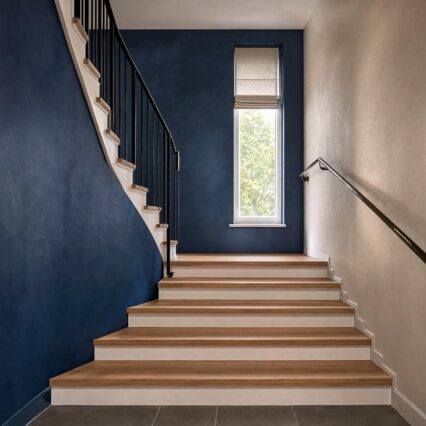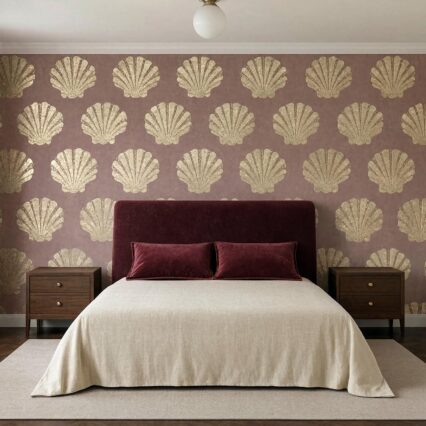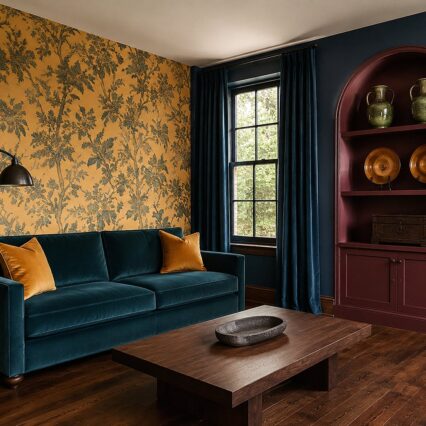
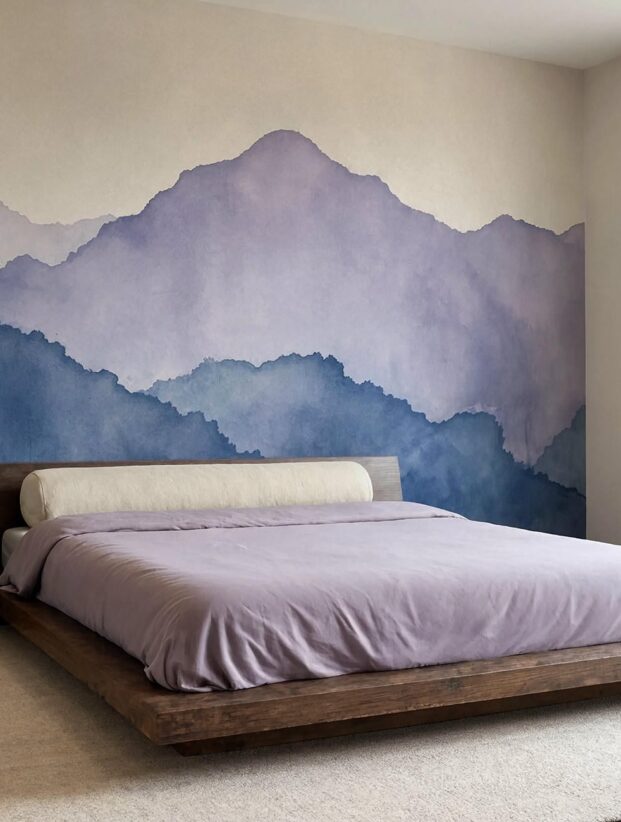
I keep noticing the same wall in rooms I save: the one that seems to continue beyond the drywall. A mountain ridge drifts behind a sofa, a magnolia branch climbs past the crown molding, or a soft blue wash makes a bedroom feel as though rain just moved through it.
The appeal is bigger than pattern. A mural wallpaper accent wall gives the eye a destination, and that single decision can settle furniture, color, and mood in one shot. Choose the subject first, then let the room answer it.
That order matters. If you begin with a vague urge to "make the wall interesting," you can wind up with something loud that says very little. Begin with the view, scale, or feeling you want, and the choices get wonderfully narrower.
Make the mural feel like part of the room
A mural earns its keep when the room seems built around it. To my eye, the weakest versions behave like an oversized poster: centered, isolated, and unrelated to anything below. The good ones slip behind furniture and keep going.
Start by looking at the wall's interruptions. Doors, windows, radiators, sloped ceilings, and built-ins will crop the image, so study the full mural layout against an accurate drawing or photograph of your wall before you order. A mountain peak disappearing behind a tall cabinet may look accidental; a branch emerging beside it may look deliberate.
Custom landscapes are especially good at creating a long visual horizon. Misty ridges, marsh grass, low desert mesas, and loose coastal cliffs can read quietly even at a grand scale. I'd choose a composition with room around the focal feature, because a scenic wall needs somewhere for your eye to rest.
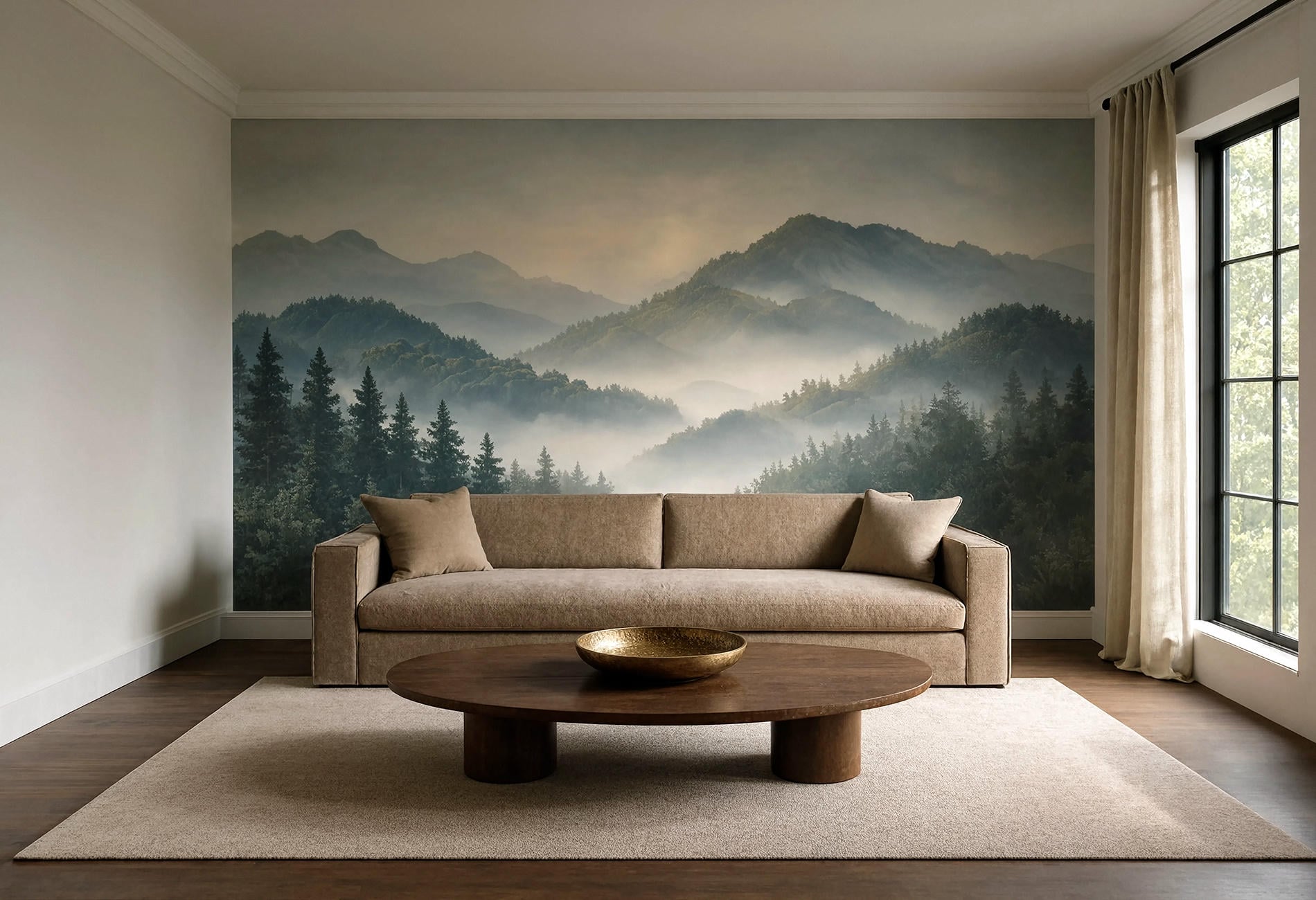
Then borrow two colors from the image. Pull the smoky blue into a cushion and the bark brown into a wood table, for example, while keeping the rest of the room fairly calm. Two echoes feel thoughtful; seven feel like the mural held the room hostage.
Scale is the secret sauce. Tiny leaves can turn into visual static across a full wall, while a few enormous stems have swagger. I was going to say bigger is always safer, but a very small room can handle a dense pattern when the palette stays tight. Mood outranks square footage here.
Choose the subject by the energy you want
You don't need to match a mural to a named decorating style. It helps more to decide what you want the wall to do at eight in the morning and again after dark.
A bold botanical mural brings movement. Look for broad leaves, thick stems, or oversized petals with enough plain background between them. Deep green on inky blue feels enveloping; ochre leaves on chalky pink are sunnier and a little strange in the nicest possible way.
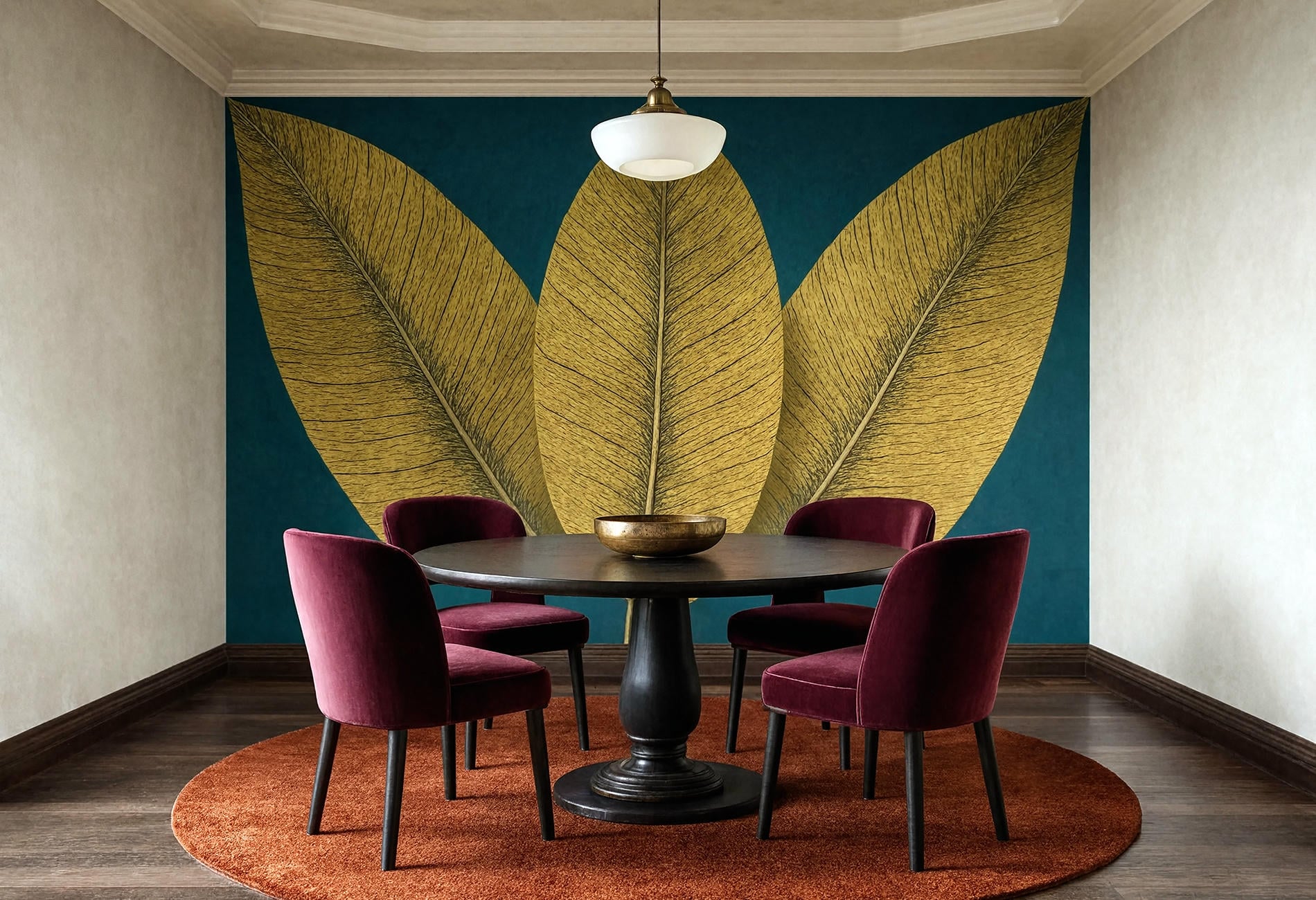
For dining rooms, I like botanicals with a strong upward gesture. Chair backs and table edges create plenty of horizontal lines already, so tall foliage gives the wall a different rhythm. Keep the table shape simple, then let the mural be the peacock.
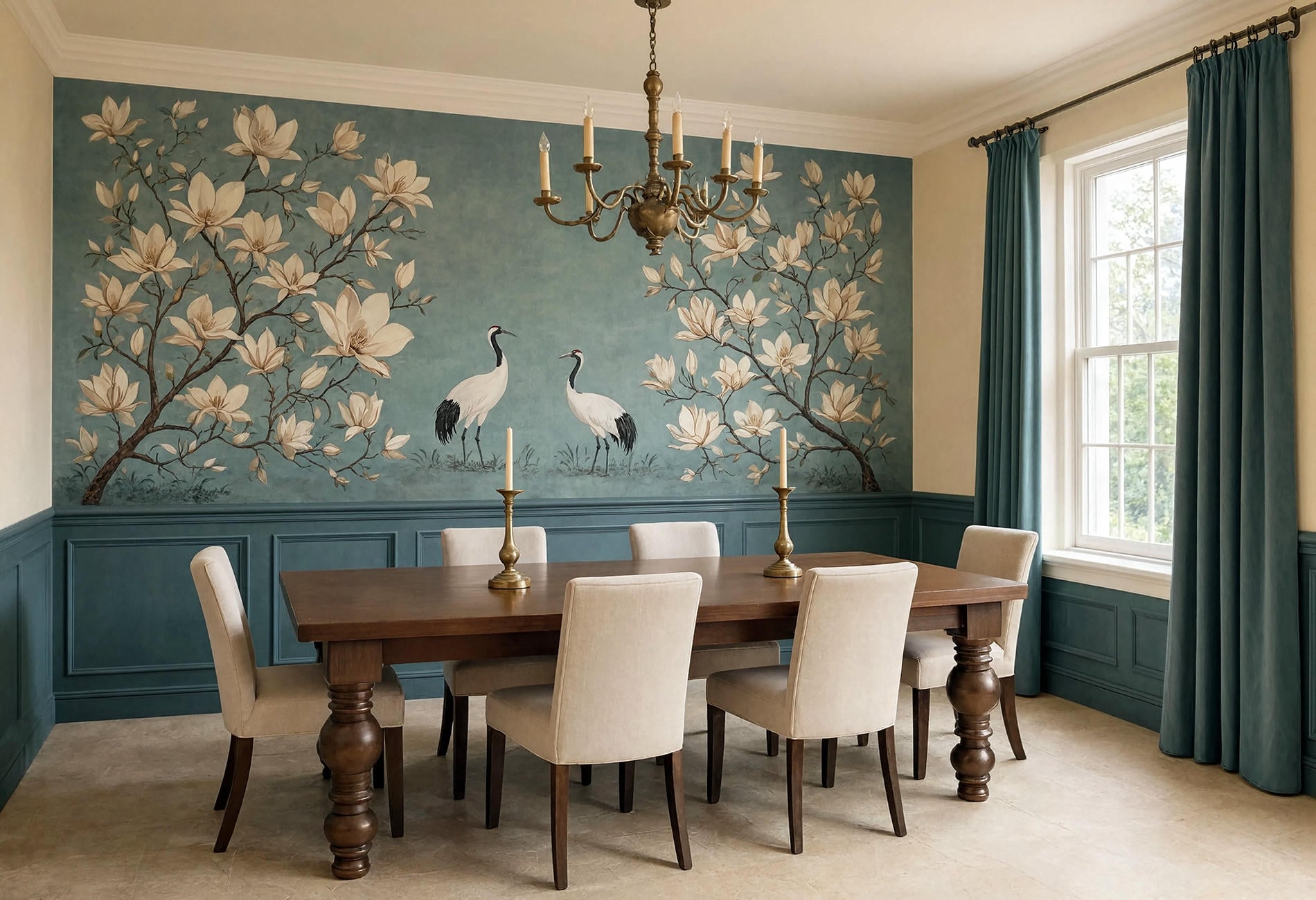
A vintage chinoiserie accent wall has a gentler sort of drama. The version I'd pick uses a few large branches, open sky, and birds with simple silhouettes rather than a thicket of tiny blossoms. Pair it with dark wood, aged brass, or a plain linen shade and stop before the room starts auditioning for a period drama.
For modern rooms, a 3D geometric wallpaper mural can supply architecture without touching the bones of the house. Oversized arches, faceted blocks, or deep tonal cubes create convincing depth from across the room. At close range, they should still read as intentional graphic fields rather than a computer screensaver from a forgotten decade.
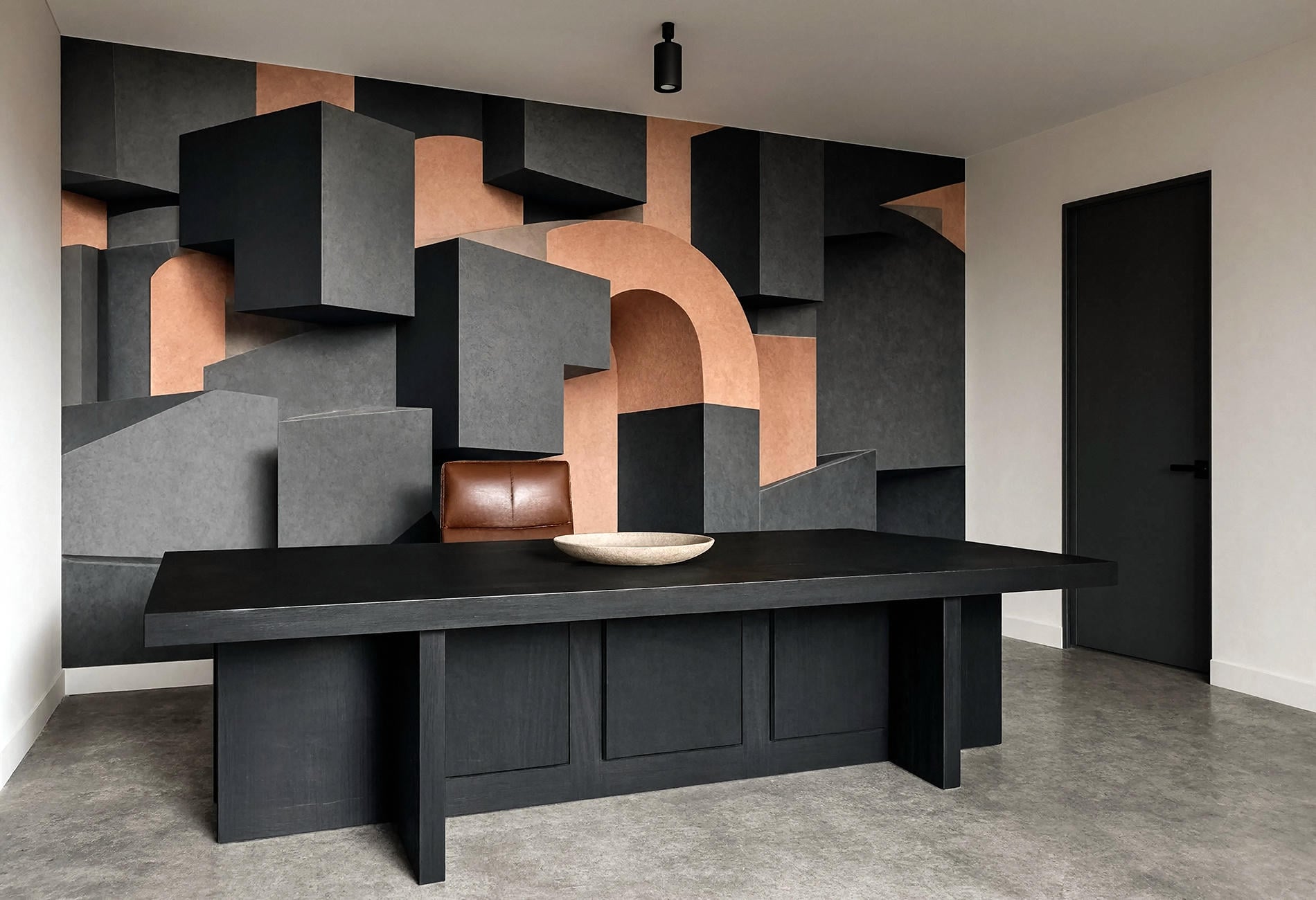
My preference is a restrained geometric palette with one dark edge and one warm midtone. Charcoal, clay, and bone have enough contrast to show the illusion without shouting. Glossy furniture can compete with the printed shadows, so matte wood or woven upholstery usually looks calmer to my eye.
Give renters a version that still feels grown-up
Peel and stick wall murals make sense when permanence is the sticking point (yes, I heard it). You can choose a removable format, keep the surrounding walls unchanged, and still make the room feel specific to you.
But read the maker's surface and removal guidance before falling in love with the picture. Paint condition, finish, wall texture, moisture, and cure time can affect what a particular mural is designed to adhere to. Follow the exact instructions for your mural and your wall rather than treating "removable" as a universal promise.
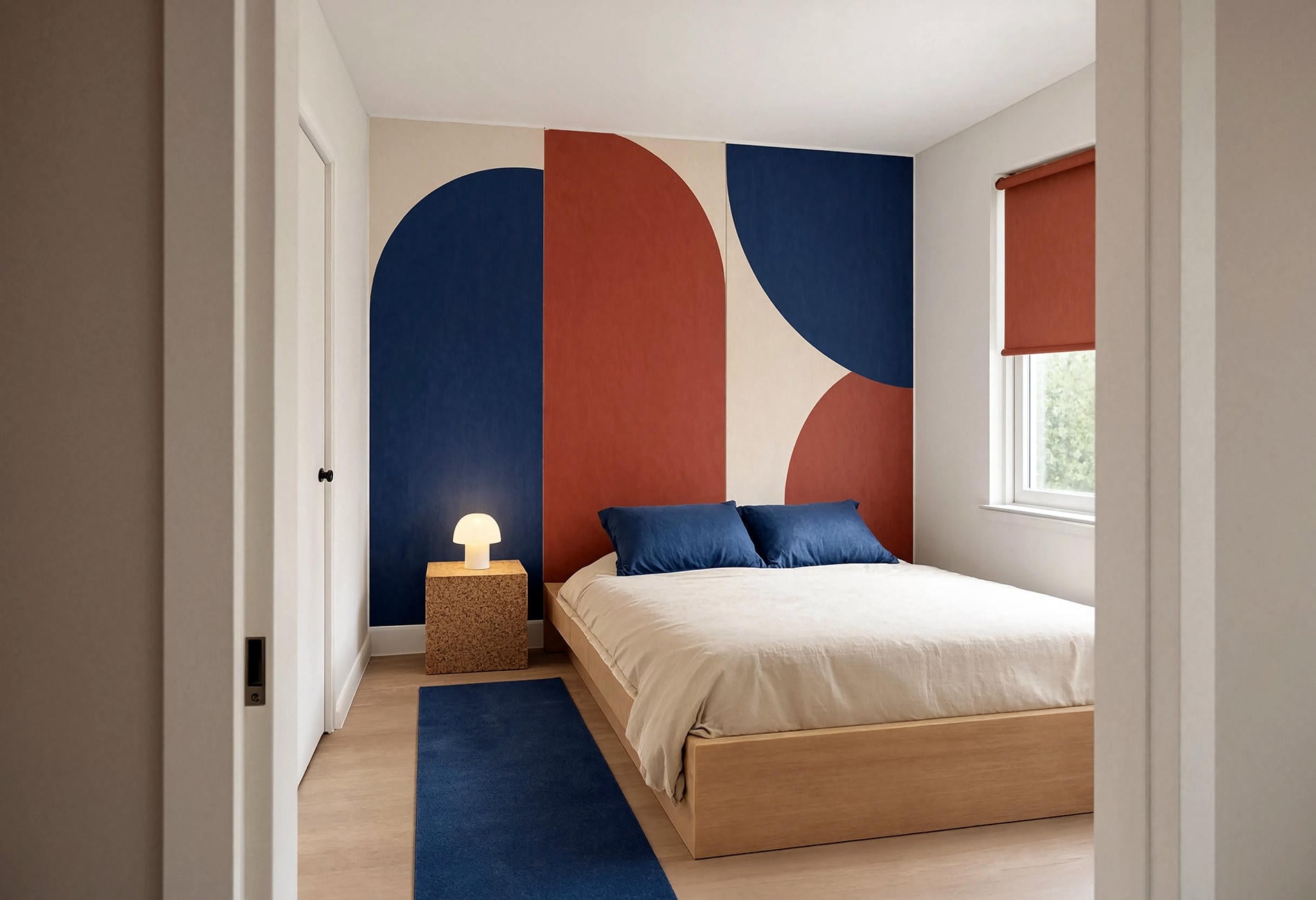
In a rental bedroom, I'd use a graphic mural behind the bed and leave the headboard low enough to reveal the image. A solid duvet and one chunky bedside table are plenty. The wall is already doing jazz hands; it doesn't need backup dancers.
Save the packaging and note the removal guidance somewhere you can find it later. Future-you, surrounded by half-packed boxes and one mysteriously missing screwdriver, will be grateful.
Let watercolor be soft without becoming vague
An abstract watercolor mural works when the washes have a visible direction. A broad sweep rising from one corner, a low band that resembles fog, or overlapping pools with generous pale areas gives the composition structure. Random blobs can feel less like atmosphere and more like a printer having a difficult afternoon.
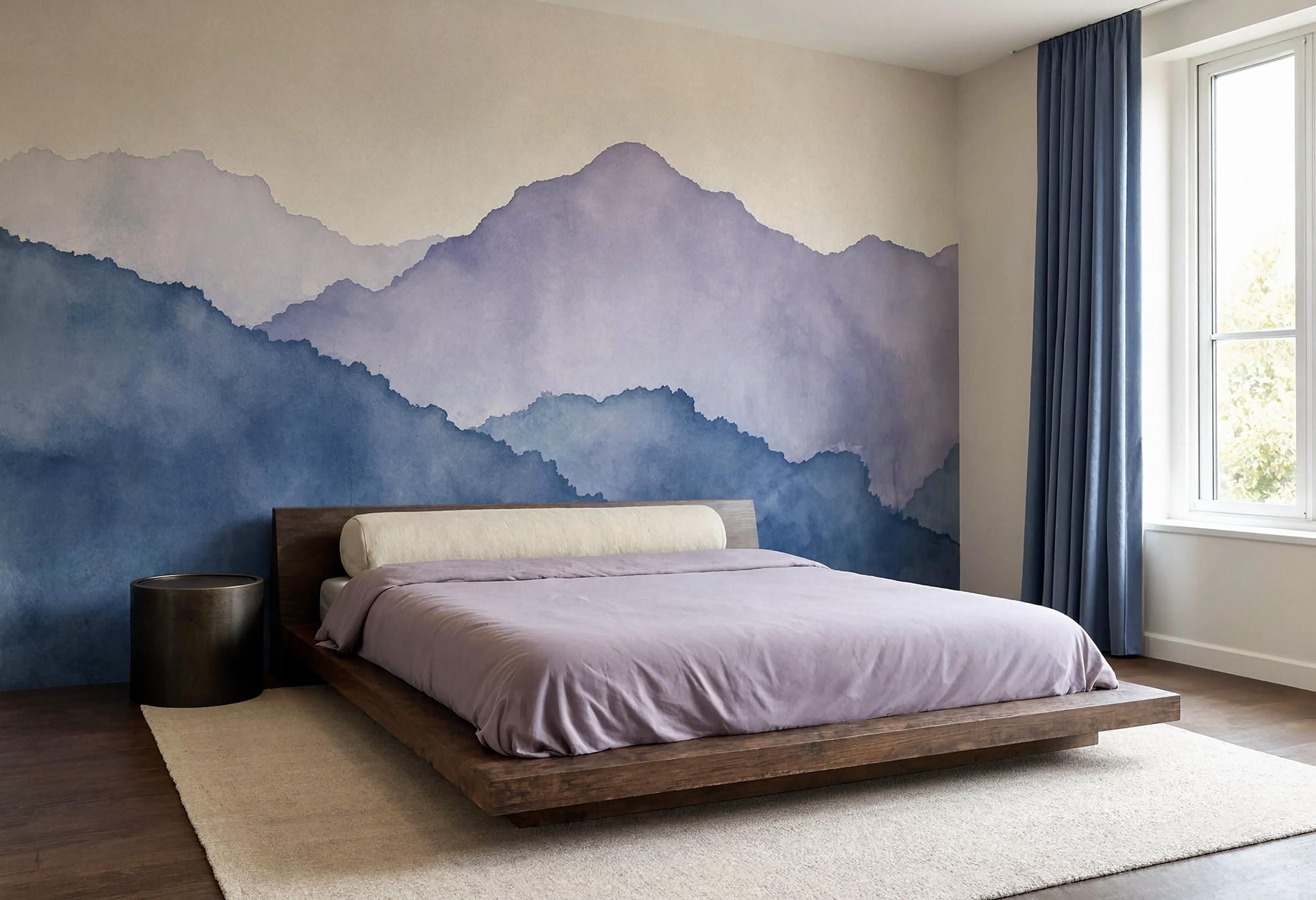
Watch the undertones in daylight. A pale wash that looks cool blue on a screen may lean lilac beside warm flooring, while blush can turn peach near creamy trim. Order the sample option offered by the maker and view it on the actual wall during the times you use the room.
Soft doesn't have to mean timid. One deep mineral-blue sweep against chalk white can carry a bedroom with almost no other pattern. Linen, matte oak, and a wool rug keep the finish grounded.
Plan the installation before the panels arrive
The sensible answer to how to install mural wallpaper on an accent wall begins with the instructions packed with your specific mural. Materials vary. Some panels are peel-and-stick, some use paste, and the recommended wall preparation and overlap can differ.
For non-trade wallcovering work, this is a useful planning sequence:
- Confirm the wall is clean, dry, sound, and prepared exactly as the mural maker directs. Check that the paint has met any stated cure-time requirement.
- Unroll or lay out the panels in order on a clean surface. Compare the full image, panel labels, and wall measurements before anything touches the wall.
- Establish the first vertical reference line using the method in the instructions. A level first panel matters more than following a corner that may wander.
- Apply each panel according to its material, handling only as much backing or paste as the instructions recommend. Use the specified smoothing method and work patiently around the large printed features.
- Finish edges and seams only as directed, then inspect the mural in side light before putting furniture back.
Slow is fine. Wallpaper has an uncanny ability to sense panic.
If the wall has outlets or fixed fixtures that complicate the layout, pause and decide what belongs within your comfort level. Any electrical changes belong with a licensed electrician; shock, fire, and code concerns are real, and there is no design prize for taking that risk yourself.
Textured walls deserve a test, not a pep talk
Can you put mural wallpaper on textured walls? Sometimes a particular mural system and a particular texture may be compatible, but there isn't one reliable answer for every combination. Orange-peel texture, knockdown texture, rough plaster, and painted masonry present very different surfaces.
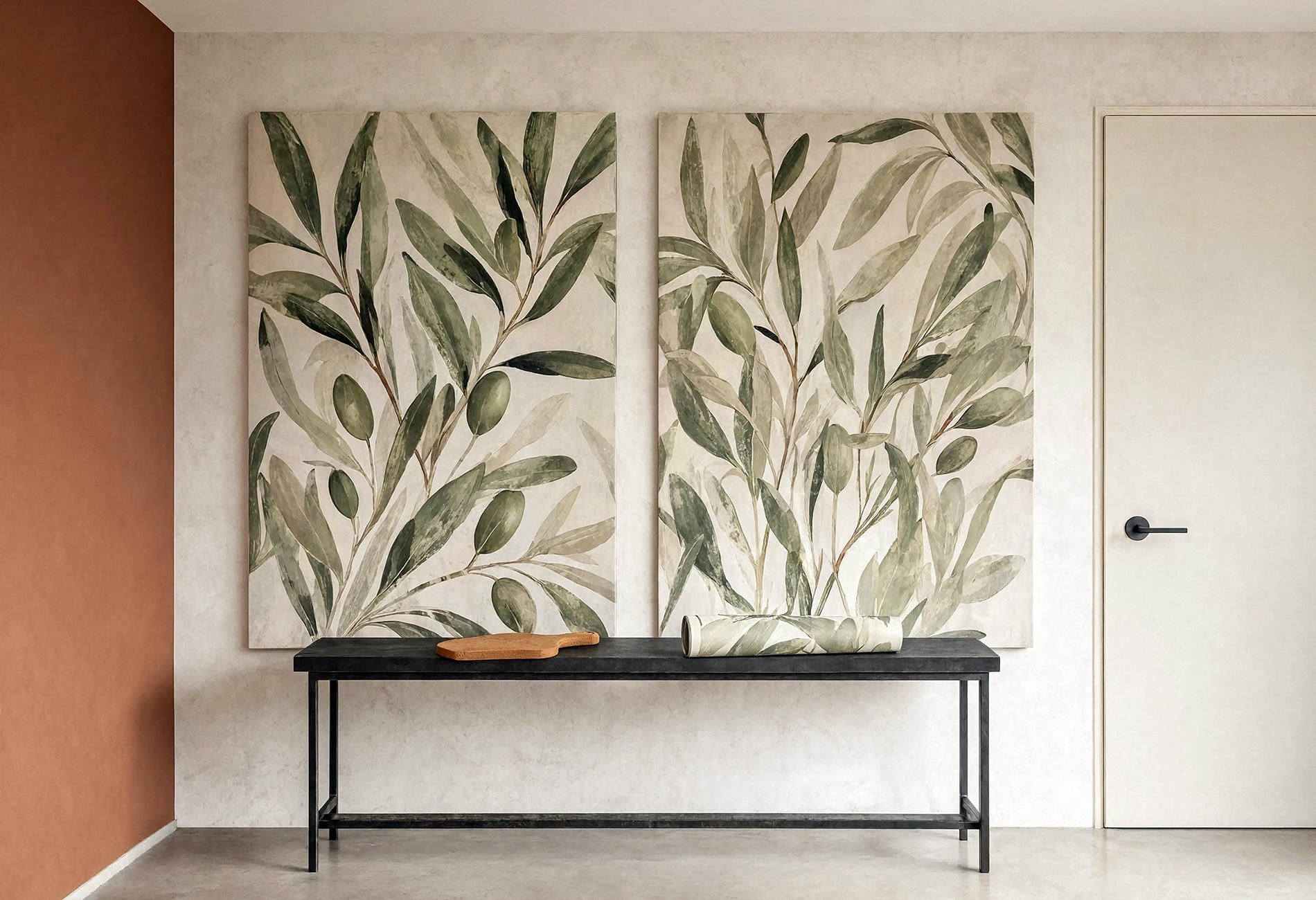
Follow the exact mural maker's substrate guidance and use the test method they recommend. A small sample can show how the print looks across raised texture and how the edges behave on your actual finish. Don't assume a sample result guarantees long-term adhesion beyond what the maker states.
When the surface falls outside the guidance, consider professional surface preparation. A wallcovering installer or qualified finishing professional can assess the wall and explain what preparation may be appropriate. That conversation is far cheaper than ordering a custom view and watching a panel disagree with the wall.
Understand what you are paying for
How much a custom wallpaper mural costs depends on more than wall size. Image licensing or original artwork, custom cropping, substrate type, print method, panel configuration, shipping, wall preparation, and professional installation can all change the total.
A ready-sized design in a standard material is usually the simpler cost tier. Bespoke artwork, unusual dimensions, premium substrates, and specialist preparation sit at the investment end. Ask for a written scope that separates the mural itself from design adjustments, proofs, delivery, surface work, and installation, so you can see where the budget is going.
Spend first on a clear proof and an accurate fit. I'd rather simplify the furniture than gamble on fuzzy image resolution or a crop that puts the lake behind a lampshade. The mural is the room's horizon; it deserves the careful part of the budget.
And this is where my mind wanders to old stage sets, those painted forests that looked endless from the seats and delightfully flat from the wings. A mural has some of that same trickery. You know the meadow ends at the baseboard, yet in late light the room briefly forgets.
Questions about mural wallpaper accent walls
How do I choose the right image for a mural wallpaper accent wall?
Choose the image according to the wall's shape, furniture placement, and the energy you want in the room. Favor large, legible forms and review the crop at your wall's actual proportions before ordering.
How much does a custom wallpaper mural cost?
The cost depends on size, artwork, material, printing, wall preparation, delivery, and installation. Ask for an itemized scope, then compare the proof quality and service included rather than comparing a single headline price.
Can you put mural wallpaper on textured walls?
Only when the exact mural maker's substrate guidance supports your wall condition. Follow its recommended test process, and consider professional surface preparation when the texture falls outside that guidance or the sample doesn't sit cleanly.
Are peel and stick wall murals a good choice for renters?
They can be a practical option when the maker approves the wall surface and paint condition. Review both application and removal instructions, test as recommended, and get the property owner's approval if your agreement requires it.