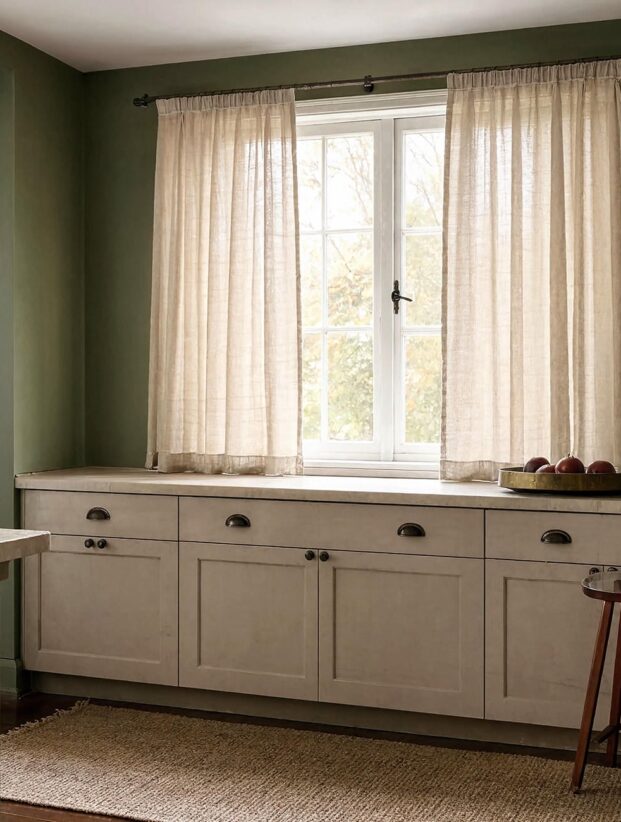
Fall kitchen decorating goes sideways the moment every horizontal surface gets assigned a pumpkin. One on the island, two beside the sink, a whole family above the cabinets -- and suddenly you can't make toast without relocating a gourd.
My opinion is firm: autumn belongs in the kitchen through color, texture, food, and light. A few real seasonal objects can join in. The room should still work on a Wednesday morning when somebody needs the cutting board and the coffee hasn't happened yet.
Start when the light changes, not when a date tells you to
Begin decorating when your own kitchen starts asking for autumn. In a warm climate, that may be late enough that the rest of the internet has moved on to snowflakes. In a northern kitchen, cool mornings might make a rust-colored runner feel right much earlier.
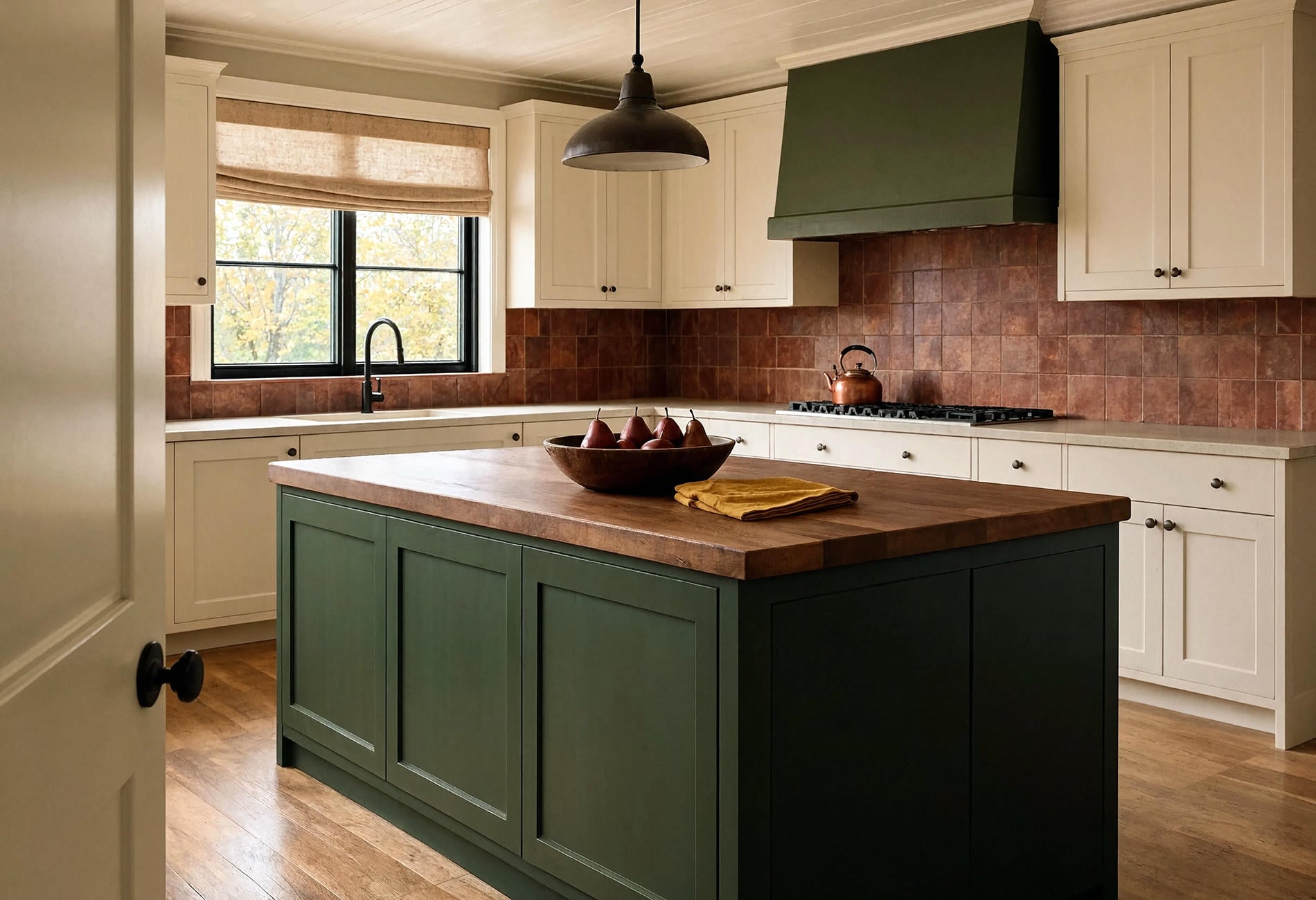
Notice the light. Summer sun can wash pale rooms nearly white, while autumn light arrives lower and finds every bit of wood grain. Bring in a deeper hand towel, a woven shade, or a bowl of dark pears when the existing colors start looking thin.
You don't need to finish in one afternoon. I like a room that shifts slowly: textiles first, branches or produce later, then candles when evenings arrive early. Seasonal decorating is allowed to have poor project management.
Use the counter for cooking, then give one corner to fall
Any seasonal counter arrangement should pass the elbow test. Can you chop, unload groceries, and set down a hot pan without staging a small evacuation?
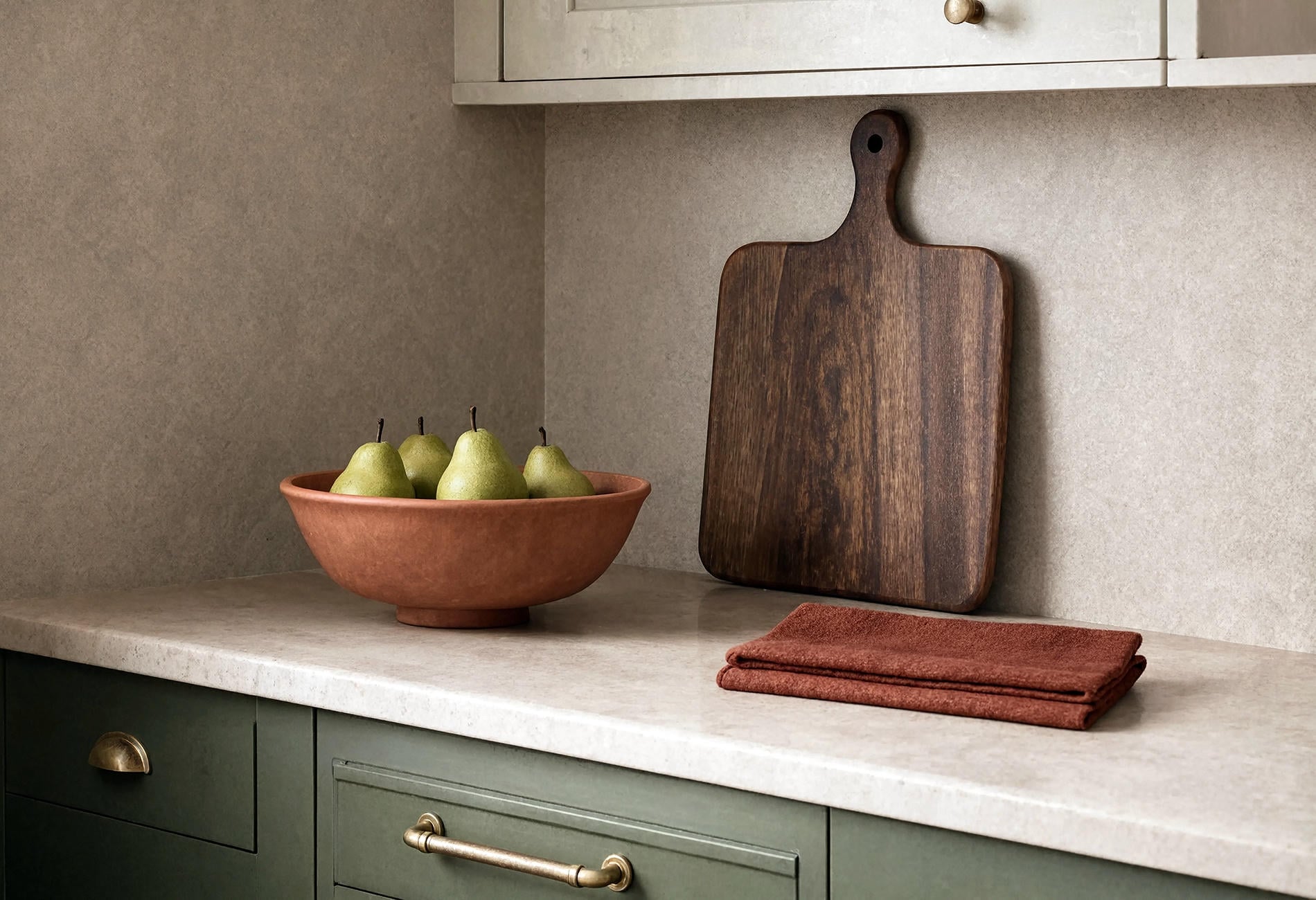
Choose one corner outside the main prep path. Set down a decorative wood board, lean it safely against the backsplash, and place one substantial bowl of apples or pears in front. Add a folded rust linen towel if the area still feels bare. Done.
Near the range, keep combustible items, dangling fabric, and candles away from heat, and follow appliance guidance. By the sink, choose washable pieces that tolerate splashes. Pretty doesn't excuse a towel flirting with a burner.
For apartment kitchens, a small tray makes the seasonal moment movable. Hold a lidded tea canister with a plain finish, one mug, and a small pumpkin, then shift the whole tray when counter room gets tight. Check lease terms before hanging anything or changing hardware.
Let autumn color come from food and broad fields
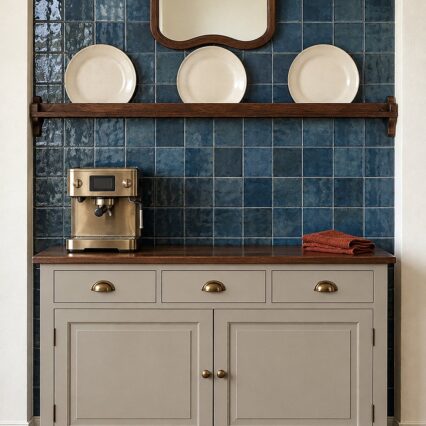
Look first at the colors already in the room before choosing an autumn palette. Cream cabinets welcome oxblood, ochre, deep green, and tobacco brown. Blue cabinets can take rust or warm copper. A black-and-white kitchen often needs one earthy midtone so it stops feeling like fall arrived wearing a name tag.
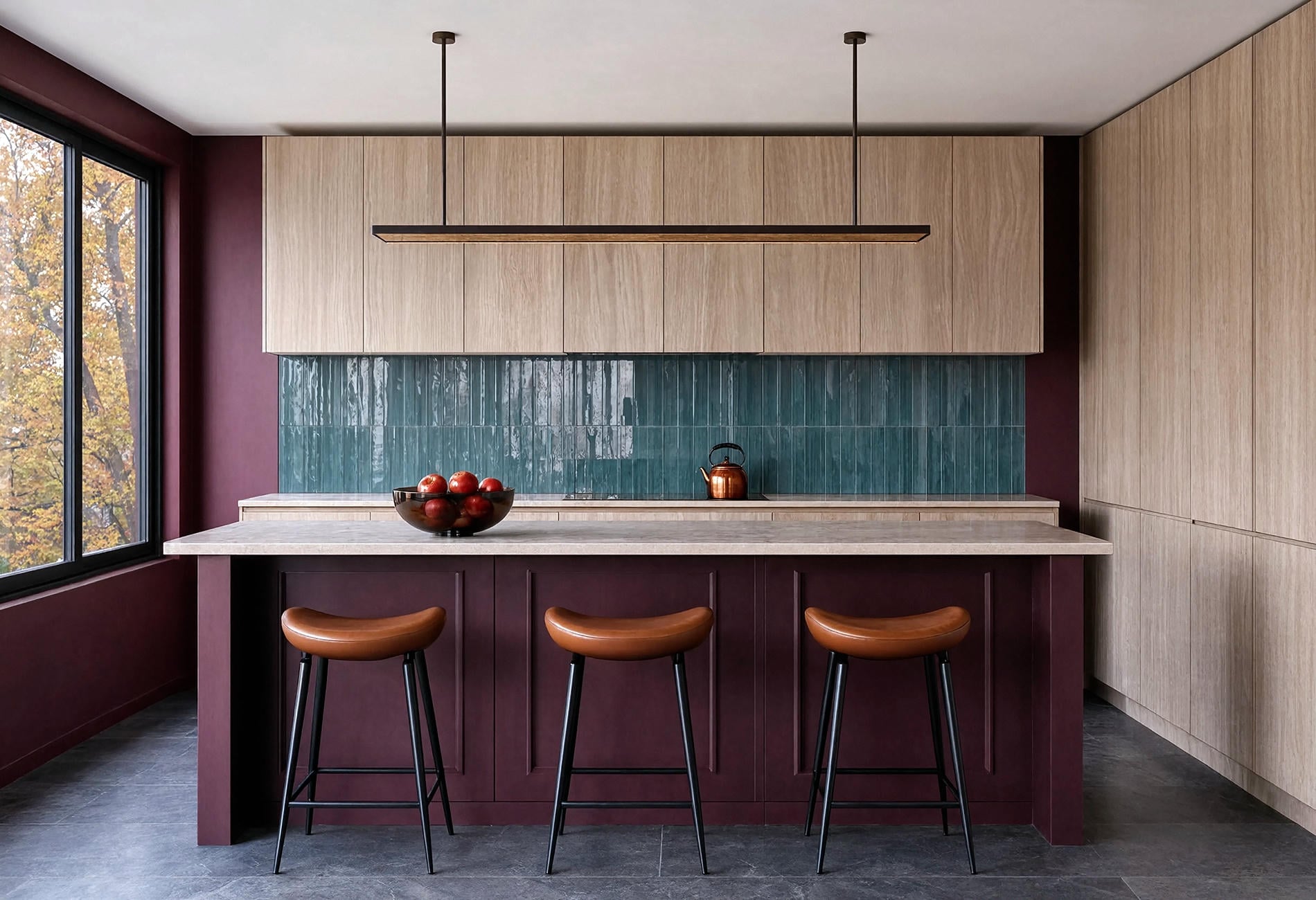
Use the new color on one broad field: a tablecloth, a long runner, a painted stool, or the island if you're ready for paint. Then repeat it once in something edible or useful. Equal little dots of orange around the room feel busier to my eye than one confident swath.
Neutral autumn kitchen styling doesn't have to mean beige piled on beige. Try mushroom, smoke, oat, dark walnut, and aged metal. Texture carries the season when contrast stays low: slubbed linen beside smooth stone, rush against painted wood.
Modern kitchens benefit from one precise move. A clay-colored runner, a broad smoked-glass bowl of red apples, or deep olive curtains can soften clean cabinetry without disguising it as a farmhouse.
Treat pumpkins like guests, not permanent staff
Pumpkins are charming. They also take up an astonishing amount of workplace for an object with no kitchen assignment.
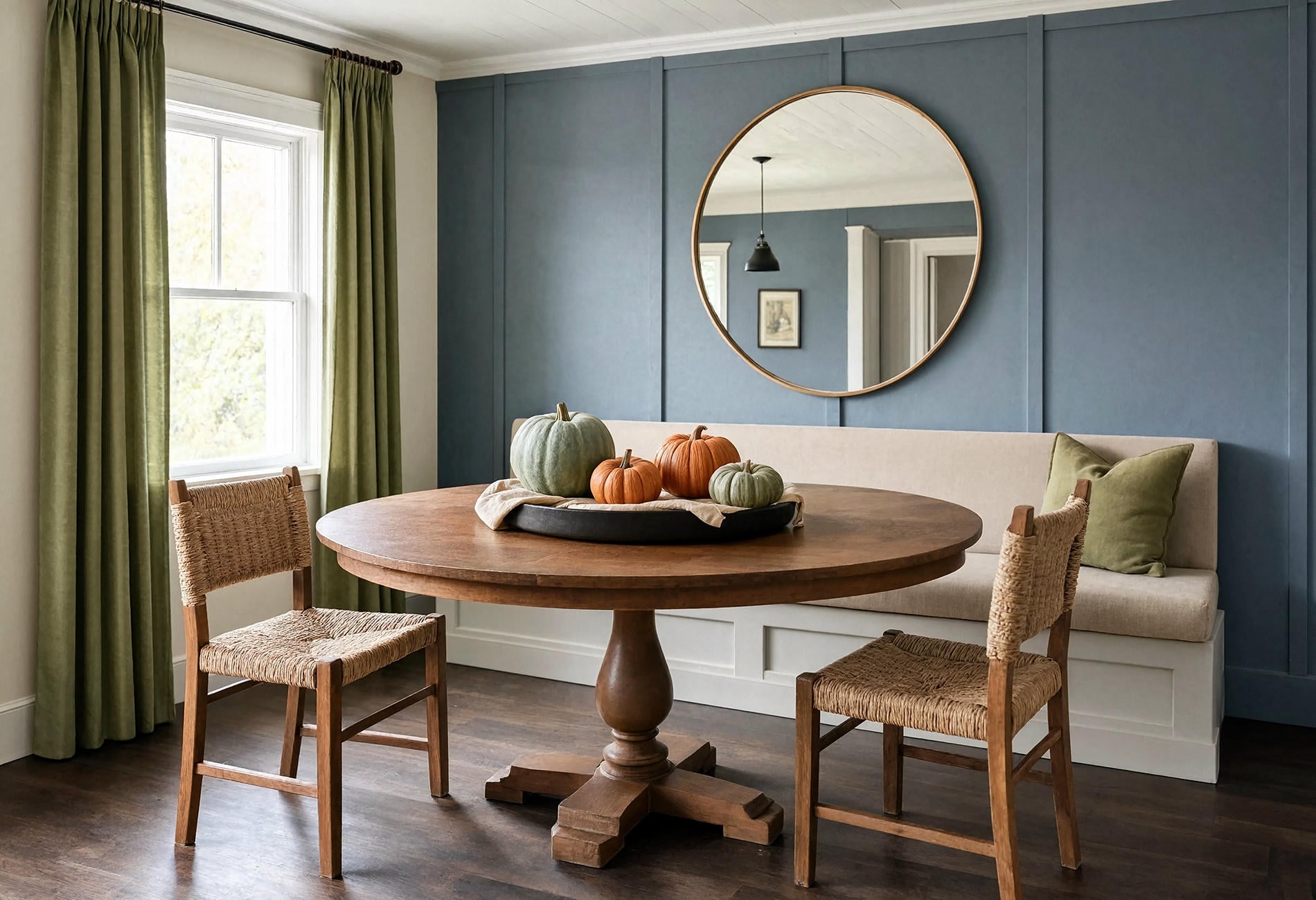
If pumpkins are your thing, choose a small group with distinct scale and put it where food prep doesn't happen: the middle of a dining table, a deep windowsill, or the end of a sideboard. Three is the obvious number, which is precisely why I'd use two or four. Perfect little triangles can look stage-managed.
Color can do the editing. Deep green and pale tan pumpkins feel quieter than a scatter of bright orange, while one rust-red squash beside a broad wood bowl brings more depth. Real produce changes as the season moves; that's part of the pleasure.
Inspect natural materials and dispose of anything that softens or spoils. Keep arrangements away from flame and heat. The little stem will catch your sweater at least once, because autumn insists on slapstick.
Make the table the generous part
The kitchen table can carry a larger gesture because its whole purpose is gathering. Use a washable flax cloth or a heavy runner, then center one low object that doesn't block faces.
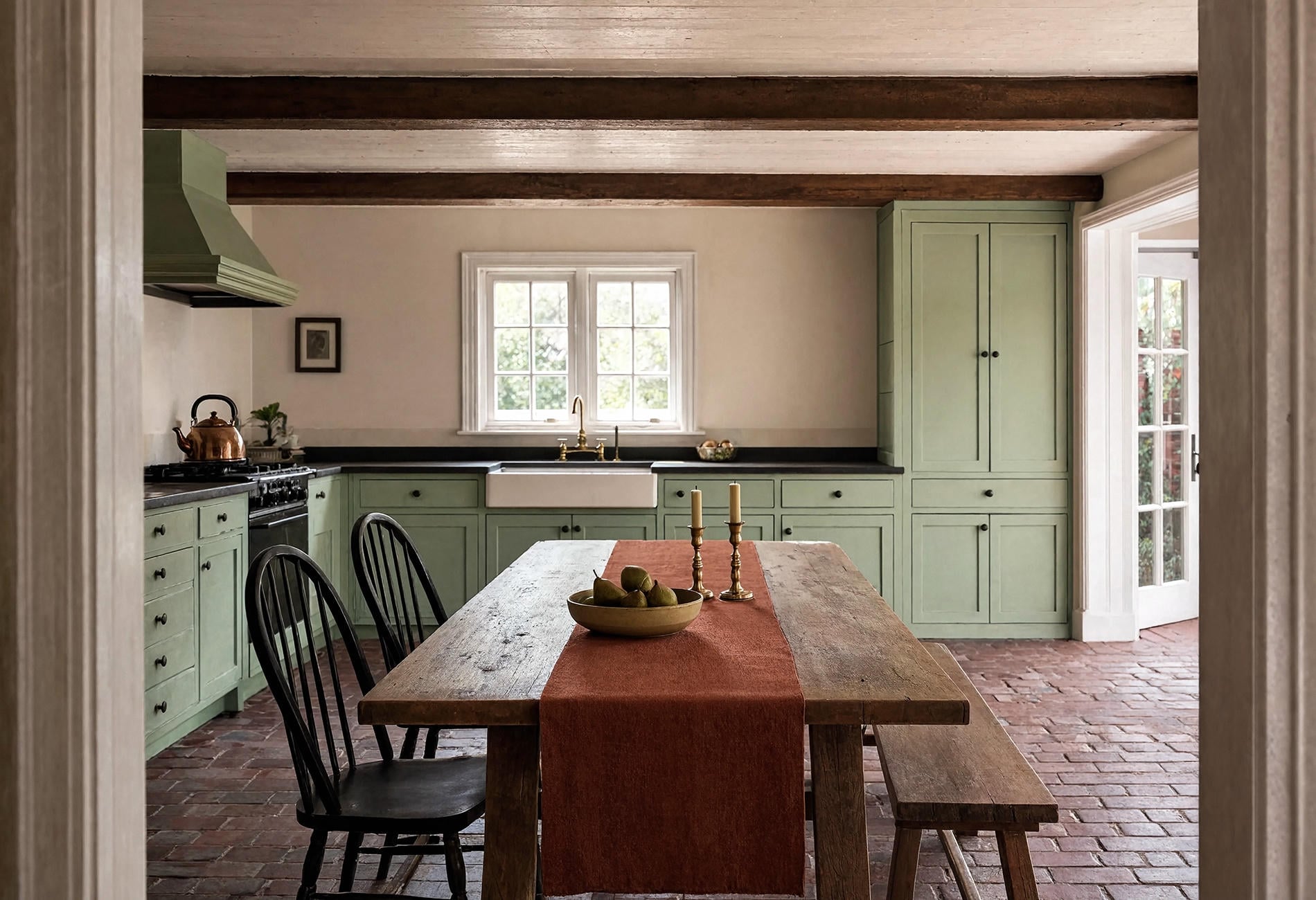
A broad wooden bowl of pears, a cluster of four small pumpkins on a stone tray, or one earthenware pitcher with sturdy branches can work. Keep the branch height above eye level or trim it low; conversation shouldn't happen through a twig maze.
The table gets richer when the chairs join in. Add one rust seat cushion to a bench or drape a washable wool-blend throw over the end chair. Don't dress every chair. Someone has to sit down without completing a textile-removal ceremony.
A rustic farmhouse kitchen already has wood, iron, and simple work surfaces doing half the seasonal work. Bring in a deep green cloth, burnished copper, or aged red rather than another layer of faux-weathered objects. A working farm table doesn't need a sign explaining that it's a table.
Style open shelves with less than you removed
Take everything off one shelf and put back the pieces you use: a short stack of bowls, a broad pitcher, perhaps a lidded crock. Then add one seasonal object, such as a small rust-colored squash or folded checked napkin.
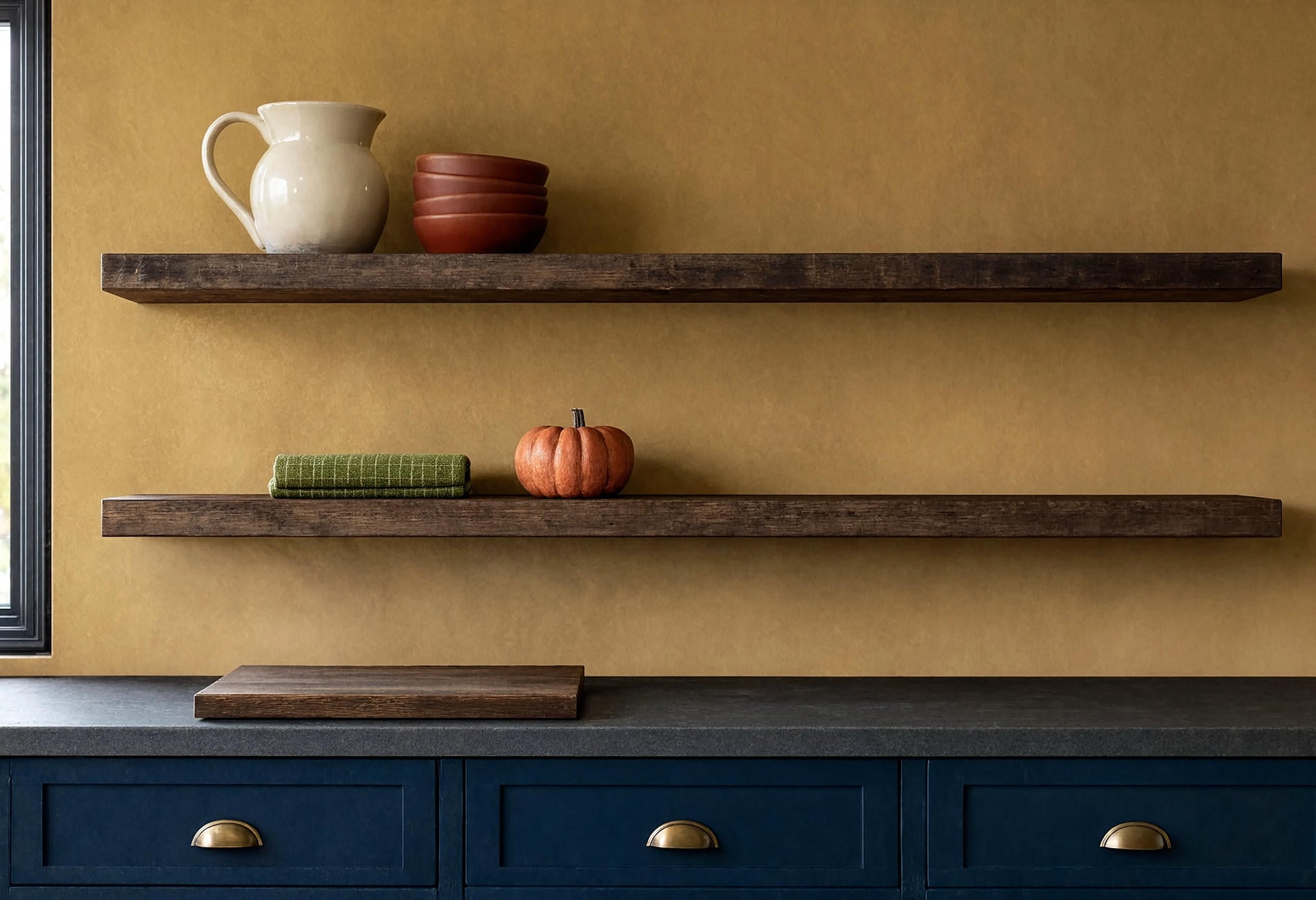
That approach makes the autumn shelf feel edited instead of accumulated. Leave a patch of bare shelf around the seasonal item so you can actually see it. Negative room around an object is free, which is suspiciously generous of it.
Vintage accents are strongest when they still have a job. An old copper kettle, a dark wood breadboard, a worn yellow mixing bowl, or a simple turned stool brings age without requiring a pile of collectibles. Describe the material, feel the weight, use the thing.
If open shelves are already visually busy, leave them alone and move the autumn note to the table. Every room doesn't need every idea.
Build a coffee corner that wakes up with you
A cozy autumn coffee corner can be one tray. Put the daily brewer or kettle where it's approved to operate, keep cords arranged according to product directions, and gather a mug, spoon rest, and sealed container nearby.

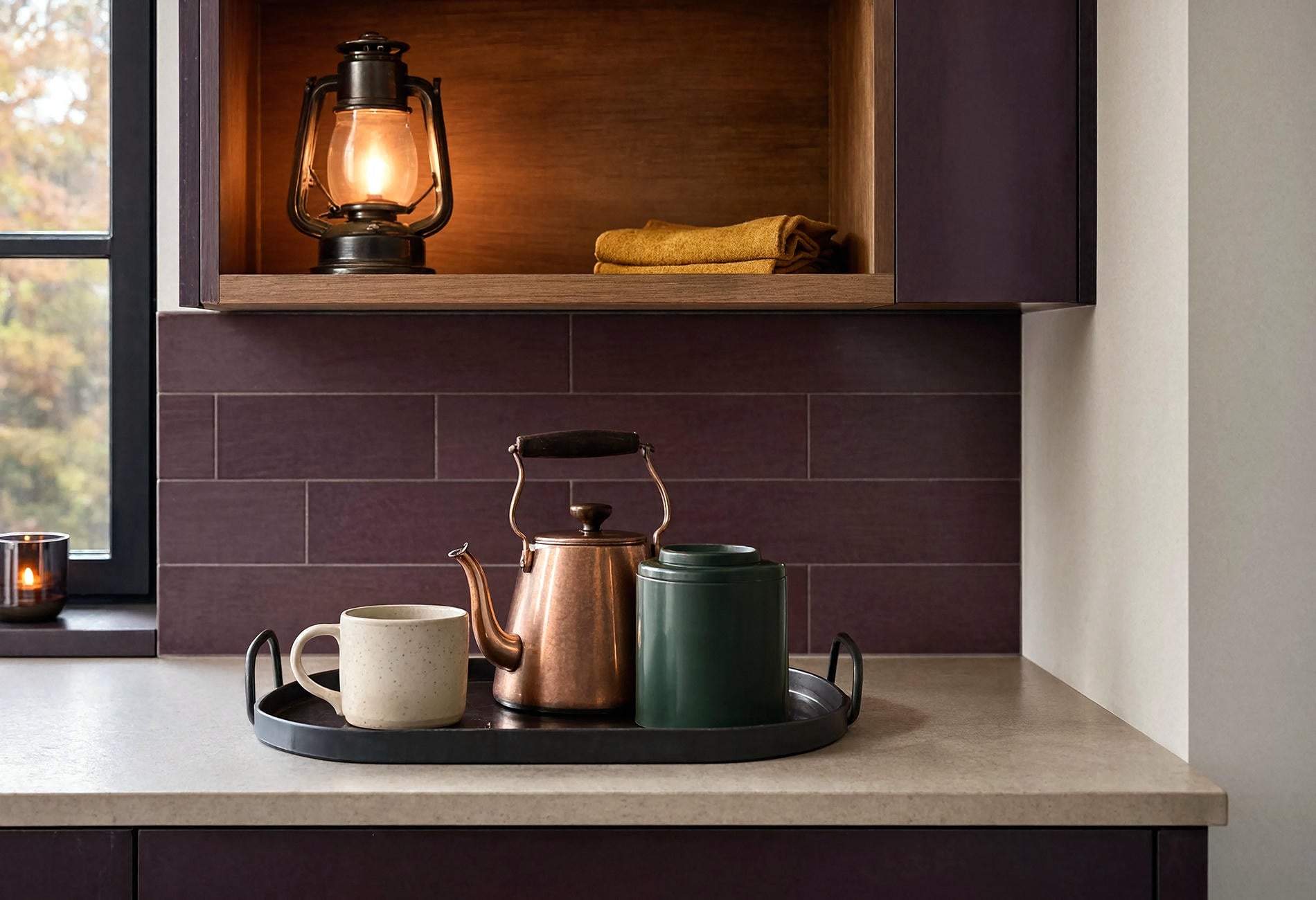
Set a folded plaid napkin under the mug or lean a small wood board behind the tray. Add cinnamon sticks only if you use them and store them appropriately. Function is what keeps the arrangement charming after the first week.
Scent can come from actual coffee, toast, or apples cooking. With fragrance and candles, remember that some people and pets are sensitive; keep it optional, ventilate as appropriate, follow all label directions, and never leave flame unattended. A battery candle in ribbed glass gives a similar evening flicker with less fuss.
I prefer one scent at a time. Coffee plus spiced candle plus simmering fruit can make the kitchen smell like three shops sharing one tiny hallway.
Change fabric before buying objects
On a budget, textiles move the room fastest to my eye. Swap bright summer towels for ochre or rust, lay a washable runner near the sink, and fold a heavier cloth across the table.
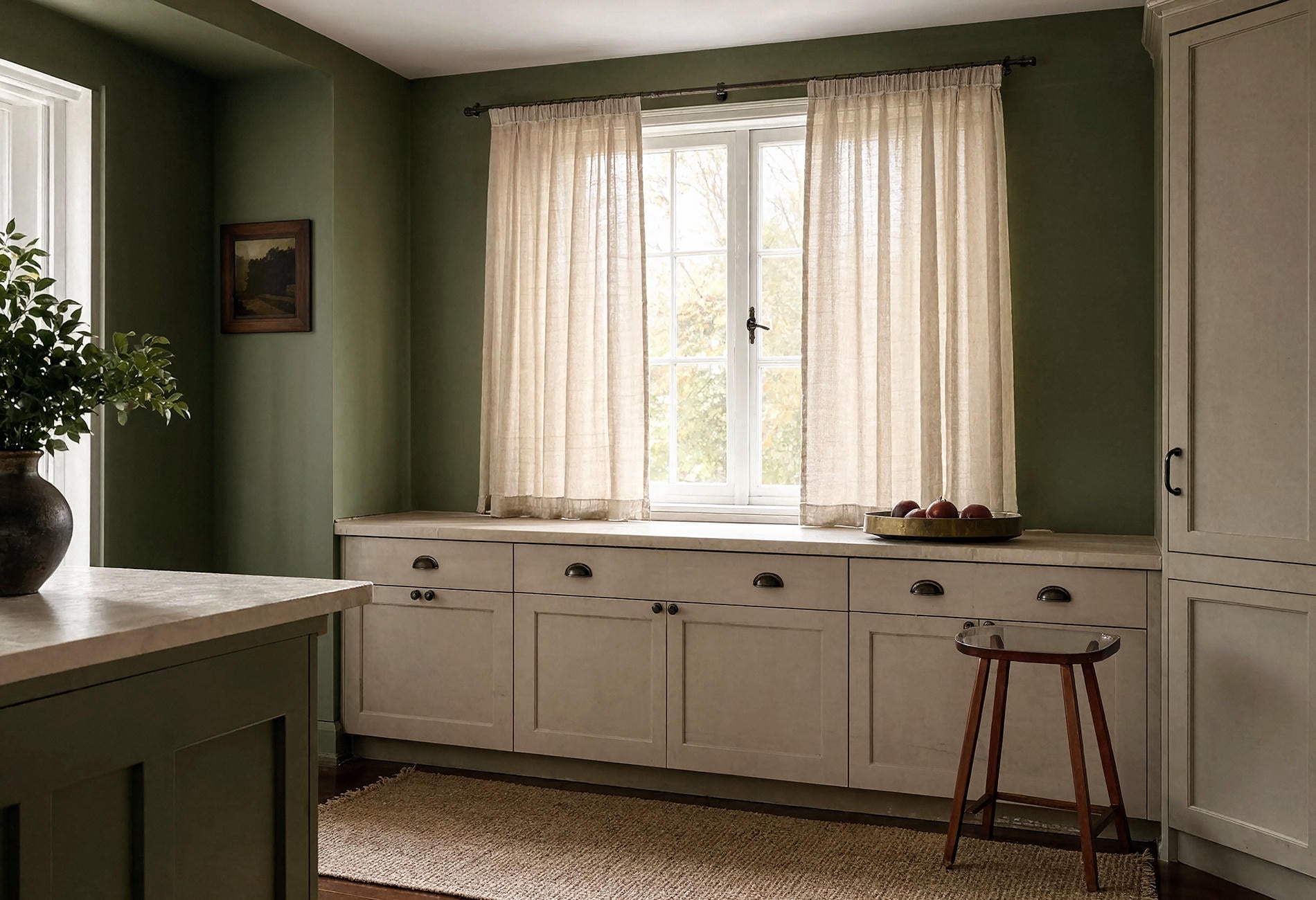
At the window, try a cafe curtain in oat linen, a woven shade, or full panels in deep olive where the room and mounting allow. Keep fabric safely away from cooking heat and use hardware appropriate to the wall; renters should follow lease terms and product weight guidance.
A secondhand stool painted oxblood can become the one saturated note. A thrifted crock can hold wooden spoons if it's clean and suitable for the job. On a modest budget, I'd rather buy one useful vintage piece than a bag of seasonal filler.
Apartment dwellers can store the whole season in one lidded bin: four pillow or seat covers, two towels, a runner, and one simple tabletop object. When November ends, the kitchen gets its cabinet back.
Fall Kitchen Decorating Q&A
When should I start decorating my kitchen for fall?
Start when cooler light, weather, or your own routines make warmer texture feel good. There's no design prize for being first, and climate makes one universal date silly.
How do I decorate a kitchen island for autumn?
Protect the main prep zone and use one end for a low, movable arrangement. A broad tray with two small pumpkins and one wood bowl is enough; move it whenever the island needs to work harder.
What are good fall colors for kitchen decor?
Rust, oxblood, ochre, deep olive, mushroom, and warm wood all read beautifully in autumn. Choose shades that connect to your cabinets and counters, then use one as the main note.
How can I add subtle fall touches to a modern kitchen?
Change one large textile, bring in a bowl of seasonal fruit, and add a single earthy color against the clean cabinetry. Keep counters mostly clear so the architecture still reads.
How can renters decorate a kitchen for fall?
Use movable trays, towels, a table runner, seat cushions, and lease-approved window treatments. Avoid permanent changes, respect weight limits, and keep all fabric safely away from cooking heat.
By evening, the curtain turns olive against the dark glass and the wood board catches a stripe of lamp light. Two pears remain in the bowl. The kitchen smells like coffee, because somebody made coffee -- which is plenty of autumn for one room.