A French kitchen does not need a rooster, a sign that says "boulangerie," or a theatrical dusting of flour. Its real appeal comes from tension: old materials beside practical appliances, graceful details in a room that expects to work hard, and a few beautiful objects that earn their place through daily use.
That leaves plenty of room for interpretation. A country kitchen in Provence may lean toward limestone, painted wood, and copper. A Paris apartment kitchen can be tighter, sleeker, and more urbane, with marble, dark cabinetry, and cafe-like lighting. Both can feel French because neither is trying to make every surface agree.
The best French kitchen aesthetic ideas begin with the room you have. Keep the useful bones, add age where it brings warmth, and resist buying a matching set of anything.
Start With a Quiet, Mineral Color Palette
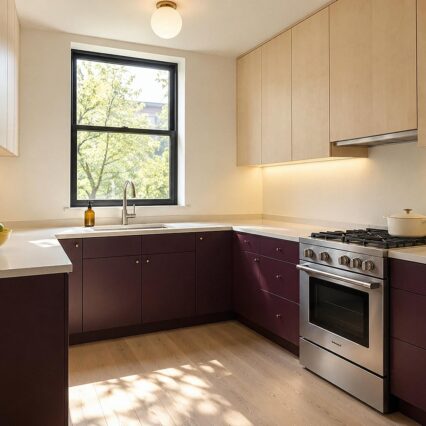
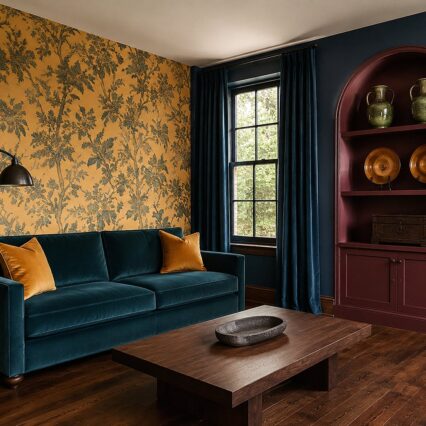
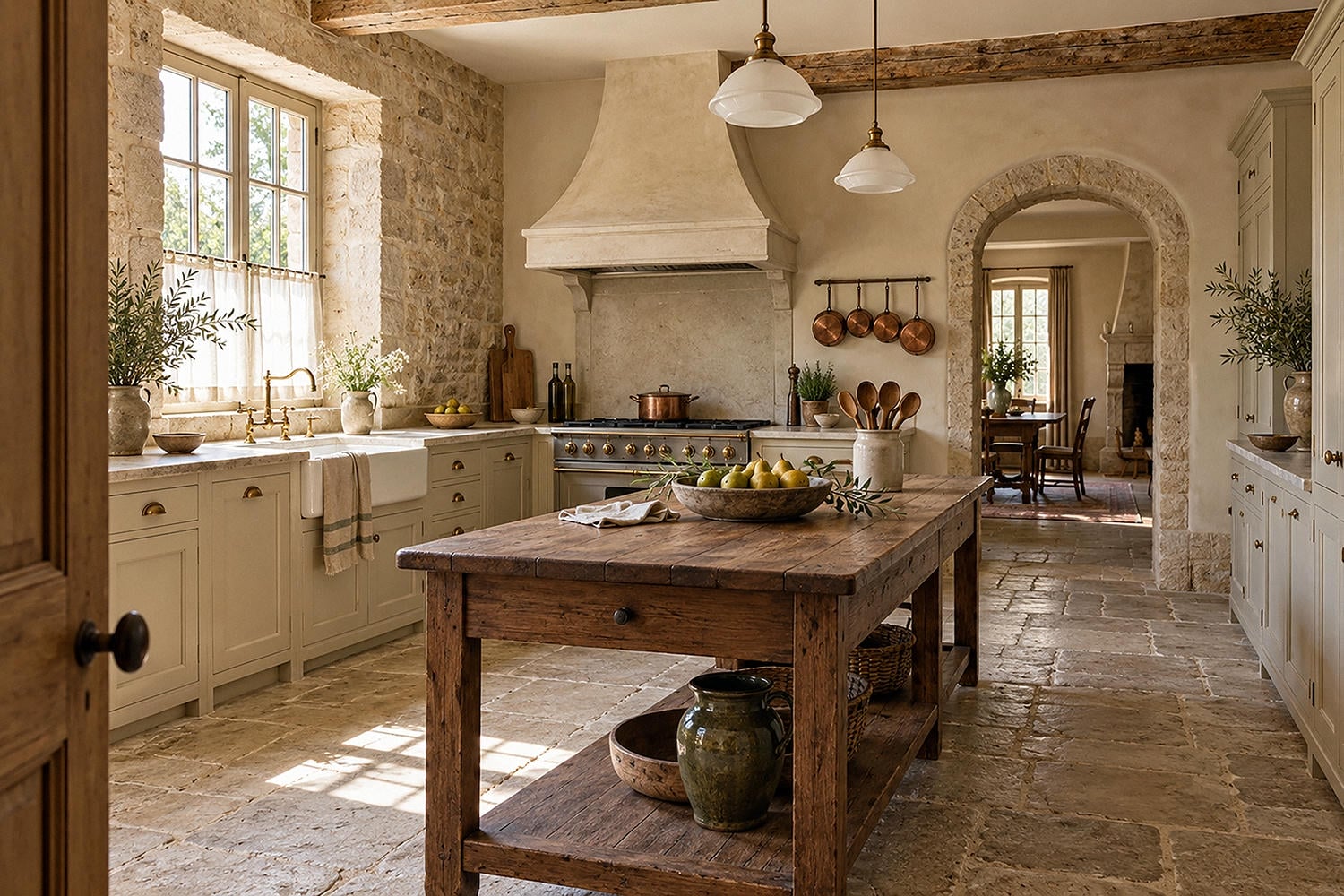
What colors are used in a French kitchen? Usually colors that look convincing beside stone, wood, metal, and food. Chalky white, warm cream, mushroom, putty, faded blue, olive, tobacco, and deep charcoal all belong. Burgundy or oxblood can appear in a small dose, especially in a Parisian scheme.
The important word is muted. A blue with a little gray feels easier beside copper than a sugary pastel. Cream should look warm without drifting into yellow. Even black is often softened to soot or ink.
Choose one pale field color, one grounding tone, and one living material. For example, warm white walls, olive cabinets, and a walnut table create more depth than five decorative colors. Let produce, pottery, linens, and cookware supply the smaller notes.
Let Vintage French Kitchen Cabinets Show Their Age
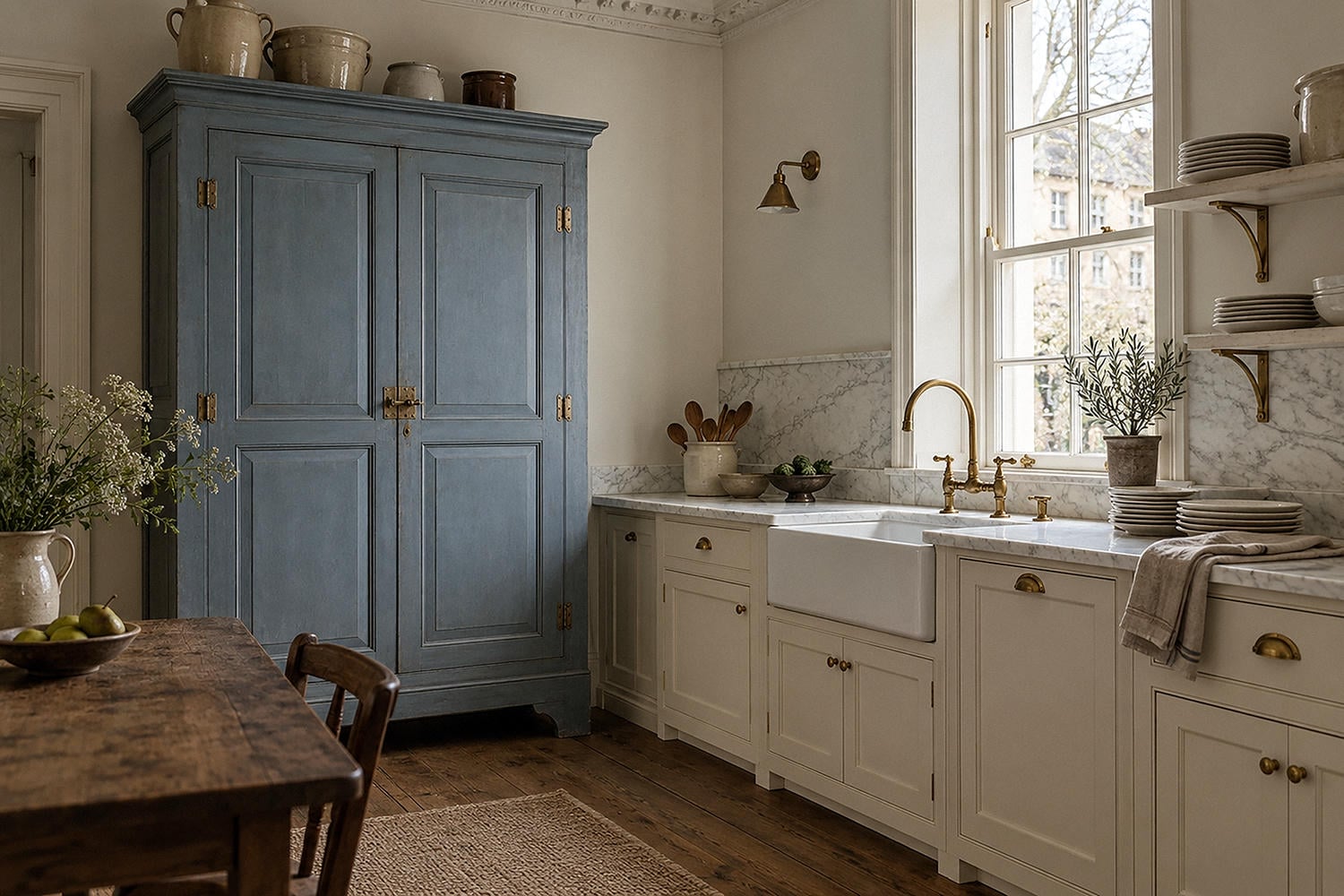
Vintage French kitchen cabinets rarely look factory-perfect. Their charm comes from visible hinges, furniture-like feet, inset doors, simple latches, and finishes with a little variation. You can capture that character without replacing every cabinet.
Try repainting only the island or lower cabinets, then use unlacquered brass knobs that will darken through handling. A freestanding armoire can become pantry storage. An old worktable can replace a built-in island if the clearances allow it. Even a new Shaker cabinet looks less generic when paired with a recessed toe kick, traditional hinges, and a warm hand-painted color.
Keep wear believable. Sanded corners on every door read as manufactured distressing; one old cabinet with honest marks is much more persuasive.
Give the Range Hood Some Architectural Weight
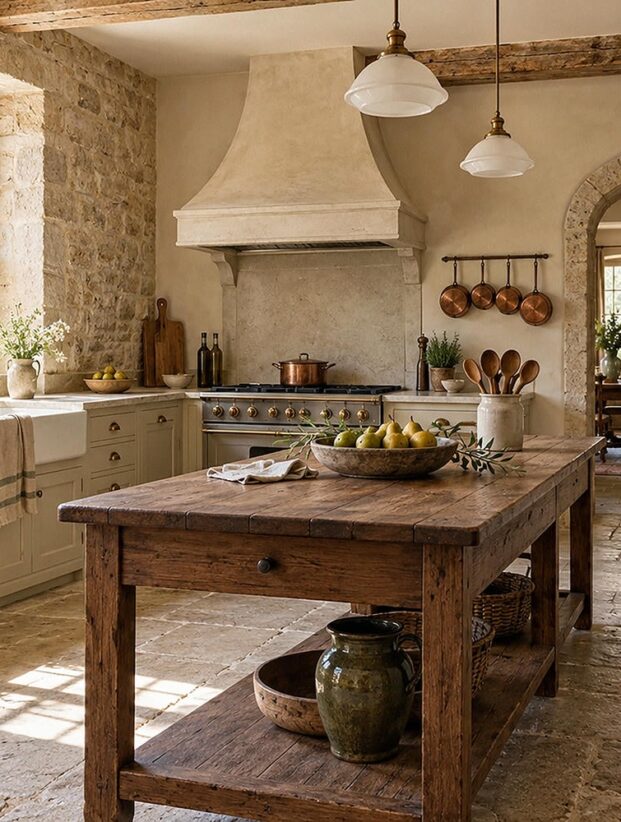
A French country kitchen range hood often acts like a small piece of architecture. Plaster, limewash, wood trim, or a stone-like surround can give the cooking wall a strong center without turning it into a stage set.
Proportion matters more than decoration. A hood that is slightly wider than the range looks settled. A shallow shelf or simple corbel can add character, but grease-catching ledges are less romantic once cleaning day arrives. Check appliance clearances, ventilation requirements, and local code with the installer before designing the surround.
In a smaller Parisian kitchen, a slim metal hood or a discreet insert can work better. French character is not measured by the number of curves above the stove.
Display Antique Copper Cookware With Restraint
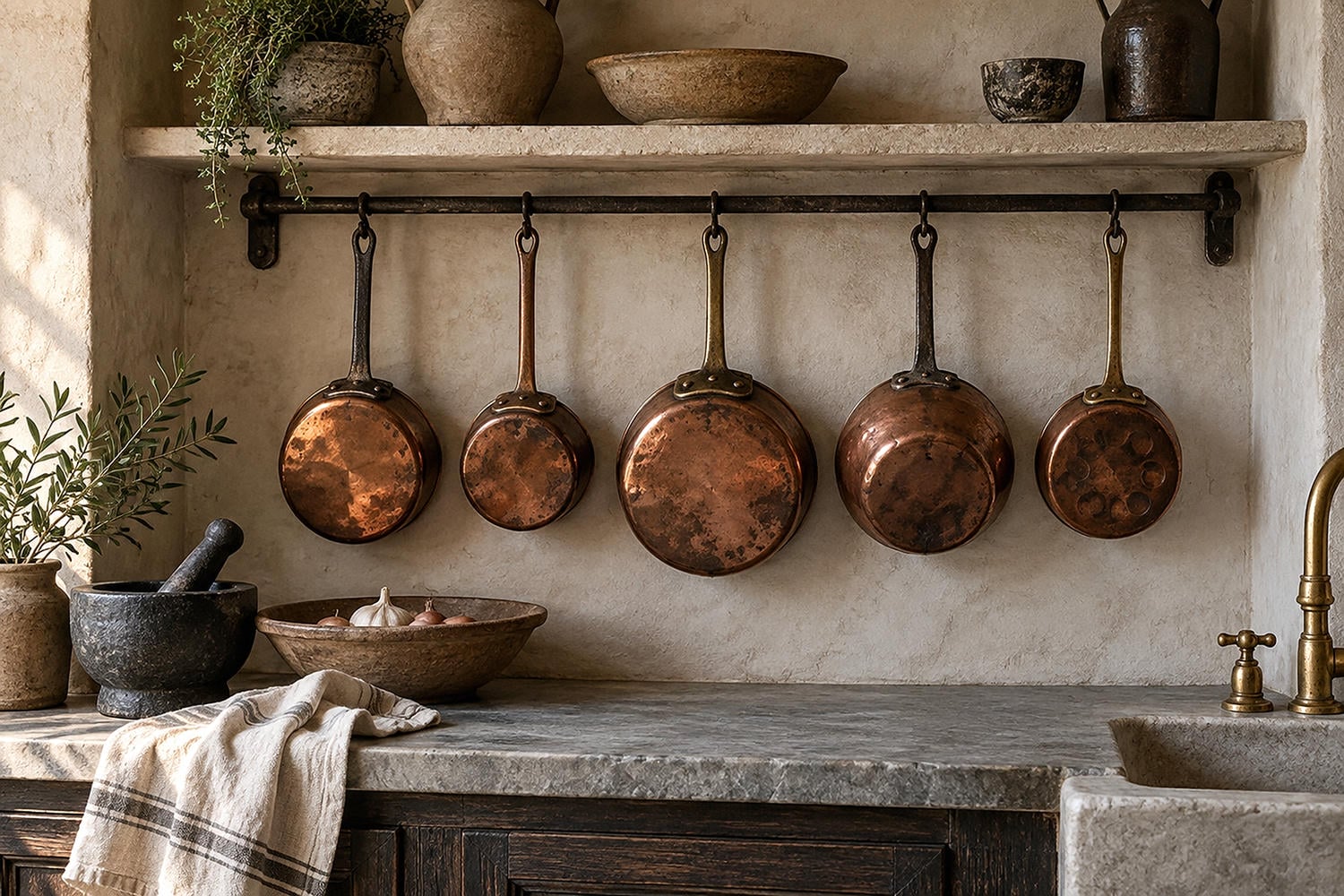
An antique copper cookware display gives a French kitchen instant warmth because the pieces are both sculptural and useful. Hang a short row from a sturdy rail, place two large pans on an open shelf, or stand one burnished stockpot above an armoire.
Do not scatter copper across every wall. Five pans grouped together look intentional; five isolated copper objects can feel like props. Mix polished and patinated pieces for a less showroom-like finish.
Before cooking in antique copper, inspect its lining. Decorative pieces can be displayed as-is, but cookware with damaged or unknown interior lining should be assessed by a qualified retinner or cookware specialist before food use.
Use French Cafe Kitchen Lighting, Not Just One Bright Fixture
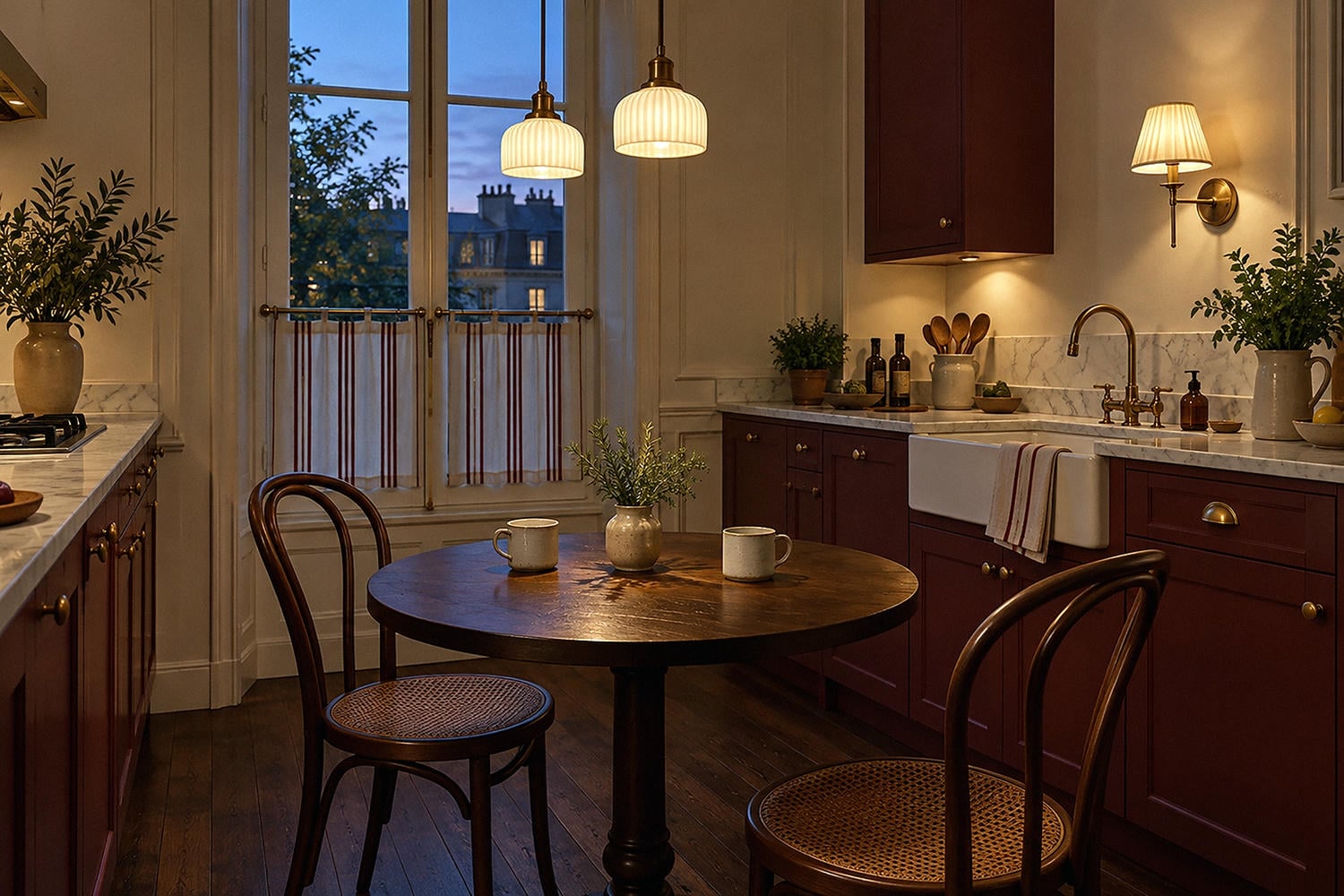
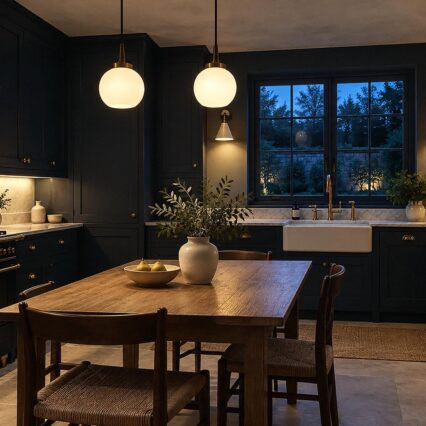
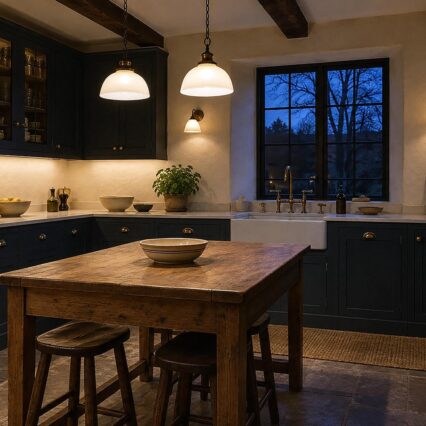
French cafe kitchen lighting feels intimate because light comes from several levels. A pair of opal glass pendants over a worktable, a small shaded sconce over the sink, and warm under-cabinet task lighting will do more for the mood than one oversized chandelier.
Choose fixtures with simple silhouettes and finishes that age well: ribbed or milky glass, aged brass, painted metal, or ceramic. Keep strong task light at chopping and cooking zones, then put decorative fixtures on dimmers where compatible. The glow can be flattering without making the cook guess whether the chicken is done.
For a low ceiling, use shallow schoolhouse lights or petite flush mounts. A dramatic fixture belongs where people will not hit it and where it will not interrupt cabinet doors.
Consider a Checkerboard Floor With Softer Contrast
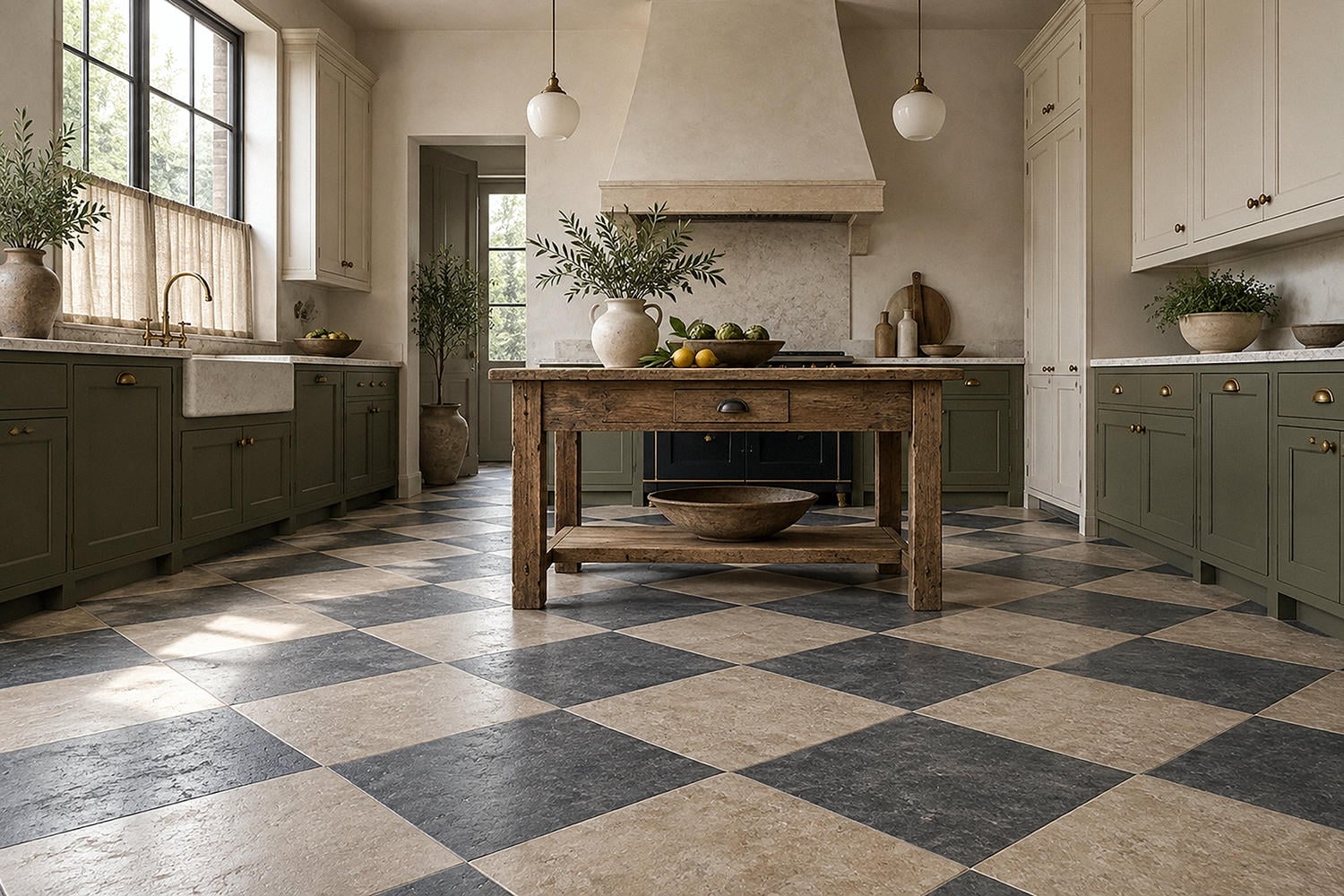
A checkerboard floor in a French kitchen can be graphic without resembling a diner. Replace hard black and white with charcoal and limestone, terracotta and cream, or two warm stone tones. A honed or matte surface also feels quieter than polished tile.
Scale the pattern to the room. Small checks can become busy in an open kitchen, while enormous squares may make a compact room feel like a fragment of a lobby. Lay out several full-size paper squares before ordering.
For rustic French stone kitchen floors, irregular limestone, reclaimed terracotta, or convincing porcelain lookalikes bring age underfoot. Natural stone needs product-specific sealing and care; porcelain is often the easier choice for a busy household. Whatever the material, confirm that it is rated for floors and appropriate for the expected wet conditions.
Add Bistro Curtains Where Privacy Is the Real Problem
Bistro curtain kitchen ideas are especially useful at a street-facing window. A short panel covers the lower sash while keeping the upper glass open to daylight. That practical split is what makes the treatment feel natural.
Use washed linen, cotton voile, a fine stripe, or a restrained check. Mount the rod inside the frame when possible, and let the fabric skim rather than puddle. Full cafe theatrics - scallops, script, lace, and tassels together - quickly overwhelm a small window.
At a sink, choose washable fabric and enough clearance to keep it away from splashes and flames.
Choose Countertops That Improve With Use
What countertops are used in French kitchens? There is no single answer. Marble, limestone, soapstone, wood, and tile all appear, along with modern quartz and porcelain surfaces chosen for easier upkeep.
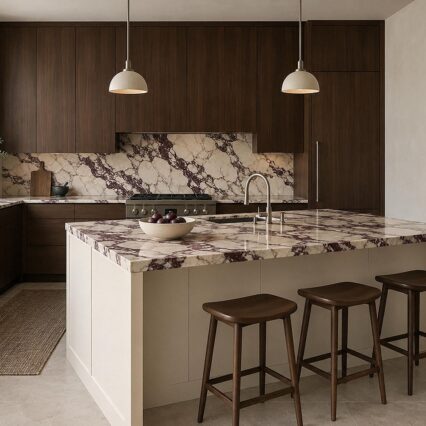
Honed marble brings softness and accepts a visible patina, but it can etch and stain. Soapstone darkens and scratches, then can be renewed. Wood is warm and repairable but needs sensible water management around sinks. Quartz offers consistency, though highly dramatic printed veining can fight the quieter materials around it.
Pick according to your tolerance for change. If every lemon mark will feel like a crisis, do not let a romantic photograph talk you into marble.
Let an Unlacquered Brass Faucet Age Naturally
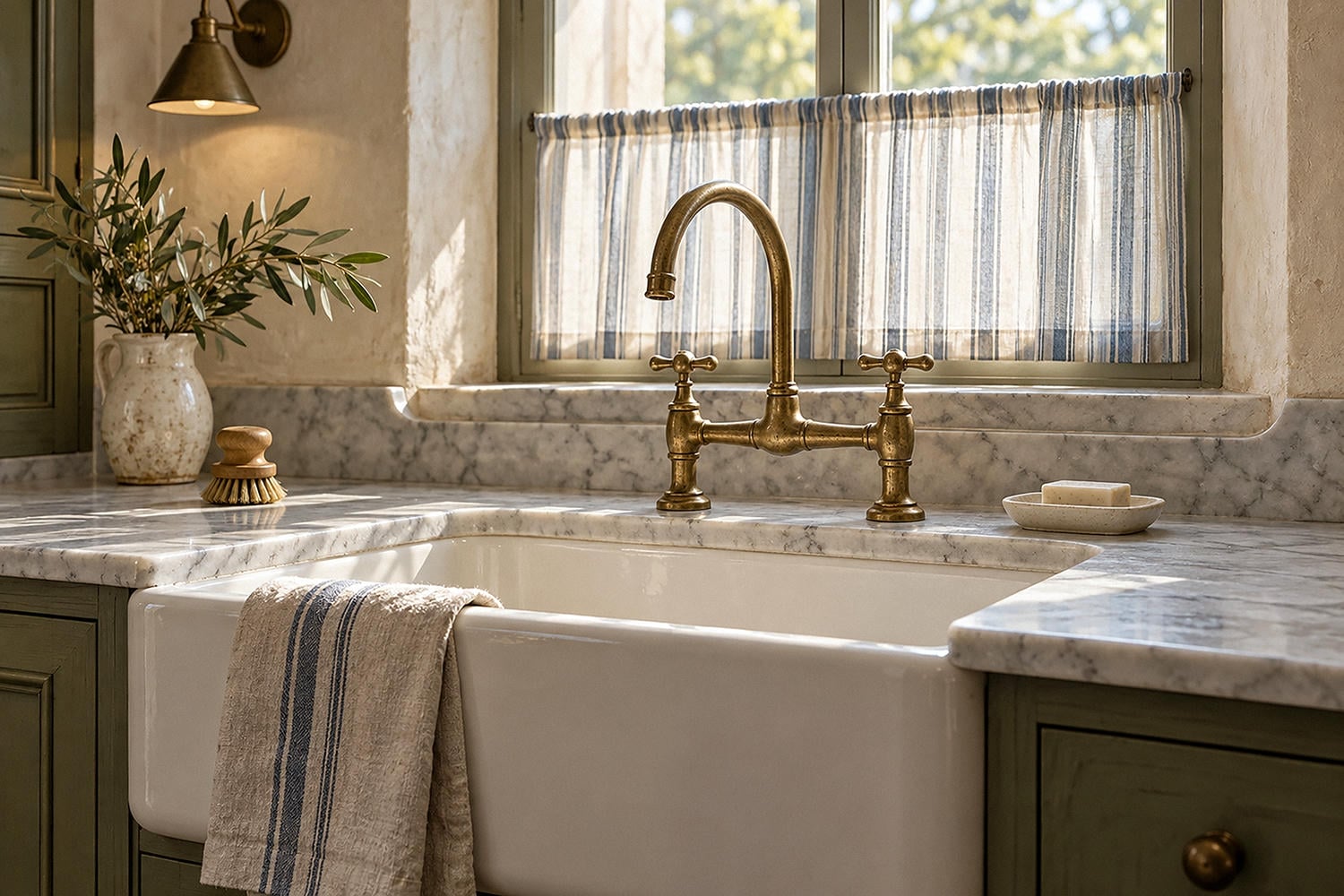
An unlacquered brass faucet in a French kitchen changes color as it meets water, air, and hands. That evolving surface suits a room built around natural materials. It will not stay evenly golden, and that is the point.
Before buying, confirm that the finish is genuinely unlacquered and review the manufacturer's cleaning instructions. Abrasive polish may erase the patina unevenly. If you prefer a stable finish, aged-brass or brushed-brass plating can offer a similar warmth with less change.
Mixing metals is fine. Brass plumbing, dark iron lighting, and stainless appliances can coexist when each finish appears at least once more or is clearly tied to a function.
Use Vintage French Kitchen Wall Art Sparingly
Vintage French kitchen wall art works best when it looks discovered rather than ordered as a themed bundle. A small still life, an old market sketch, a ceramic platter, or an unframed oil can fill a quiet wall. Keep paper works away from steam and grease, and use protective glazing where necessary.
One strong piece above a breakfast table usually carries more character than a grid of generic cafe prints. If the room already has patterned tile, copper, curtains, and open shelves, the blank wall may be doing useful work.
Understand the Layout Before Copying the Look
What is a classic French kitchen layout? Historic examples vary enormously by building, region, and era. Many were workrooms rather than open-plan social spaces. Furniture, wall storage, a central table, and a substantial cooking area often mattered more than today's uninterrupted run of cabinetry.
That makes a furniture-based plan a useful modern translation. A table can serve as prep space and dining; an armoire can hold dishes; a narrow console can become a coffee station. In a larger room, create a clear path between sink, range, refrigerator, and main prep surface before adding decorative pieces.
Good circulation is more French than a faux-antique island that blocks the oven.
French Country Versus Parisian Kitchen Style
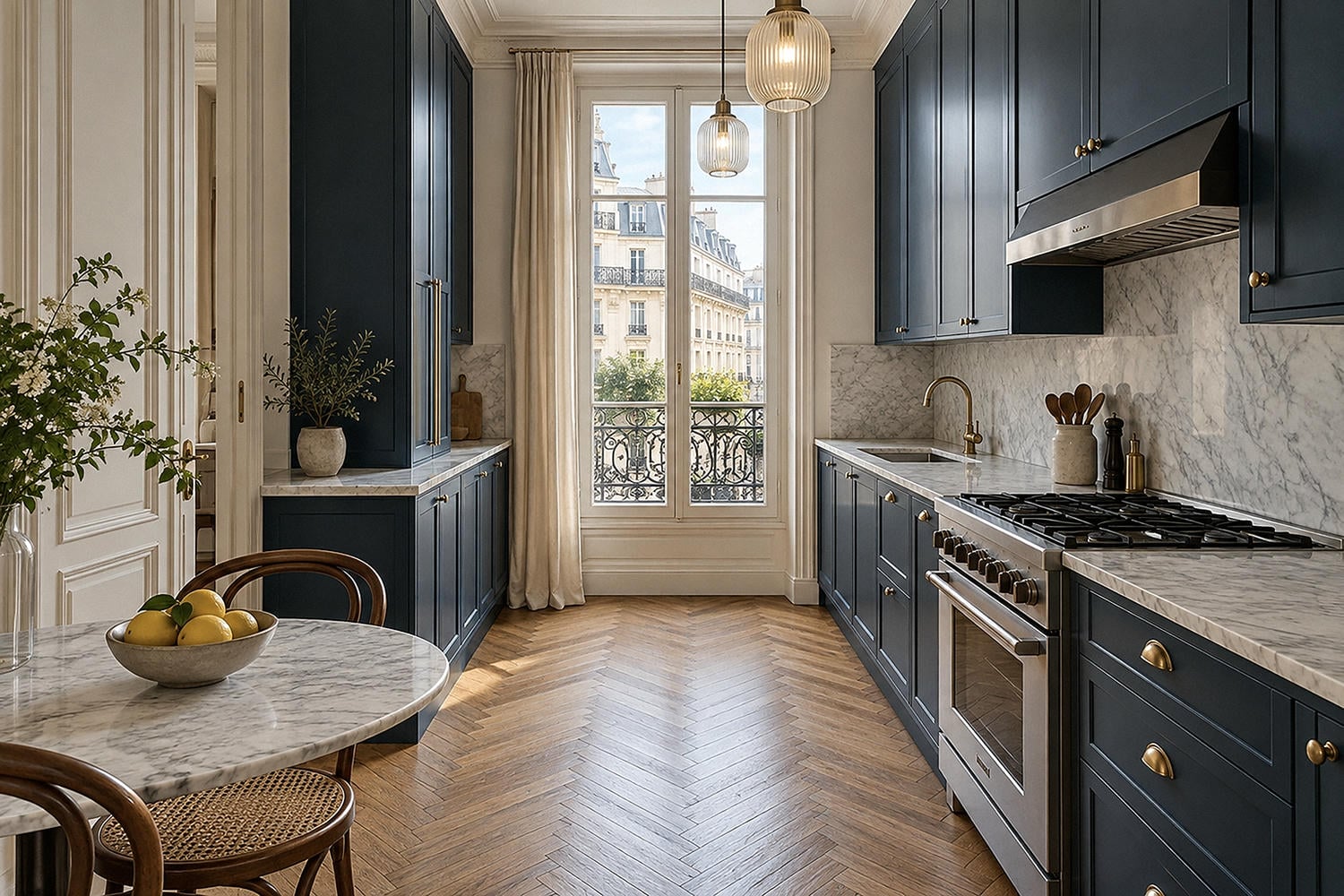
What is the difference between French country and Parisian kitchen design? French country usually leans rustic: pale painted wood, rough stone, terracotta, linen, copper, and generous farmhouse forms. Parisian kitchens tend to be more compact and polished, often using marble, dark or creamy cabinets, tailored lighting, and clever storage within older architecture.
They overlap in their respect for good materials and useful objects. You can combine them, but choose a lead. A stone floor, plaster hood, and farmhouse table make a country base; slim brass lights and a burgundy cabinet can sharpen it. In an apartment, a marble shelf and cafe curtain can soften crisp cabinetry without pretending the room is a farmhouse.
How to Make a Kitchen Feel French Without Remodeling
Begin with edits, not purchases. Remove themed signs and matching accessory sets. Bring frequently used tools into view: a crock of wooden spoons, a linen towel, a pepper mill, a small lamp away from water, and a bowl for fruit. Replace one harsh ceiling bulb with layered, warm light.
Then make one material change with staying power. Add a cafe curtain, switch cabinet hardware, hang a safe cookware rail, or introduce a worn wood table. The room should feel as though it became more useful and more personal at the same time.
Frequently Asked Questions
How do I get a French cafe look at home?
Use intimate lighting, a small round or marble-topped table, bentwood or simple wood chairs, a cafe curtain, and one restrained piece of vintage art. Keep the palette limited so the details feel atmospheric rather than themed.
What colors make a kitchen feel French?
Warm white, cream, putty, faded blue, olive, charcoal, and deep wine tones are reliable starting points. Choose colors with softened undertones and test them beside the room's fixed stone, floor, and wood.
Do French kitchens use open shelving?
Some do, but it is not a requirement. One shelf for everyday dishes or cookware can add ease. Use closed storage for visual noise and anything that collects grease.
Can a modern kitchen have a French aesthetic?
Yes. Keep modern appliances and practical cabinetry, then introduce natural materials, furniture-like storage, aged metal, layered lighting, and a less rigid mix of finishes.
What is the fastest French kitchen update?
Change the light quality first. Add a shaded sconce or small lamp in a safe dry location, install compatible dimmers, and use warm bulbs. Then add one honest old object instead of a collection of reproductions.
A convincing French kitchen is not a catalog of symbols. It is a working room with good light, useful beauty, and enough looseness to let age look like an asset.