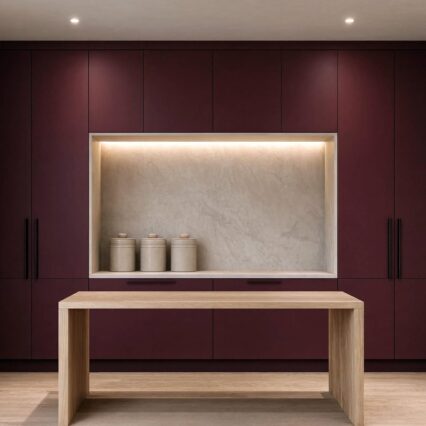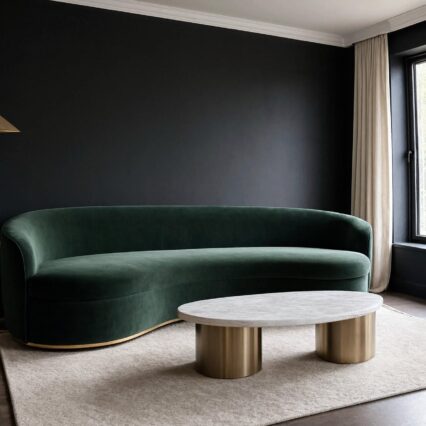
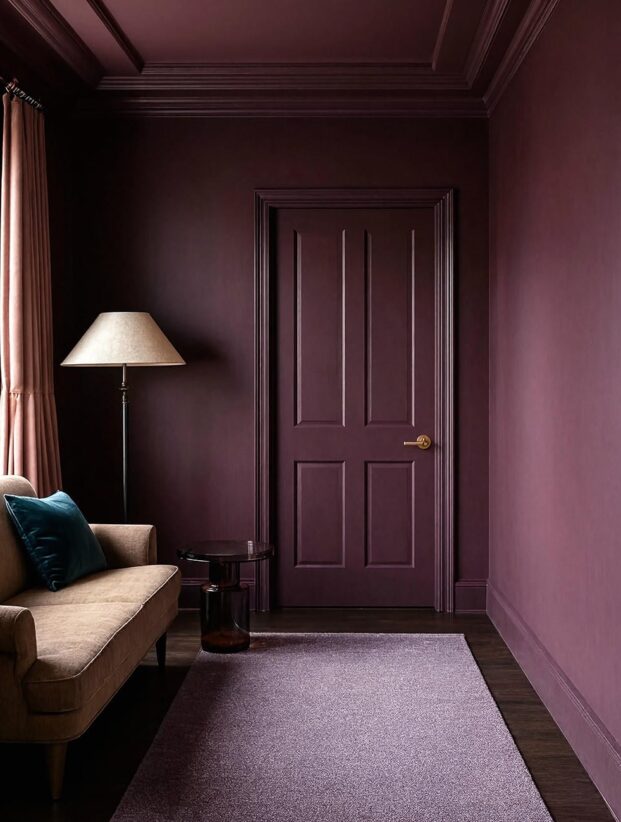
If you're about to paint a wall deep plum, pause before you reach for white trim and a grey sofa. Plum noir isn't a polite little accent that will smile beside anything. It has opinions, which is exactly why it's interesting.
Give it brown, red, and black notes to answer. Let light rake across it instead of blasting it flat. And choose a wall with enough visual authority to carry the color, because a timid sliver of burgundy behind a television can look like an apology.
My taste runs toward the dark, velvety version: rich aubergine with a burnt red undertone, paired with smoked oak or tobacco brown. It feels grown-up, slightly theatrical, and just dangerous enough to rescue a room from good behavior.
First, decide what kind of plum you actually want
Plum lives between purple, red, and brown, and that balance changes everything. A red-led plum reads warmer and can sit beautifully beside camel, walnut, rust, or dusty pink. A blue-led plum feels cooler, sharper, and particularly good with blackened metal, mineral blue, or a restrained warm white.
Test large painted samples on the intended wall. Look at them in morning, afternoon, and lamplight, because dark paint can reveal undertones that a tiny paper chip keeps secret. Put the sample beside your actual sofa, flooring, and curtains. Paint has no obligation to behave like it did under shop lights.
A useful sorting test is simple: wine, fig, or ink. Wine plums lean red. Fig plums carry more brown. Ink plums edge toward violet-black. Pick the family that already speaks to the fixed finishes you can't or don't want to change.
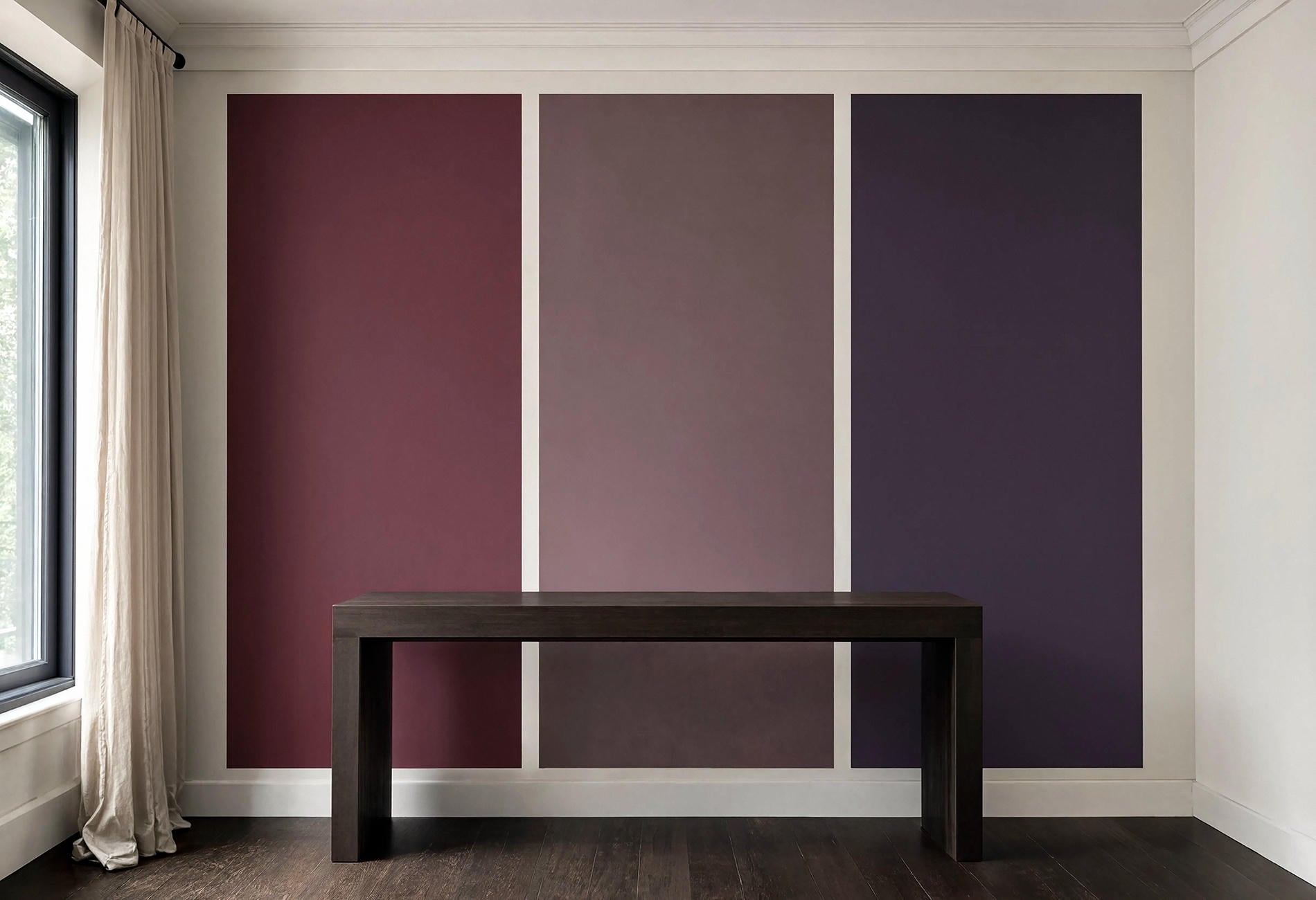
Choose the wall that already has a reason to matter
The strongest accent wall usually has a natural boundary: behind a bed, around a fireplace, at the end of a long room, or behind a sofa centered on a clear furniture grouping. Corners, millwork, and openings help the color finish its sentence.
Avoid selecting a wall only because it's empty. If the eye has no reason to land there, dark paint can make the choice feel arbitrary. Instead, ask where the room's main shape already lives, then use color to underline it.
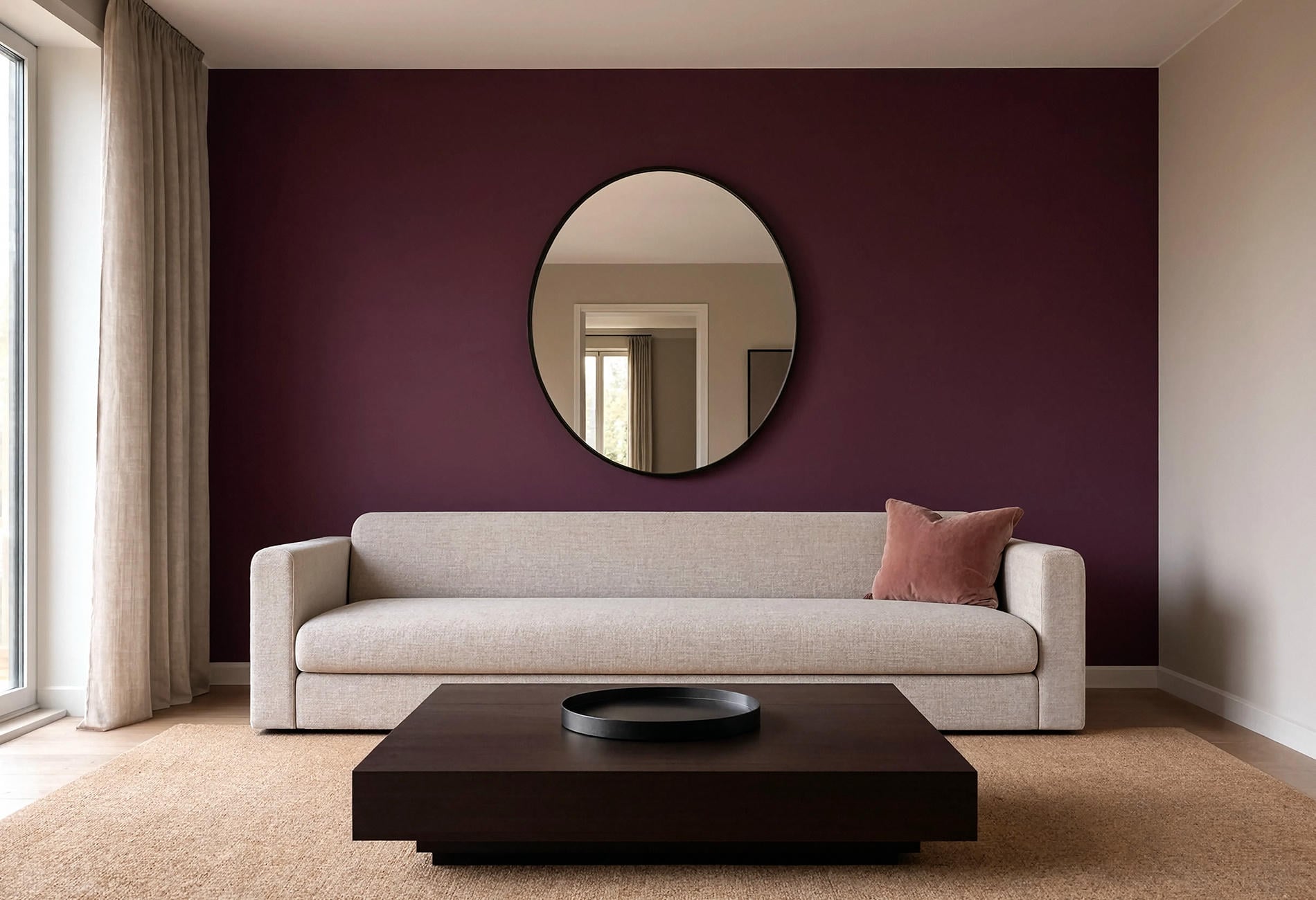
In an open living room, a plum wall behind a substantial sofa can anchor a rug and coffee table. Keep the adjacent walls quieter. I'd rather see one broad, assured field of plum than several little purple echoes scattered around like dropped grapes.
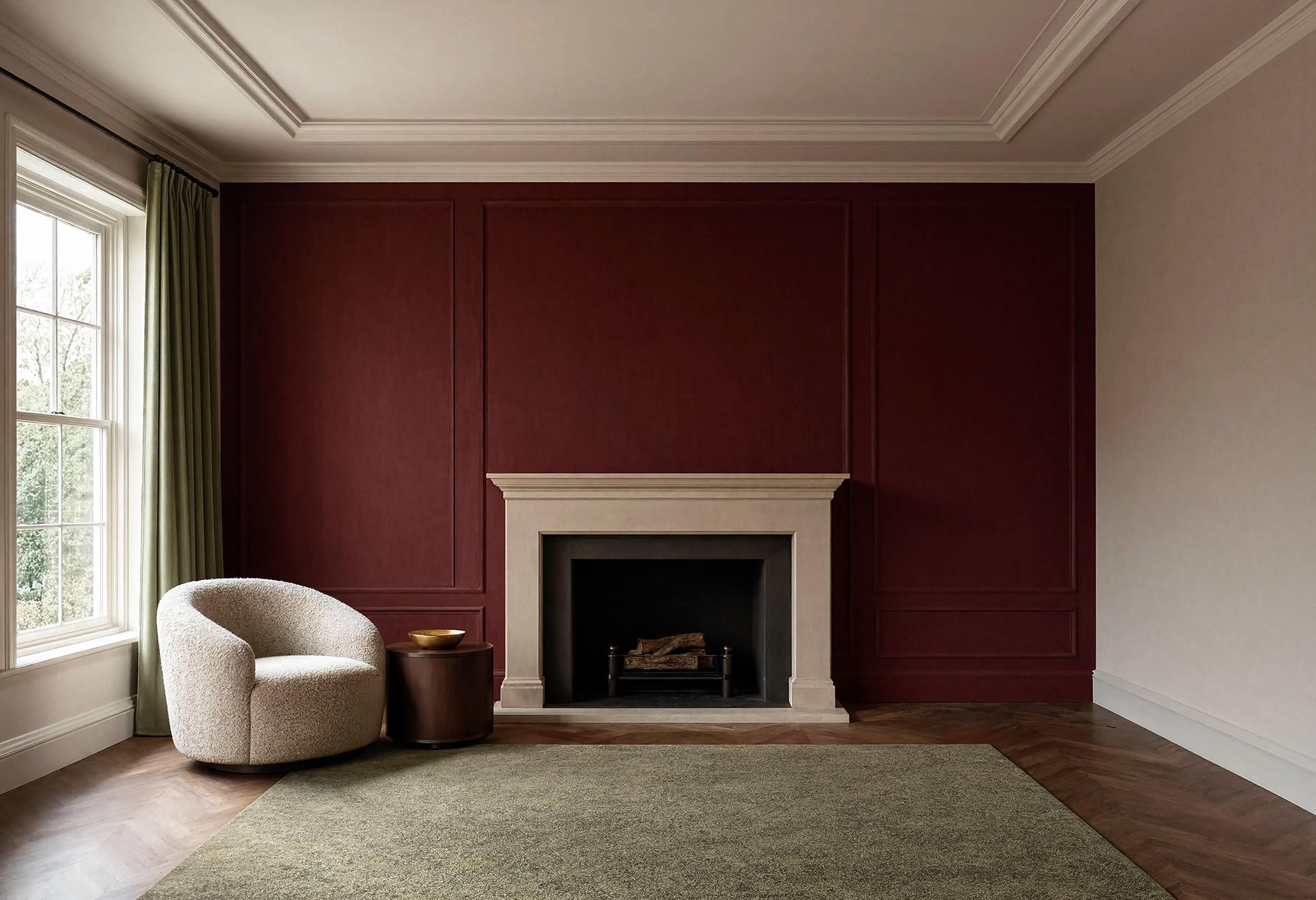
Dark plum living rooms need warm material, not more gray
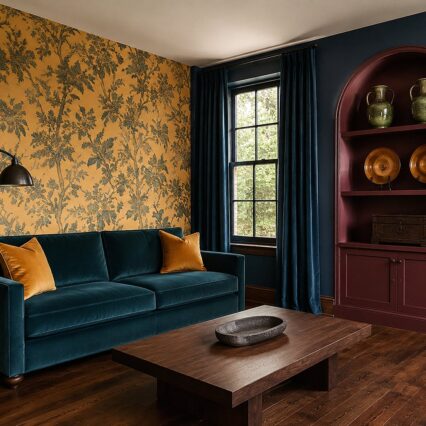
Burnt burgundy and velvet brown are exceptionally good companions because each has red or earthy depth. Try a tobacco velvet chair, a dark walnut table, a caramel wool rug, or linen curtains in mushroom. The finishes should differ: matte wall, soft cloth, visible wood grain, and one small metal note.
Gray can work, especially a mushroom gray with warmth in it. Cool silver gray is harder; beside plum, it may make the wall feel harsher and the upholstery faintly blue. To my eye, warm stone colors offer a calmer bridge.
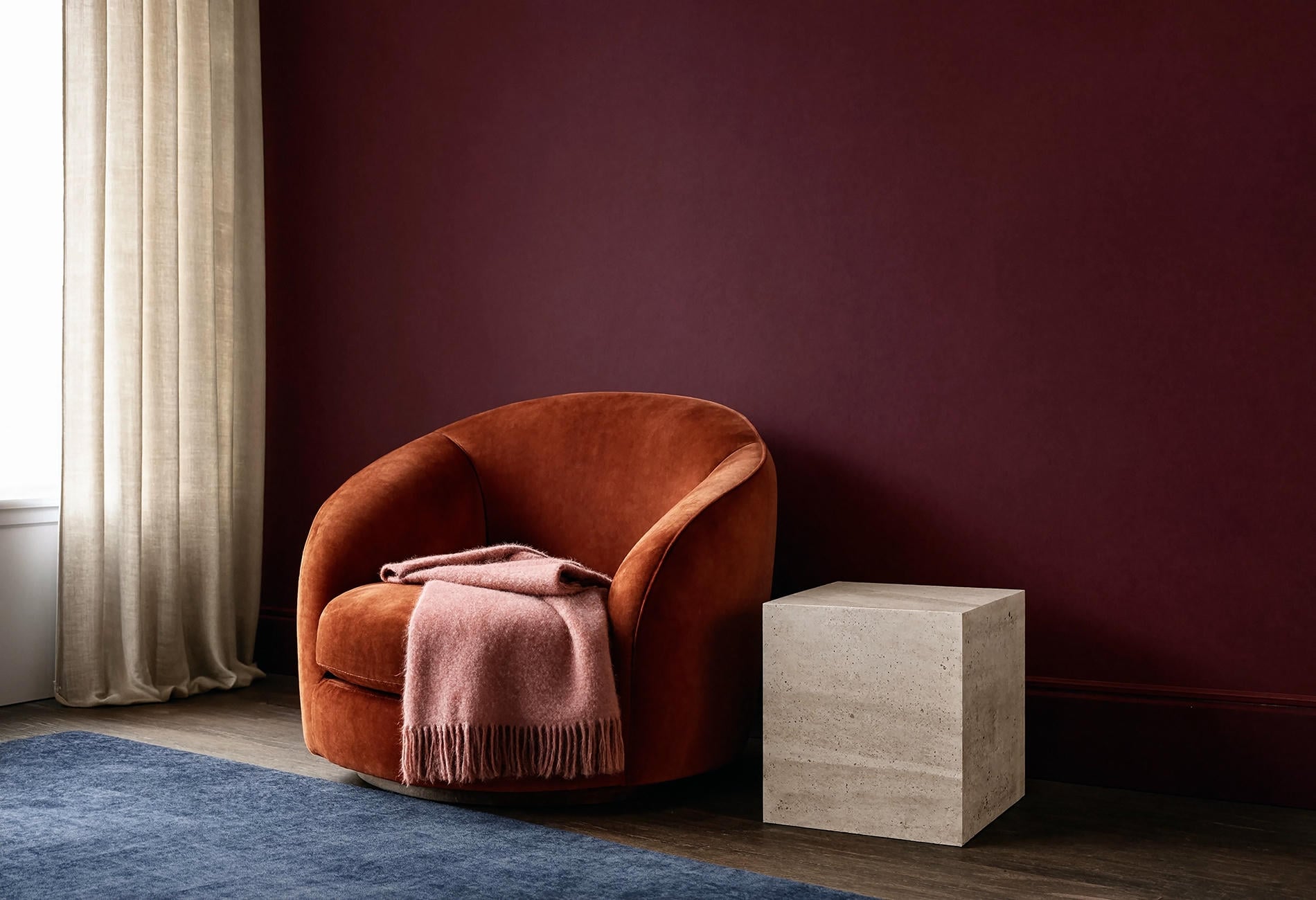
What colors go with plum noir beyond brown? Dusty rose softens it, olive makes it earthier, mineral blue creates a moody contrast, and parchment gives you breathing room. Brass or dark bronze can catch the light in small doses. Chrome isn't forbidden (few things are), though I'd use it only if the room already has a crisp, cooler character.
Keep pattern broad. A large check, hazy stripe, or oversized botanical shape can hold its own. Tiny patterns tend to dissolve against the wall and leave the room feeling busier rather than richer.
How to style a dark plum wall without smothering it
Dark paint needs some bare acreage. Let part of the wall remain uninterrupted, and resist the reflex to cover it with a grid of little frames. A single large mirror, a wide headboard, or one broad piece with a simple shape gives plum room to show its color shifts.
Place a light source near the wall rather than aiming one harsh beam straight at it. A floor lamp with a wide shade, a pair of table lamps, or a plug-in sconce can make the paint glow at the edges. The little gradient from bright plum to near-black is the good part.
If you consider hardwired sconces, I'm not an electrician, and shock, fire, plus code concerns belong with a licensed pro. Plug-in fixtures can give you the same lovely low pool of light with far less fuss.
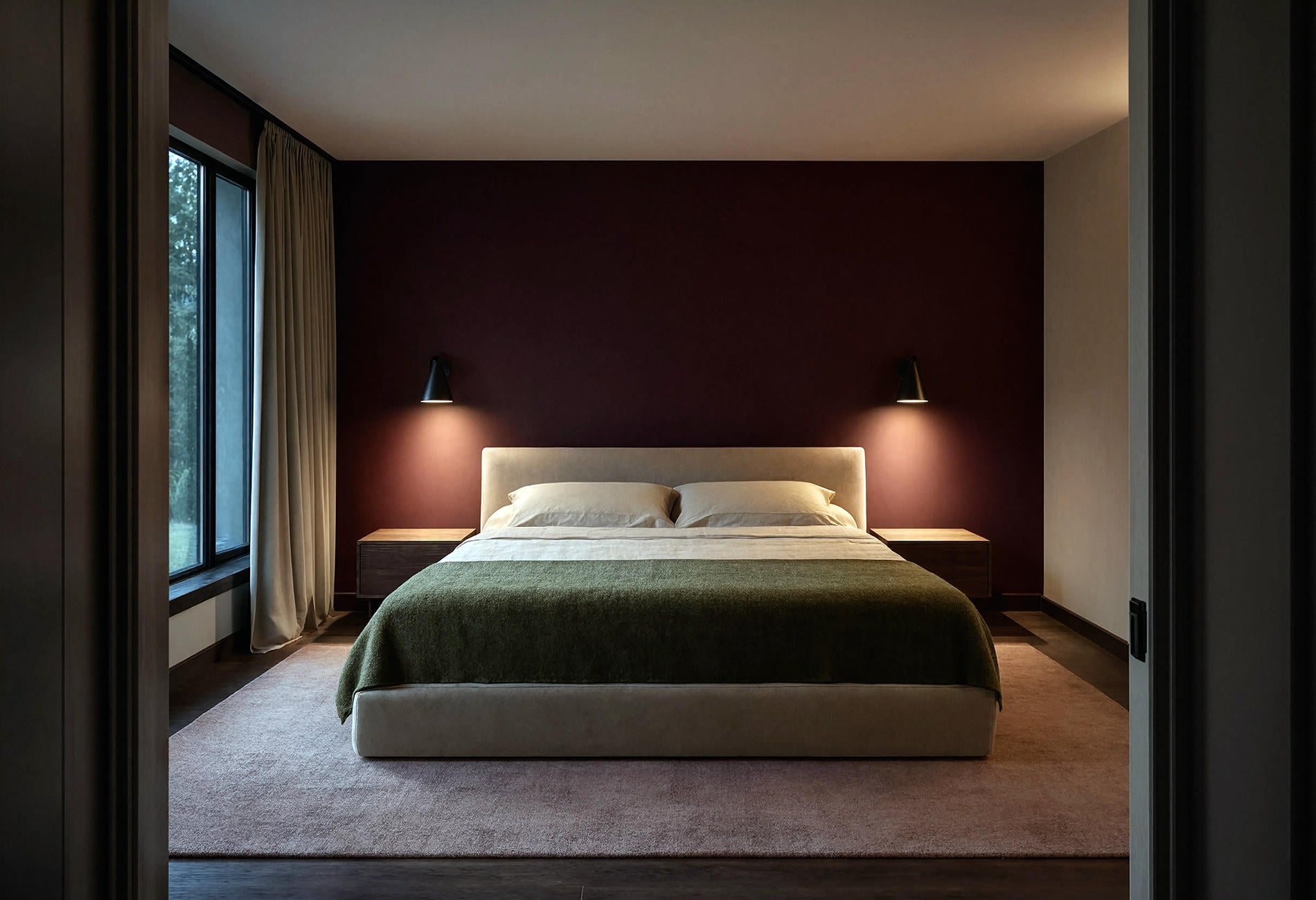
Balance the lower half of the room. Deep burgundy walls beside spindly furniture can feel top-heavy, so choose at least one piece with visual weight: a broad upholstered bed, a low sofa, a chunky cabinet, or full curtains that touch the floor. Scale here is a visual judgment, and your ceiling height and wall width will affect what feels right.
Plum earns its place in a bedroom
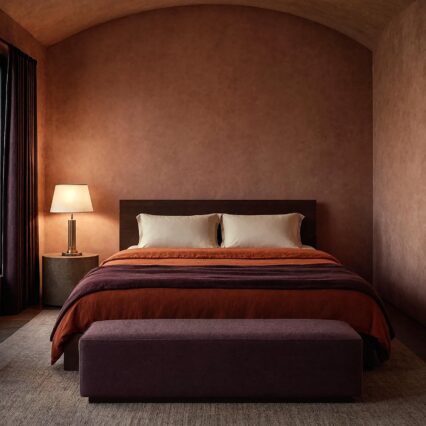
Deep plum can feel wonderfully cocooned after dark. The trick is deciding how much your particular bedroom can carry. A feature wall behind the bed gives you drama with lighter surrounding walls; painting more surfaces pushes the room toward a deeper jewel-box effect.
For moody bedroom paint ideas, combine aubergine with cream bedding and smoked oak, then add one color that isn't expected. Moss green feels grounded. Dusty rose feels soft. Saffron gives the whole arrangement a wicked little spark.
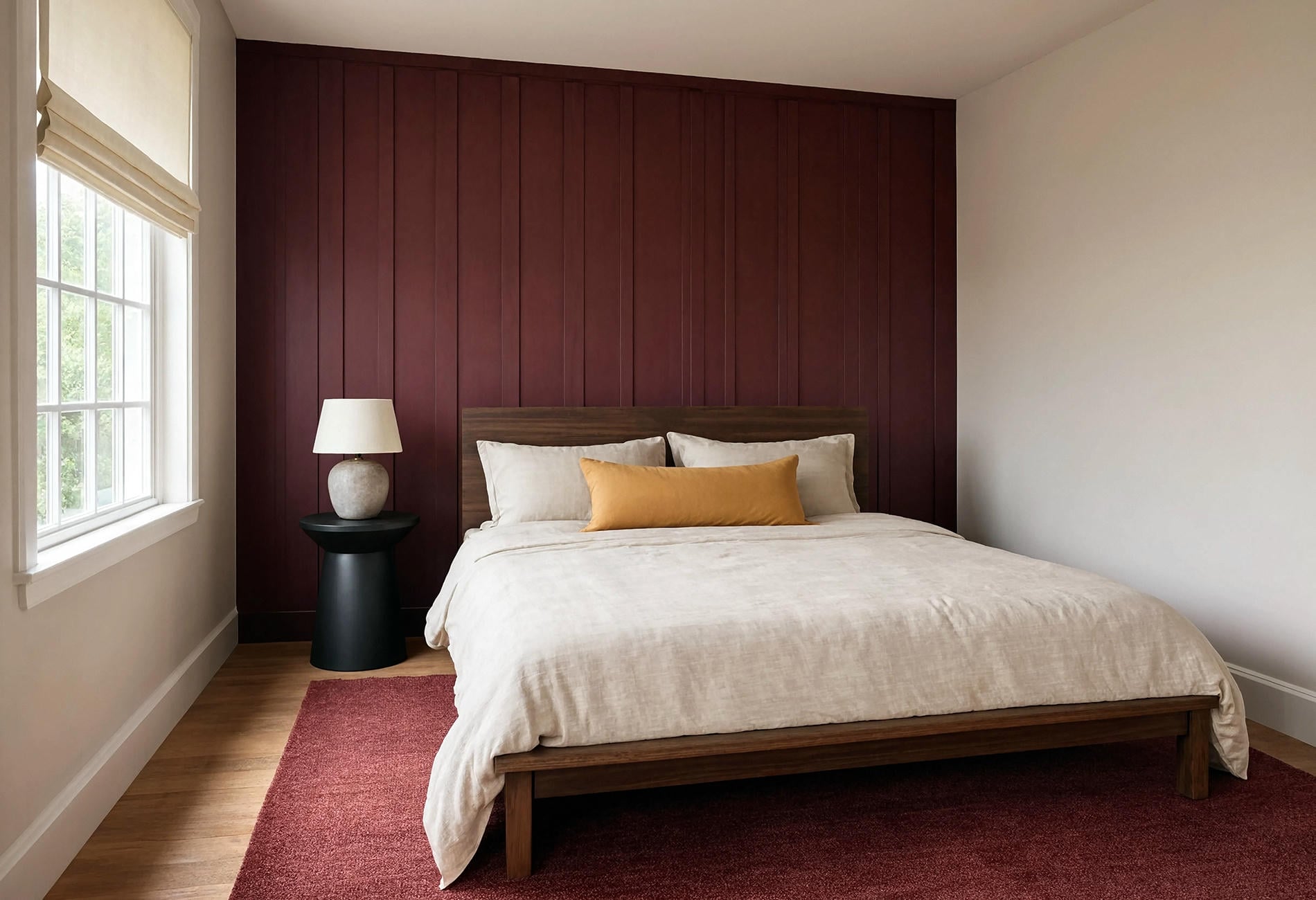
Dark purple wainscoting offers another route. Plum on the lower paneling with mushroom above feels tailored and keeps the deepest color closer to furniture level. Carrying plum across the full wall and wainscoting feels more enveloping. Both can work; the first has more contrast, while the second is the bolder choice I'd make in a small bedroom with good window light.

The viral phrase "plum noir villain era" captures the mood, though your room still has to serve ordinary life. You need a place for socks. The bed needs clean sheets. Drama is much better when it knows where the laundry basket lives.
Trim color changes the whole plot
Dark purple walls give you three useful trim routes. Warm white creates a crisp outline and suits rooms with pale ceilings or traditional casing. Mushroom is quieter and reduces the hard border, while plum produces a nearly continuous field that makes doors and baseboards feel carved from the same color.
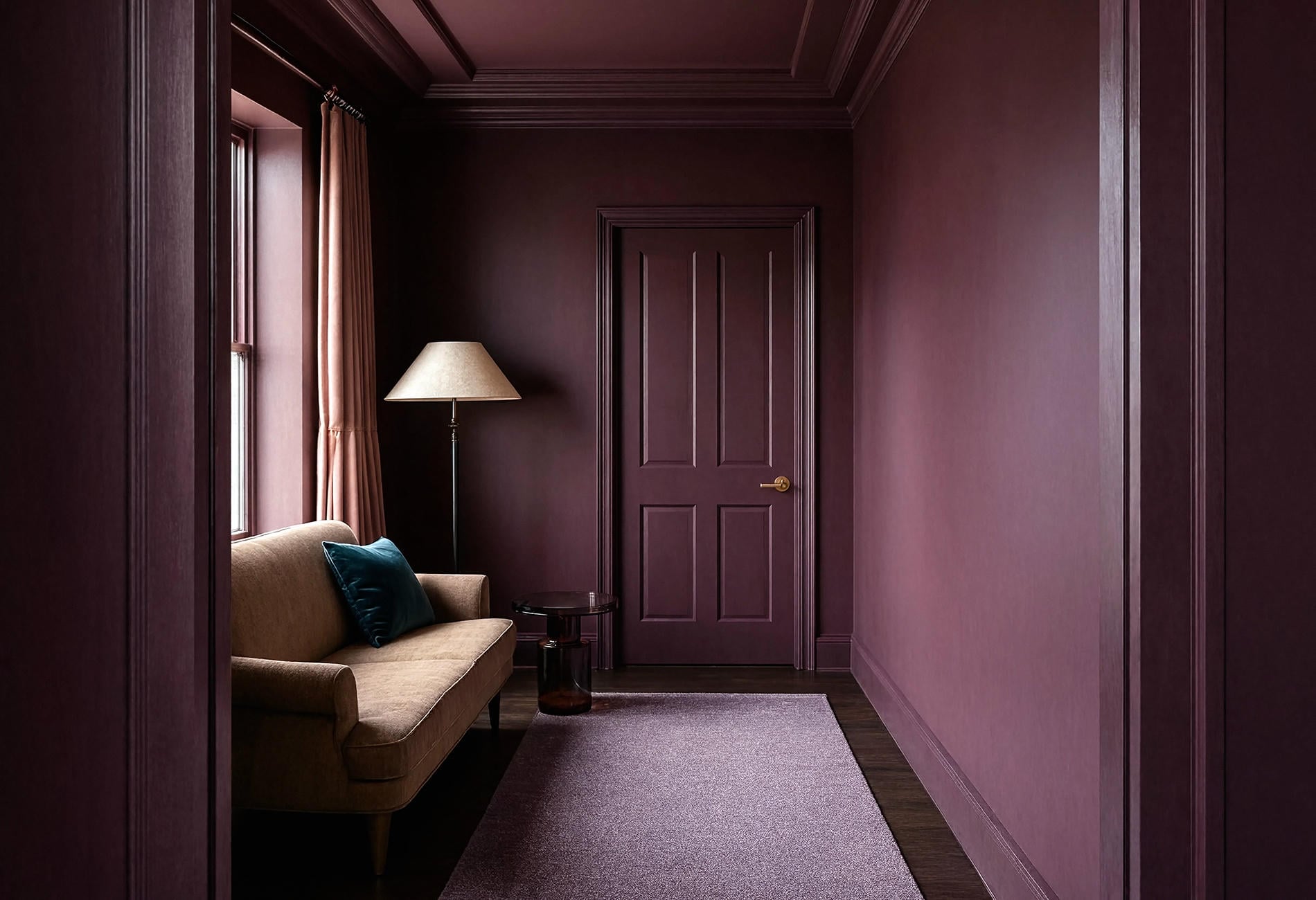
I'd avoid choosing a brilliant blue-white without testing it beside the paint. It can exaggerate red undertones and make aged floors look yellower by comparison. A softer white with a muted warmth is often kinder to wood, depending on the daylight in your room.
Sheen matters visually, too. Matte walls beside satin trim create a subtle change even when the color matches. That small glint along a door casing can be enough structure; you don't need a contrasting color to outline every edge.
When plum noir isn't the answer
Some rooms need ease more than drama. If your furniture is already very dark, your daylight is limited, and you dislike using lamps during the day, a full wall of near-black plum may feel heavy. A redder, mid-depth burgundy or plum on lower paneling can keep the character while leaving more light in the composition.
And if you're painting mainly because an online feed told you it's your villain era, wait a week. Watch the room at dusk. Notice which materials already look good there. A paint choice should survive long after the joke leaves the internet.
My mind keeps returning to the lamp-lit version of this color, when the wall slips from berry to brown-black and the edge of a brass bowl catches one narrow line of light. Somewhere nearby, there is probably still a white plastic laundry basket. Rooms are generous like that.
Plum noir accent wall questions, answered
What colors complement a plum noir accent wall?
Warm brown, dusty rose, olive, parchment, mineral blue, and dark bronze all pair well. Choose two supporting colors rather than sampling the whole paint fan, and let material contrast do the remaining work.
How do you style a dark plum wall?
Anchor it with one substantial piece, leave part of the wall bare, and place a warm lamp nearby. Smoked wood, velvet, linen, and aged metal keep the room tactile without crowding the color.
Is plum too dark for a bedroom?
It can work beautifully, depending on daylight and how you like the room to feel at night. Try a large sample behind the bed, then compare a red-led plum with a browner fig shade before committing.
Should trim match deep purple walls?
Matching trim gives the wall a continuous, enveloping look, while warm-white trim creates a clearer outline. Mushroom sits between them and is my favorite bridge when the room has warm wood floors.
Can plum noir work in a small living room?
Yes. Keep the furniture grouping simple, use varied lamp light, and allow some uninterrupted wall to show; a small room can handle deep color when its visual inventory stays disciplined.