Hold a piece of red marble near a window and it rarely reads as simply red. Burgundy pools into plum. White veins turn silver. Rust, black, or the occasional greenish passage appears where the sample looked almost solid under showroom lights.
That complexity is why the stone can make a bathroom extraordinary. It is also why covering every available plane is risky. Red marble already arrives with a speech prepared; the rest of the room does not need a microphone.
My rule for this material is to establish a hierarchy before choosing fixtures: one dominant stone plane, one supporting use, and several quiet surfaces. A vanity top can be the star with a small floor border in support. A shower can command the room while the vanity stays dark wood and plaster. Once you know who is speaking first, the design becomes much easier.
Start With the Actual Slabs, Not the Color Name
Rosso Levanto is the name most people know, but trade labels can cover stones with different origins and mineral makeup. Treat the name as a starting point for selection, not a guarantee that every slab has identical technical properties.
That distinction is not trivia when you are buying a wet-area surface. Ask the supplier for the exact stone, quarry or source if known, finish, absorption and performance information, recommended applications, and maintenance guidance for the slabs or tiles you will receive. A poetic name is not a technical specification.
View full slabs whenever possible. Red stone changes dramatically from one section to another, and a palm-size sample cannot reveal a bold white fracture line or a dark green passage running across the vanity. Photograph the slabs, map the cuts with the fabricator, and decide which movement belongs on the most visible face.
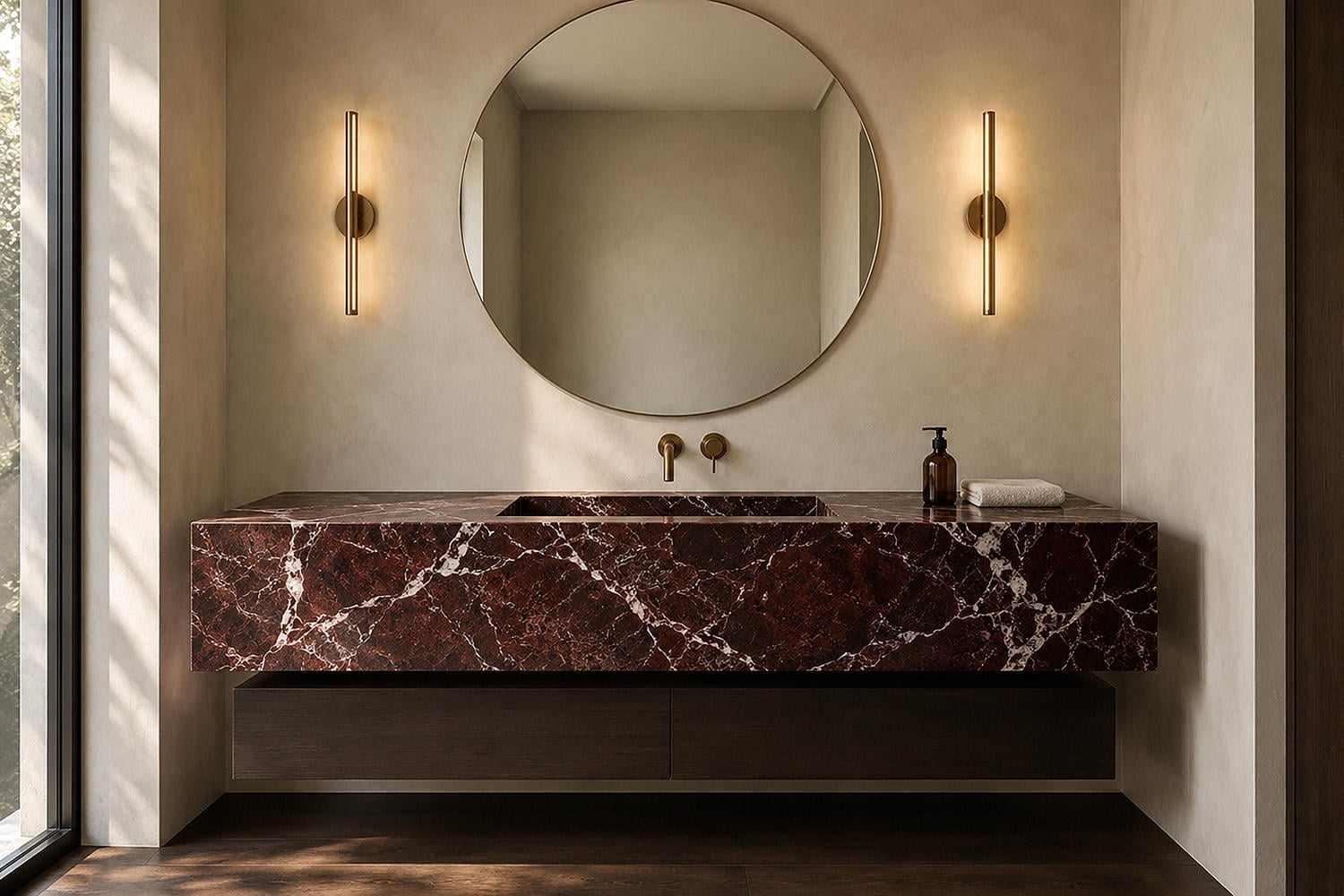
For a red marble vanity, a thick-looking apron edge can create the impression of a carved block without requiring a massive solid piece. Keep the basin simple, then let one broad vein travel over the front edge rather than chopping the pattern into unrelated fragments.
Make the Shower the Room's One Grand Gesture
A burgundy marble shower can carry an entire primary bathroom. Use large slabs or large-format pieces on the main wall, then let the remaining bathroom settle into plaster, dark timber, or quiet porcelain.
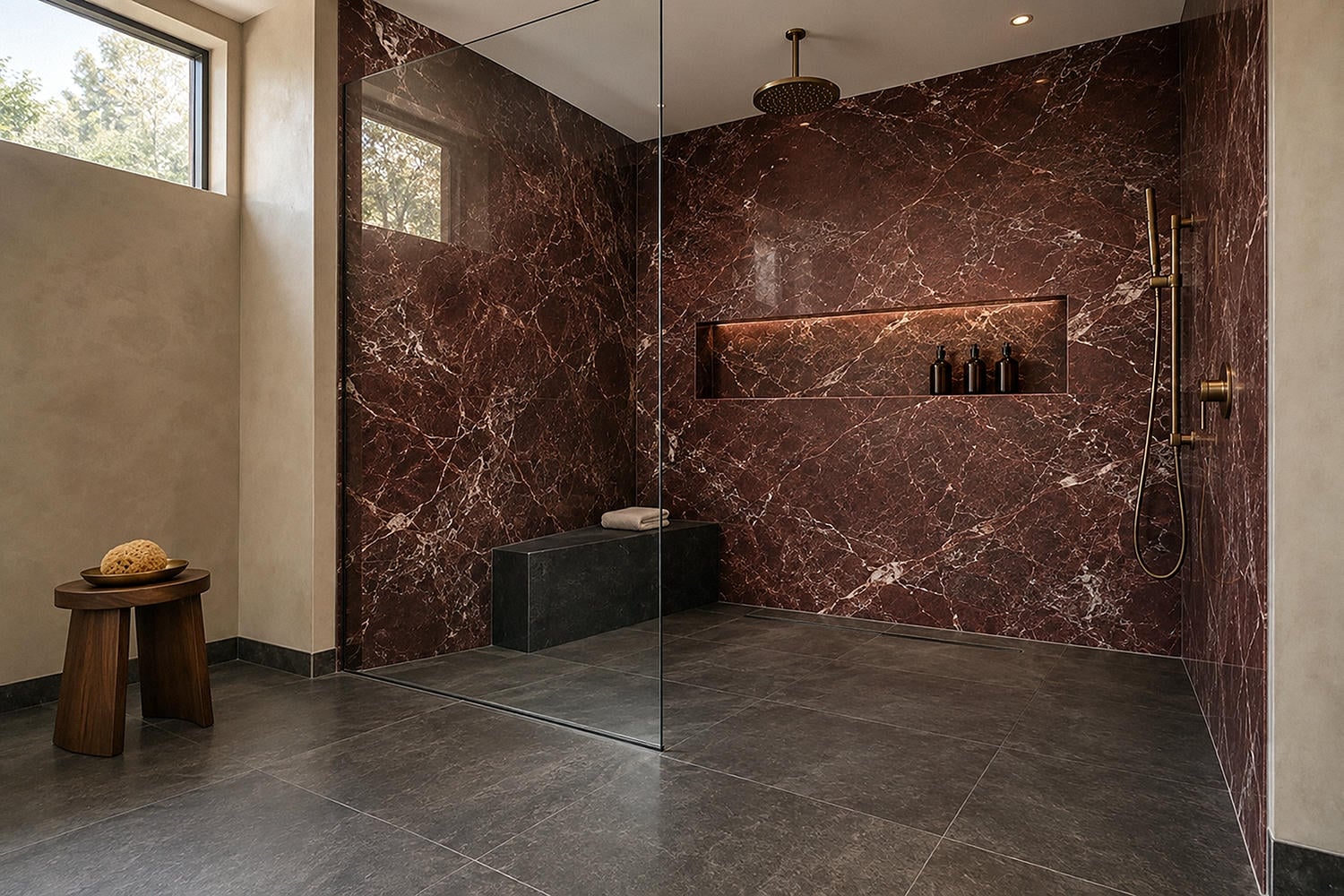
The temptation is to continue the red stone across the vanity, floor, tub deck, and every niche because matching feels safe. It usually makes the expensive material look less special. A shower with three beautifully coordinated planes has more authority than red fragments sprinkled around the room like garnish.
Vein direction matters. Vertical movement can exaggerate height, while a strong horizontal line can visually widen the enclosure. If two slabs meet in a visible corner, review the proposed cuts so the pattern turns deliberately rather than colliding.
Wet-area stone installation is technical work. The Natural Stone Institute's current resource library identifies porosity, waterproofing, floor slope, anchorage, and stone soundness among the concerns addressed for wet-area installations. Use an experienced stone fabricator and qualified tile or waterproofing professionals who can evaluate the actual material and local requirements.
Lay Out the Veins Before Anyone Makes a Cut
Red marble rewards obsessive planning. A dramatic slab can either become a continuous mineral drawing or a collection of expensive punctuation marks.
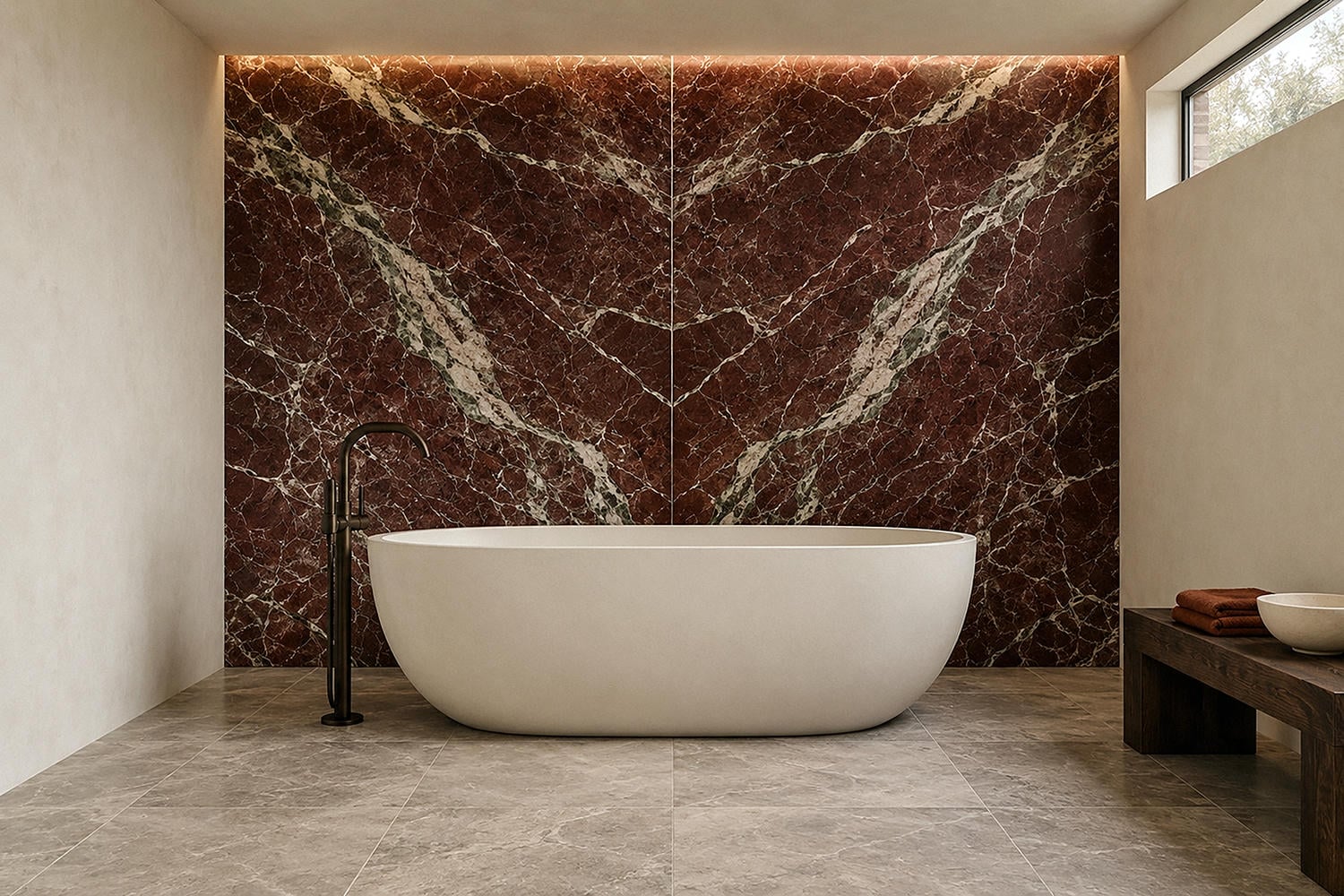
Bookmatching opens two neighboring slab faces so the veining mirrors across a center line. It can be magnificent behind a tub or vanity, but it is not automatically better. Some patterns create a calm wing-like shape; others produce a face, heart, or startling Rorschach creature you did not intend to shower beside.
Ask for a digital or physical layout that shows seams, outlets, faucets, niches, mirror edges, and cutouts. Shift those elements away from important veins when practical. A faucet drilled directly through the best white movement is the sort of tiny decision that remains irritating for decades.
For tile, dry-lay several boxes and mix pieces before installation. Natural variation is part of the appeal, but clustering the darkest tiles in one corner can make the floor or wall look patched. The installer should follow the material-specific setting, sealing, and joint guidance rather than treating every red stone like ordinary ceramic.
Use a Powder Room for the Most Concentrated Version
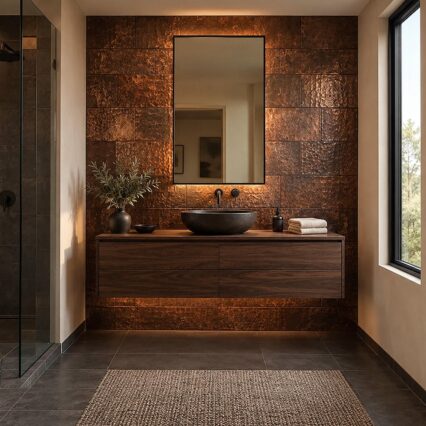
A red marble powder room can tolerate more drama because the room is experienced in short visits and has fewer wet-area demands than a full bath. This is where a floating stone vanity, burgundy wall, and low amber light can become delightfully theatrical.
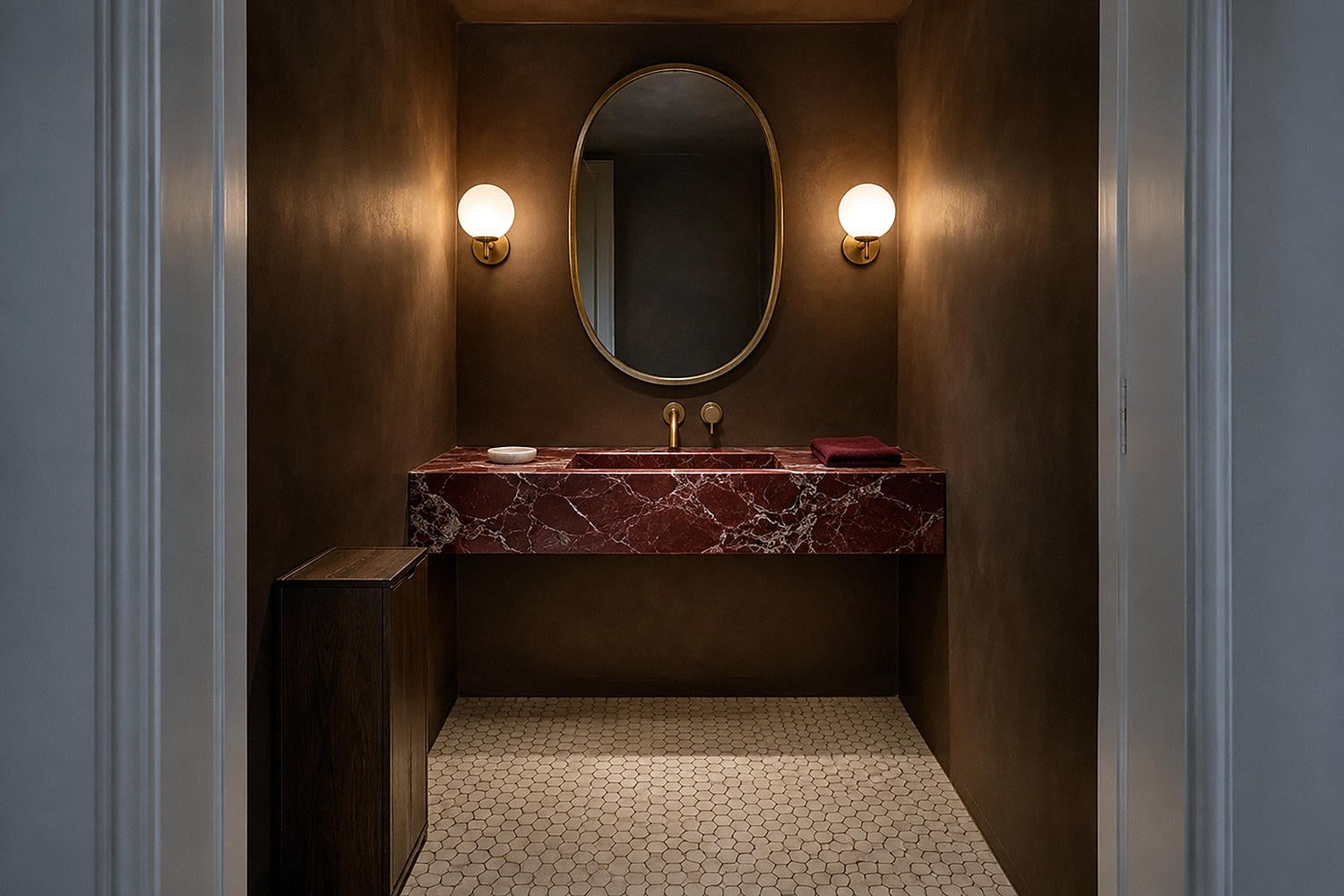
Keep the floor and ceiling quiet so the small space still has structure. Deep brown plaster, blackened oak, or warm ivory can frame the stone; a plain mirror gives the veins room to move. One pair of sconces is enough jewelry.
In a narrow room, I like a shallow red stone basin or vanity shelf that leaves visible floor beneath it. The negative space prevents the stone from feeling like a barricade. Wall-mounted plumbing can help with the silhouette, though fixture placement and structural support need professional planning.
Do not assume darkness makes a powder room feel luxurious. What creates the effect is controlled contrast: the marble is legible, skin looks human at the mirror, and the corners recede gently instead of disappearing into black.
Pair Red Marble and Brass With One Quiet Metal
Red marble with brass fixtures is a natural pairing because both materials carry warmth. The danger is letting every hinge, frame, pull, pipe, and accessory become bright gold.
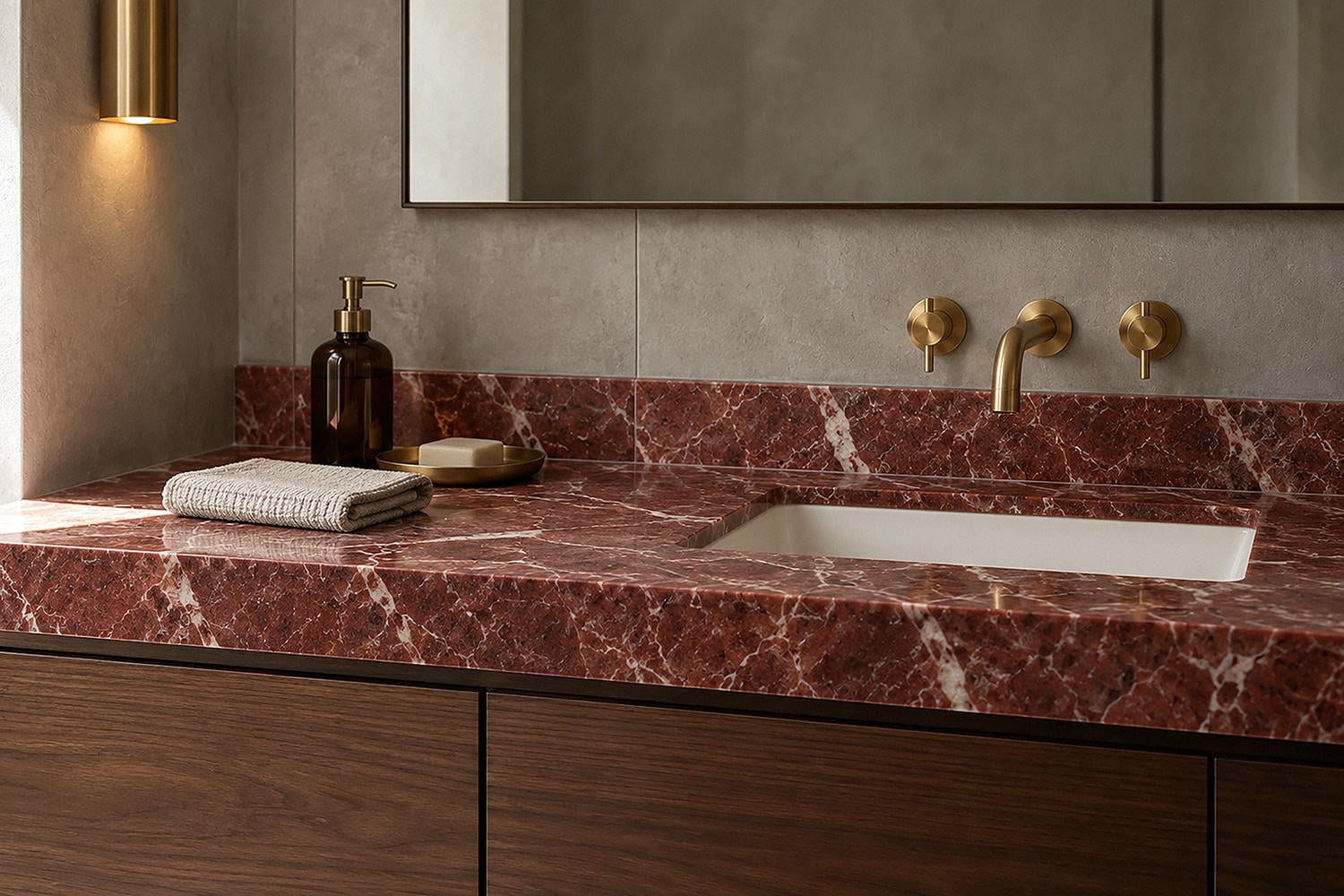
Choose where brass deserves attention. A wall-mounted faucet and two slender sconces may be enough. Shower framing can then use a darker bronze or a nearly invisible channel, while door hardware follows the surrounding architecture.
Finish variation is welcome. A softly brushed or living-looking brass feels less formal beside honed stone than mirror-polished gold. But verify that the chosen finish, fixture, and cleaning method are appropriate for a bathroom; some finishes change with handling and moisture, which can be beautiful only if you expected it.
Black is useful in tiny doses. A black mirror edge or dark-stained vanity creates a visual stop between burgundy stone and brass. Chrome or nickel can work too, especially with cooler red stone, but I would test the combination rather than mix metals by formula.
Pick Wall Colors From the Stone's Quietest Passage
Wall colors with red marble should support the mineral complexity rather than match the loudest red. Look for the background color between the veins: smoky plum, mushroom, warm grey, bone, or brown-black.
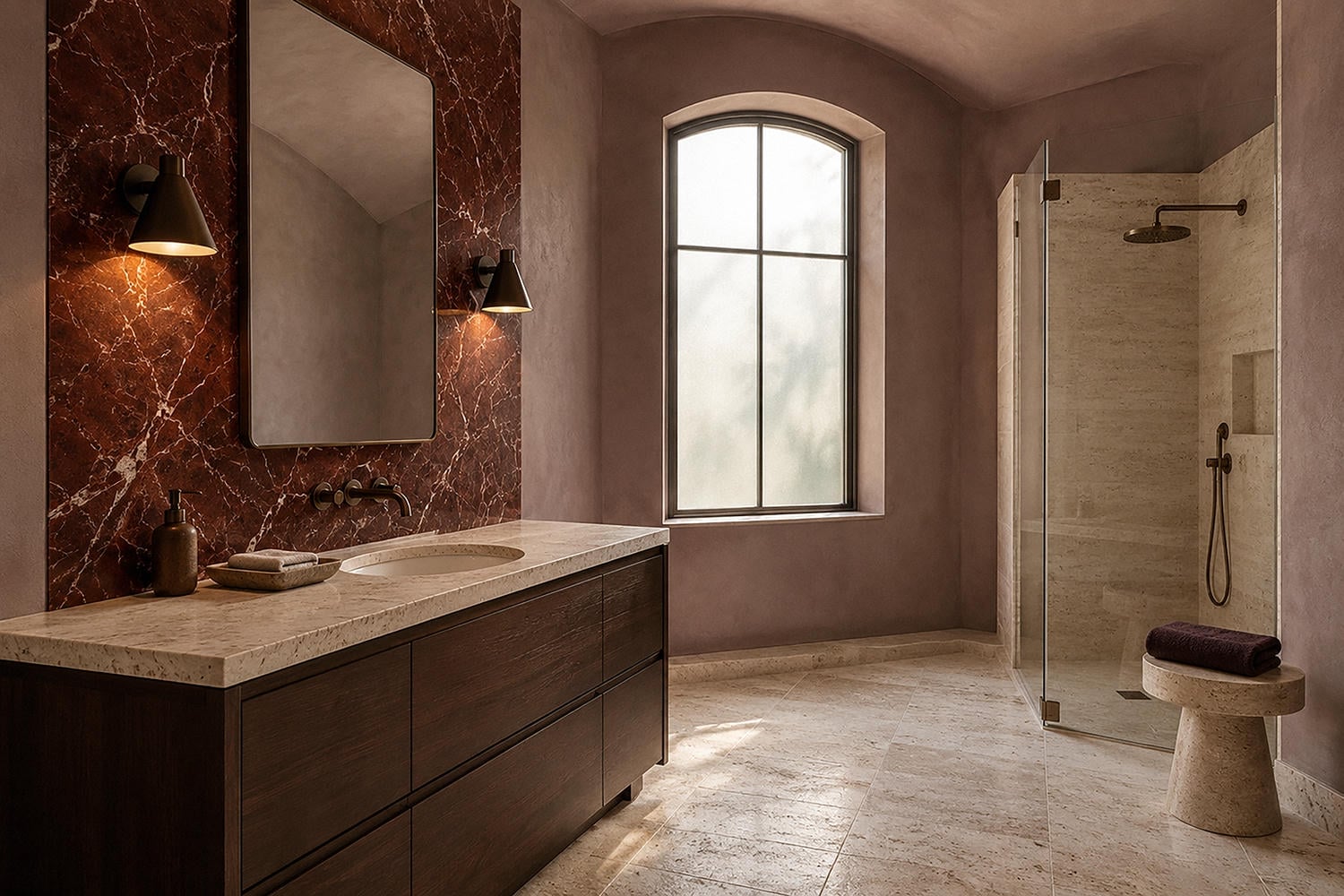
Warm ivory gives the greatest contrast and makes a dark stone feel crisp. Mauve plaster creates a cocoon without repeating the exact red. Deep espresso or charcoal produces a moody red marble bathroom, but it asks more from the lighting and mirror placement.
Green can be superb when the actual stone contains subtle green tones, though the color should be dirty and mineral rather than holiday-bright. A small olive sample beside the slab will tell you within seconds whether the pairing feels geological or festive.
Paint large sample boards and stand them vertically beside the actual stone. A countertop sample laid flat catches light differently from a wall slab, so test both orientations when the project uses the material in more than one plane.
Treat Red Marble Flooring as a Performance Decision
Red marble bathroom floor tiles can create a magnificent dark field beneath pale walls, but a wet floor is not the place to choose finish by shine alone. Discuss slip resistance, tile size, grout joints, drainage, stone soundness, and maintenance with the supplier and installer.
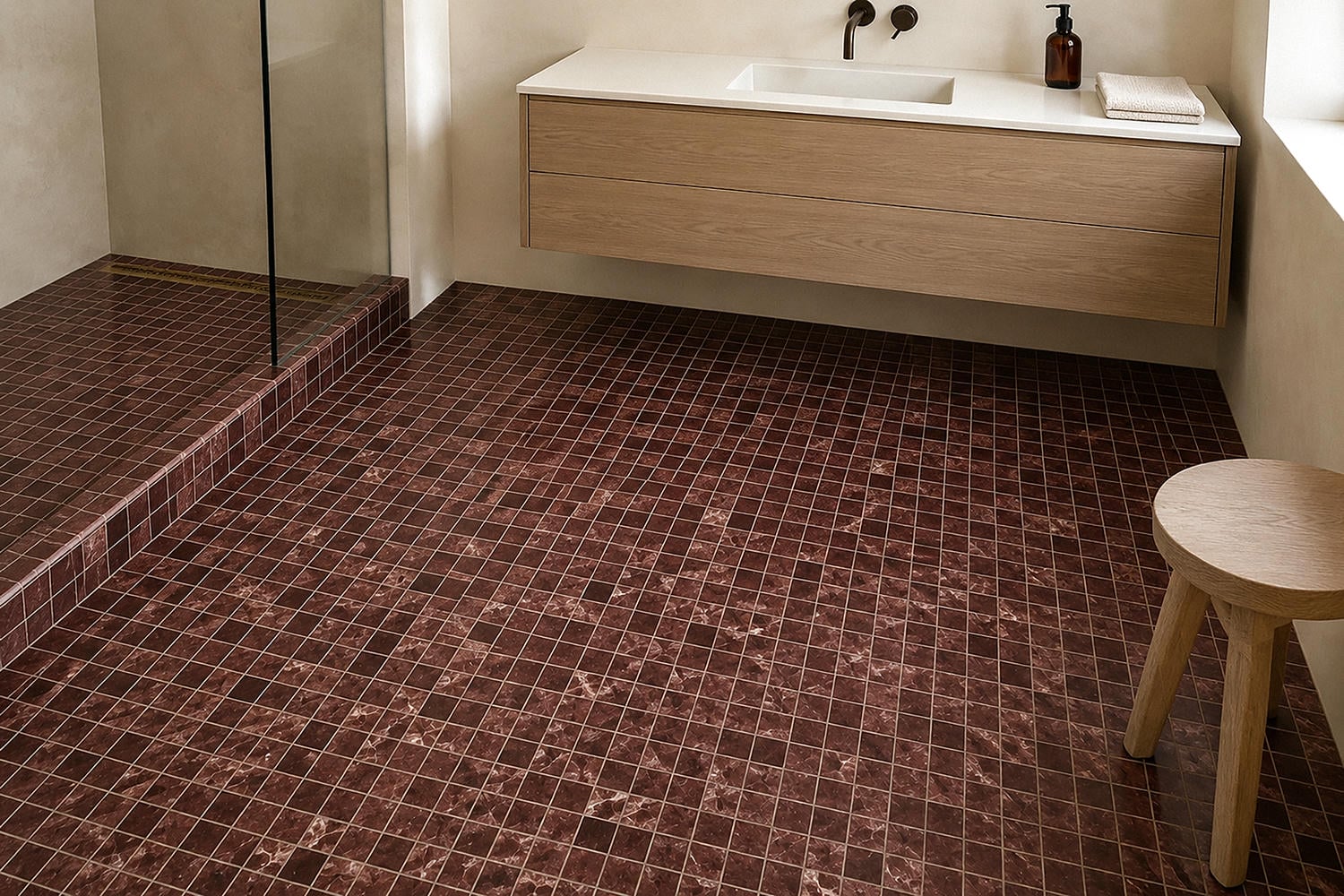

Smaller pieces introduce more joints and can follow shower slopes more readily, while large tiles create calmer veining in the dry part of the bathroom. Those are general design effects, not a substitute for an installation specification. The correct assembly depends on the material, location, substrate, and local code.
Use the floor as the supporting stone plane if the shower is already dramatic. A burgundy mosaic border around a quiet porcelain field can be enough. Or reverse the hierarchy: full red floor, ivory plaster walls, and a walnut vanity with no additional marble above it.
Heated-floor systems, waterproofing, and natural stone require compatible materials and careful detailing. Bring the stone supplier, installer, and heating-system instructions into the same conversation before work begins.
Let a Tub Feel Sculptural Without Becoming Impractical
A luxury red marble bathtub carved from stone is a staggering object, but it is also a structural, logistical, and maintenance commitment. Weight, floor capacity, transport, access, plumbing, and thermal behavior need expert review long before anyone imagines carrying it upstairs.
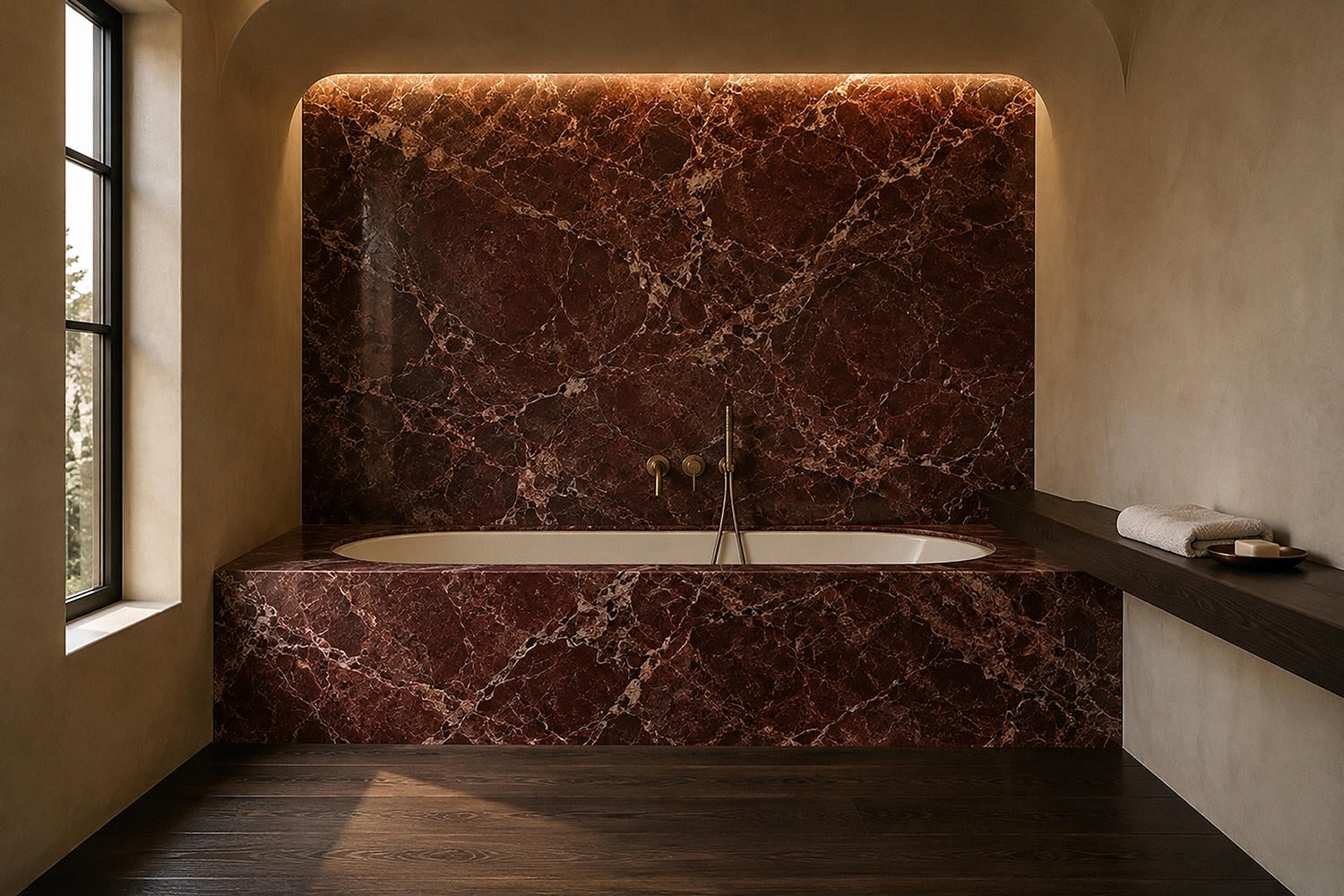
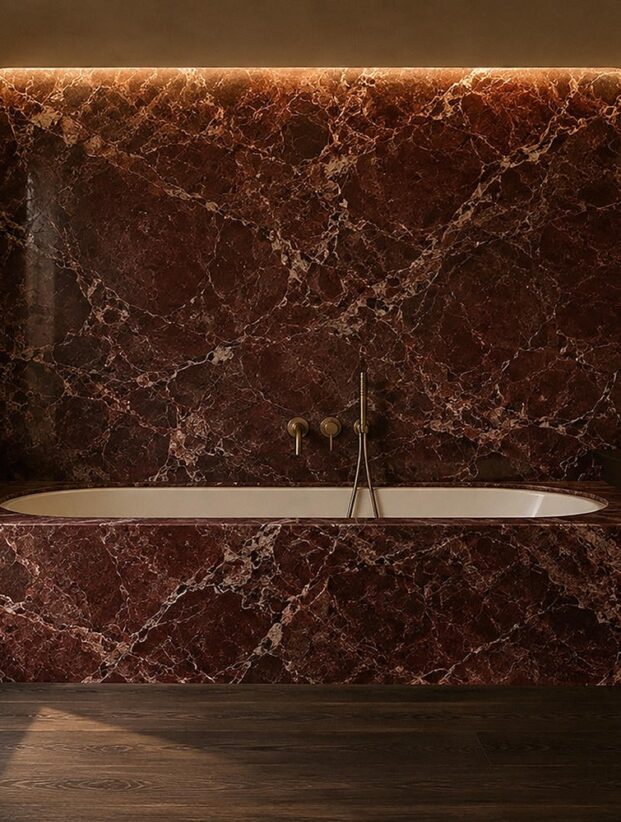
You can get much of the visual effect with a conventional tub framed by a red slab wall or a carefully detailed stone apron. The eye reads one continuous burgundy volume, while the bathing surface remains a familiar material with known care requirements.
Keep the ledge mostly empty. One folded towel and a dark tray are plenty. Bottles scattered across richly veined stone shrink the visual scale and make the composition feel like a hotel bathroom five minutes after checkout.
Place the strongest vein where it can be seen from the doorway, not behind the faucet. Then use soft wall washing or a concealed cove to reveal depth across the surface instead of blasting it with a bright downlight.
Clean Marble Gently and Plan for Change
Is red marble practical for bathrooms? It can be, if the exact stone is suitable for the application and you accept that natural material needs informed care. It is not a maintenance-free imitation surface, and a sealer does not create an invisible suit of armor.
The Natural Stone Institute's stone-care guidance recommends neutral cleaner, stone soap, or mild dishwashing liquid with warm water; it also warns that acids such as lemon or vinegar can dull or etch calcareous stone. In wet areas, using a squeegee after showering can help reduce soap-scum buildup. Follow the recommendations for your stone and sealer, and never mix cleaning chemicals.
Does red marble stain easily in bathrooms? Susceptibility varies by stone, finish, installation, sealer, and exposure. Sealing may increase stain resistance but does not make stone stain-proof, so wipe spills promptly and ask the supplier what the specific material requires.
For lighting, begin by making faces look good at the mirror. Put diffused light near eye level, then add a separate layer to graze the stone. Very cool light can make burgundy feel harsh, while excessively amber light can muddy white veining; compare lamp samples in the finished room before buying every fixture.
Red marble is expensive enough to deserve restraint. Give it one grand surface, plan every cut, illuminate the depth, and leave enough quiet material nearby for the stone to remain the most interesting thing in the room.
Red Marble Bathroom Q&A
Is red marble practical for bathrooms?
It can be when the exact stone, finish, and installation are suitable for the location. Confirm wet-area performance with the supplier and qualified installer, then follow material-specific sealing and cleaning guidance.
How do you balance bold red marble?
Use one dominant stone plane and one smaller supporting use, then surround them with plaster, dark wood, warm ivory, or quiet porcelain. Limit shiny metal and patterned accessories so the veining remains the main event.
How do you clean red marble in a shower?
Use the neutral or stone-specific cleaner recommended for the material, rinse thoroughly, dry with a soft cloth, and squeegee wet walls after use. Avoid acidic cleaners and abrasive powders unless a stone professional specifically approves them.
What lighting works best with dark marble?
Use diffused mirror lighting for faces plus a separate wall-washing or grazing layer for the stone. Test warm-white options against the actual slab because different burgundy, white, and green mineral passages can shift under the same lamp.