Jade green isn't one color. Put a milky celadon bowl beside a dark polished stone and the supposed match falls apart beautifully: one leans blue and misty, the other grows warmer, deeper, almost mossy at the edge.
That range is exactly why jade works so well in interiors. You can make it quiet enough for a bedroom, earthy enough for a wood-heavy living room, or saturated enough to carry an entire cabinet wall. The trick is choosing which jade you mean before the supporting colors start clamoring for attention.
My preferred method is simple: pick a jade temperature, choose one grounding material, then add a small opposite note. Cool jade with walnut and rust. Warm jade with chalk white and mineral blue. The imbalance keeps the palette alive.
Decide Where Your Jade Sits From Mint to Moss
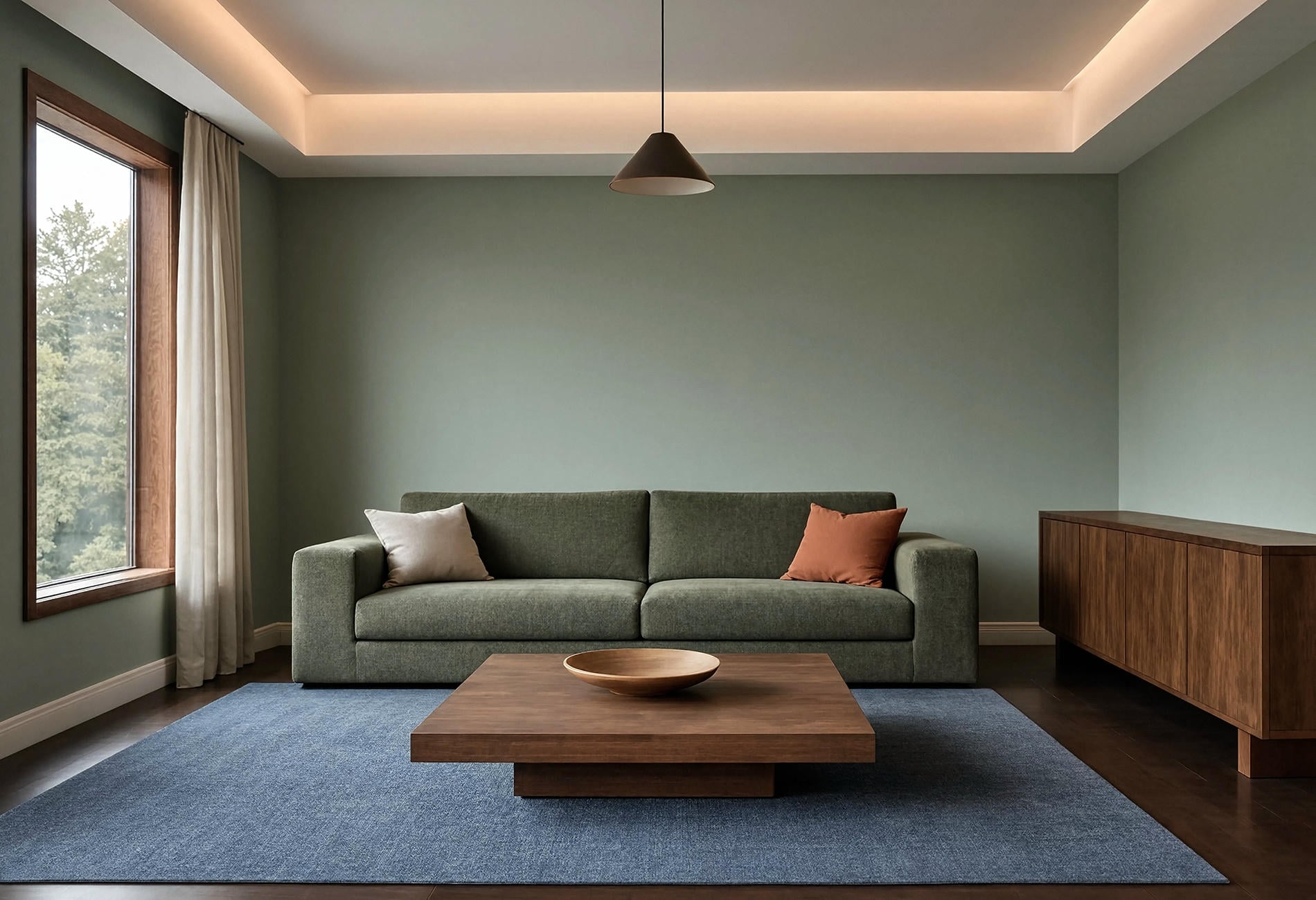
Spread the green family out in your mind. Mint is pale, airy, and often blue-leaning. Celadon carries a greyed, ceramic softness. Classic jade sits in the middle with clearer color, while moss adds yellow, brown, and shade.
That mint-to-moss continuum matters because the same companion color behaves differently at each point. Dusty rose can look tender beside celadon and sharper beside dark moss. Pale oak may gently warm mint, while walnut gives saturated jade enough depth to feel settled.
Use a physical material as your anchor. A glazed tile, linen cushion, painted sample board, or veined stone tells you more than a screen swatch because the surface changes under light. Jade texture is part of the color: glossy glaze throws bright highlights, velvet creates dark folds, and matte paint reads chalkier.
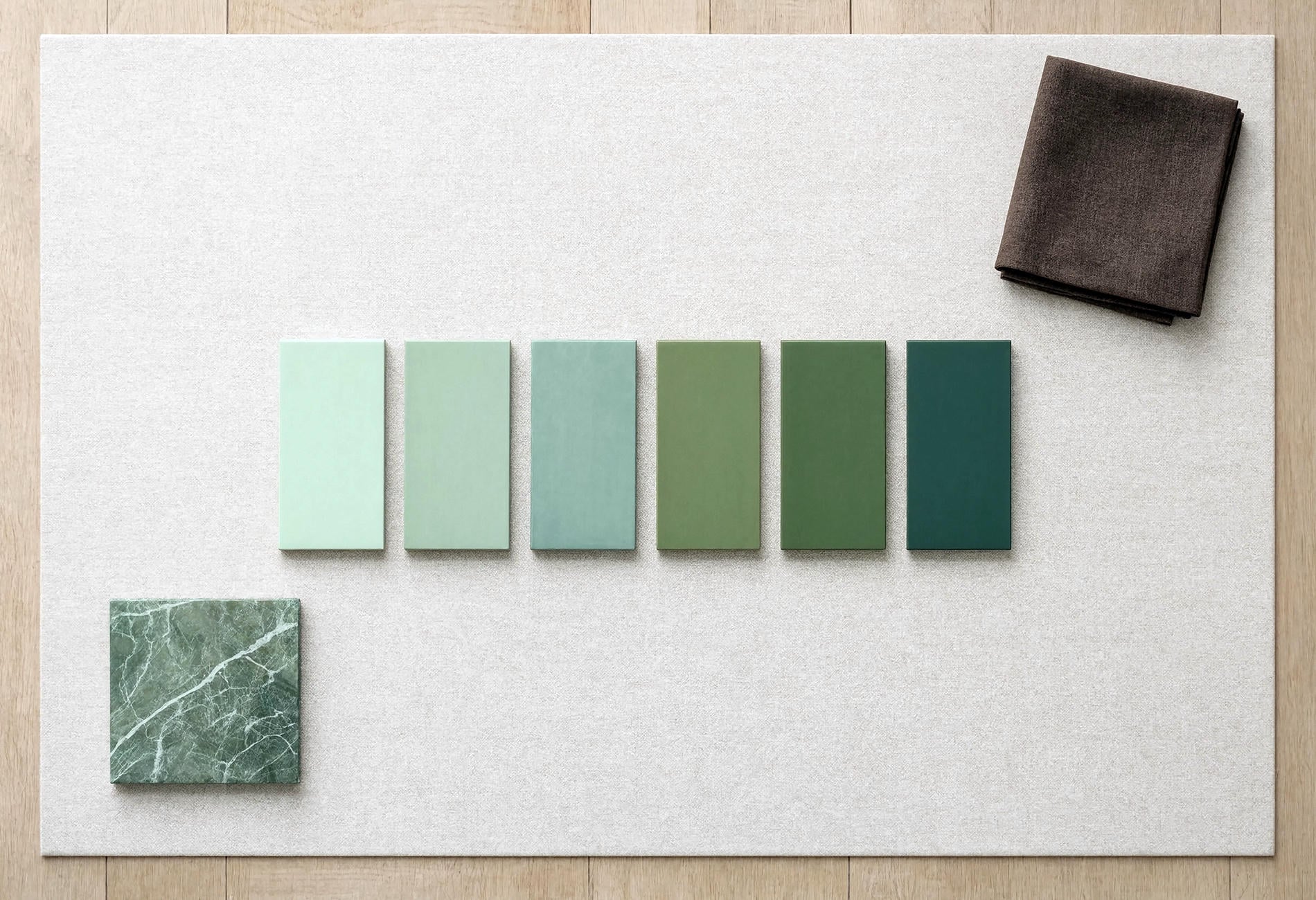
Jade Can Be Warm or Cool, Sometimes in the Same Room
Blue-leaning jade tends to feel cool and watery. Yellow-leaning jade moves toward moss and can feel warmer. Reflected light, nearby wood, and finish may shift either one, so treat temperature as a relationship rather than a permanent label.
Place your sample beside plain white, then beside the floor and largest textile. White reveals the undertone. The room materials reveal whether that undertone belongs there.
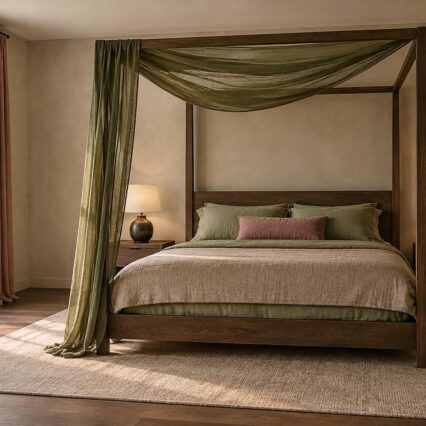
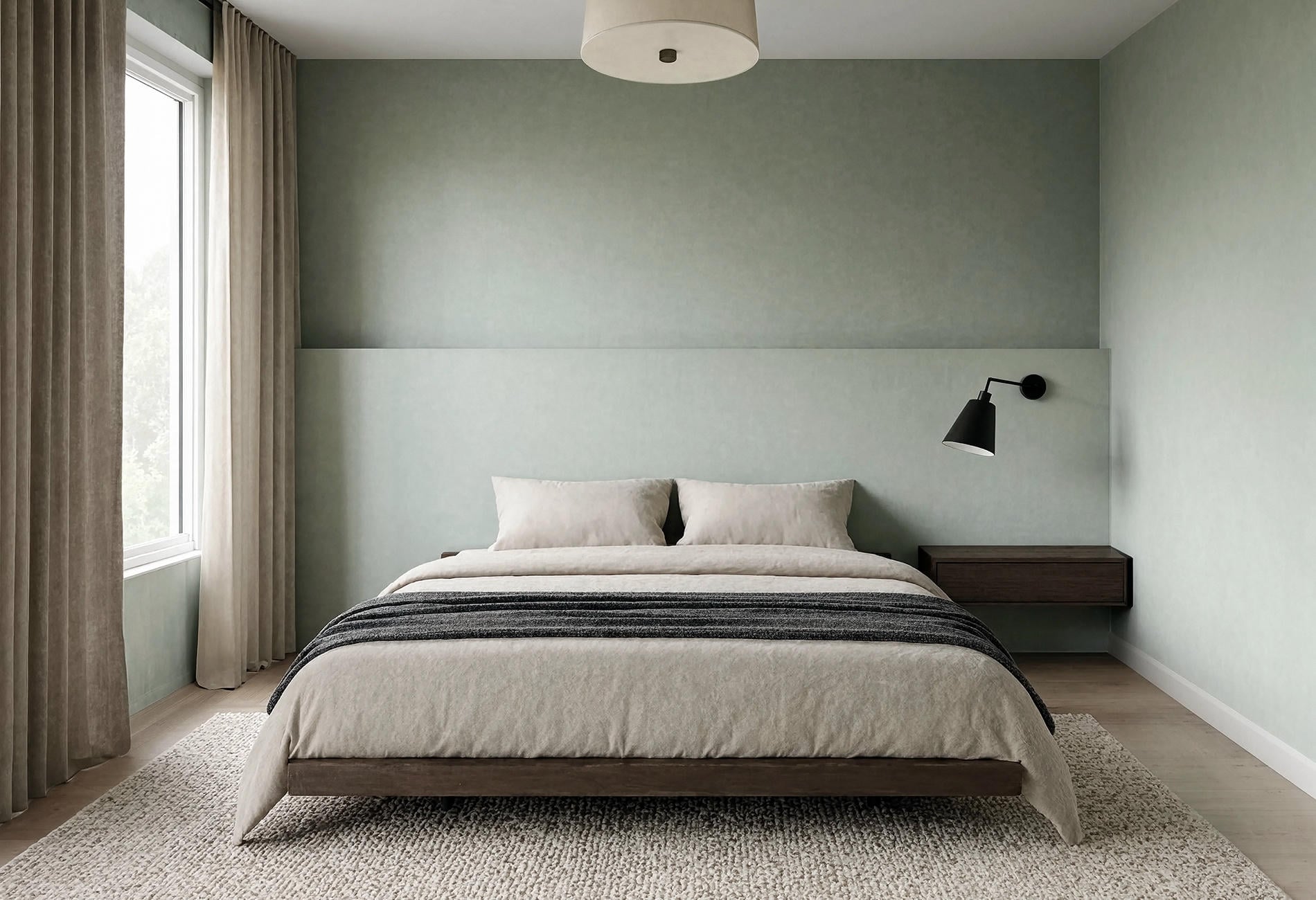
For a soothing bedroom or living room, pair pale jade or celadon with warm white, flax, and one darker edge such as smoked oak. Keep the green broad and quiet across a wall or headboard instead of sprinkling it through ten small objects. To my eye, color looks more confident when it occupies an actual field.
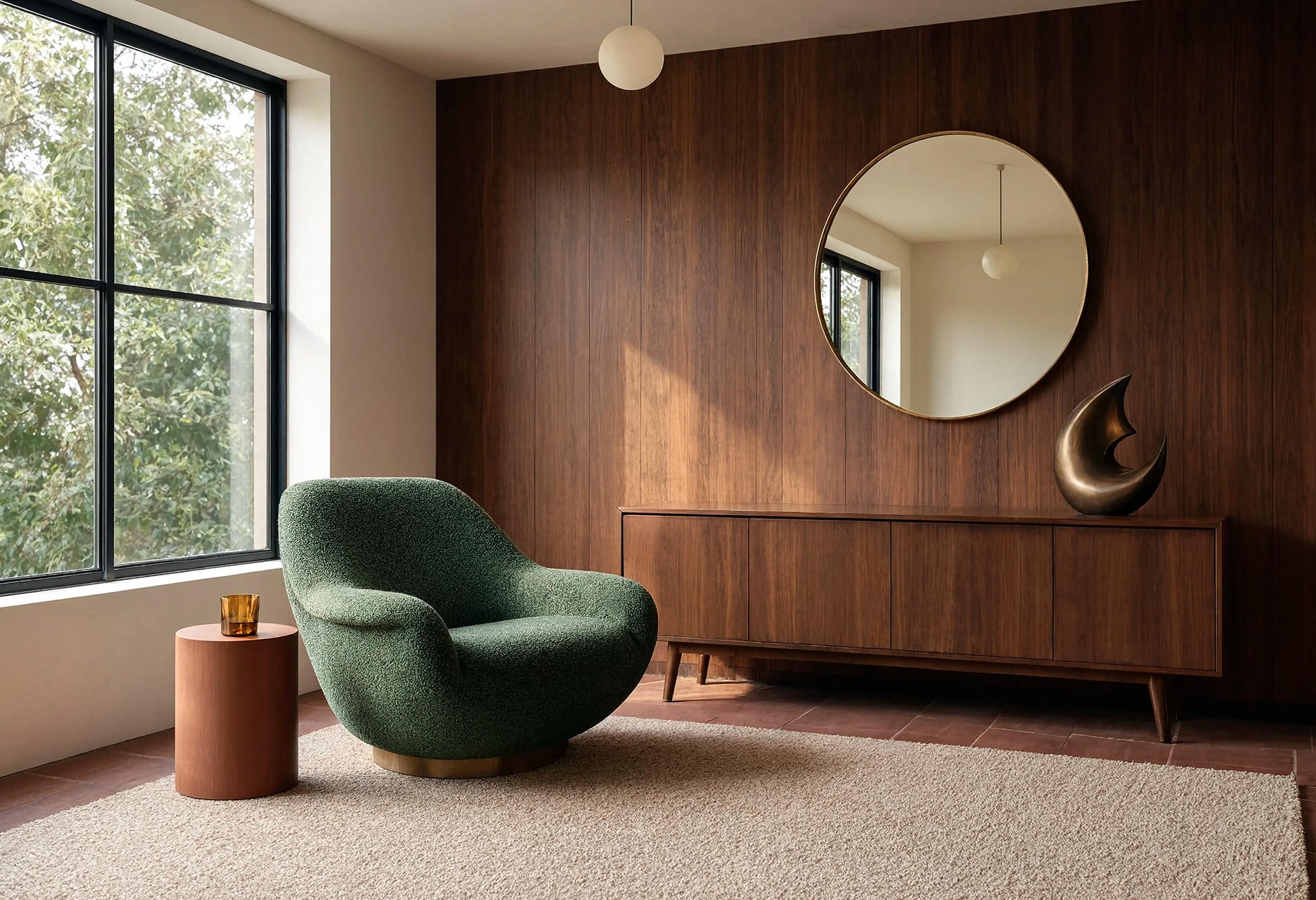
Walnut and Rust Give Jade an Earthy Backbone
Earthy mid-century modern tones give jade some muscle. Walnut brings deep brown grain; rust or burnt orange adds a dry warmth that sits opposite the green without shouting across the room.
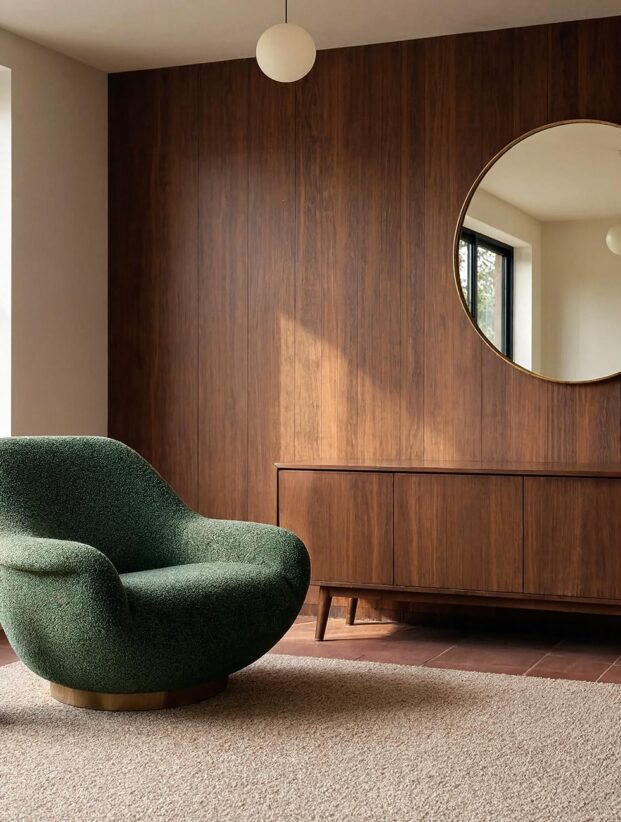
Use one big green element and let the other colors support it. A jade wool lounge chair beside a walnut credenza may need only one rust cushion or a red-clay lamp base. If every object auditions for the lead, the room starts looking like a period set with commitment issues.
Shape matters too. Low timber furniture, tapered legs, and one rounded upholstered silhouette carry the era more convincingly than novelty motifs. I'd keep the walls plain and let the material combination do the historical work.
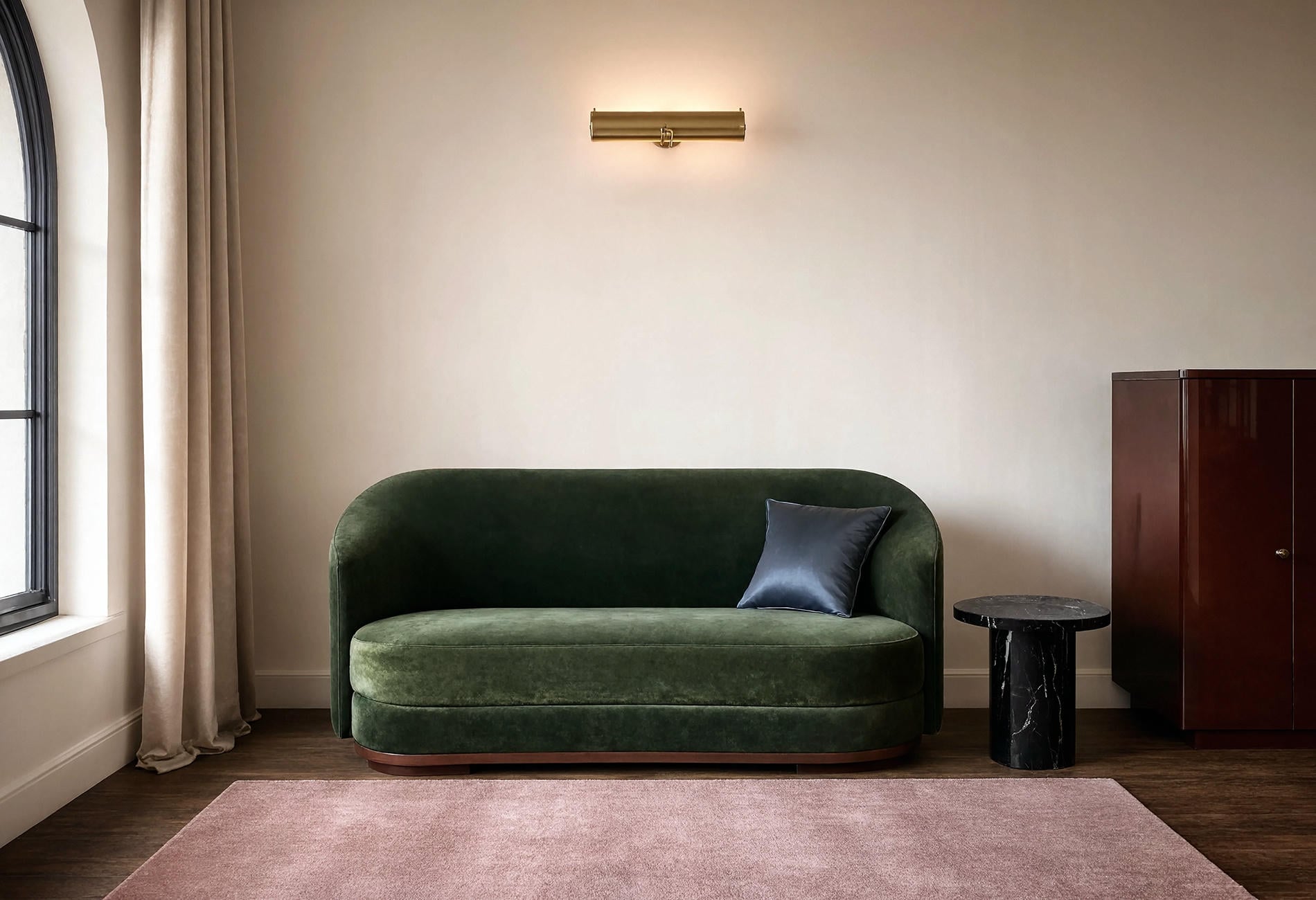
Jewel-Toned Upholstery Wants Breathing Room
Deep jade velvet absorbs light in the folds and flashes brighter where the pile turns. That's the appeal. Pairing anything with jewel-toned upholstery calls for restraint; the sofa or chair already contains several greens before you've added a single cushion.
Cream walls and a dark wood floor create a quiet frame. Mineral blue can join as a low-contrast companion, while plum or oxblood makes the arrangement moodier. I'd choose one of those directions and leave the rest in the sample drawer.
Metal is useful in small amounts. Aged brass warms deep jade, and blackened steel makes it feel sharper. Repeat the finish once across a lamp and a furniture handle, then let the upholstery keep its solo.
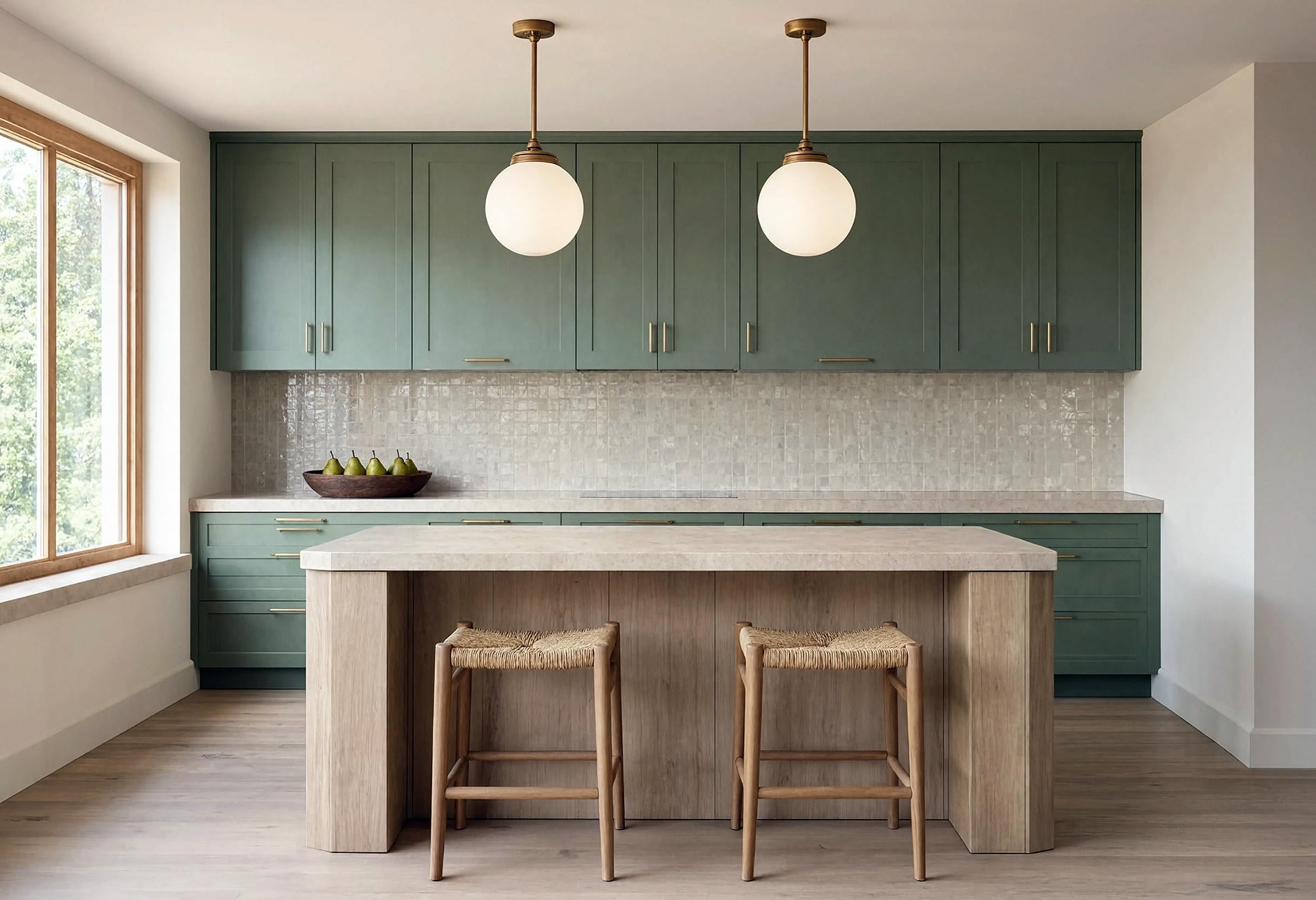
Jade Kitchen Cabinets Need a Material Counterweight
Cabinet color covers a lot of visual territory, so begin with the jade itself and quiet the nearby planes. Honed cream stone, pale oak, warm-white plaster, and low-movement tile all give painted cabinetry room to read as color rather than noise.
Jade kitchen cabinets can lean soft and greyed for an airy room, or deep and blue-green for a more enveloping one. Test large door-sized samples vertically. A sample lying flat under a lamp won't tell you how an upper cabinet catches window light or how a base cabinet falls into shadow.
For my money, warm stone and aged metal flatter medium jade more than stark blue-white surfaces do, though your light and undertone may argue differently. And listen when they do. A cool stone with strong violet-grey movement may prefer a bluer green and a cleaner wall white.
Keep visible counters edited: a broad wood bowl, one plain kettle, or an expanse of bare stone. Green cabinets already bring rhythm through doors and drawers. They don't need a parade on top.
Small Jade Accessories Work Best in a Trail
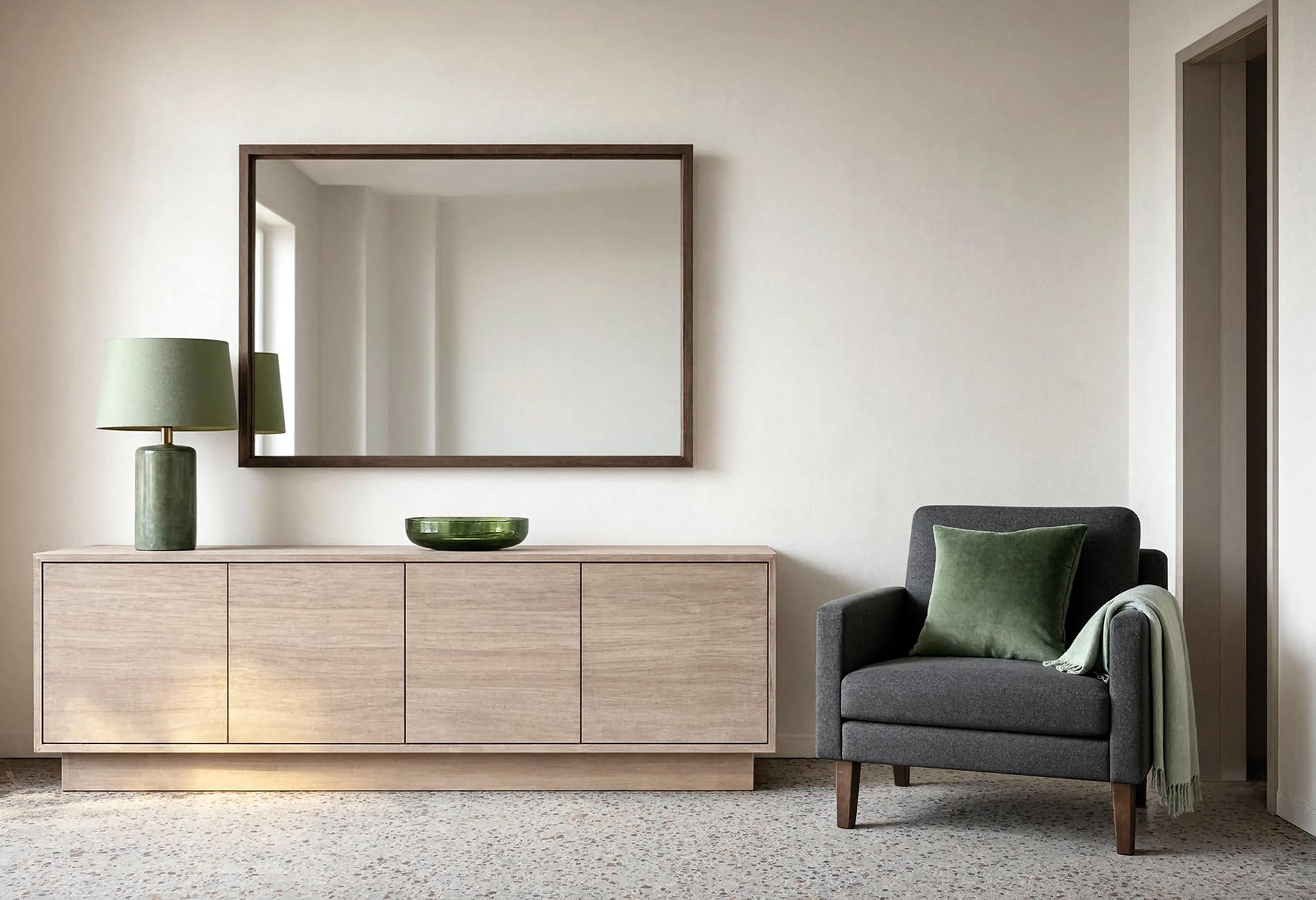
Renters and color-cautious decorators can build a jade thread through useful objects. Start with a glazed lamp base, a folded throw, or one broad bowl. Then repeat the green at a different height so the eye travels through the room instead of landing on a lonely colored blob.
Three identical jade accessories lined up neatly can feel like a display. I know that sentence itself contains three, and the irony isn't lost on me. In the room, use two or four objects with different material finishes: perhaps a matte linen shade across from a glossy tile tray, plus a wool cushion and a glass catchall.
Leave distance between them. The pause lets each surface show what jade does with light, and it stops the room from turning into a theme.
Pair Jade With Colors That Change Its Personality
Jade's broad range gives you several useful pairings because each one pulls a different quality forward. Keep the combinations uneven and choose according to the room you want.
- Chalk white and pale oak make jade feel clearer and lighter.
- Walnut and red clay draw out its earthy depth.
- Mineral blue and charcoal create a cooler, quieter reading.
- Dusty rose and aged brass bring warmth with a little glamour.
A soft celadon room benefits from contrast at the edges: a dark frame, deep timber, or one saturated textile. A stronger jade field may need the reverse, with cream stone and warm white creating open visual rest.
Jade can represent growth, balance, nature, or quiet richness in design, depending on cultural and personal associations. I think its real gift in a home is ambiguity. It can look mineral in morning light, leafy at noon, and almost inky after sunset.
So which jade do you want to live with when the room is doing nothing special -- on a grey Tuesday, under a reading lamp, with a jacket over the chair?
Jade Green Color Questions, Answered
What colors match with jade green?
Warm white, pale oak, walnut, rust, dusty rose, mineral blue, charcoal, and aged brass can all pair well with jade. Choose two supporting colors that suit the jade's undertone, then keep one dominant so the room doesn't feel evenly divided.
How do you decorate with jade green?
Use jade across one broad field such as a cabinet run, chair, wall, or headboard, or repeat a few useful jade objects at different heights. Mix finishes so glazed, woven, and matte surfaces give the color more depth.
Is jade green warm or cool?
Jade can lean either way. Blue-leaning versions feel cooler, while yellow or moss-leaning versions may feel warmer; surrounding light and materials can shift the result, so test the actual sample in place.
What does jade green represent in design?
Jade may suggest nature, growth, balance, or mineral richness, though meaning depends on the viewer and context. In a room, its range from misty celadon to deep moss can create calm or drama without leaving the green family.
Does jade green work in a small room?
Yes. Pale celadon can create a soft field, while deep jade can make a small room feel intimate to my eye. Keep the supporting palette limited and preserve some clear surfaces so the color has room to register.