Viola Marble Kitchen Ideas That Let the Stone Lead
Viola marble kitchen ideas begin with an unusual problem: the stone is already the room's main character. Calacatta Viola carries burgundy, wine, violet, gray, and sometimes gold-brown movement across a creamy field. Treating it like quiet white marble usually produces a room in which every other finish is competing with weather.
The better approach is to let the slab set the palette. Pull one dark note from the veining for cabinets or paint, one warm neutral from the background for walls, and one metal that belongs to the stone's warmer marks. Then stop adding colors. This marble does not need moral support from seven decorative accents.
1. Choose the Actual Slab, Not the Category
Calacatta Viola marble varies dramatically. One slab may have large burgundy islands separated by clear cream; another may carry dense purple-gray webbing across most of the surface. A small sample can reveal the minerals and finish, but it cannot show the composition you are buying.
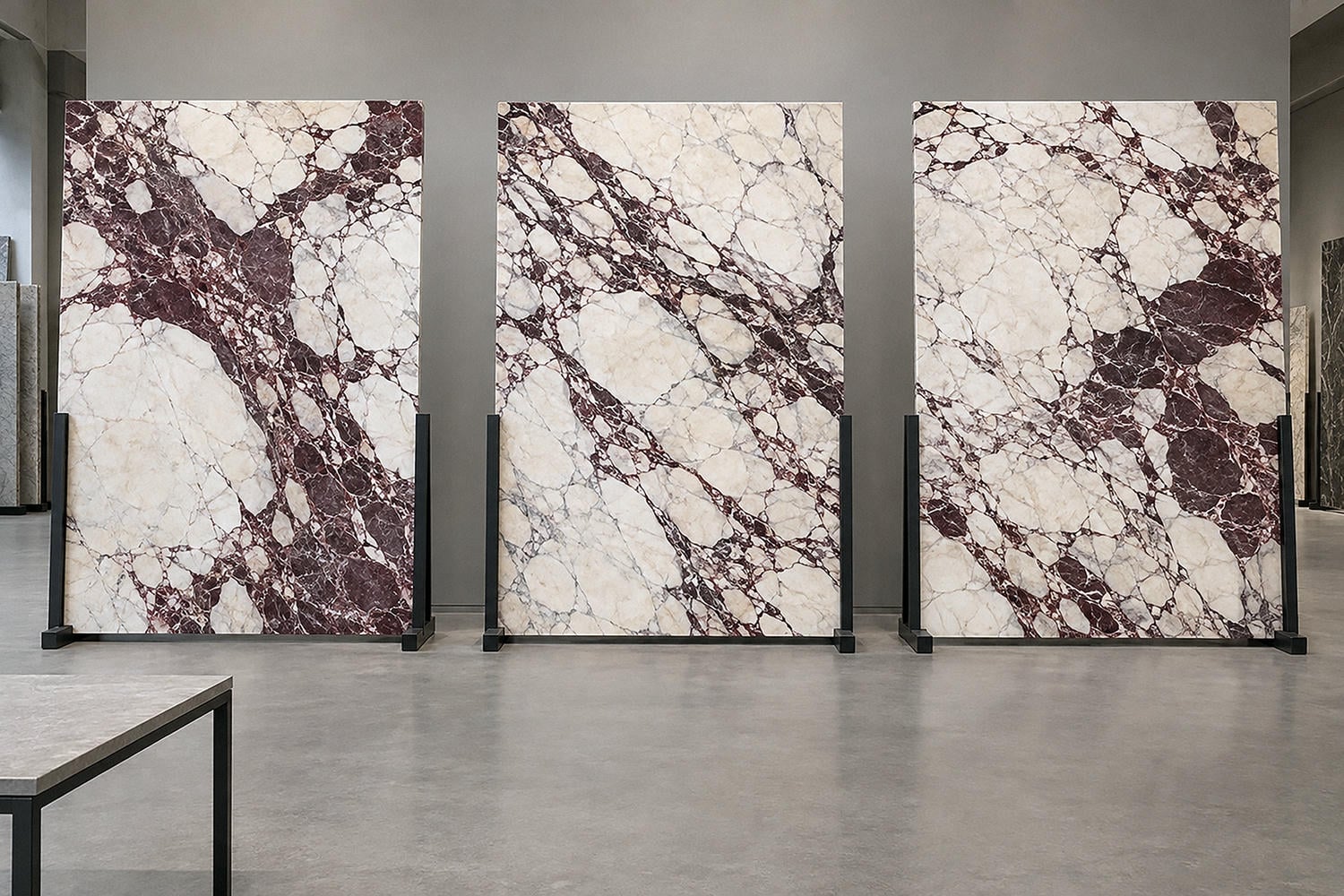
To learn how to choose a Calacatta Viola slab, photograph each candidate straight on, then mark the locations of sink cutouts, cooktops, seams, and visible edges on the image. Ask the fabricator which fissures are natural, which areas are reinforced, and how the pattern will travel over corners. View slabs from the same lot together if the project needs more than one.
Do not reserve the most dramatic section for a place hidden beneath stools or countertop appliances. Slab layout is design. The burgundy bloom should land where it can be seen.
2. Let Cabinet Color Echo, Not Copy, the Veining
What cabinet color works with Calacatta Viola? Burgundy, oxblood, mushroom, warm white, dark walnut, blackened oak, taupe, and muted olive can all work. The right answer depends on the slab's dominant note.
Calacatta Viola with burgundy cabinets is bold but coherent when the paint is darker and quieter than the stone's purple-red marks. Avoid matching one vein exactly. A near-match changes with lighting and can make the cabinets look wrong rather than related.
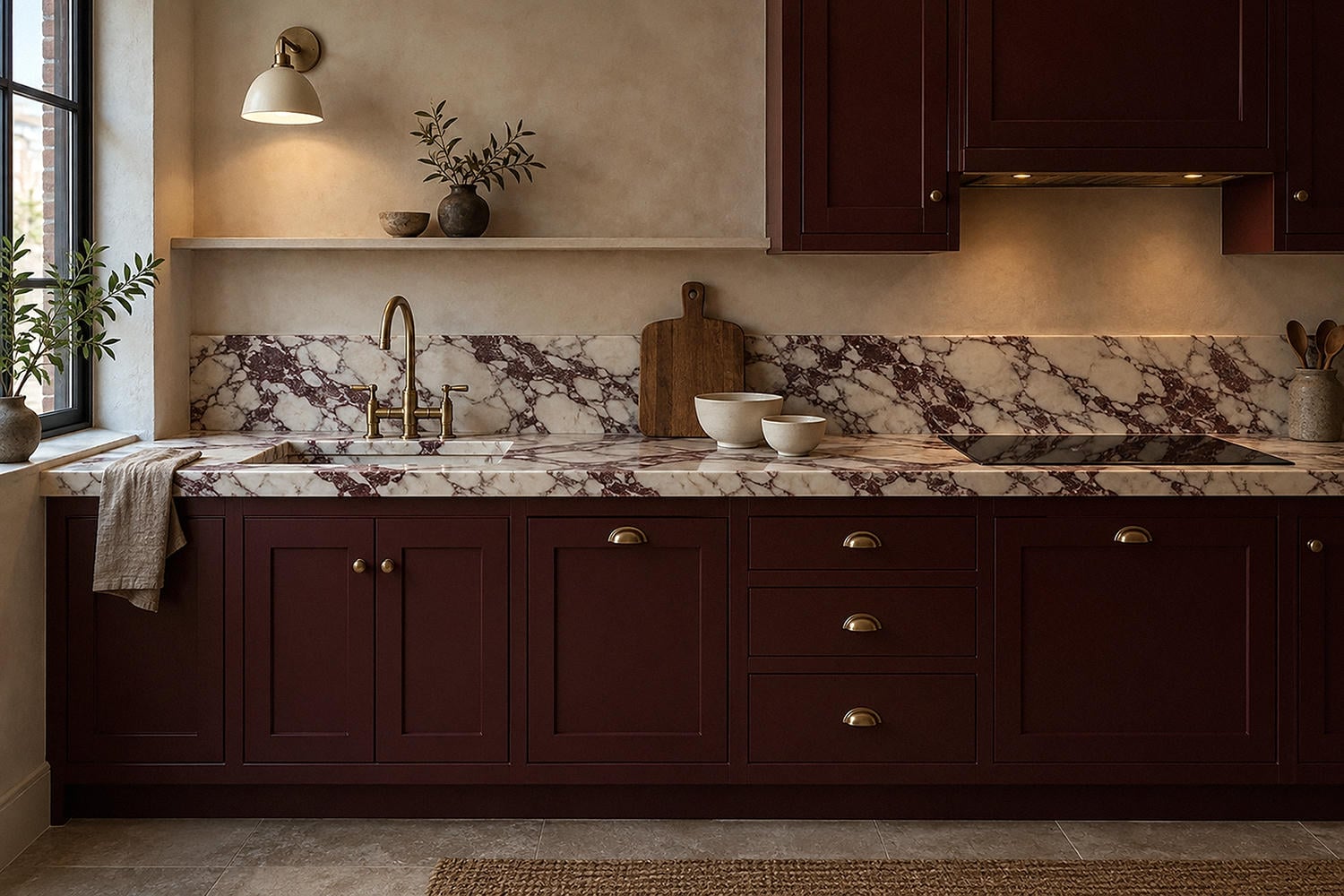
Warm white cabinetry gives the stone maximum contrast, while mushroom makes the overall room softer. Black works best when the slab contains strong charcoal lines. Green can be beautiful, but choose an earthy olive rather than introducing a clear emerald that demands its own storyline.
3. Use Dark Wood to Quiet the Pattern
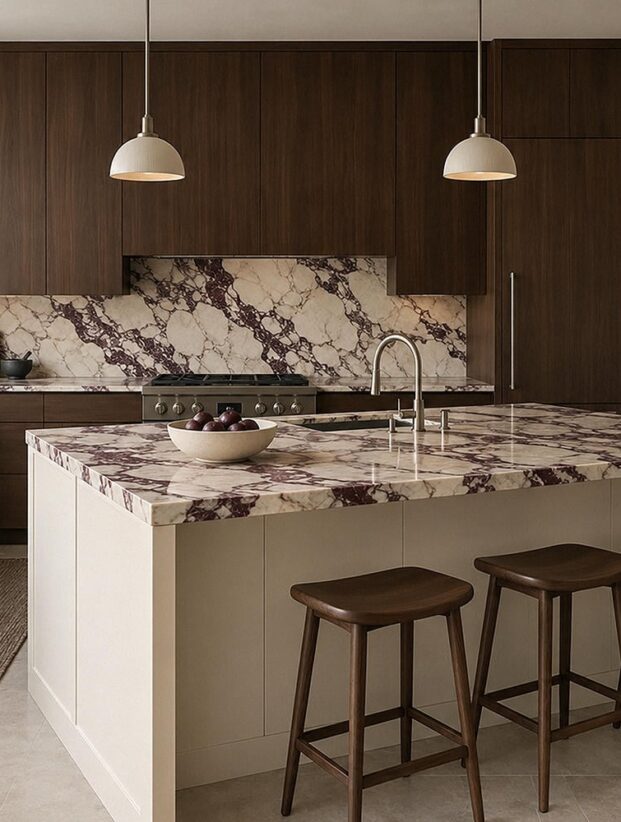
Calacatta Viola with dark wood is one of the most forgiving combinations. Walnut and smoked oak do not compete with the veining because they read as natural fields rather than another painted color. Their brown notes also connect the cream ground to burgundy marks.
Keep the grain direction simple. Rift-cut or straight-grained doors make a calmer backdrop than highly figured wood. If the island and tall cabinets are walnut, consider warm plaster or painted lowers elsewhere so the room does not become too brown.
Blackened oak gives the stone a more graphic setting. Use it where daylight is generous, and keep the ceiling or wall noticeably lighter.
4. Turn the Backsplash Into a Composed Picture
A Calacatta Viola kitchen backsplash can use one continuous slab, large tiles, or a carefully placed fragment behind the range. A full-height slab removes grout lines and lets the pattern read at room scale. It also makes every outlet, seam, and cutout more consequential.
Bookmatched Calacatta Viola backsplash panels mirror adjacent cuts to create a central shape. This can look remarkable behind a range or sink, but only when the vein alignment is planned from the physical slabs. A digital rendering is useful; it is not permission to stop checking measurements.
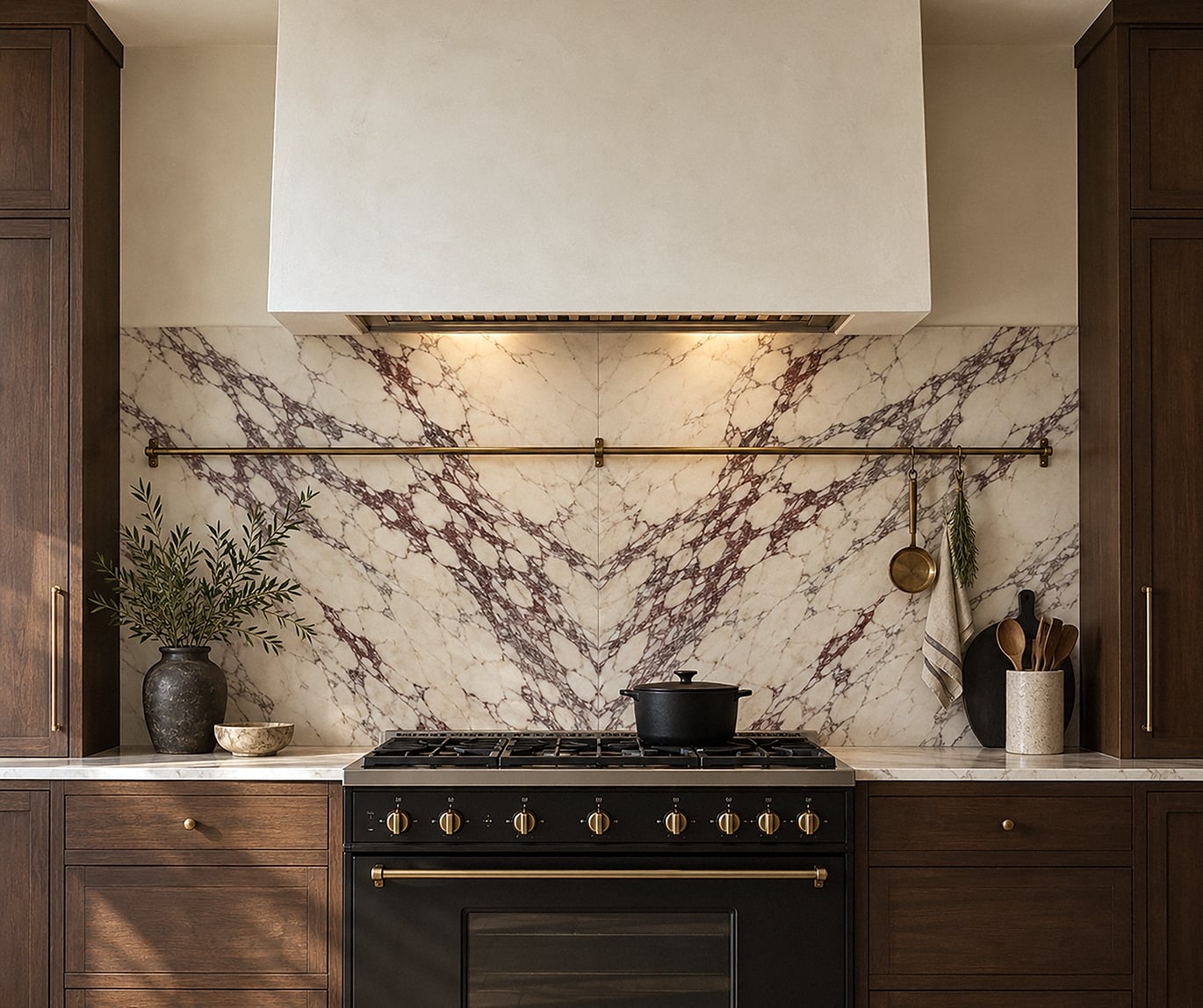
Place outlets where they interfere least, within code and project requirements. An under-cabinet plug system may reduce visible wall plates, but electrical planning belongs with licensed professionals and applicable local rules.
5. Decide Whether the Island Is Furniture or Sculpture
A Viola marble kitchen island can carry a simple counter, a thick built-up edge, or a waterfall end. The more stone it displays, the quieter the base should become.
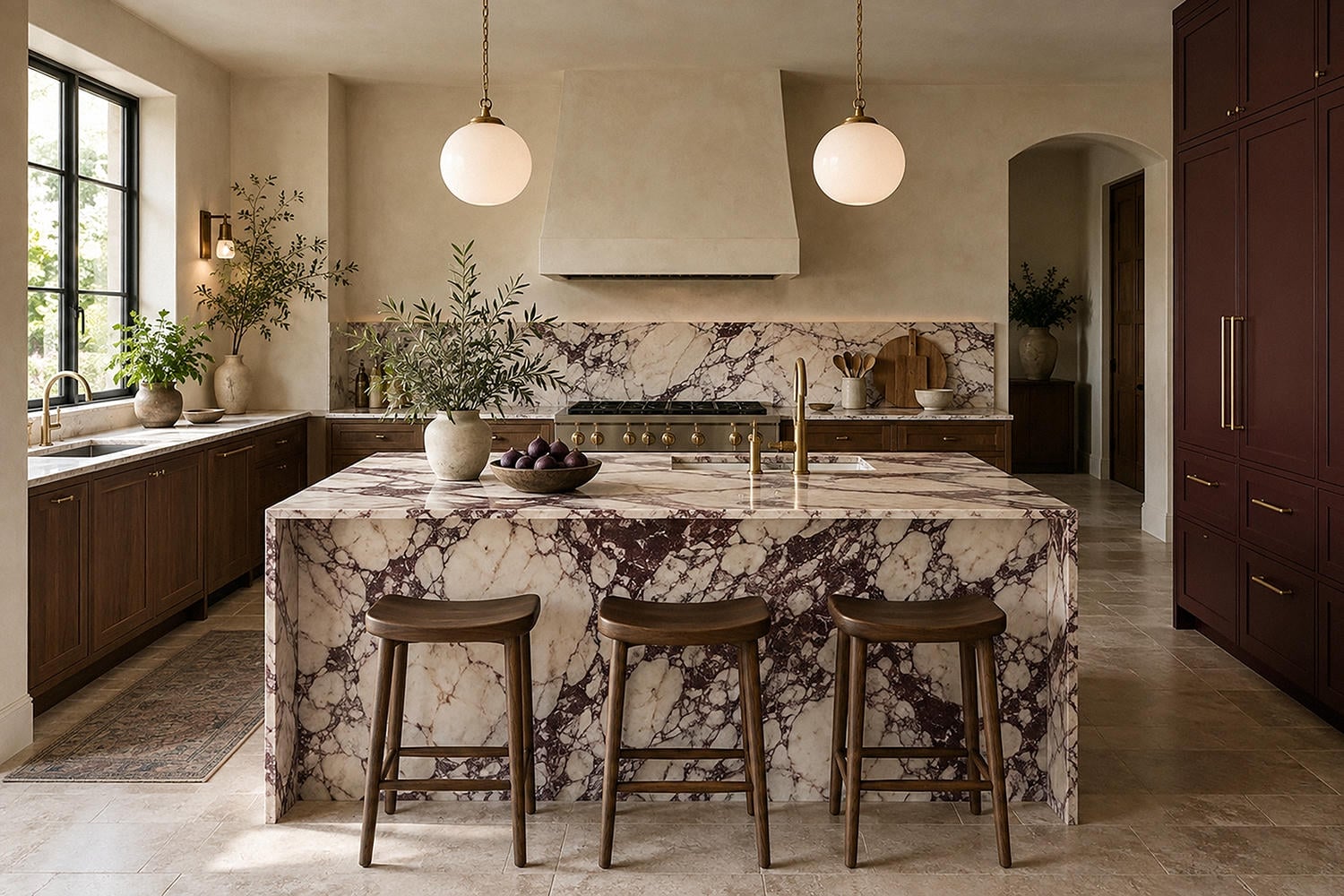
A Calacatta Viola waterfall island creates a dramatic continuous turn down one or both ends. Ask the fabricator to show how the vein will meet at the miter; poor continuation makes the corner look assembled from unrelated offcuts. The cabinet and floor must also support the assembly specified by the fabricator and stone supplier.
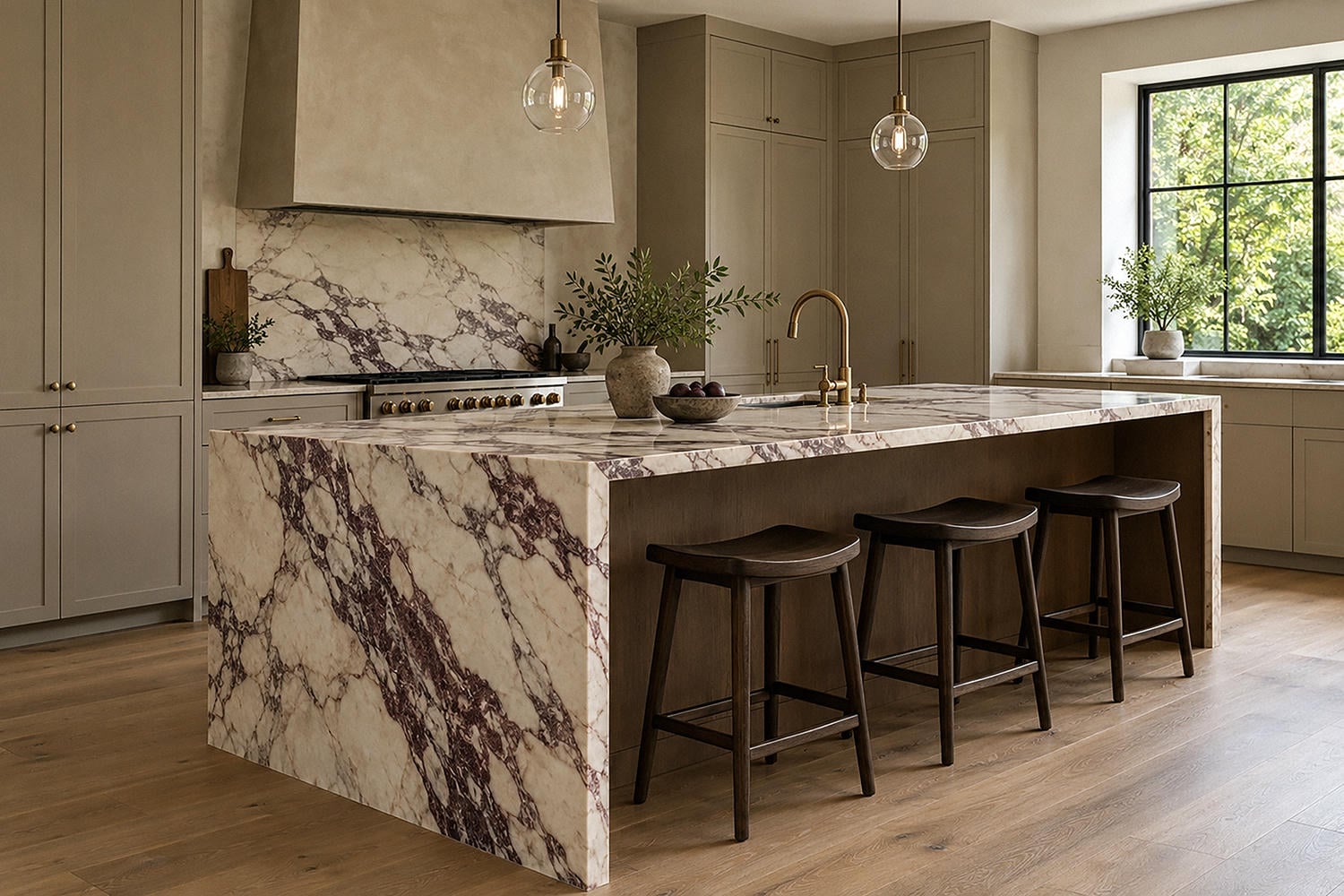
One waterfall end is often enough, especially when the other end needs seating. A simple slab top over walnut or burgundy cabinetry can show just as much personality with less material and less visual weight.
6. Use Brass as a Warm Accent, Not a Theme
Brass hardware with Viola marble picks up gold-brown mineral notes and softens the contrast between cream and burgundy. Satin, aged, and unlacquered finishes usually sit more comfortably beside honed stone than high-polish gold.
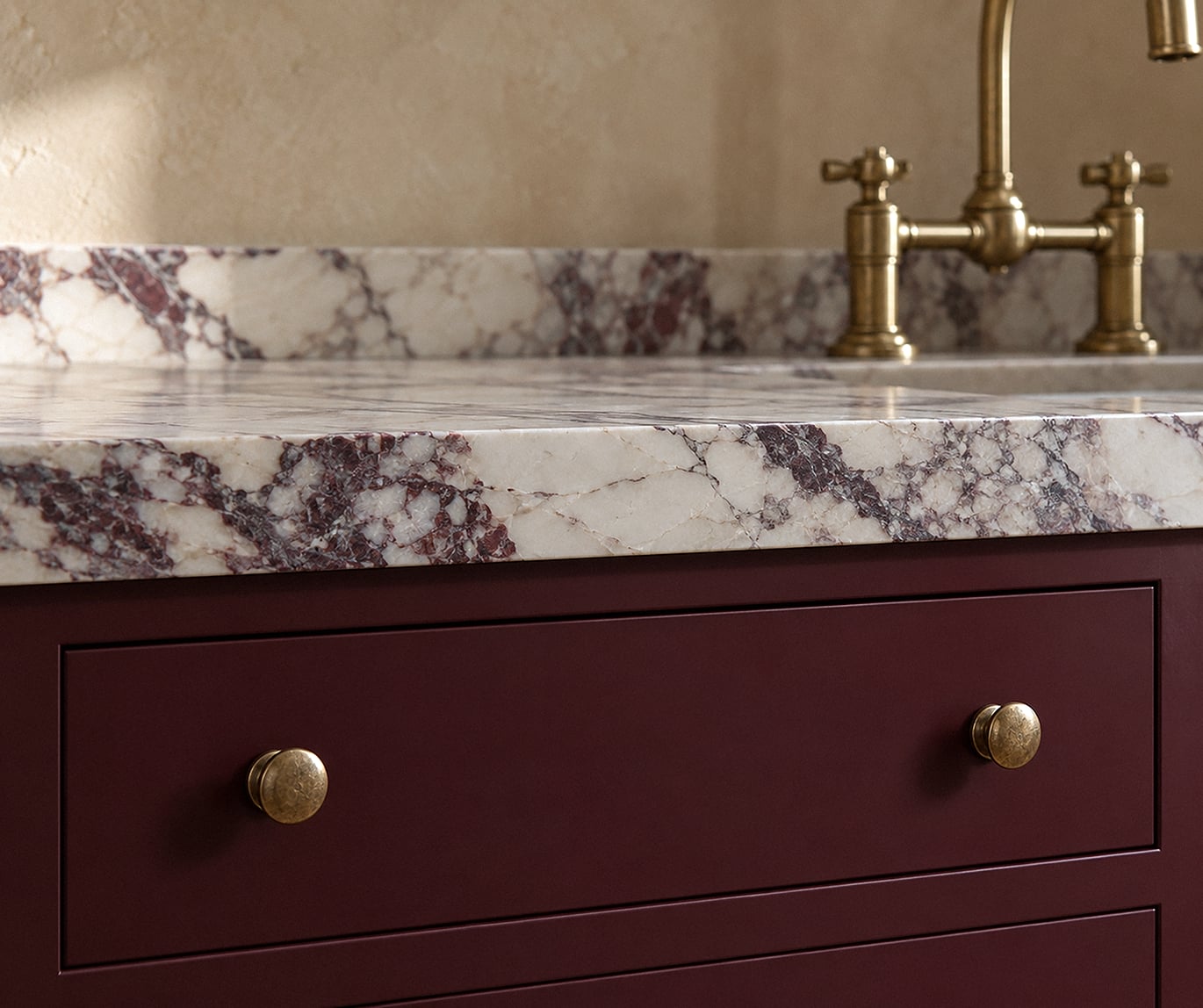
Keep the shapes simple. Small knobs, restrained latches, a bridge faucet, or thin pendant details are enough. If the slab has cool violet and gray veining with little warmth, aged nickel or dark bronze may be more convincing than brass.
The goal is connection, not compulsory matching. Faucet, cabinet pull, and pendant do not need identical finishes, but each metal should appear more than once or have a clear reason to stand alone.
7. Make a Small Kitchen Use the Stone More Precisely
A small kitchen with Calacatta Viola does not require a full marble envelope. Use the stone on a short backsplash, a compact island, a cafe table, or one highly visible counter run. Concentration can make the pattern feel more deliberate.
Keep surrounding surfaces quiet and preserve some clear cream or plaster. When marble counter, backsplash, floor, and accessories all carry strong pattern, the room loses scale. The eye needs one surface that does not have breaking news.
Large-format Viola-look porcelain can be useful behind a range or on a floor, but compare color and pattern repeat in person. A convincing single sample may become obvious repetition across a larger wall.
8. Choose Honed or Polished Based on Wear, Not Photographs
Calacatta Viola honed vs polished is partly a maintenance decision. Polished stone reflects light and intensifies contrast, making burgundy veining look crisp. It can also make etch marks easier to notice when light crosses the surface. Honed marble has a softer, matte appearance and tends to make wear less visually abrupt.

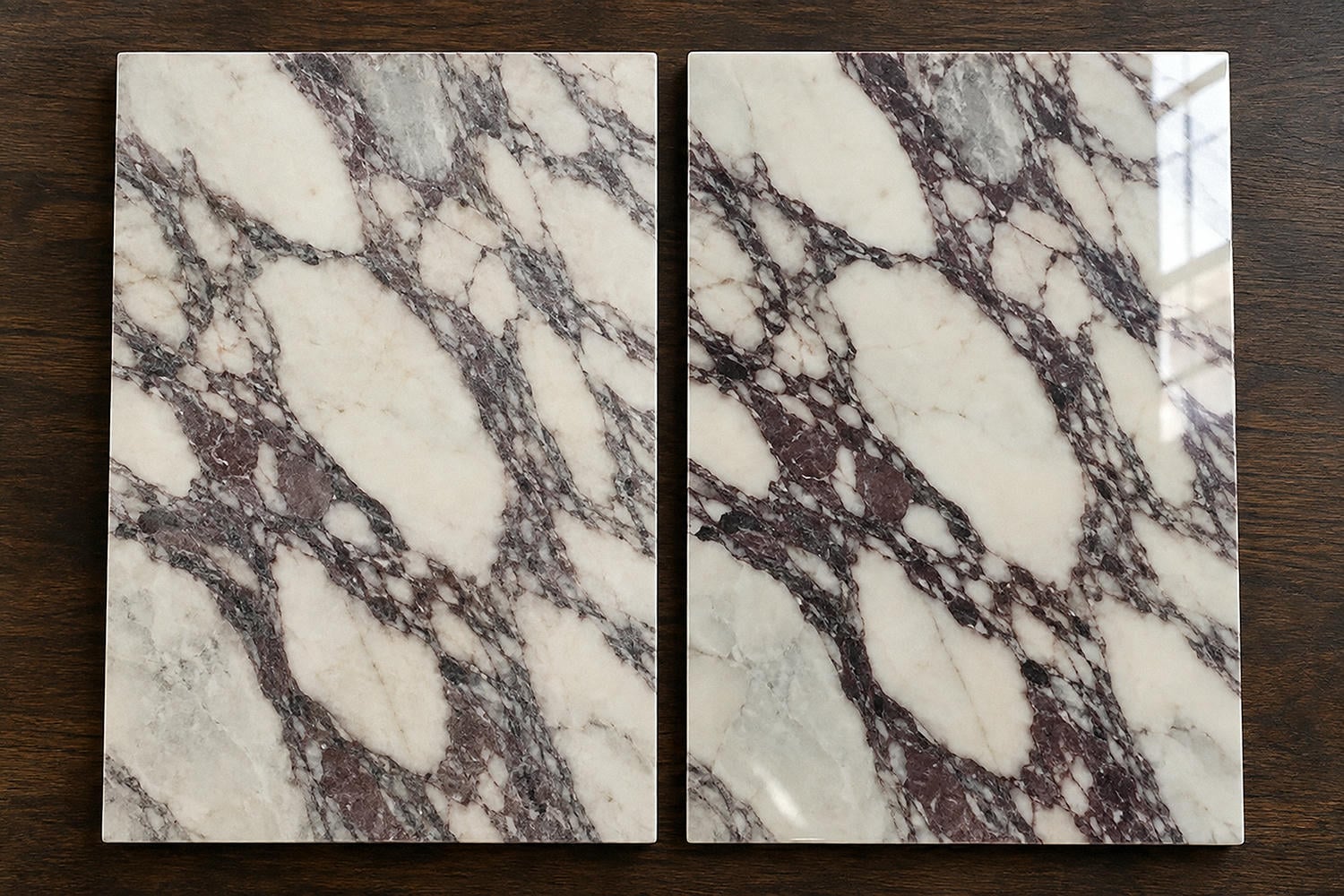
Marble is calcium-based and sensitive to acids. Natural Stone Institute care guidance recommends mild non-acidic cleaning, notes that citrus and vinegar can etch calcareous stone, and explains that impregnating sealers improve stain resistance but do not make stone stain-proof. Use Natural Stone's countertop-care article likewise notes that sealers do not prevent etching and that honed or textured finishes can make daily wear easier to accept.
View both finishes upright and flat. A honed sample can look sleepy in a dim showroom but luminous beside a kitchen window. A polished sample may add helpful reflection in a dark room but also introduce glare beneath pendants.
Is Calacatta Viola Marble Durable for Kitchens?
Calacatta Viola is real marble, so it can serve as a kitchen surface when the owner accepts etching, possible staining, scratching, and professional maintenance. It is not the best choice for someone who wants the counter to remain visually unchanged.
Does Calacatta Viola marble stain? It can. Prompt spill cleanup and an appropriate sealer may reduce absorption, but neither turns marble into a stain-proof or acid-proof material. Use cutting boards, trivets, and coasters, and follow the fabricator's product-specific care advice.
To clean Calacatta Viola marble, blot spills rather than spreading them, then use warm water with a neutral stone cleaner or mild dish detergent. Rinse and dry with a soft cloth. Avoid vinegar, lemon-based cleaners, abrasive powders, and improvised stain treatments that have not been approved for the stone.
How Much Does Calacatta Viola Marble Cost?
Pricing varies sharply by slab grade, thickness, location, freight, pattern layout, edge profile, cutouts, waste, fabrication, and installation. As of September 2026, current pricing guides place premium Calacatta marble around $150 to $250 per square foot installed, though actual pricing varies by slab, region, fabrication, and project complexity. Those figures are budgeting references, not quotes for your project.
Ask local fabricators for line-item proposals based on the exact slabs and layout. A compact island with awkward vein matching can cost more per square foot than a simple straight run. Full-height backsplash work, mitered edges, difficult access, and multiple slabs can change the total substantially.
Calacatta Viola Marble Alternatives
A Calacatta Viola marble alternative should copy the color relationship, not merely print purple squiggles on white. Look at engineered quartz, porcelain slab, quartzite, or printed sintered surfaces with a warm cream field and broad burgundy movement. View a full slab or a large installed photograph to judge repeat and scale.
Quartz and porcelain avoid marble's acid etching, but their seams, edge fabrication, heat limits, and printed pattern behavior differ. Ask for care instructions and warranty terms for the exact product. An alternative is successful when it fits the household's tolerance for upkeep, not when it passes a ten-second imitation test.
Frequently Asked Questions
What colors go with Calacatta Viola?
Burgundy, oxblood, mushroom, warm white, walnut, blackened oak, taupe, muted olive, aged brass, and dark bronze can all connect to the stone. Pull colors from the actual slab rather than a generic product photo.
Is Calacatta Viola marble durable for kitchens?
It is suitable for owners who accept natural wear and follow proper care. Marble can scratch, stain, and etch from acids, so it is not a visually unchanged, low-maintenance surface.
Does Calacatta Viola marble stain?
Yes, it can absorb staining substances. An appropriate impregnating sealer can improve resistance, but it cannot make marble stain-proof and does not prevent acid etching.
How do you clean Calacatta Viola marble?
Blot spills quickly, then use warm water with a neutral stone cleaner or mild dish detergent. Rinse and dry with a soft cloth. Avoid acidic and abrasive cleaners.
What cabinet color works with Calacatta Viola?
Warm white makes the stone crisp, mushroom softens it, burgundy echoes its strongest veins, and walnut quiets the pattern. The cabinet color should relate to the slab without trying to match one vein exactly.
The best Viola marble kitchens are edited around the slab. Choose its composition first, give its boldest movement a visible place, then let cabinetry, metal, and lighting play supporting roles. The stone has plenty to say; the rest of the room only needs to listen well.