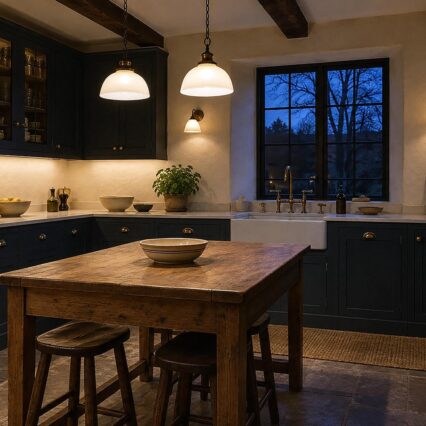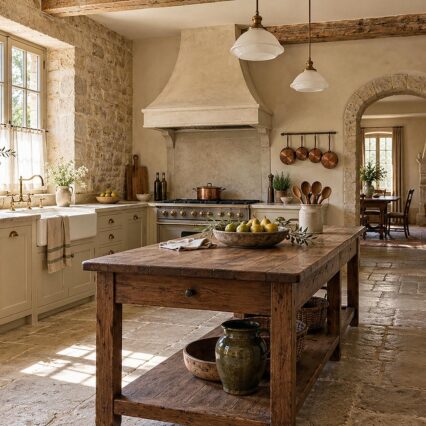
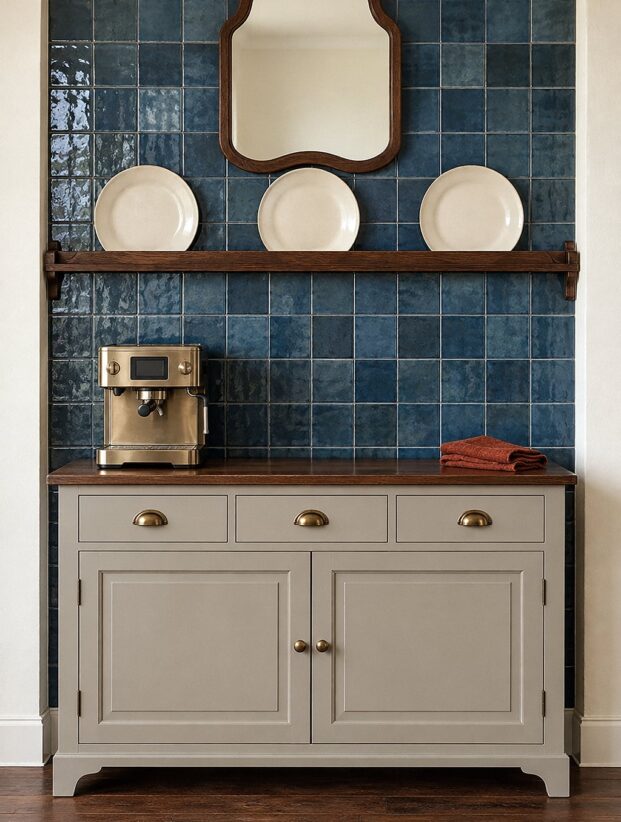
A good vintage coffee corner should look as though it has been improving one lucky find at a time. The cabinet came from an estate sale. The striped mugs appeared in three different thrift shops. The little brass lamp seems to have lived a full life before landing beside the sugar bowl.
That collected quality is what separates a charming vintage coffee station from a countertop wearing a costume. You do not need a matching set of faux-antique accessories or a sign announcing that coffee happens here. The machine has already made that fairly clear.
Interest in vintage coffee corners has been rising, which makes sense: it is a small, attainable project with the atmosphere of a neighborhood cafe. The trick is giving the corner enough practical discipline that making coffee still feels easy on a weekday morning.
Begin With One Piece That Has Some History
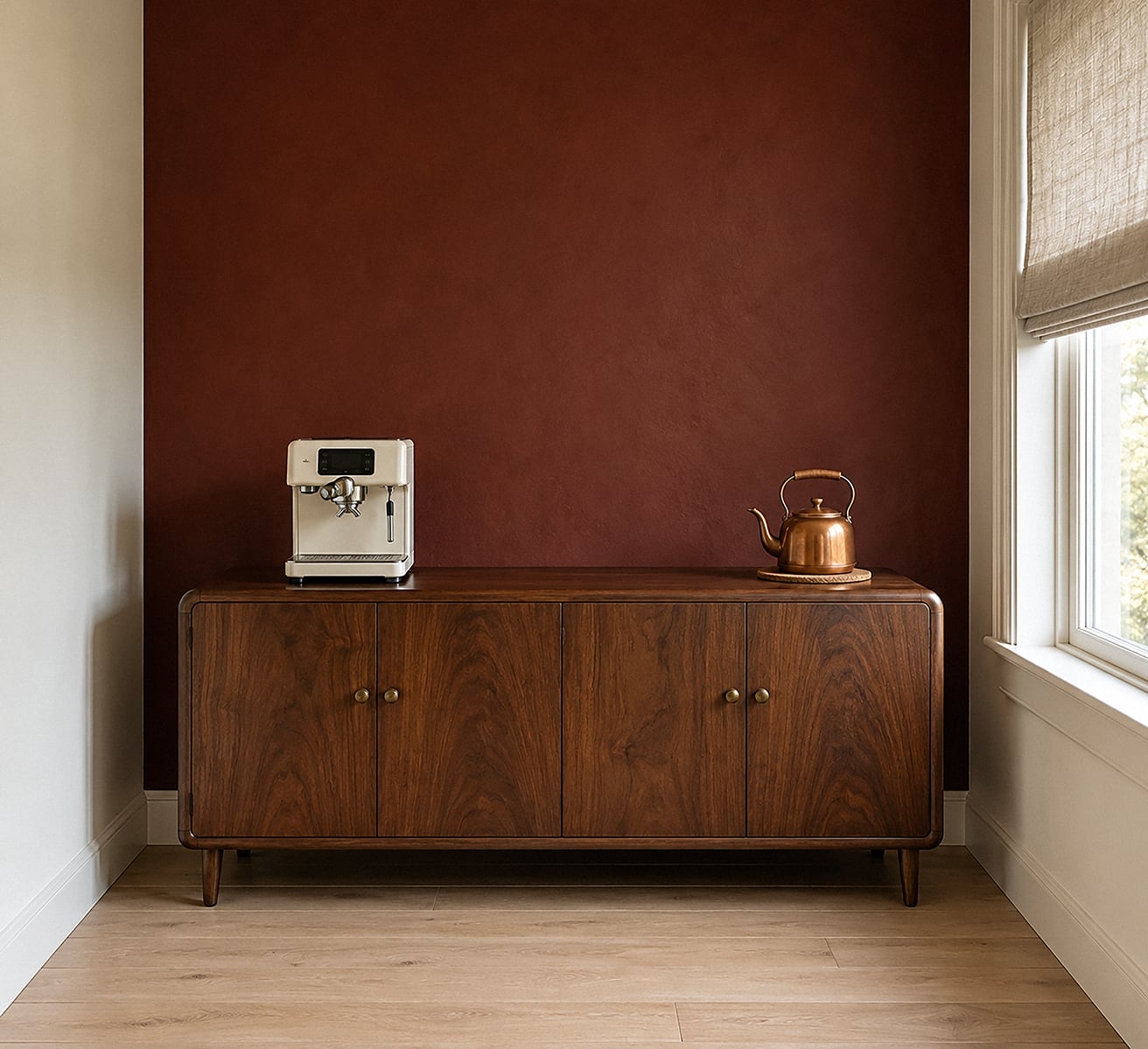
Every convincing coffee corner needs an anchor. A walnut sideboard, painted hutch, shallow pine cupboard, or marble-topped washstand can set the tone before a single mug arrives. I would rather have one genuinely old or well-made piece than six new objects trying very hard to look weathered.
Before buying, measure the coffee maker with its lid, water tank, portafilter, and any doors fully open. That last part has ruined many beautiful furniture plans. Check the surface depth, the interior shelf height, and the route to a suitable outlet. An appliance should sit level and stable, with the clearances its manufacturer requires; cords do not belong stretched across a sink or hot surface.
The best furniture depends on how you make coffee. A low credenza suits a drip machine and grinder. A taller antique coffee bar cabinet earns its footprint when you need concealed storage for beans, filters, linens, and backup cups. A compact wall cabinet over a sturdy console works in a narrow kitchen. If a tall piece feels top-heavy, secure it appropriately to the wall rather than trusting gravity and optimism.
Let age remain visible. Small scratches, darkened brass, and a softened edge are character. Sticky drawers, flaking finishes, active rust, and unstable shelves are repair jobs. Vintage should make the room more interesting, not make breakfast more hazardous.
Turn an Antique Cabinet Into a Working Station
An antique oak cabinet can hold an entire morning routine if you assign the zones before styling it. Put the machine and grinder on the main work surface. Keep everyday cups within one easy reach. Store beans away from direct sun and heat, then give spoons, filters, and tea bags a shallow drawer or lidded container.
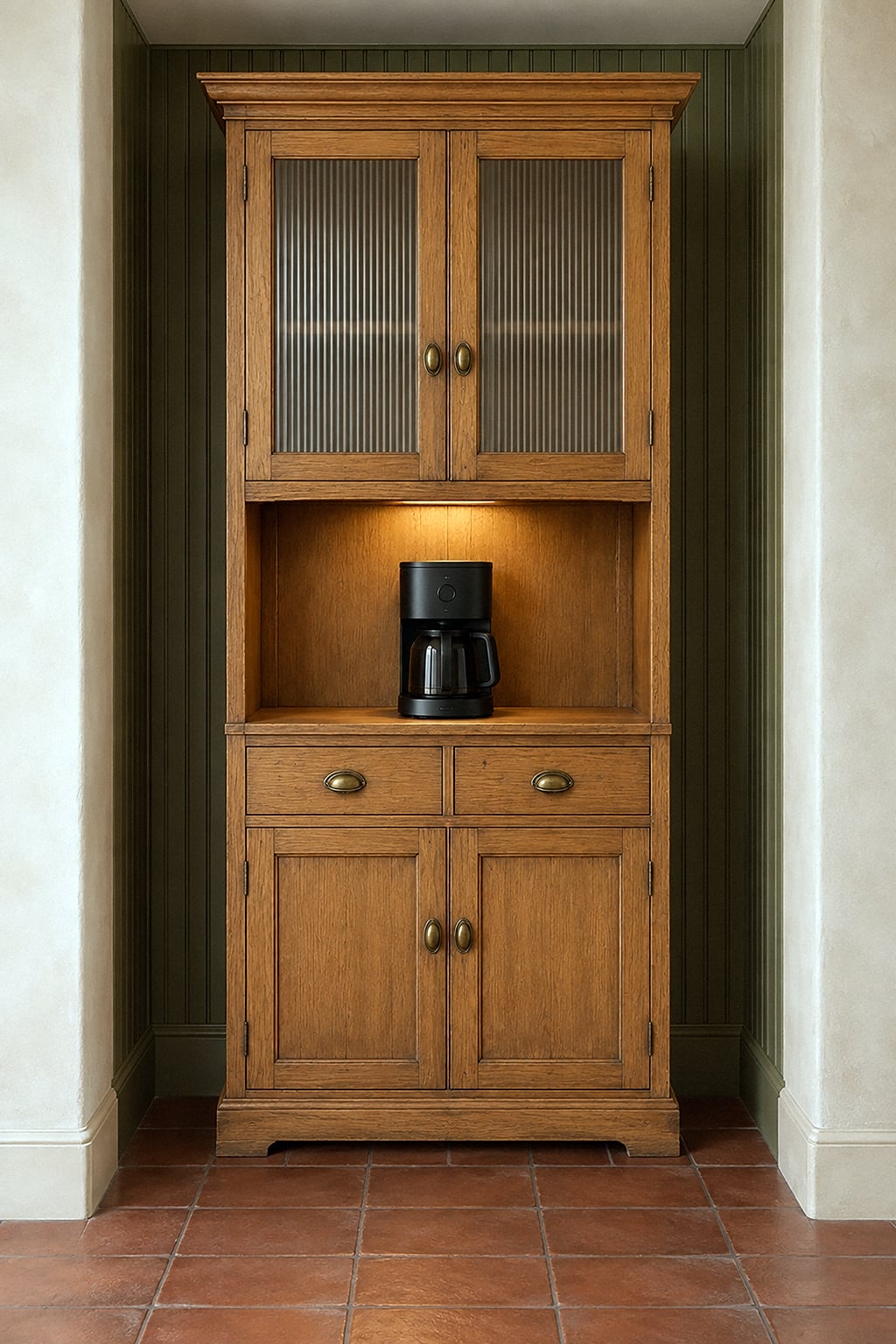
Closed storage is the quiet hero here. The lower doors can hide bulk coffee, appliance manuals, cleaning cloths, and the mug that says something hilarious only to your family. If the cabinet has no useful interior shelves, removable shelf risers or freestanding inserts add capacity without permanently altering an antique.
Keep the top composition restrained. One lamp, one tray, and one sculptural object are usually enough beside the equipment. Repeating a material helps mismatched pieces settle down: warm wood, cream pottery, and aged metal can make a chrome espresso machine feel like part of the story rather than a visiting robot.
If you are adapting furniture that was not designed for appliances, check its condition and load capacity first. Do not cut holes, add outlets, or alter wiring unless a qualified professional has confirmed a safe approach. A coffee corner is not improved by a scorched heirloom.
Borrow the Grammar of a Retro Cafe
Retro coffee nook ideas become more convincing when they borrow a few design rules instead of every diner reference at once. Start with the floor, wall color, or seating shape. A checkerboard floor, curved cafe chair, chrome-edged table, or mineral-blue wall can establish the era without turning the kitchen into a film set.
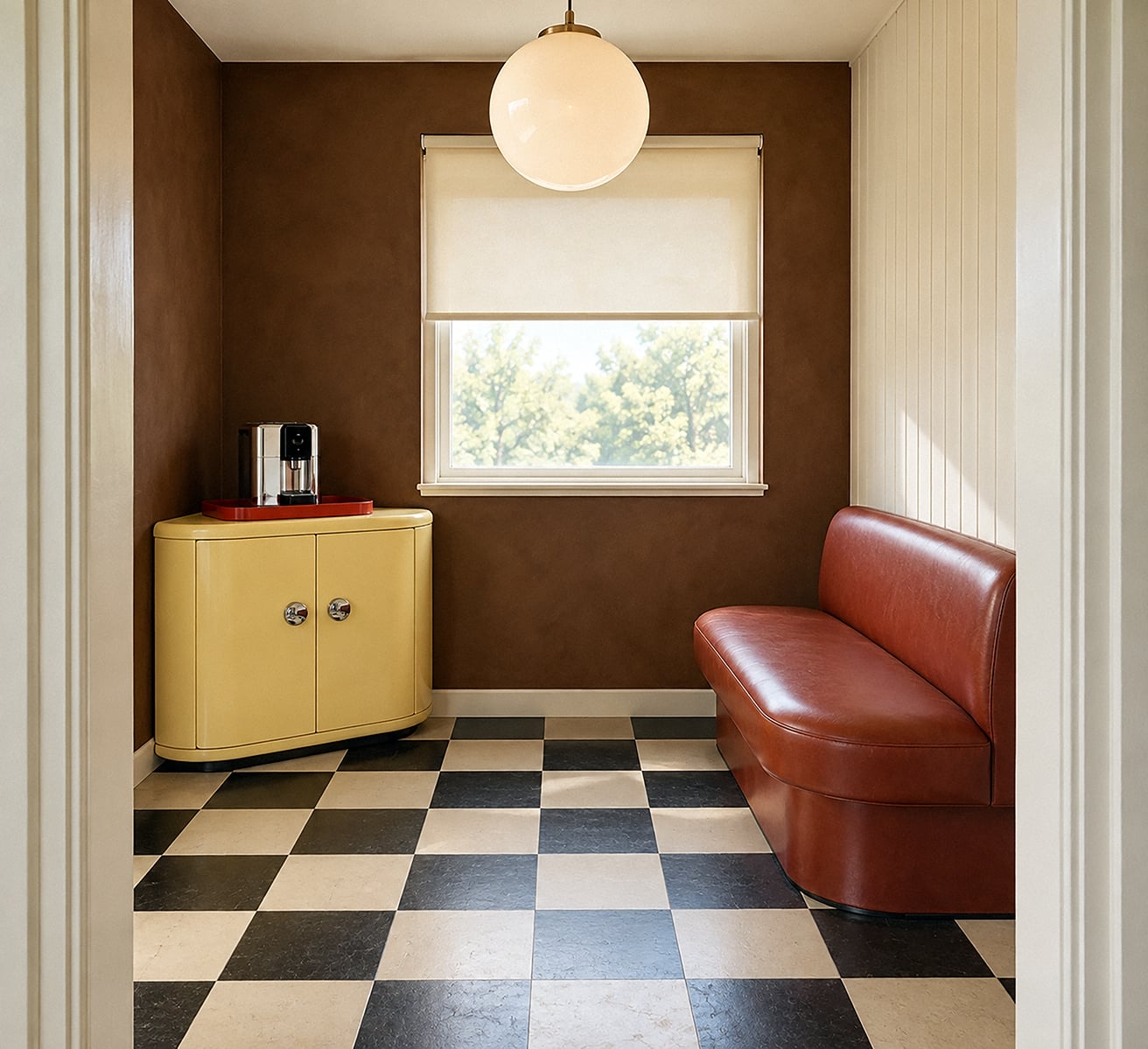
Choose one strong color family and let neutrals carry the rest. Tomato red with cream feels energetic; teal with walnut feels moodier; butter yellow with pale oak is sunnier. Black-and-white checks can handle almost any of them, although a smaller-scale pattern tends to behave better in a tiny nook.
A round bistro table is especially useful because it softens a boxy corner and avoids sharp traffic edges. If space allows, pair it with two chairs that share either color, material, or silhouette. They do not need to match exactly. In fact, a pair that is related rather than identical often looks more plausibly collected.
Resist filling every wall with cafe memorabilia. One clock, one frameless mirror, or a small group of graphic pieces has more authority than a dozen tiny plaques. Leave enough blank wall around the arrangement for the room to breathe.
Make a Thrifted Mug Display Feel Intentional
A thrifted mug display is where personality can get wonderfully specific. Thick diner mugs, transferware cups, hand-thrown stoneware, and striped 1970s shapes can coexist if you give the collection one visual rule. Repeat a color, keep the silhouettes chunky, or limit the display to a tight palette.
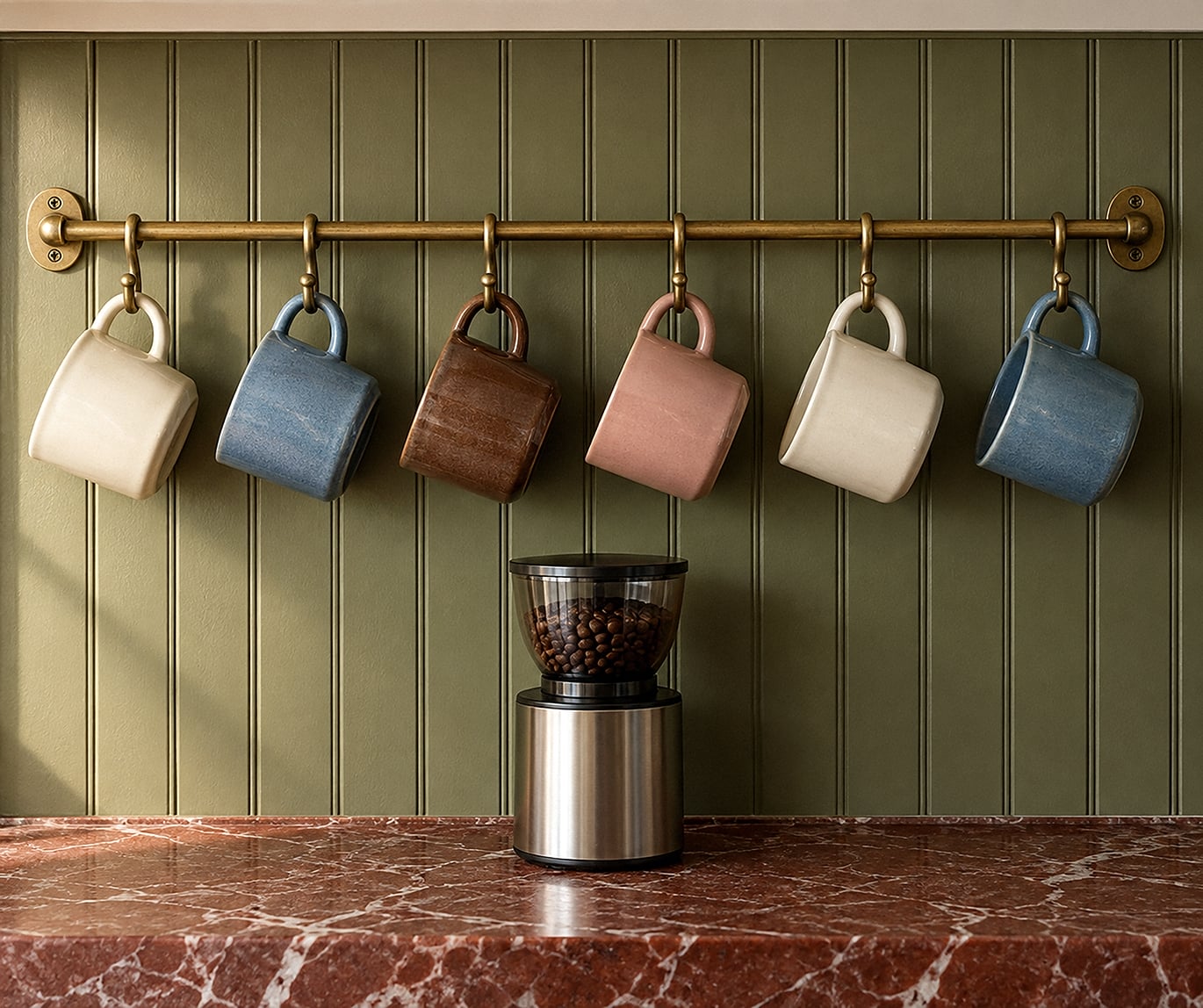
A sturdy rail with hooks works beautifully beneath a shelf, provided the hardware and wall can support the loaded weight. Keep enough space between cups that the handles do not collide every time someone reaches for one. Open shelves are another option, though I would reserve the easiest position for the cups used daily and let the fragile treasures occupy calmer territory.
There is one less-romantic detail worth knowing. The FDA warns that some traditional, antique, damaged, or flea-market pottery may contain lead that can leach into food or drink; its guidance on lead-glazed pottery advises against using questionable pieces for food or beverages when they cannot be reliably tested. Let uncertain cups be decorative and use modern food-safe mugs for coffee.
That division can actually improve the display. Hang the daily cups closest to the machine and place collectible pieces on the upper shelf, where their odd shapes and faded glazes read as art.
Give a Small Kitchen Coffee Corner Firm Boundaries
A small kitchen coffee corner needs a border more than it needs extra square footage. One tray, a narrow cart, or the width of a single base cabinet can define the station. Without that edge, the grinder gradually annexes the toaster, the fruit bowl, and most of the prep counter.
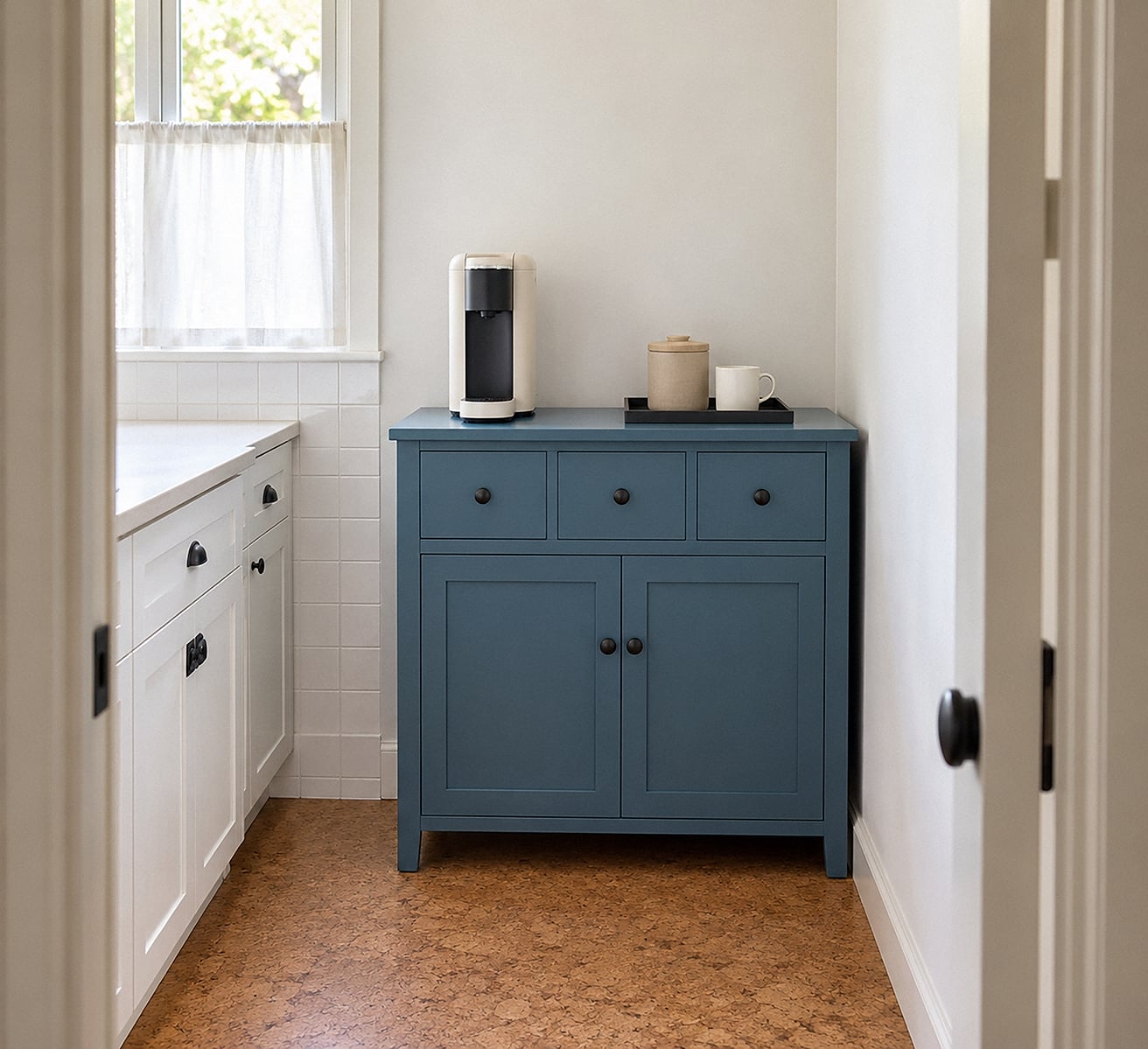
Build upward carefully. A shallow shelf can hold canisters and two or three display mugs while leaving enough headroom to fill the machine. A peg rail takes spoons or cups off the counter. The inside of a nearby cabinet door can hold a lightweight filter organizer if the hinges and clearance permit.
Then edit by frequency. Coffee beans and everyday mugs stay out. The milk frother used twice a month goes behind a door. Backup filters do not require their own ceramic urn on the counter. A vintage corner feels richer when a few useful objects have space around them.
For apartment kitchens, a narrow rolling cart offers flexibility, but lockable casters and a stable top matter. Keep any hot appliance positioned according to its instructions and connected directly as recommended by the manufacturer. If the only available outlet creates a cord hazard, move the station or ask an electrician about safe options rather than improvising with a questionable extension setup.

Use Vintage Cafe Wall Decor With a Light Hand
The wall is your chance to suggest a cafe without spelling out "CAFE" in six-inch letters. A beveled mirror, old clock, abstract print, or small still life gives the corner context. Even an empty carved frame can be lovely against a saturated wall.
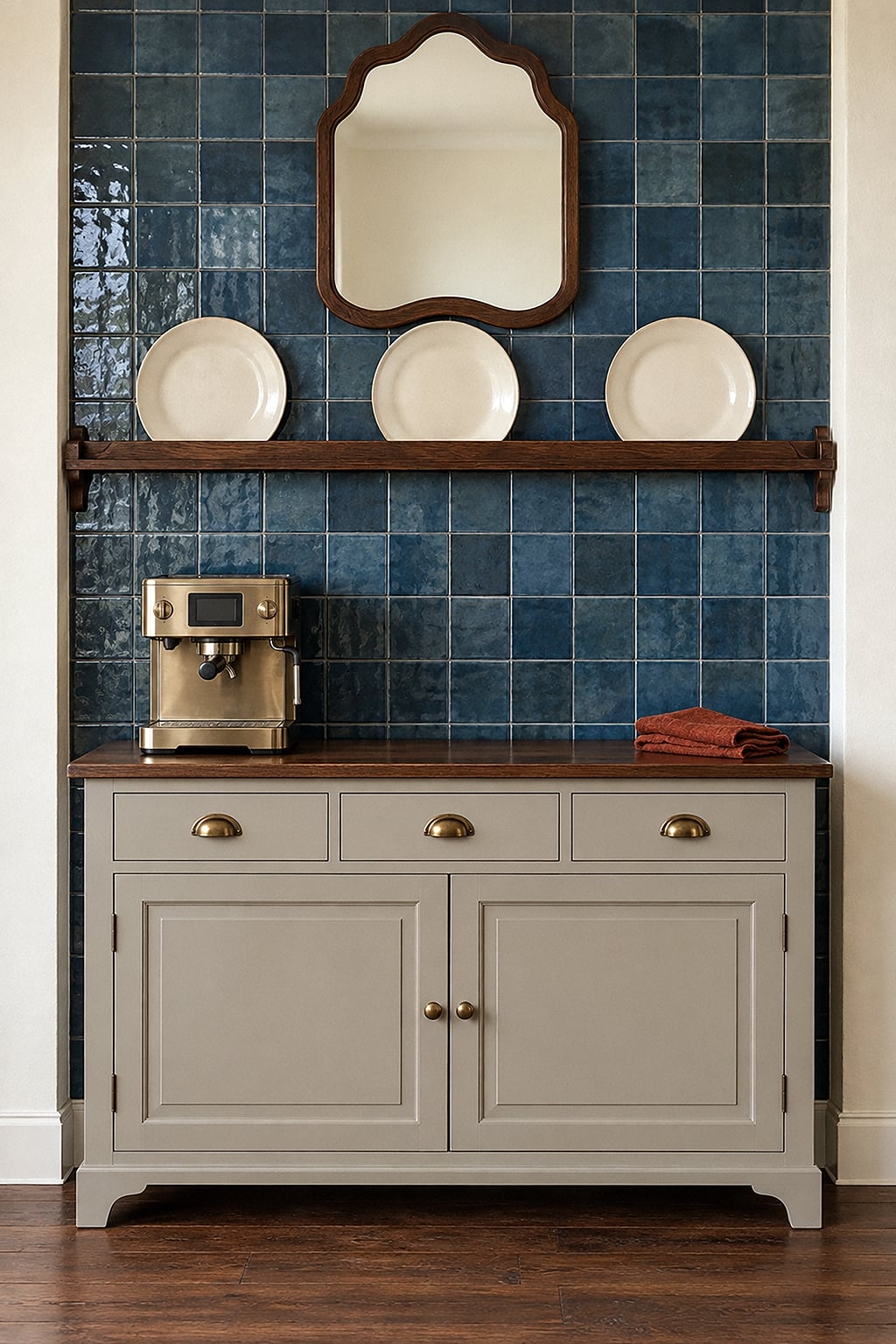
For a gallery arrangement, mix shapes as well as sizes. A round clock interrupts all those rectangles; a tiny brass plate catches light; a dark wood frame ties back to the furniture. Lay the pieces on the floor first and leave irregular, but deliberate, gaps. Perfectly even spacing can make an eclectic group feel like evidence in a police procedural.
Avoid hanging valuable paper art where steam, splashes, or direct heat will reach it. A mirror or sealed print is more forgiving near the machine. If you collect actual vintage menus or postcards, display copies in the coffee area and keep the originals somewhere protected.
The wall color does much of the work. Mineral blue, tobacco brown, faded peach, olive, or warm cream can make ordinary kitchen cabinetry feel more storied. Sample the color beside the wood and metal already in the room; a blue that looks charming online may turn icy beside cool LEDs.
Style for the Evening, Not Only the Photograph
The final layer is light. A tiny shaded lamp on a hutch gives the station the glow of a cafe just before closing. A plug-in sconce or rechargeable picture light can do something similar when counter space is scarce. Keep shades and cords safely clear of water, heat, and moving appliance parts.
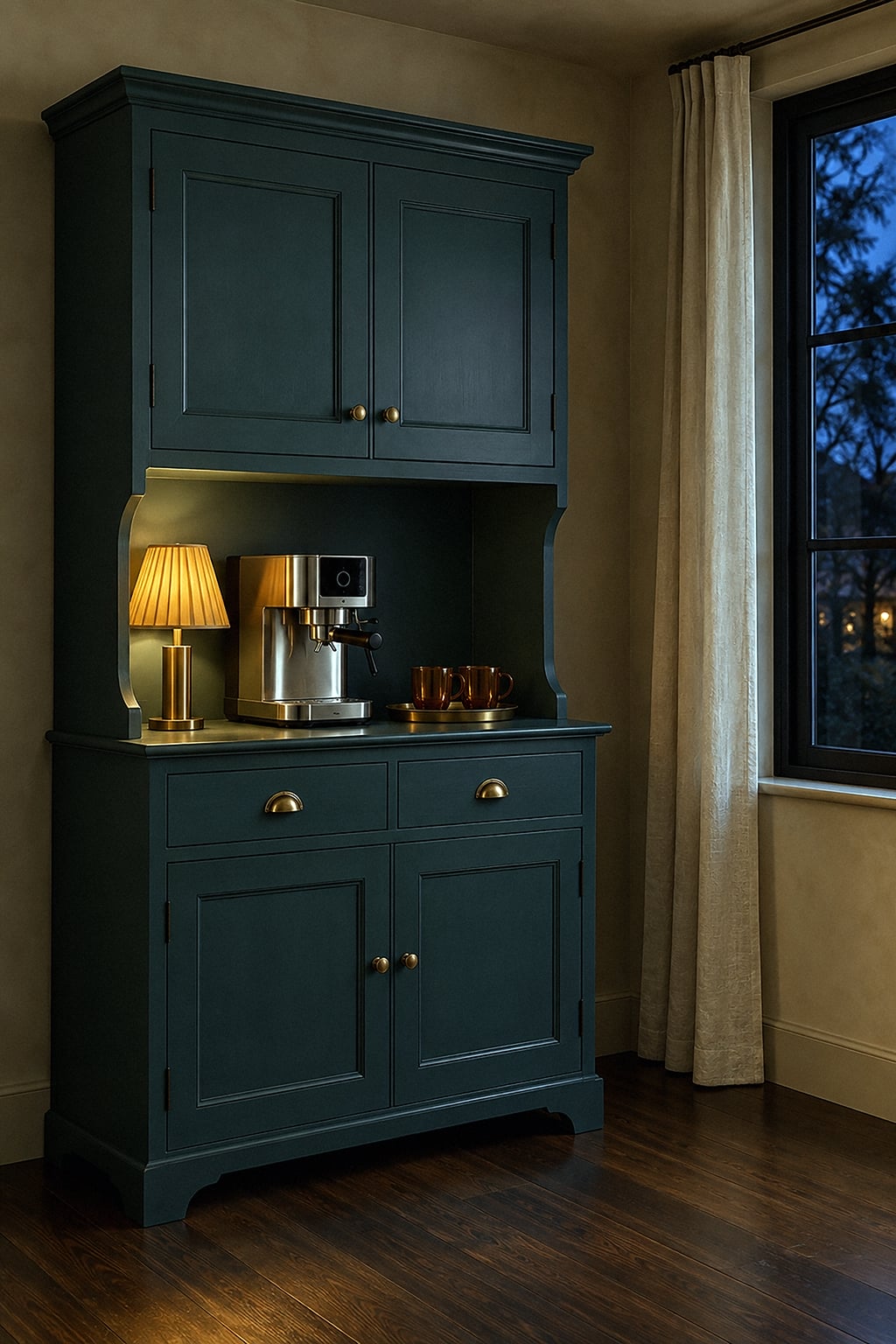
At night, the corner needs less decoration because the light creates its own composition. A teal cabinet, warm pool of light, dark tray, and two favorite mugs may be all it takes. During the day, a small vase of clipped branches or a bowl of citrus can bring freshness without becoming another permanent collection.
This is also where chrome and older wood can become friends. Let the machine be the brightest object, then repeat a smaller metallic note in a lamp base, tray edge, or hook rail. You are building a conversation, not requiring every object to arrive in uniform.
The most persuasive vintage coffee corners are useful first and atmospheric second. They hold the things you actually reach for, protect the pieces that should not hold hot drinks, and leave enough empty surface for the mildly chaotic act of making coffee. When the corner works at 7 a.m. and still looks lovely at 7 p.m., it has earned its place.
Vintage Coffee Corner Q&A
How do you style a vintage coffee corner without making it look cluttered?
Start with one substantial vintage piece, repeat two or three materials, and confine small tools to a tray or drawer. Display only the mugs and objects that strengthen the palette; empty counter space is part of the styling.
What furniture works for a home coffee nook?
A sideboard, hutch, shallow cupboard, sturdy console, or lockable rolling cart can work. Choose according to the appliance depth, open-lid height, storage needs, outlet location, furniture stability, and the clearances required by the appliance manufacturer.
How can I make a vintage coffee station in a small kitchen?
Claim one defined section of counter or use a narrow cart. Add a shallow shelf or secure mug rail above it, keep only daily supplies visible, and move occasional equipment into closed storage.
Can I drink from antique or thrifted mugs?
Not every old mug is safe for food use. Pieces with unknown origins, damaged glaze, or questionable decoration are better treated as display objects unless their safety is reliably established; use modern food-safe mugs for daily drinks.