White Oak and Black Kitchen Ideas That Balance Warmth and Edge
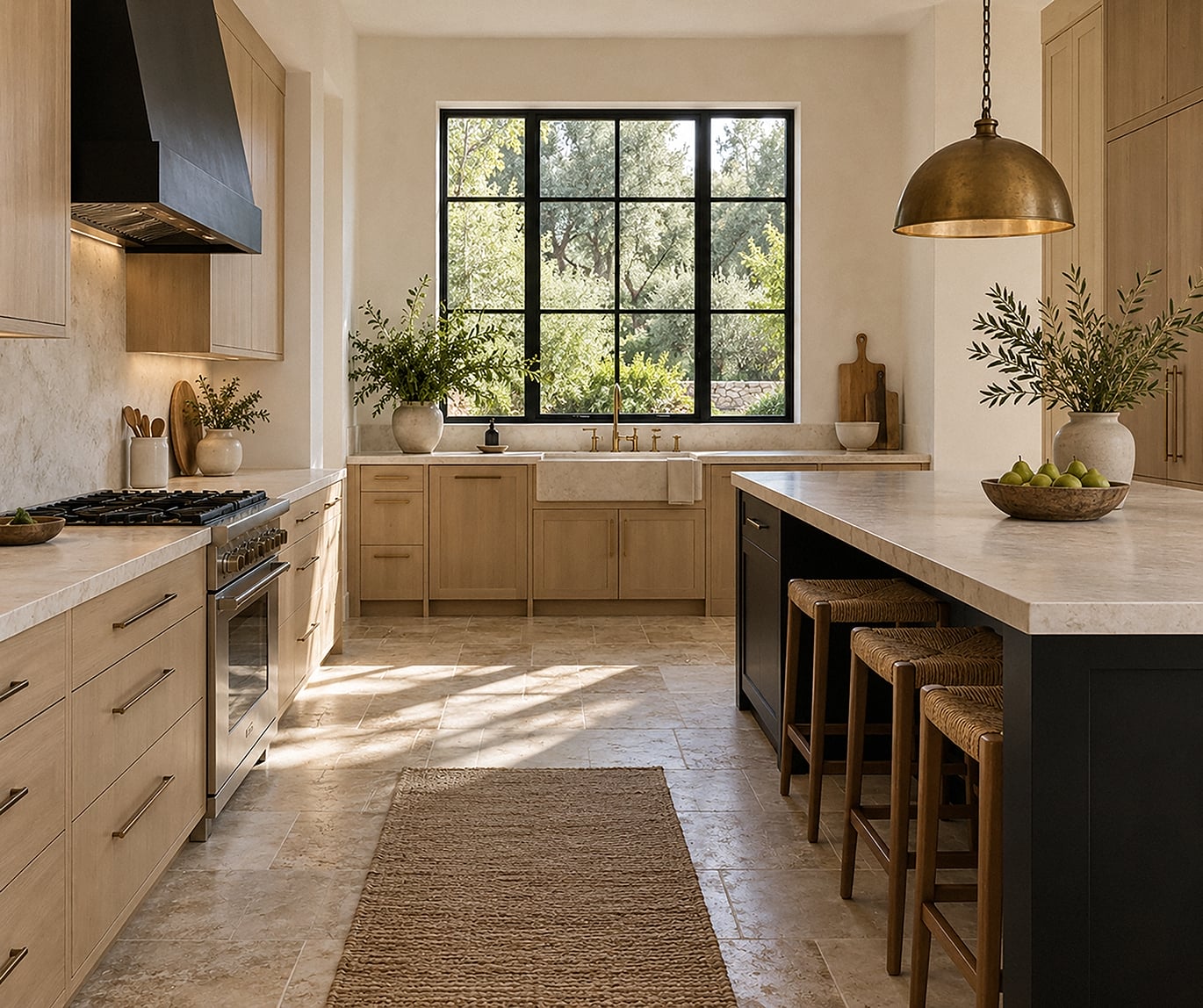
White oak and black kitchen ideas succeed because the two materials correct each other's worst habits. Black brings definition, but can become severe. White oak supplies warmth, but can drift toward bland beige when every surface has the same value. Put them together and the kitchen gains both structure and ease.
The trick is deciding which finish leads. In most rooms, white oak should occupy the largest visual area while black marks the places that need weight: the island, range hood, windows, worktop, or hardware. When every dark element is equally loud, the contrast starts shouting. When black appears in a few connected locations, it behaves like punctuation.
1. Choose the White Oak Before Choosing the Black
White oak varies more than its name suggests. Some boards read pale wheat, others gray-beige, honey, or softly rosy. Rift-sawn material shows long, quiet grain; plain-sawn boards have more visible arches and movement. Neither is inherently better, but a modern white oak and black kitchen usually looks calmer when neighboring cabinet fronts have reasonably consistent color and grain.
Select the actual oak sample before settling on black. A cool blue-black can make honey oak look orange. A warm charcoal or brown-black often connects more gently to natural timber. View the samples vertically, since cabinet color changes with the direction and angle of light.
For the finish, skip anything that buries the grain beneath a thick amber film. A matte clear coat or pale oil-like appearance keeps the wood looking light, though the exact coating should be specified for cabinet use and maintained according to its manufacturer.
2. Pair White Oak Cabinets With Black Countertops Carefully
White oak kitchen cabinets with black countertops create one of the cleanest versions of the palette. Honed black granite, soapstone, dark quartz, and charcoal porcelain each give the wood a strong horizontal cap. A low-sheen surface usually feels more relaxed than a mirror-polished black slab.
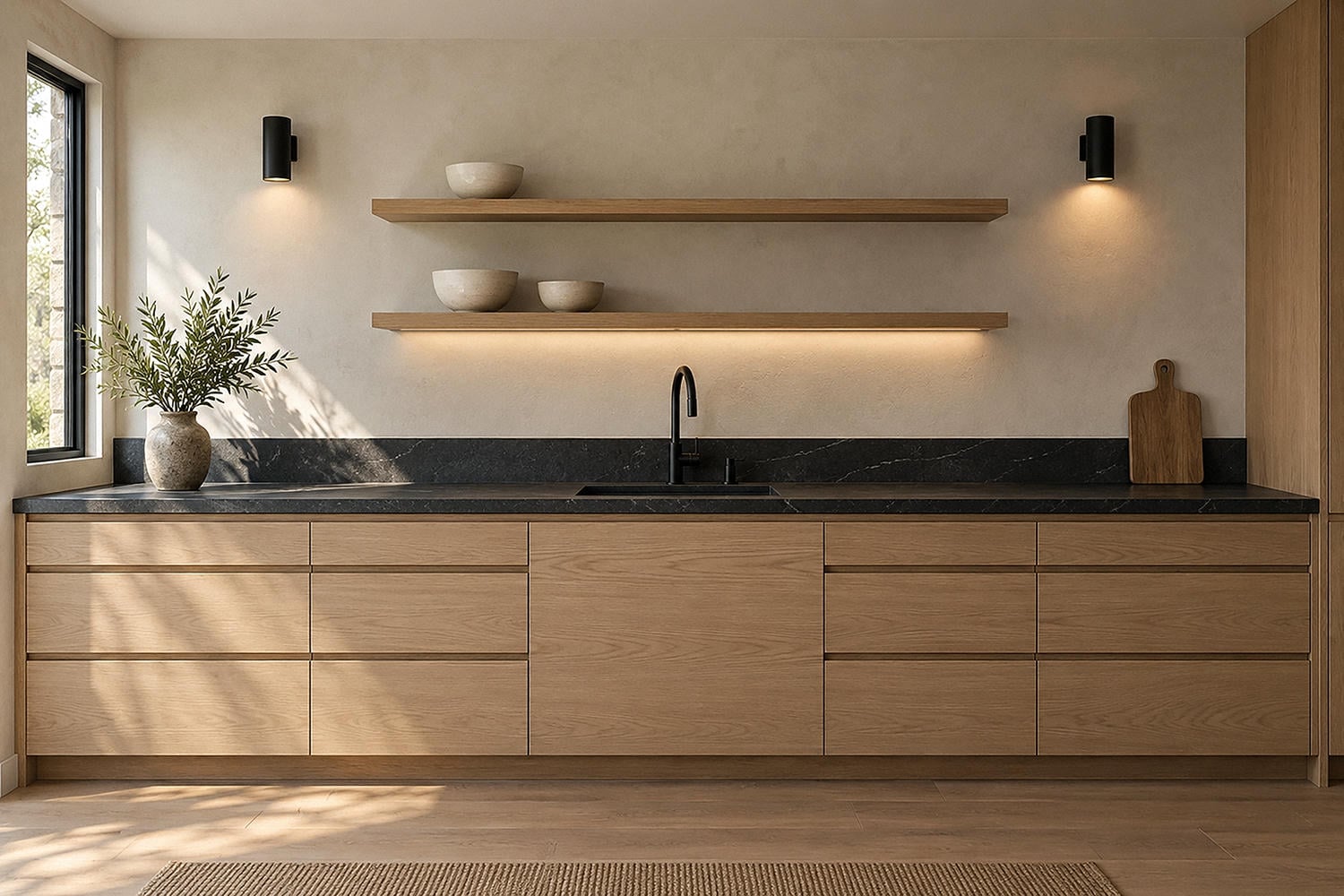
The practical question is not simply what countertop goes with white oak and black accents. It is how much black the room can carry. In a bright kitchen, dark counters can wrap the entire perimeter. In a smaller room, use black on the island and keep the wall counters warm white or pale taupe. That preserves the graphic idea without turning every work surface into a shadow.
Black counters show crumbs, flour, fingerprints, and hard-water marks differently depending on their pattern and finish. A softly mottled surface is more forgiving than a perfectly uniform glossy one. Test a large sample with the kitchen's actual daylight and task lighting before ordering.
3. Anchor the Room With a Black Island
A black kitchen island with white oak cabinets works because the island already reads as a separate piece of architecture. Use matte black, charcoal, or an almost-black brown on the base, then repeat that tone once or twice at the perimeter through the range hood, windows, or a narrow shelf bracket.
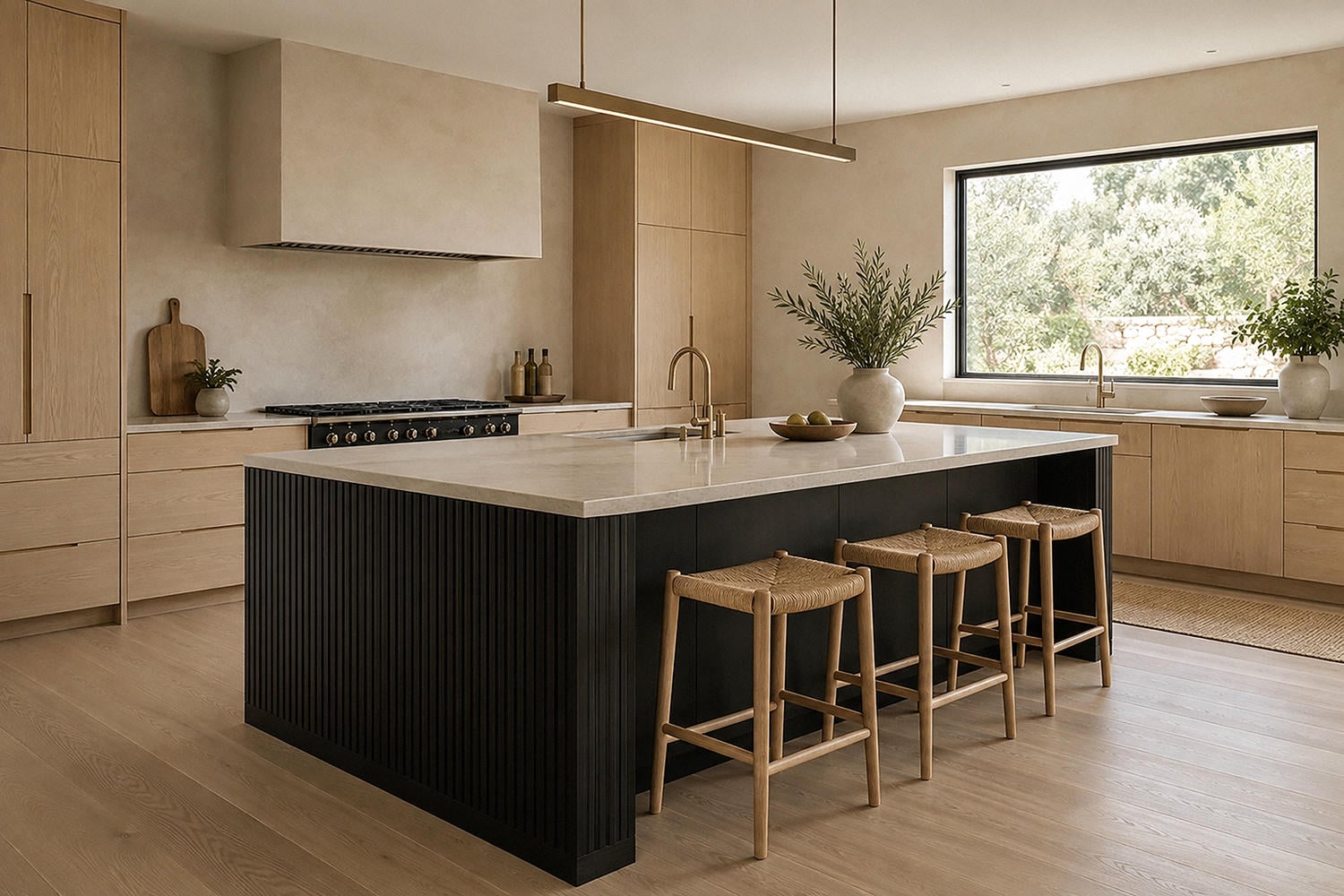
A white oak slab cabinet and black island combination can feel especially crisp. Let the oak doors remain flat and quiet, then give the painted island a little more detail, perhaps slim shaker fronts or fluted end panels. The difference should be subtle enough that the cabinetry still belongs to one room.
Keep seating visually light. Oak stools, woven seats, or thin black frames prevent the island from becoming a large dark box with four more dark objects parked beside it.
4. Treat Black Backsplash as a Feature, Not a Void
A black backsplash with white oak cabinets can be handsome, but material variation matters. Handmade charcoal tile, soapstone, veined black marble, or small-format matte tile reflects light in broken, changing ways. A featureless black sheet can absorb so much visual information that outlets and work zones seem to disappear.
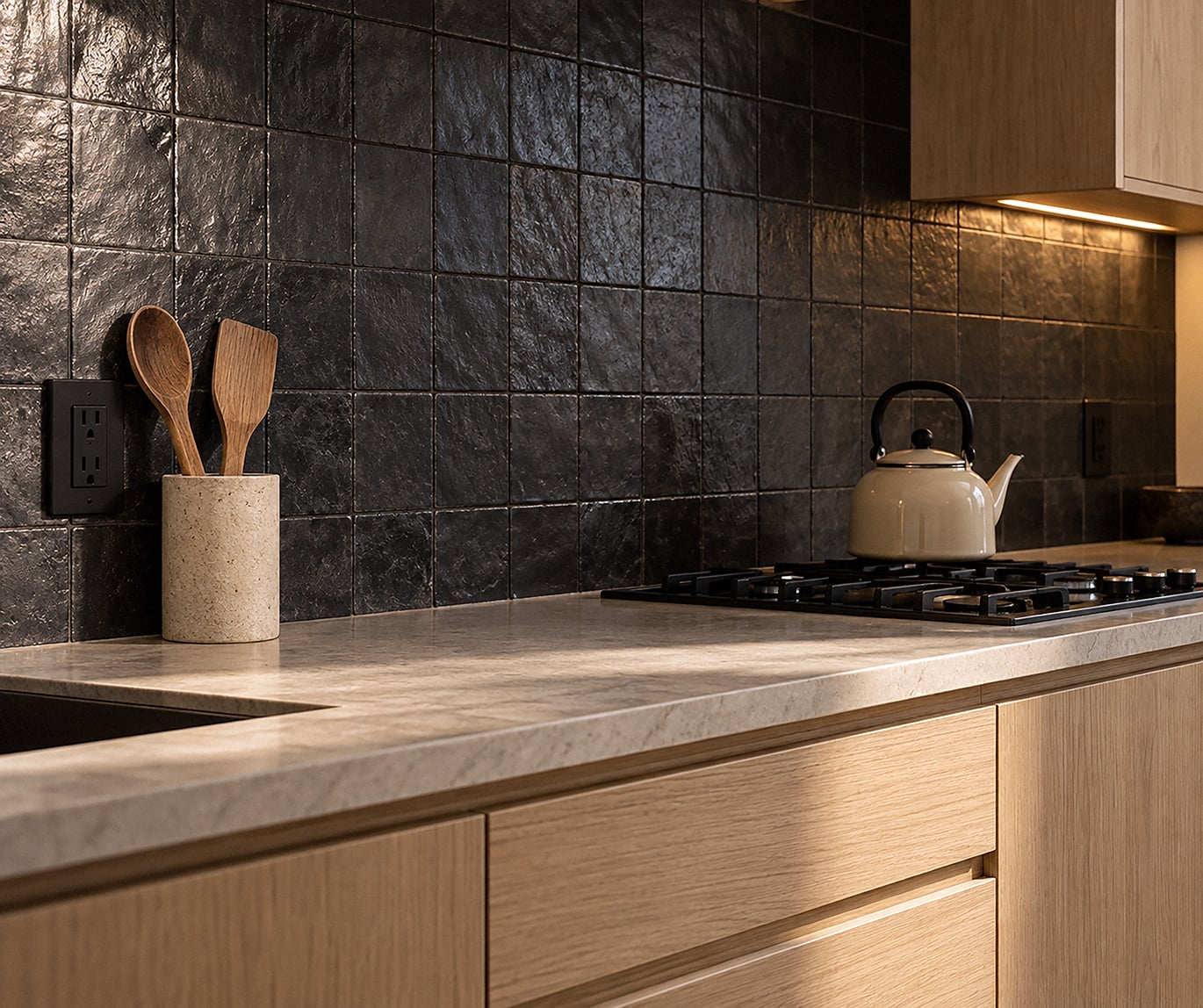
Use a pale counter between dark backsplash and oak cabinets when the room needs breathing room. If both counter and backsplash are black, add strong under-cabinet illumination and keep upper cabinets limited. Under-cabinet lighting can provide useful kitchen task lighting; here it also reveals texture in the dark surface.
Match grout to the design goal. Dark grout creates a quieter field, while warm gray grout outlines each tile. Bright white grout often introduces a third, sharper contrast that the room does not need.
5. Connect a Black Range Hood to the Cooking Zone
A black range hood white oak kitchen combination gives the cooking wall a clear center. A simple plaster hood painted near-black feels softer than stainless steel, while a slim black metal hood suits flat-front oak cabinets.
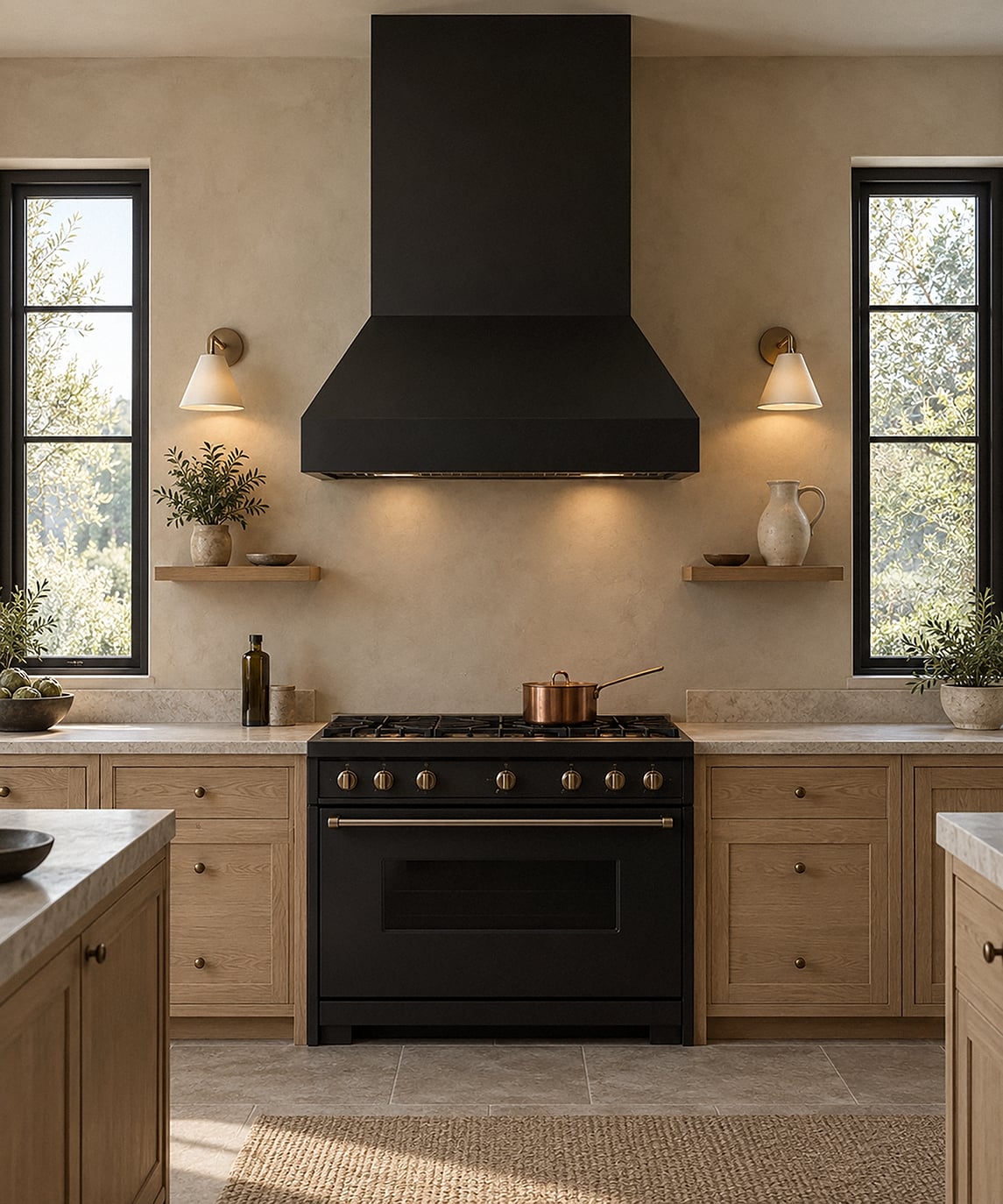
Do not let the hood float as the only dark shape above counter height. Repeat black in the window frames, sconces, range, or a narrow picture-free rail. The repeats can be small; they only need to show that the hood arrived by invitation.
Ventilation performance, clearances, ducting, and hood width are installation decisions, not styling details. Choose the appliance specifications first and design the decorative surround around them.
6. Use Black Appliances as One Continuous Band
A white oak kitchen with black appliances looks most controlled when the appliance faces form a deliberate rhythm. Group wall ovens with a tall pantry, place a black range beneath the matching hood, or panel the dishwasher so one isolated black rectangle does not interrupt the base cabinets.
Matte black appliances are not identical across brands. Some lean cool, some warm, and some combine black glass with metal trim. Compare physical finish samples where possible. If the range is glossy black, the cabinet hardware can remain aged or satin rather than trying to mimic it.
Black refrigerators have strong visual mass. Recessing the refrigerator between oak pantry cabinets or using oak side panels helps it feel built in without requiring every appliance to be paneled.
7. Keep Black Hardware Proportional
Black hardware on white oak cabinets creates a clear outline, particularly on flat fronts. Slim bar pulls, small knobs, or compact tabs usually let the grain remain the star. Oversized black handles on every drawer can turn a quiet cabinet wall into a ladder diagram.
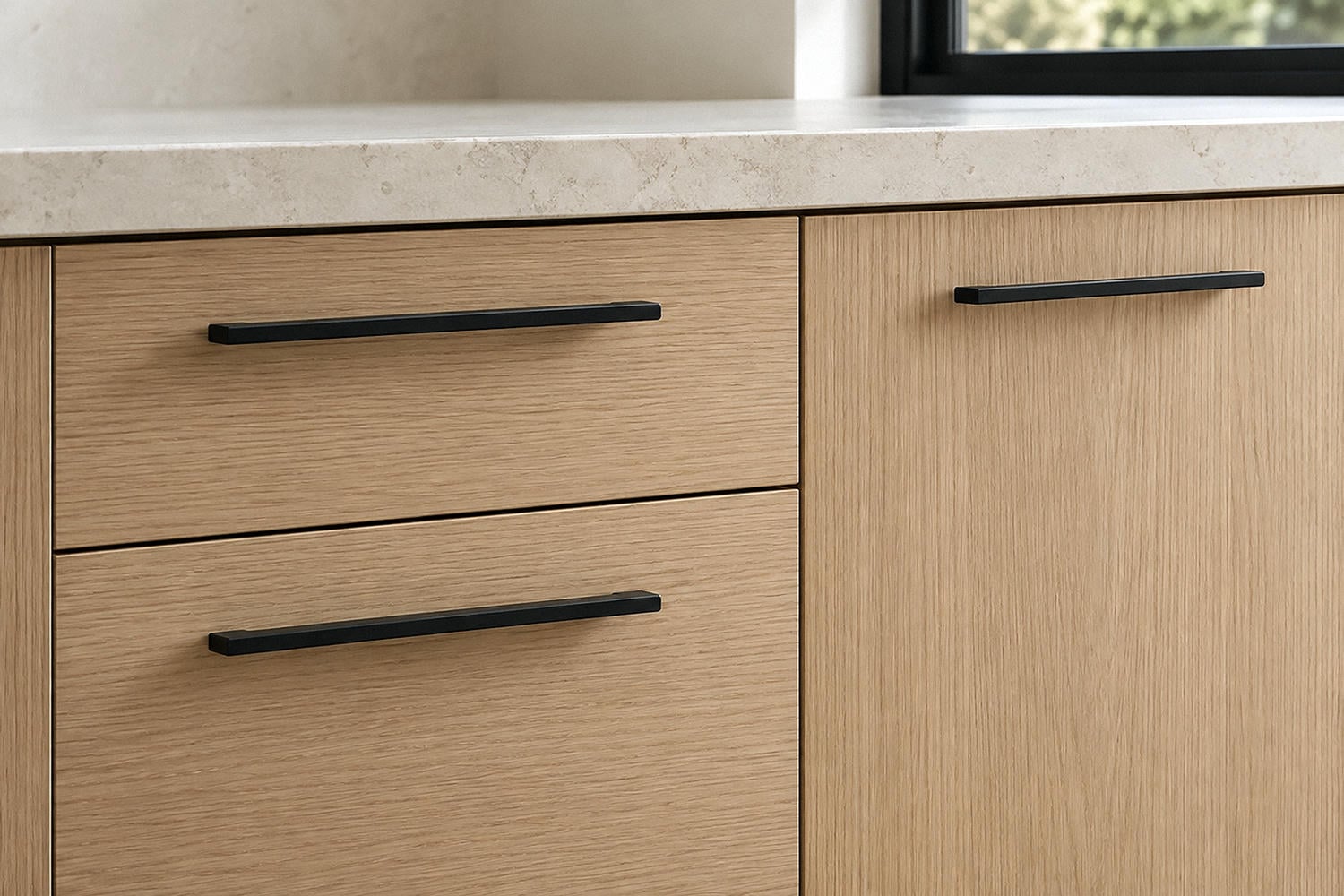
Mixing black and brass is allowed. Use black for cabinet hardware and window frames, then introduce warm metal at the faucet or pendant. The oak acts as a bridge between them. What matters is repetition: each finish should appear intentionally, not as one orphaned fitting.
Does black go with white oak? Yes, especially when the black has a warm or softened undertone and the room includes an intermediate neutral such as putty, mushroom, or warm white.
8. Let Black Windows Frame the Daylight
White oak kitchen ideas with black windows often look more dramatic than kitchens with ordinary white frames because the view becomes a graphic element. Keep the surrounding wall pale and avoid crowding the sill. The black frame already supplies enough detail.
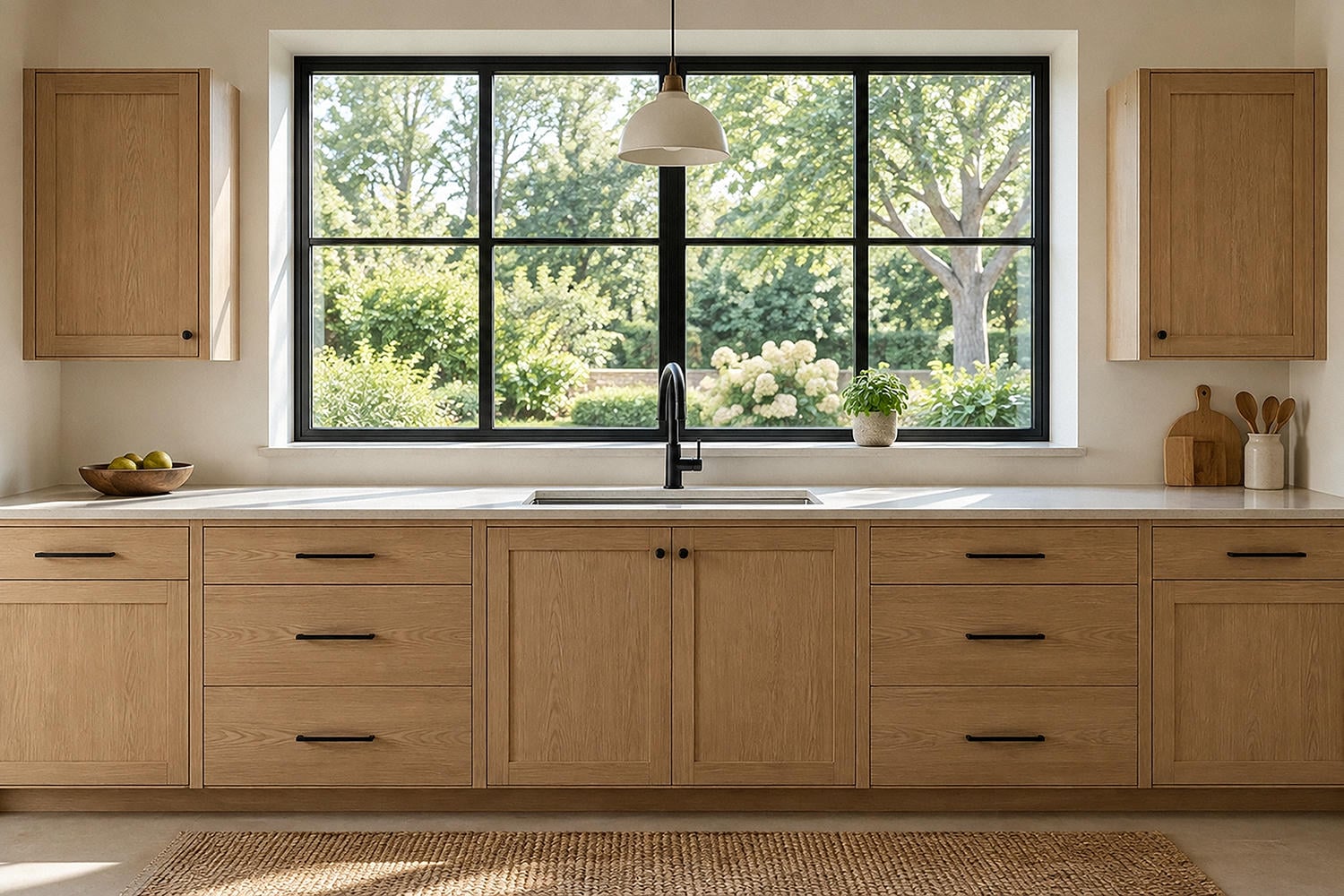
If the home has white windows that are not being replaced, do not fake this effect with unsuitable paint. Window materials and warranties vary. Black can appear instead through a dark roman shade, one pendant, or a slim interior trim detail specified for the substrate.
9. Choose Flooring That Does Not Compete With the Oak
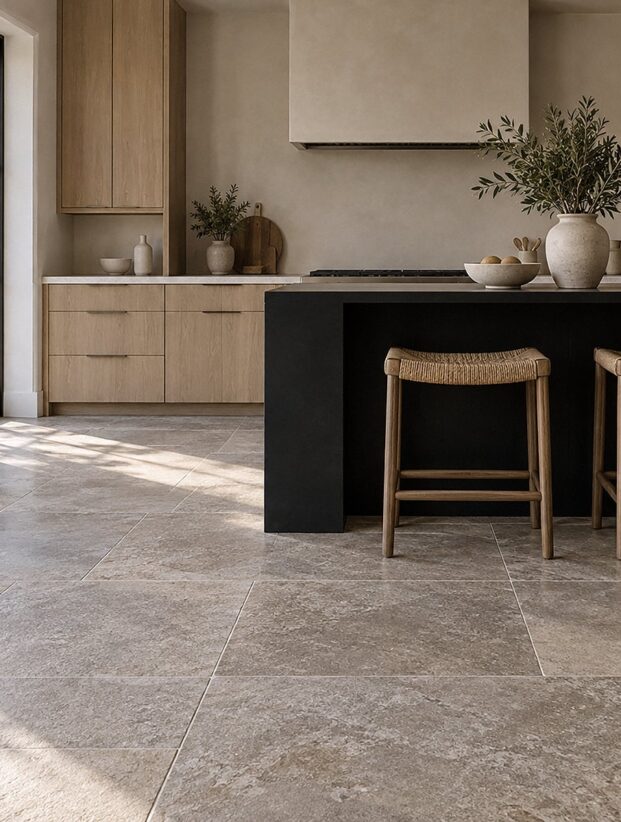
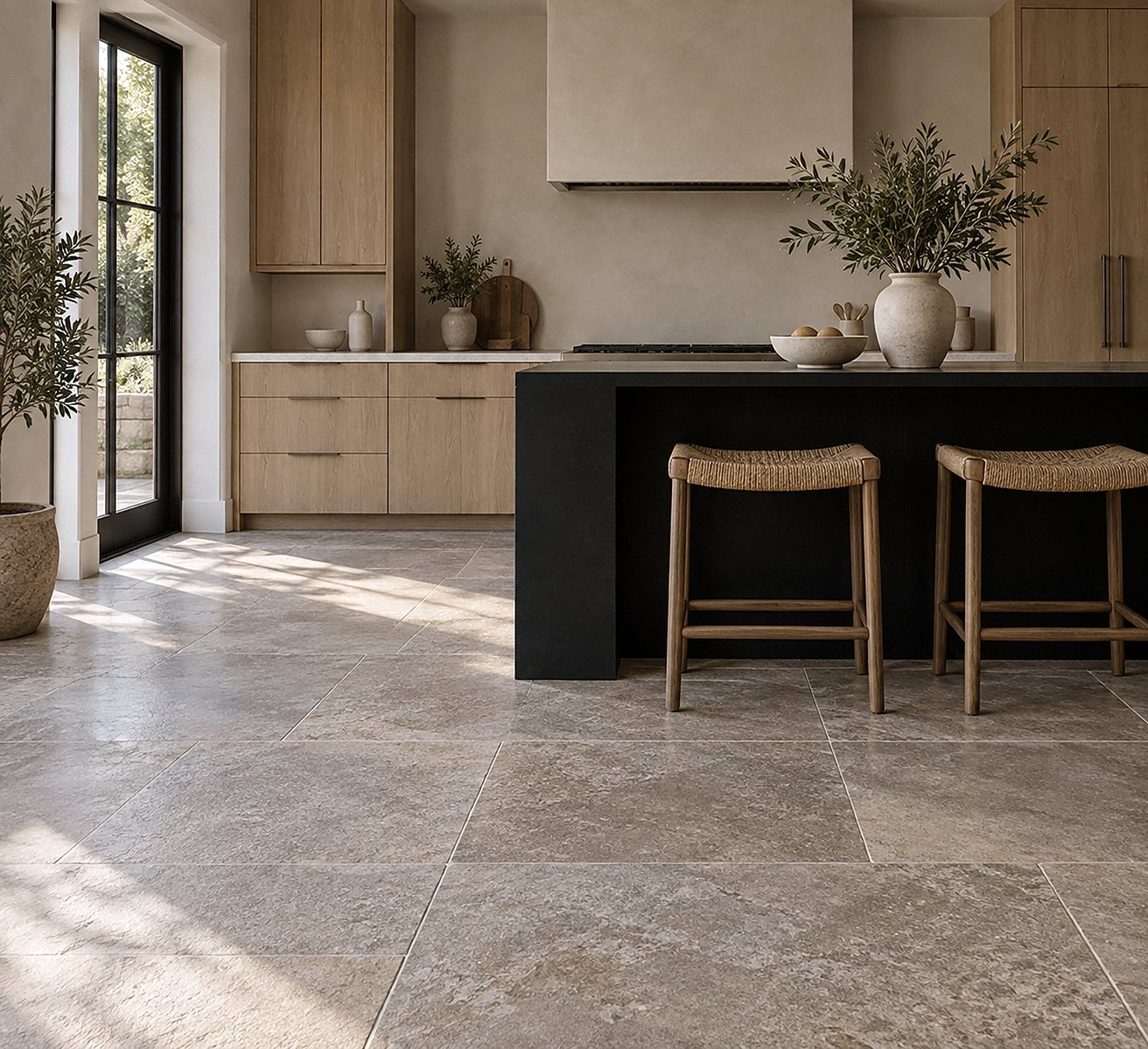
The best flooring for a white oak and black kitchen creates visible separation from the cabinets. If using wood, choose a tone clearly darker, lighter, or more muted than the cabinet fronts. A near-match that is slightly yellower tends to look accidental.
Warm gray limestone, taupe porcelain, charcoal slate, and softly patterned terrazzo all work. A dark floor makes the room moodier and connects to black accents, while a pale mineral floor keeps the overall room airy. Avoid a busy high-contrast pattern if the oak grain and black backsplash already provide movement.
How to Keep a Black and Wood Kitchen From Looking Too Dark
Protect three sources of lightness: the ceiling, at least one major work surface, and the window wall. Use warm plaster or off-white paint rather than stark white, then place task lighting where black surfaces would otherwise swallow it.
Keep tall black elements grouped instead of scattering them around the room. Let white oak occupy broad connected planes. Limit countertop objects so pale stone or wood remains visible. These choices make the contrast feel architectural rather than crowded.
Frequently Asked Questions
Is white oak good for kitchen cabinets?
Yes. White oak offers visible grain, a warm neutral color, and enough visual character to make simple cabinet shapes interesting. The quality of the cabinet construction, veneer matching, protective finish, and installation matter as much as the species name.
Does black go with white oak?
Black gives pale oak definition and keeps it from reading as uniformly beige. Warm black, charcoal, and brown-black usually pair most easily with honey-toned oak, while cooler black suits grayer white oak.
What countertop goes with white oak and black accents?
Honed black stone creates the strongest contrast. Warm white quartz, cream stone, pale terrazzo, and softly veined quartzite keep the room lighter while allowing black to appear on the island, hood, or fixtures.
How do you keep a black and wood kitchen from looking too dark?
Use black in connected focal points, not on every plane. Keep the ceiling and window wall light, add under-cabinet task lighting, preserve a pale work surface, and leave some counters visually open.
What flooring looks best with white oak and black cabinets?
Warm limestone, taupe porcelain, charcoal slate, and wood that is visibly different from the cabinetry all work. The floor should support the palette without becoming an almost-match to the oak.
The strongest white oak and black kitchens are not split evenly between two finishes. Oak provides the field; black supplies the edges, anchors, and pauses. Get that hierarchy right and the room feels warm, graphic, and remarkably easy to live with.