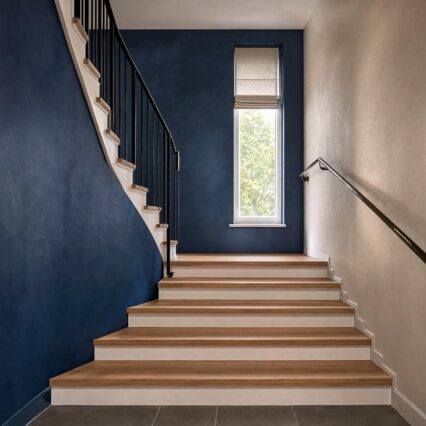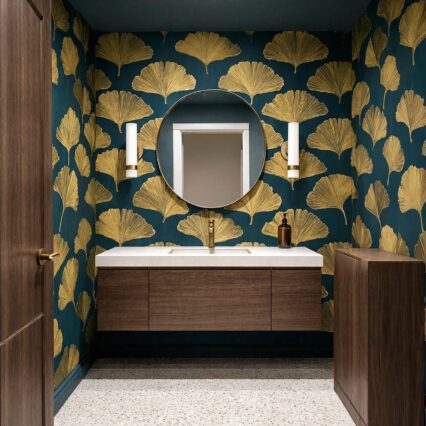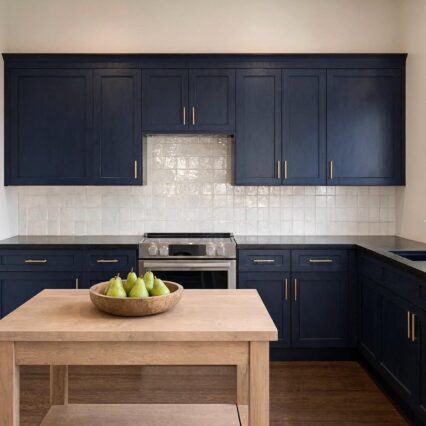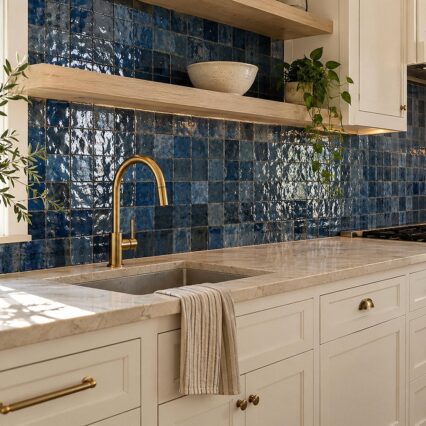
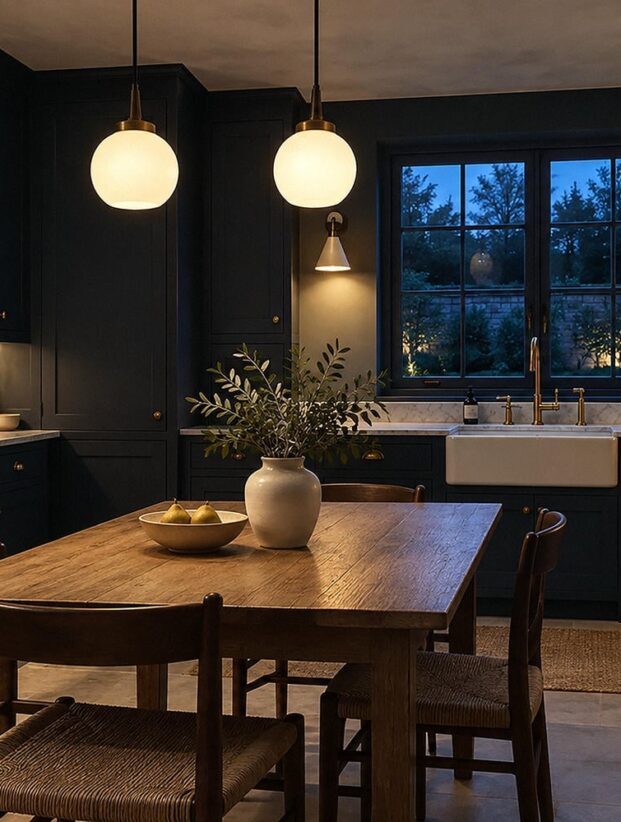
Moody blue kitchen ideas occupy the useful middle ground between cheerful color and full black. Navy, ink, petrol, midnight, and blue-black can make ordinary cabinet shapes feel substantial, yet they retain more movement than charcoal. In daylight, the blue appears. At night, it recedes and lets warm metal, wood, and lamplight take over.
The risk is not that dark blue will always make a kitchen small. The risk is that every surface will land in the same murky value. A successful room gives the blue something warmer, lighter, rougher, or shinier to meet. Think oak, cream stone, aged brass, terracotta, mushroom plaster, or a floor with visible natural variation.
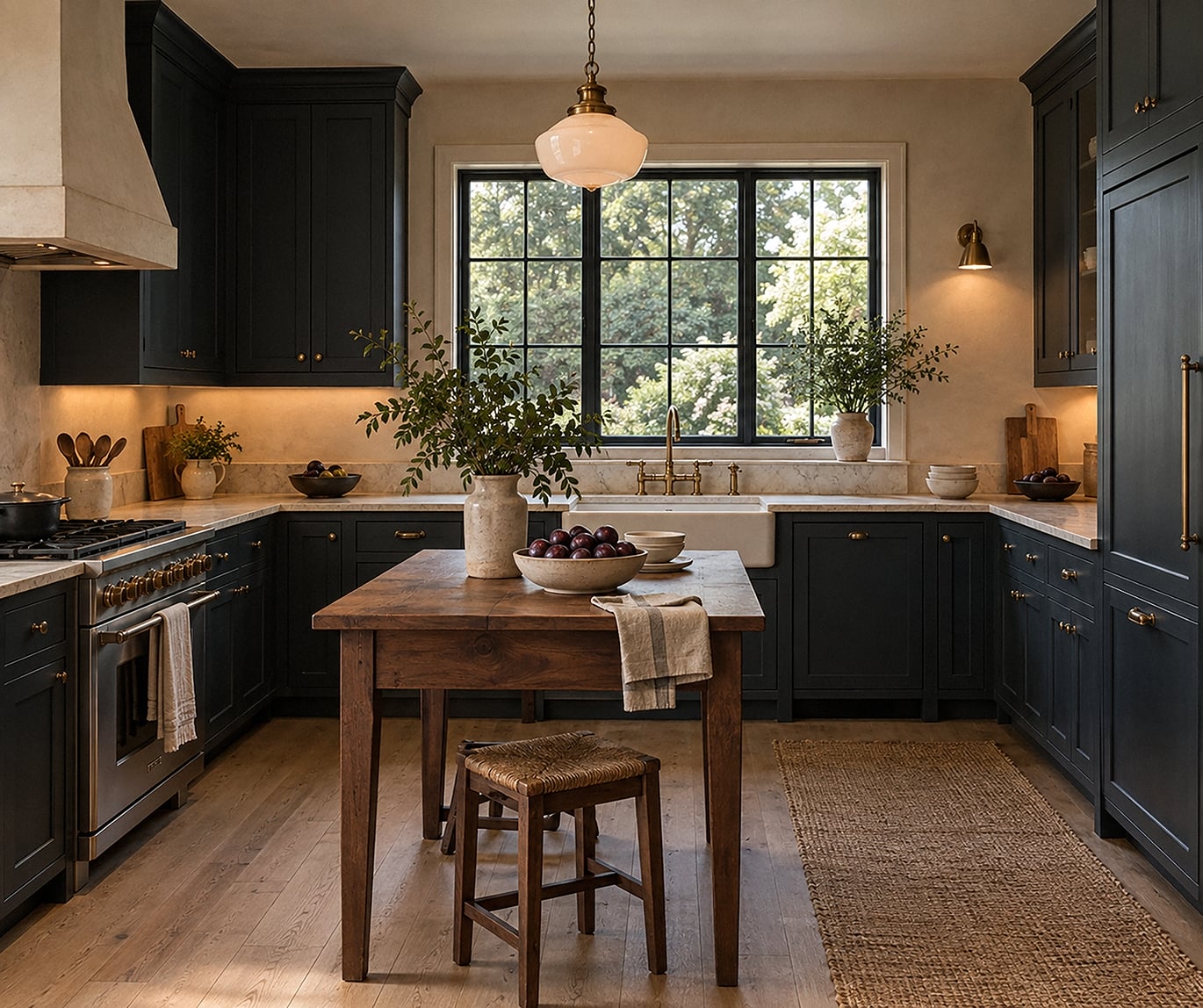
1. Find the Blue Beneath the Blue
Moody blue kitchen cabinets can lean green, gray, violet, or nearly black. Those undertones decide which companion materials will cooperate. A greenish petrol blue is comfortable with walnut, brass, and warm white. A grayer navy prefers pale oak and putty. Violet-blue looks dramatic with burgundy, pink-brown stone, or dark timber.
Sample paint on a vertical cabinet-sized board, not a white card. Move it beside the counter, floor, and backsplash, then inspect it in morning sun, cloudy daylight, and the kitchen's electric light. Many dark blues that appear calm by day become much brighter or flatter under cool bulbs.
If the room already contains a fixed blue-gray floor, choose a cabinet blue that is either clearly deeper or noticeably greener. Near-matching blue-grays often create the color equivalent of a conversation where both people mumble.
2. Use Blue-Black Kitchen Cabinets for Quiet Drama
Blue-black kitchen cabinets are useful when pure navy feels too nautical and black feels too severe. The blue may register only at the sunniest time of day, but that small shift prevents the cabinetry from becoming a dead silhouette.
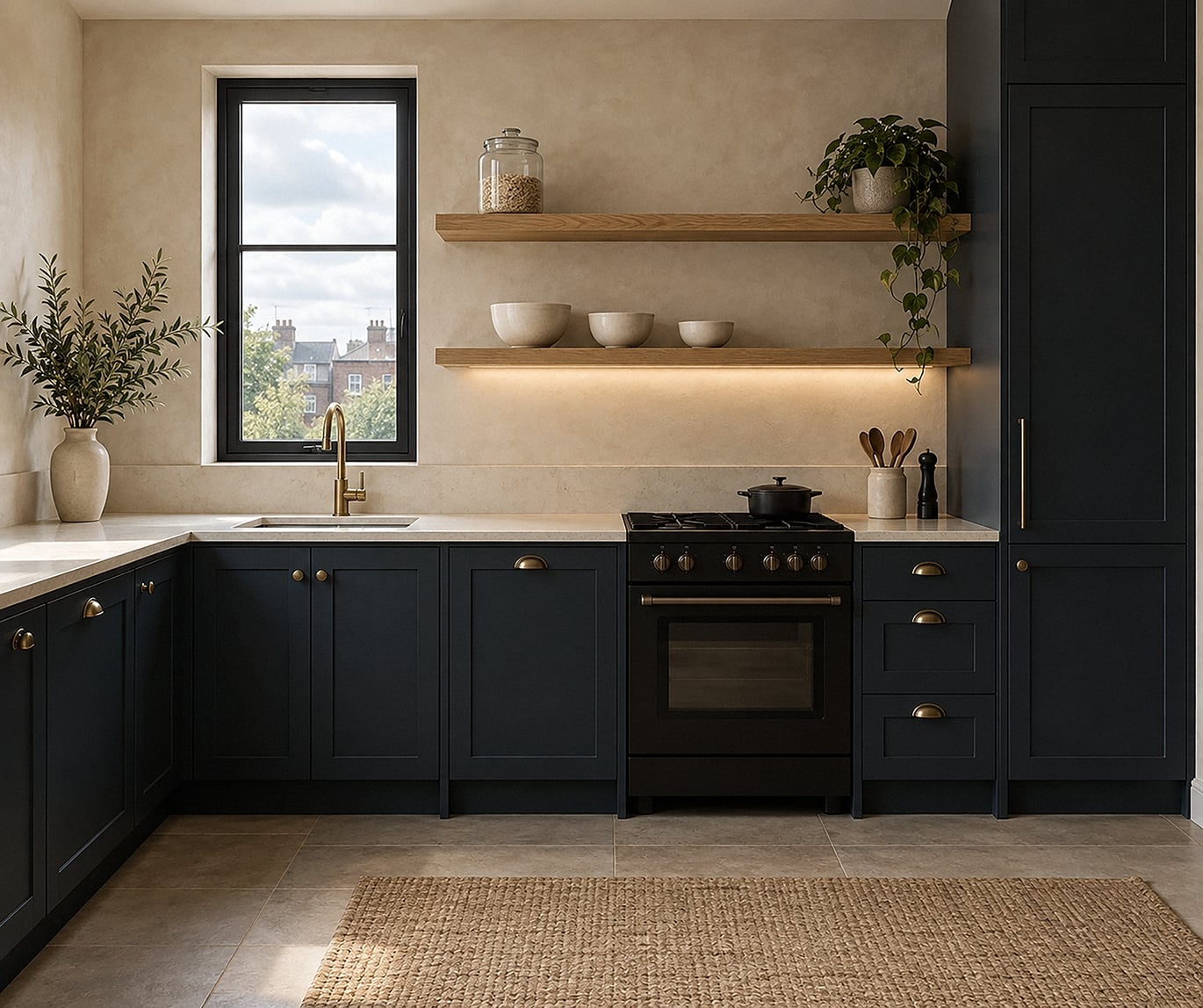
A moody blue shaker kitchen benefits from restrained door detail. Use slim rails, simple inset panels, and one hardware shape. The deep color already traces every cabinet edge, so extra molding can make the wall fussy.
For a small room, paint the lower cabinets and one tall pantry blue-black, then use warm plaster or pale oak above. Full-height dark cabinetry can work, but it needs generous daylight, strong task light, and a ceiling that remains visibly separate.
3. Give a Navy Island Its Own Role
A navy blue kitchen island is the easiest commitment because it functions like a large piece of furniture. Surround it with cream cabinets, oak, or warm gray walls, then repeat navy in one distant detail such as a door, roman shade stripe, or small tile note.
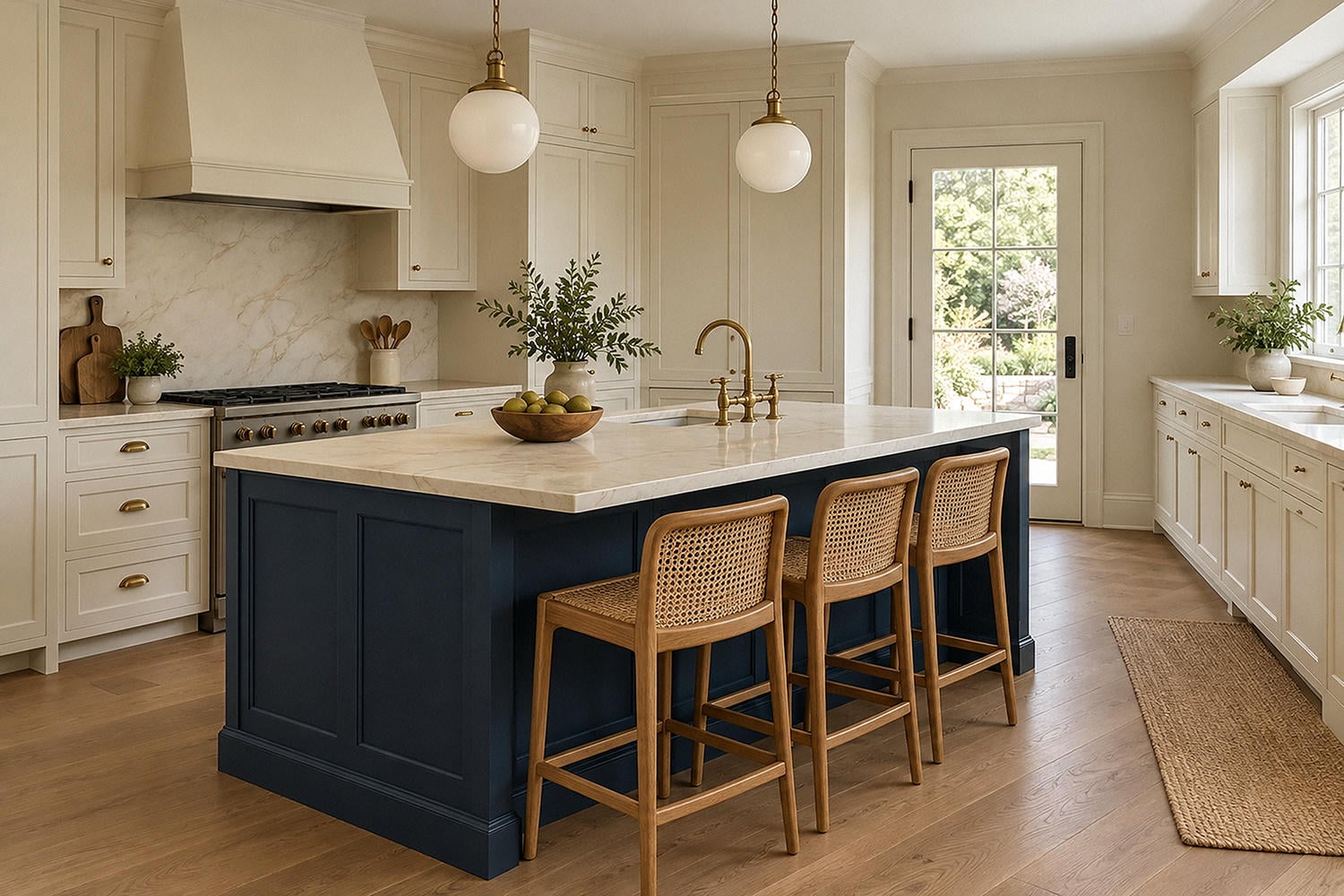
Do not automatically add a white waterfall counter. A softly veined cream slab, butcher block, or warm gray stone keeps navy from looking like a showroom display. Stools in oak, cane, leather, or thin black metal add another material without competing for attention.
If the island contains a sink or cooktop, lighting and ventilation still lead the plan. Color cannot rescue an awkward work zone.
4. Pair Moody Blue and Brass Without Overdoing the Jewelry
A moody blue and brass kitchen works because orange-yellow metal sits opposite blue and adds immediate warmth. The effect is strongest when brass appears at several scales: small cabinet pulls, one faucet, and perhaps a pair of pendant details.
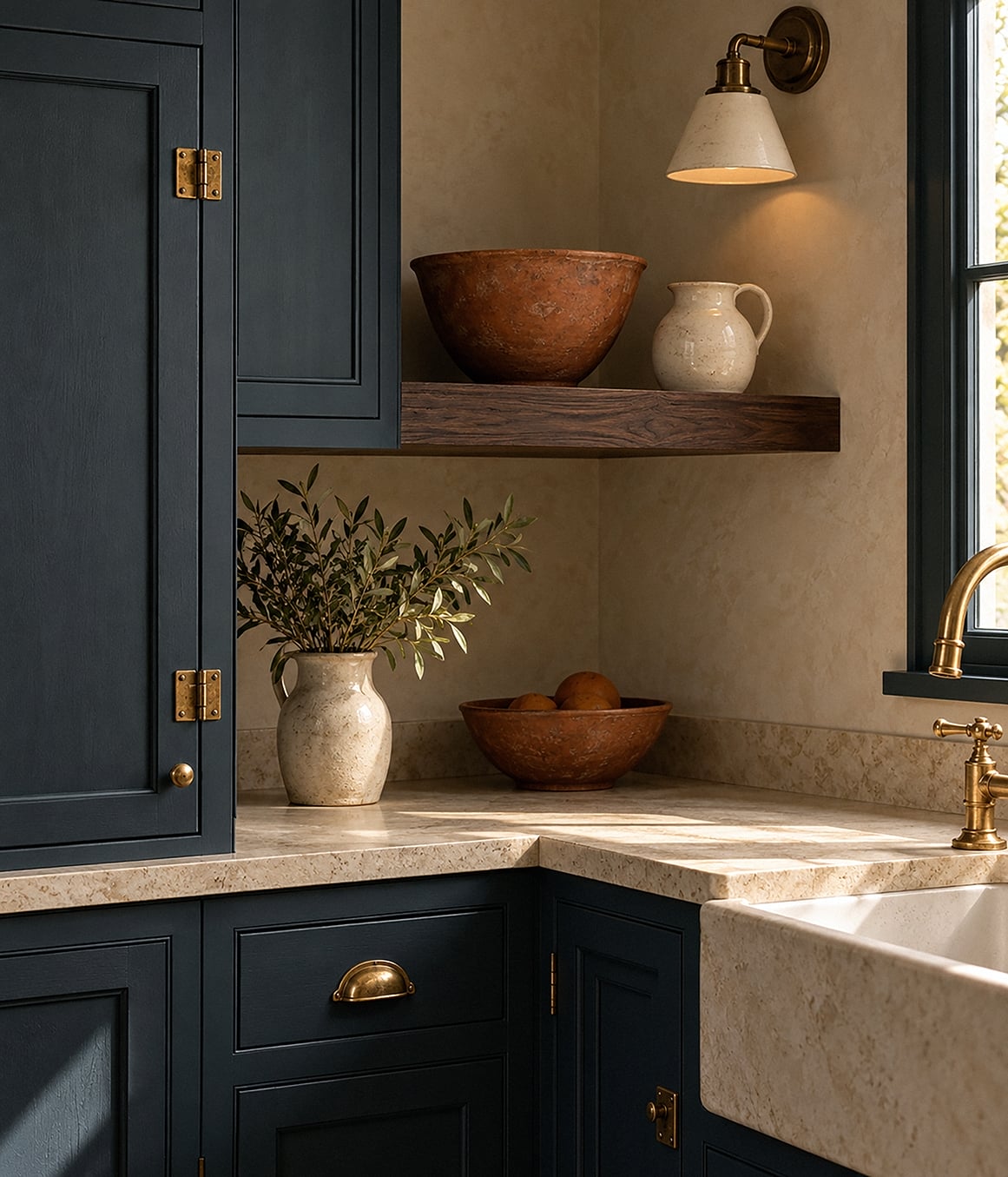
Choose unlacquered, antique, satin, or brushed brass according to the amount of change and maintenance you want. Bright polished brass can look sharp against navy, but it also makes every fitting more conspicuous. Aged finishes are quieter and tend to suit natural wood and handmade tile.
Blue kitchens with black hardware can be equally successful. Black pulls create less contrast and make the cabinetry read as one continuous block. Add warmth elsewhere through the floor, stools, counter, or lighting so the room does not become blue-black from door to ceiling.
5. Make Dark Blue Kitchen Walls Support the Cabinets
Dark blue kitchen walls are not limited to rooms with pale cabinets. Color-drenching blue walls and cabinetry can make a fragmented room feel calmer, especially where awkward corners would otherwise be outlined by contrasting paint.
The important move is changing sheen or value. Use matte wall paint and a more durable cabinet finish, or make the wall one step lighter than the cupboards. Pale stone, cream trim, and visible wood interrupt the color field.
If only one wall will be blue, give it a reason: the dining nook, pantry entrance, or range wall. An isolated dark rectangle behind random shelving can feel more like an unfinished experiment than a focal point.
6. Choose a Backsplash With Light in It
A moody blue kitchen backsplash should not disappear into the cabinets unless a fully enveloping room is the intention. Handmade navy tile with color variation, cream zellige, blue-veined stone, or warm gray glazed tile all return some light to the work zone.
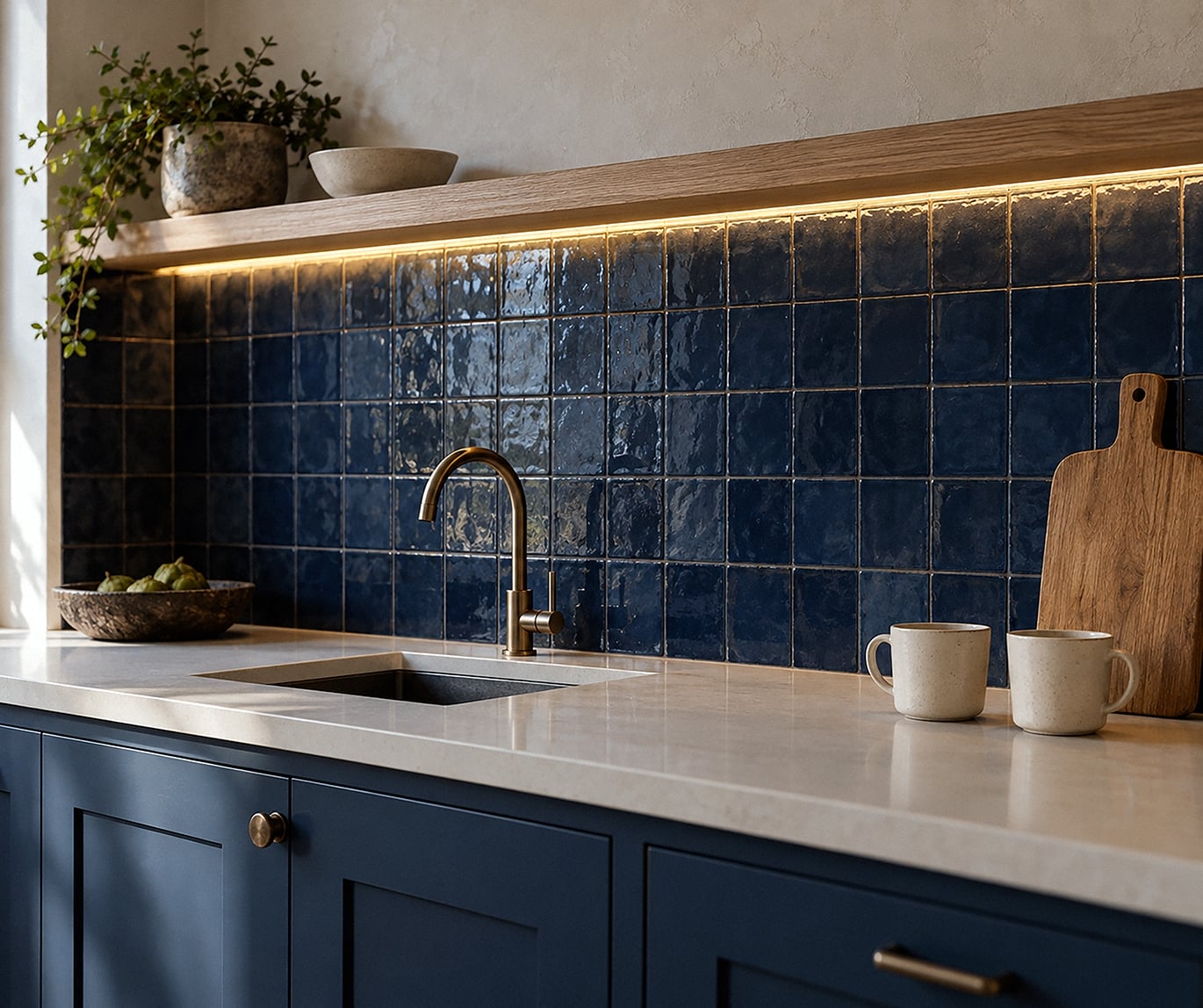
For blue-on-blue, change the scale and surface. Pair smooth shaker cabinets with small rippled tile, or flat slab fronts with a larger veined panel. Matching paint and tile too closely can create a near-match that looks accidental.
Warm grout can soften a navy tile field. Strong white grout outlines every joint and may push the design toward a busier, more coastal direction.
7. Use Countertops to Decide How Formal the Room Feels
What countertops go with dark blue cabinets? Warm white quartz, cream quartzite, honed marble, light terrazzo, butcher block, soapstone, and softly mottled concrete can all work. The deciding factors are contrast, upkeep, and the atmosphere you want.
A pale counter makes the blue read crisp. Wood makes it casual and warm. Soapstone creates a deep, old-house effect but requires excellent task lighting. A counter with brown, gold, or burgundy veining can connect dark blue to wood and brass without introducing another solid color.
Avoid choosing from a thumbnail. Bring a large sample beside the painted cabinet board and test the pair under the same light.
8. Layer Moody Blue Kitchen Lighting
Moody blue kitchen lighting needs to reveal the color as well as the work surface. Use ambient light for the room, task light beneath cabinets and over the sink or island, and a smaller accent source near a dresser or dining nook. Lutron's lighting guide describes under-cabinet fixtures as ideal for kitchen tasks and emphasizes the different jobs of ambient, task, and accent light.
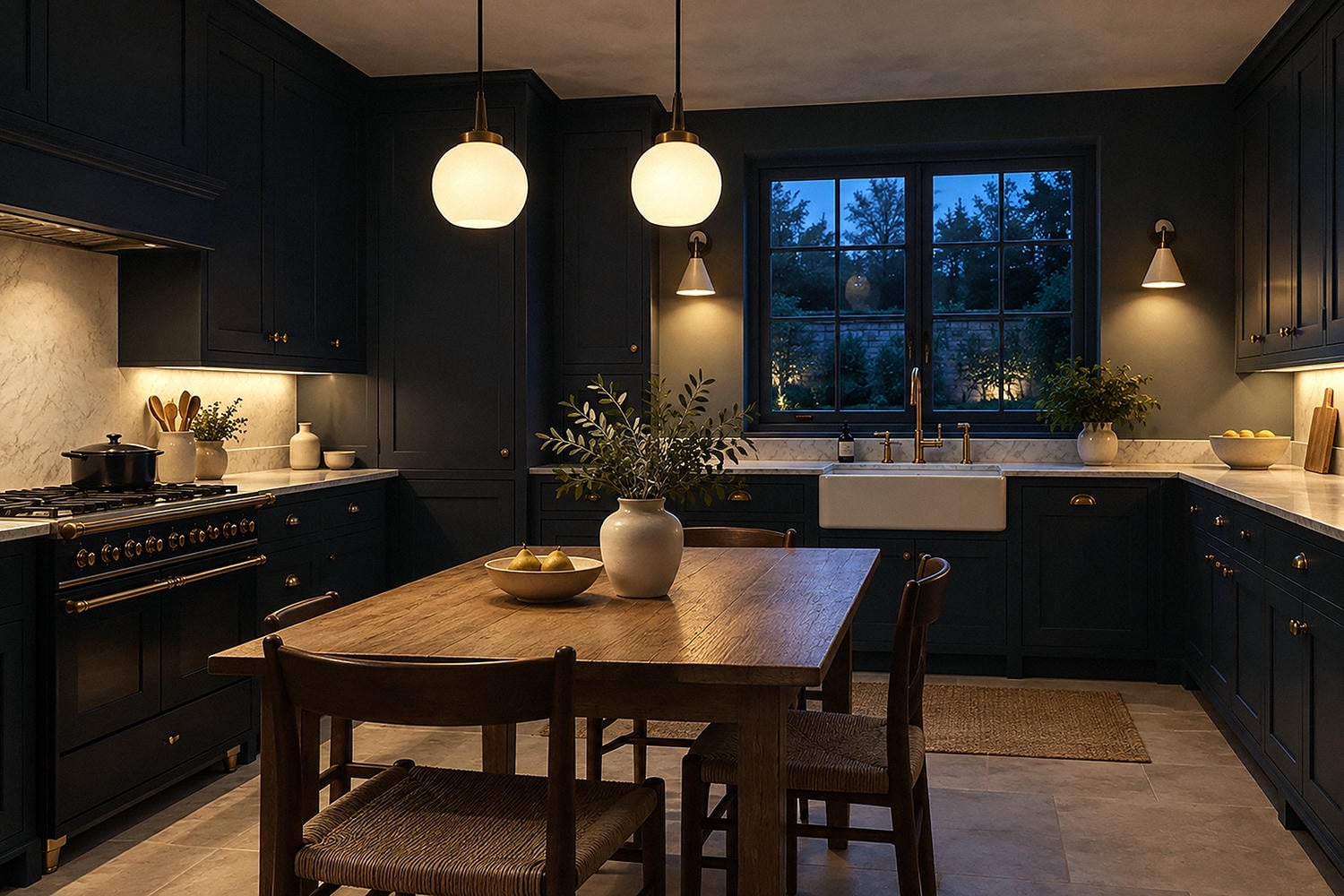
Warm decorative light makes blue cabinetry feel less chilly, but food preparation still needs clear illumination. Dimmers let pendants and sconces soften after cooking while dedicated task light remains useful when needed.
Milk glass, pleated shades, brass cones, opal globes, and ceramic sconces all suit moody blue. Avoid relying on one beautiful pendant that illuminates the island and leaves the perimeter counters in administrative darkness.
9. Warm the Kitchen Through Flooring
The best flooring for navy kitchen cabinets usually adds either warmth or quiet texture. Natural oak, medium walnut, terracotta, warm limestone, pale terrazzo, and putty-colored porcelain can all support blue.
Orange oak is not automatically a problem. In moderation, its warmth can make navy look richer. The issue arises when orange wood is combined with yellow lighting, yellow-beige walls, and bright brass; then every warm element starts campaigning at once.
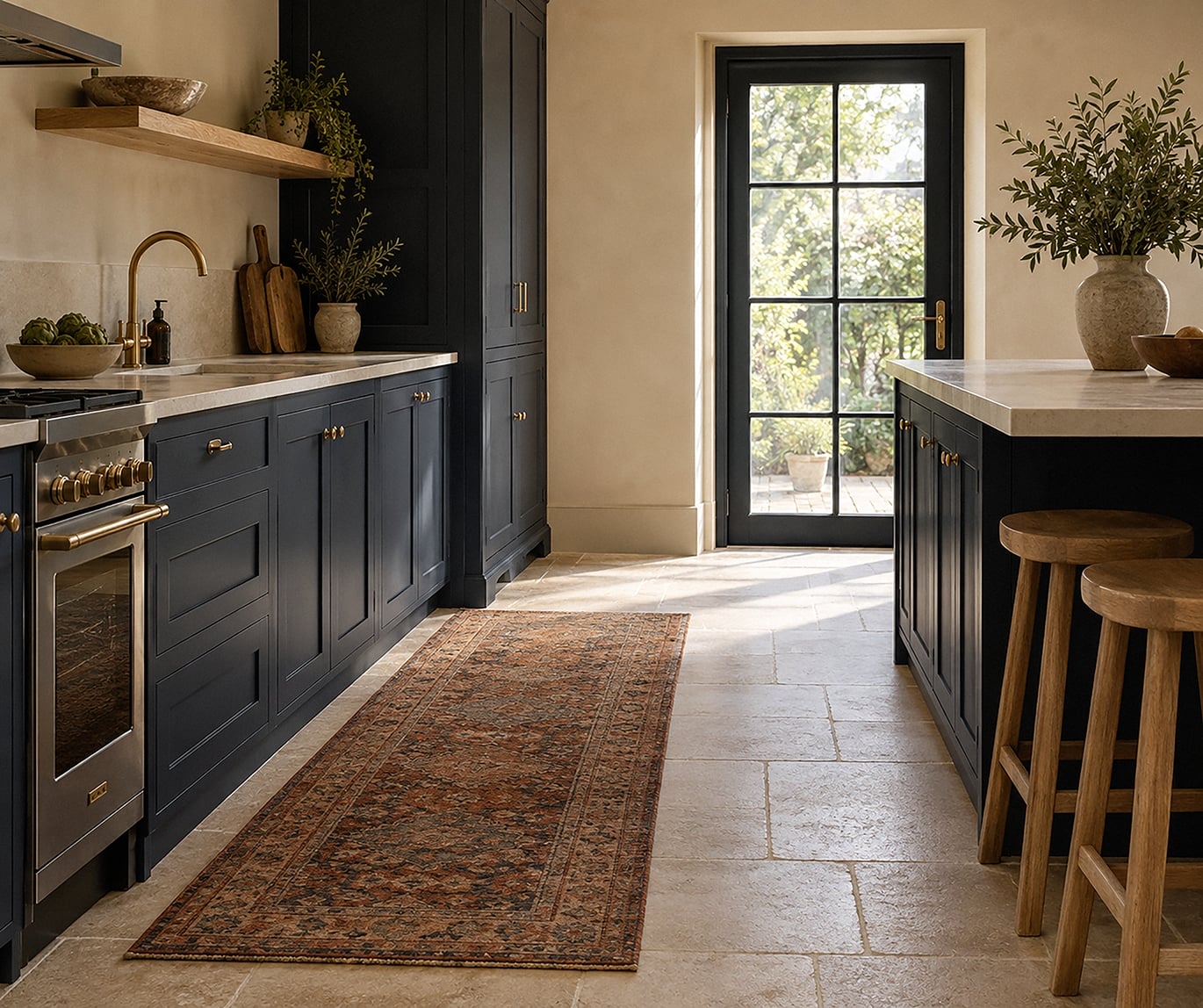
If both cabinets and floor are dark, keep the counter and wall lighter and preserve a clear window. A long runner can add rust, faded red, or ochre while making the blue feel connected to the rest of the home.
How to Make a Blue Kitchen Feel Warm
Repeat warmth in at least three places. That might be walnut shelves, aged-brass pulls, and a terracotta bowl, or oak stools, cream stone, and a rust runner. One warm object looks decorative; repetition makes the balance structural.
Use off-white rather than icy white beside the blue. Choose warm-neutral lighting for evening, but evaluate food and paint colors under useful task light. Finally, allow some natural variation. Wood grain, uneven tile glaze, and veined stone prevent a dark painted room from feeling flat.
Frequently Asked Questions
What colors go with moody blue in a kitchen?
Cream, mushroom, putty, pale oak, walnut, terracotta, burgundy, aged brass, and warm gray stone all pair well. Choose companions that relate to the blue's undertone rather than applying the same formula to every navy.
Is dark blue too dark for a small kitchen?
Not necessarily. Use it on connected cabinet runs, keep the ceiling and a major work surface lighter, protect the window, and add task lighting. A small room often feels calmer when one deep color reduces visual fragmentation.
What countertops go with dark blue cabinets?
Warm white quartz, cream quartzite, honed marble, butcher block, pale terrazzo, and soapstone all work. Pale surfaces create contrast; wood adds warmth; dark stone creates a more enveloping effect.
How do you make a blue kitchen feel warm?
Repeat warm wood, aged metal, cream, or terracotta in several places. Use warm decorative lighting, natural texture, and an off-white wall or counter rather than sharp blue-white.
Does a blue kitchen date quickly?
Simple cabinet shapes and a complex, grayed blue tend to age more gracefully than a very bright color tied to one moment. Keep expensive surfaces relatively quiet, then use runners, shades, and paint for easier future shifts.
Moody blue succeeds when it behaves as architecture rather than novelty. Let it define the cabinets or island, give it warm materials to converse with, and light it well enough that the blue remains blue after sunset.