Berber Pattern Decor Ideas With Texture, Context, and Restraint
Berber pattern decor has become design shorthand for cream rugs crossed by black diamonds. That image is recognizable, but it is only a narrow slice of a much richer textile world. Amazigh weaving traditions span communities, regions, techniques, colors, and materials across North Africa. A plush neutral rug, a brilliant flatweave, and a recycled-cloth boucherouite may share a broad geographic story without being interchangeable.
That context does not make these textiles harder to use. It makes them more interesting. The best Berber pattern decor ideas treat a rug or textile as the work of a maker, not as anonymous geometry dropped into a room.
What Is a Berber Pattern?
"Berber" is a historical umbrella term commonly used for the Indigenous Amazigh peoples of North Africa. In interiors, it is often applied loosely to geometric Moroccan rug motifs. There is no single universal Berber pattern. Designs, construction, pile, color, and meaning can differ by community, place, period, and individual weaver.
Moroccan carpet weaving includes important Amazigh traditions practiced by women, with designs, techniques, and materials varying by community and region.
When shopping, look for specific information: where was the piece made, by whom, from what fiber, and with which technique? A seller who can answer those questions gives you more than a fashionable label.
Let One Rug Establish the Room
Berber pattern rug styling is easiest when the rug gets first say. Place it, study its warm and cool notes, then choose furniture and paint. Working backward prevents the common problem of buying a rug whose cream looks strangely yellow beside an icy sofa.
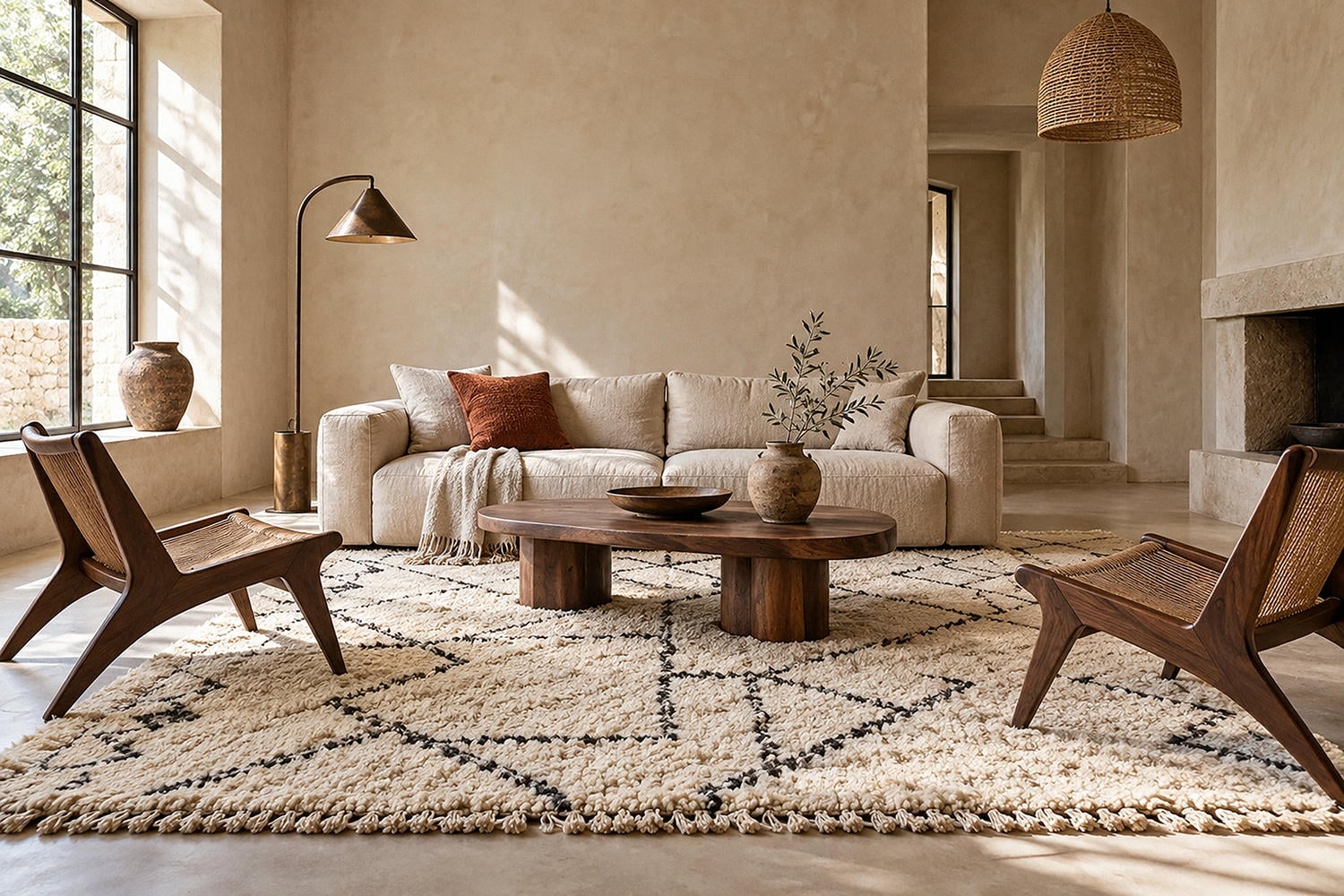
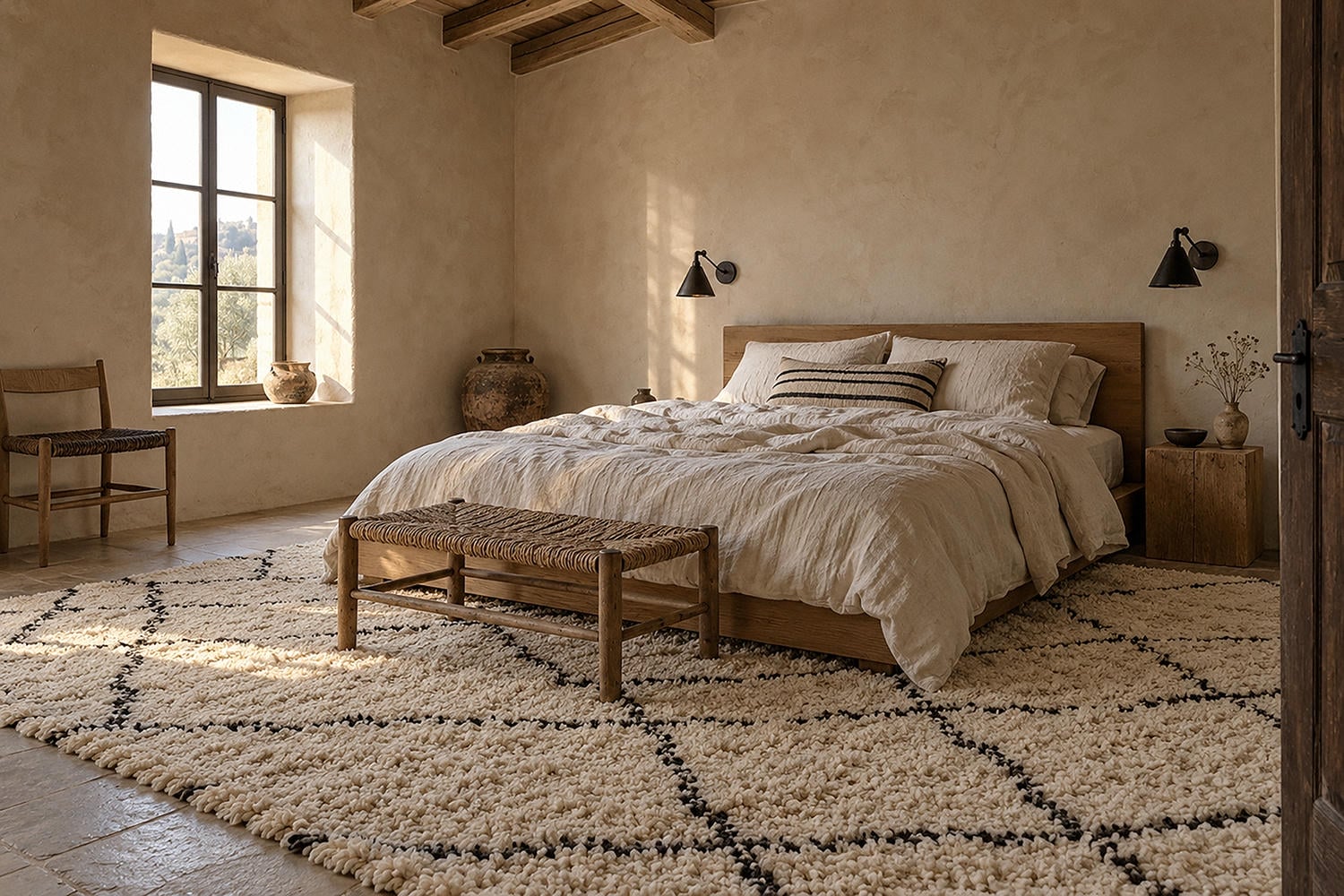
In a living room, size the rug to connect the seating rather than float under the coffee table. At minimum, the front legs of the sofa and chairs should meet it. In a bedroom, let enough pattern extend beyond the bed to be visible and useful underfoot.
If the rug is plush and strongly patterned, keep the largest upholstery pieces simple. Texture can come from linen, leather, wood, and boucle without adding another loud graphic.
Use Black and Cream Berber Decor as a Framework
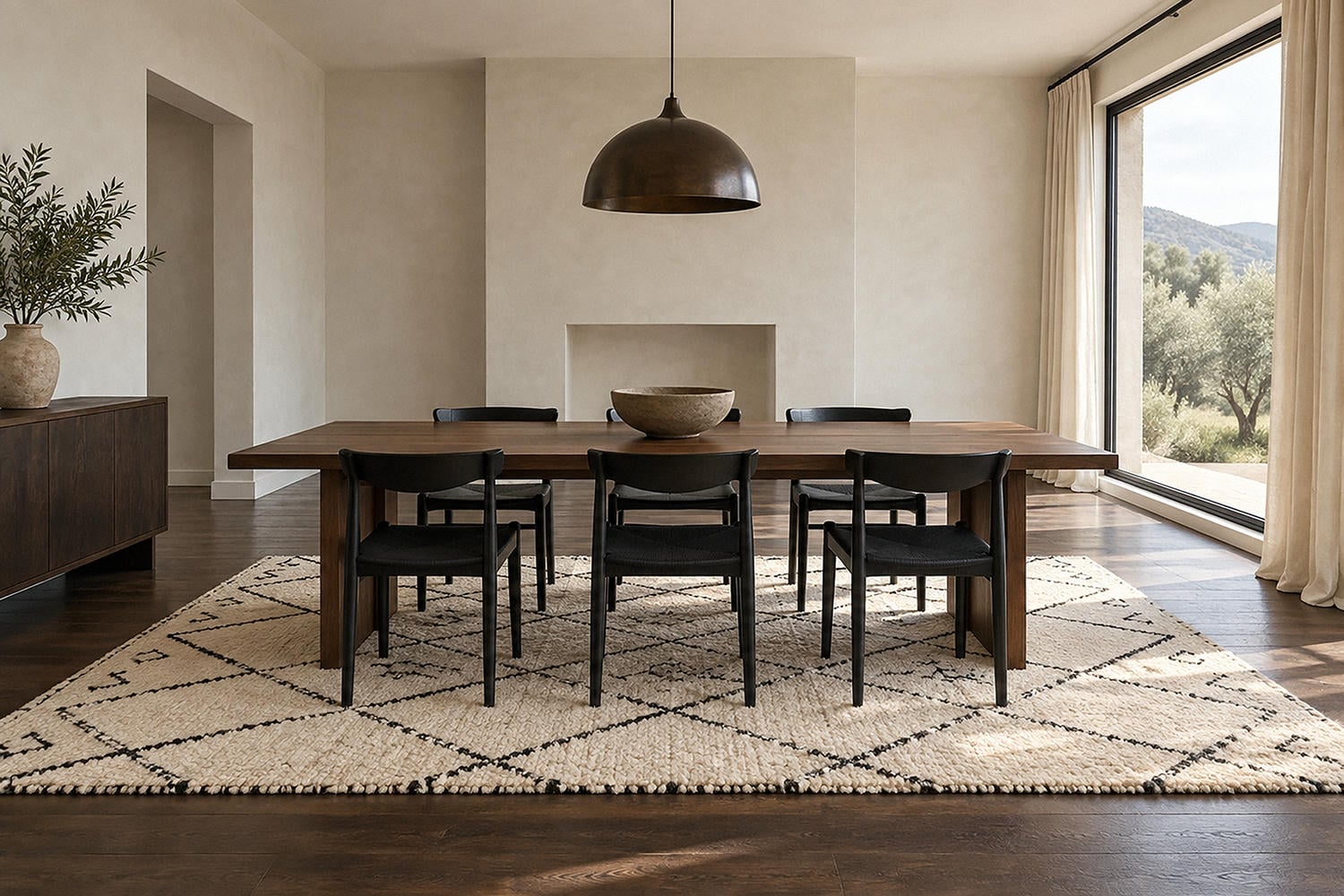
Black and cream Berber decor works because the contrast is clear and the palette is flexible. It can sit beside Danish teak, dark traditional furniture, contemporary metal, or rustic plaster. The mistake is repeating the diamond on the rug, cushions, curtains, baskets, and wall art until the room looks sponsored by one shape.
Repeat the colors, not the exact motif. A blackened bronze lamp, cream curtains, and dark wood chair can support the rug without imitating it. Add one earthy note - clay, olive, tobacco, or faded saffron - to keep the scheme from feeling like a monochrome showroom.
Natural variation in undyed wool can also soften the contrast. Ivory, oatmeal, gray, and brown often sit more comfortably with wood than optic white and jet black.
Pair Moroccan Geometric Textiles With Modern Furniture
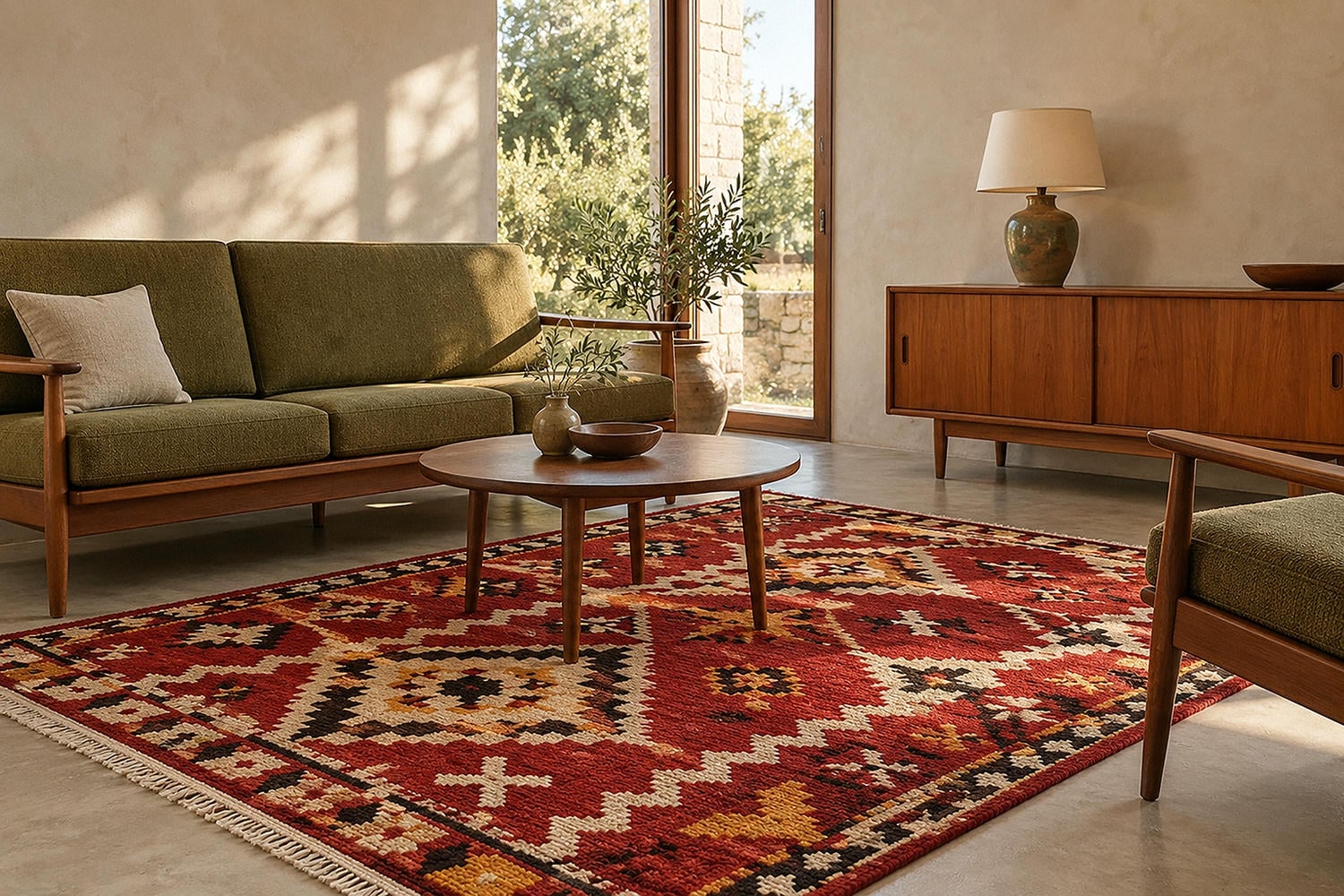
Modern rooms with Berber patterns succeed when the geometry loosens the architecture. A handwoven rug adds movement beneath a precise modular sofa. A striped flatweave warms a glass-and-steel dining area. An asymmetrical textile gives a minimalist room the evidence of a hand.
Keep silhouettes clean, but avoid making every other surface smooth. A matte plaster wall, woven shade, nubby linen, or solid wood table gives the textile companions rather than competitors.
This is also where negative space helps. Leave part of the floor visible, keep at least one wall quiet, and do not fill every seat with a patterned cushion. The eye needs somewhere to rest before it can appreciate irregular detail.
Mix Berber Motifs With Wood by Undertone
Mixing Berber motifs with wood is less about matching color names than comparing undertones. Honey oak and warm ivory feel sunny and relaxed. Walnut brings out brown or charcoal lines. Ebonized wood makes pale wool look crisp. Weathered wood suits muted, low-contrast patterns.
Spread the wood around the room. A single wood coffee table surrounded by painted furniture can look accidental, while a table, frame, and chair leg in related tones create a quiet rhythm. They do not need to be identical.
Avoid using overly orange wood with a cool gray-and-white textile unless another element bridges the temperature difference. A clay cushion, aged brass lamp, or warm wall color can make the transition believable.
Style Berber Cushions and Throws as Accents
Berber cushions and throws are useful when a full-size rug would be too dominant or impractical. Choose one or two patterns with noticeably different scales. A broad stripe and a fine stepped motif can coexist; two almost-matching diamonds tend to argue.
Check the reverse, closure, and fiber content. Some rug fragments are repurposed into cushion covers, which can be wonderfully tactile but rough against bare skin. Use them as back cushions and add a plain linen or velvet pillow in front.
A throw looks best when it is actually available for use. Fold it over an arm or place it in a low basket instead of arranging it into a ceremonial triangle that nobody wants to disturb.
Give an Authentic Beni Ourain Rug Breathing Room
Authentic Beni Ourain rug styling begins with accurate attribution. The name refers to weaving associated with Beni Ourain Amazigh groups in Morocco's Middle Atlas, not every cream rug with a dark diamond. Ask the seller for origin, age or production date, materials, construction, and maker or cooperative details where available.
A thick, pale wool rug benefits from simple surroundings and a little contrast. It is excellent under a dark wood dining table, beside a low leather sofa, or in a quiet bedroom. Because the pile is visually substantial, avoid piling on shaggy cushions and fuzzy upholstery. Let one soft material be the star.
Modern furniture is not disrespectful to the rug. In fact, restrained furniture can make its irregular line and wool texture easier to see. Respect comes from crediting the tradition, buying with questions, and caring for the piece well.
Build a Neutral Bohemian Berber Bedroom Without Clutter
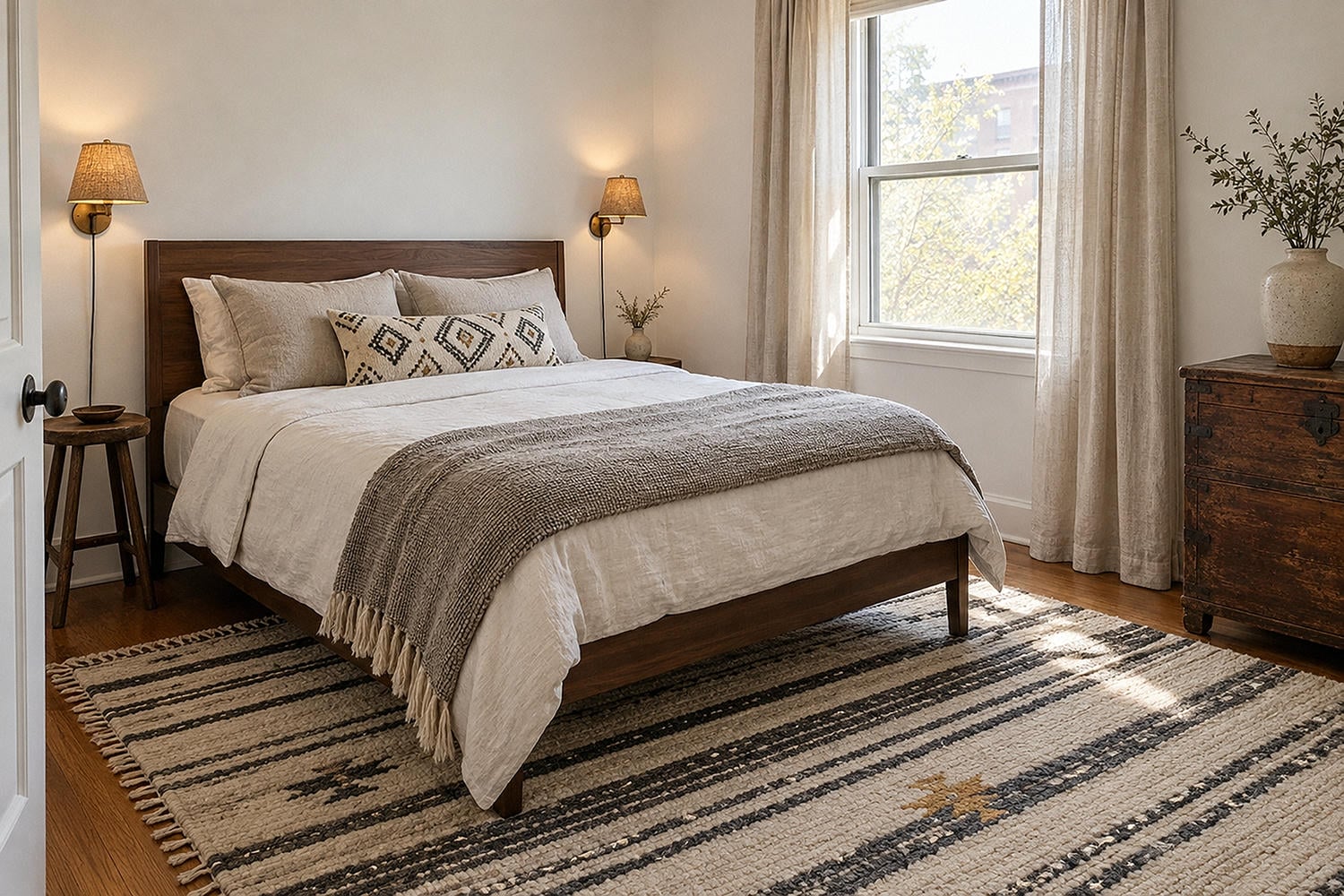
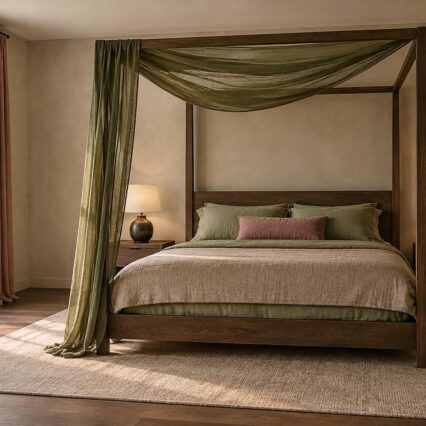
A neutral bohemian Berber bedroom needs structure. Start with warm walls, a wool rug, and plain bedding. Add a woven throw at the foot of the bed and one patterned lumbar pillow. Use wood or dark metal to outline the soft palette.
Keep plant collections modest and make sure any basket, textile, or stool has a job. "Bohemian" does not require six layers on every surface. One old chest, a hand-thrown lamp, and a good rug can carry more atmosphere than a cart full of small accessories.
For renters, the rug does most of the work without altering the room. Pair it with linen curtains hung high, removable wall hooks rated for the object, and warm bulbs in plug-in lamps.
Try a Minimalist Berber Wall Hanging
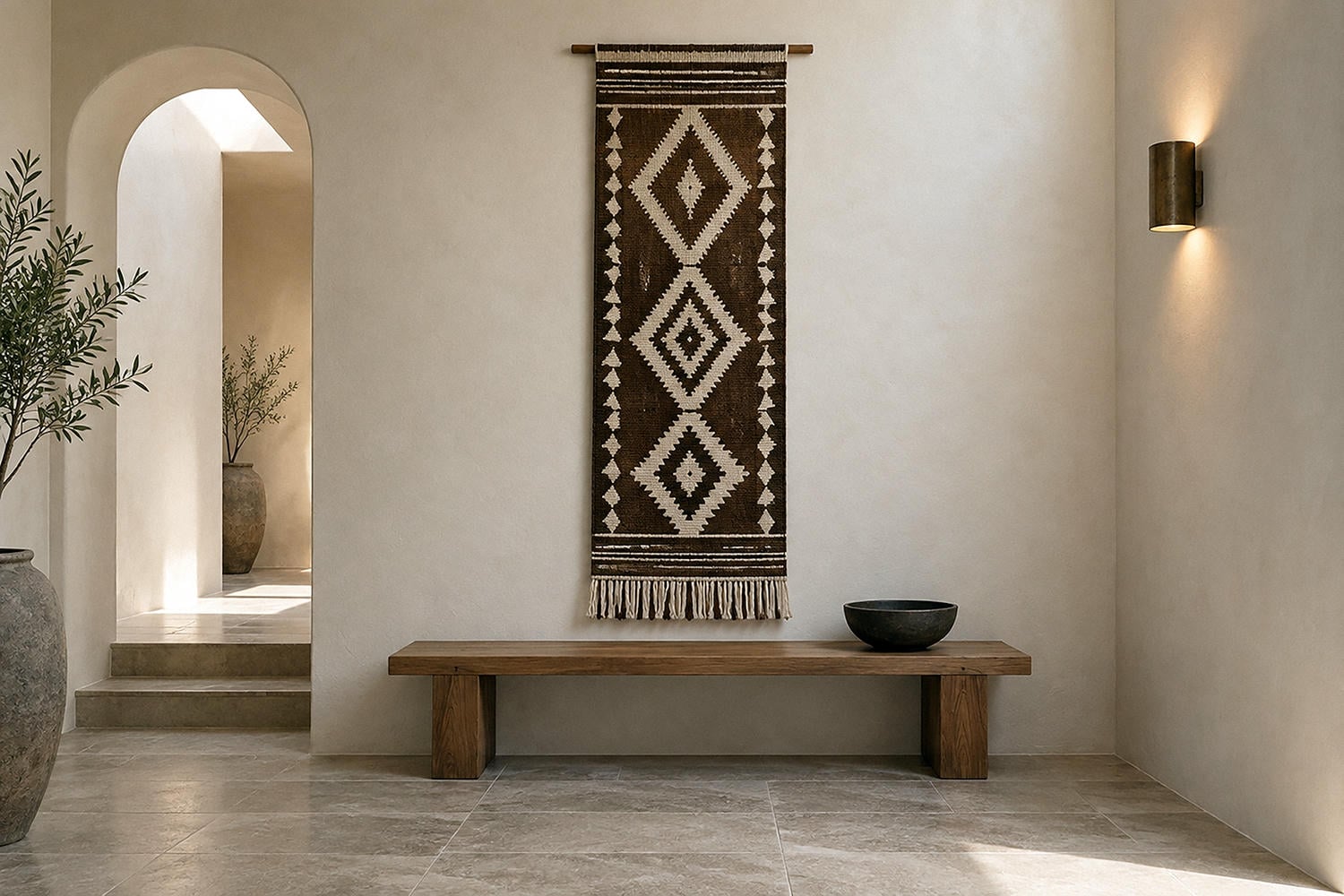
Minimalist Berber wall hangings can introduce weaving where a floor rug would face spills, pets, or heavy traffic. A narrow textile works above a bench, beside a staircase, or on the landing wall. Give it enough empty wall around the edges so its outline remains visible.
Use a mounting method that supports the textile across its width. Heavy or historic pieces may need a conservator-approved sleeve, rod, or professional display system; nails through the textile can distort and damage it. Keep valuable fibers away from persistent dampness and harsh direct sun.
Avoid inventing a fixed symbolic meaning for every mark unless the maker or a reliable source provides one. Motifs can carry personal, regional, or changing significance, and confident internet translations are often more certain than the evidence.
Use a Berber Patterned Floor Pouf as a Small Dose
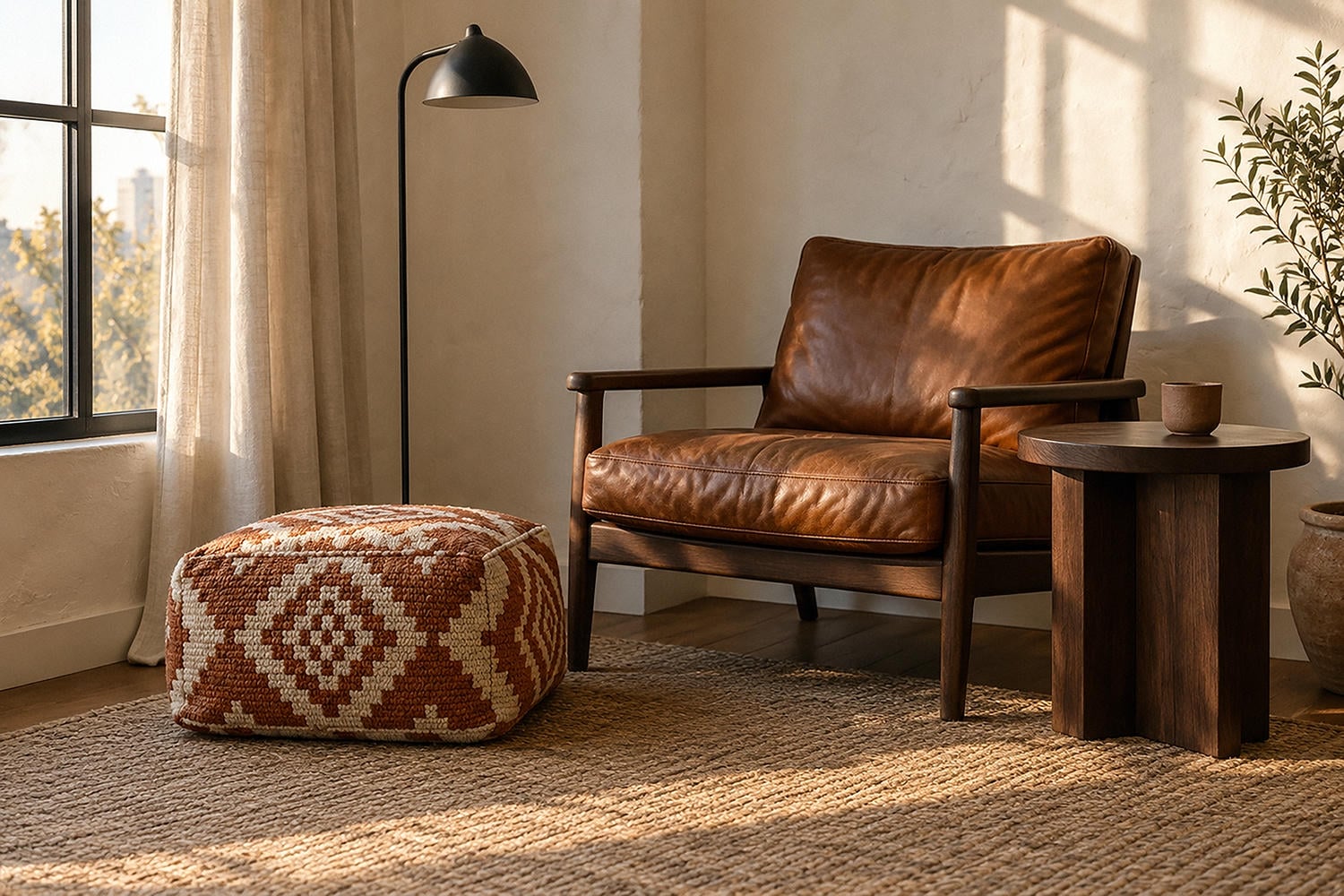
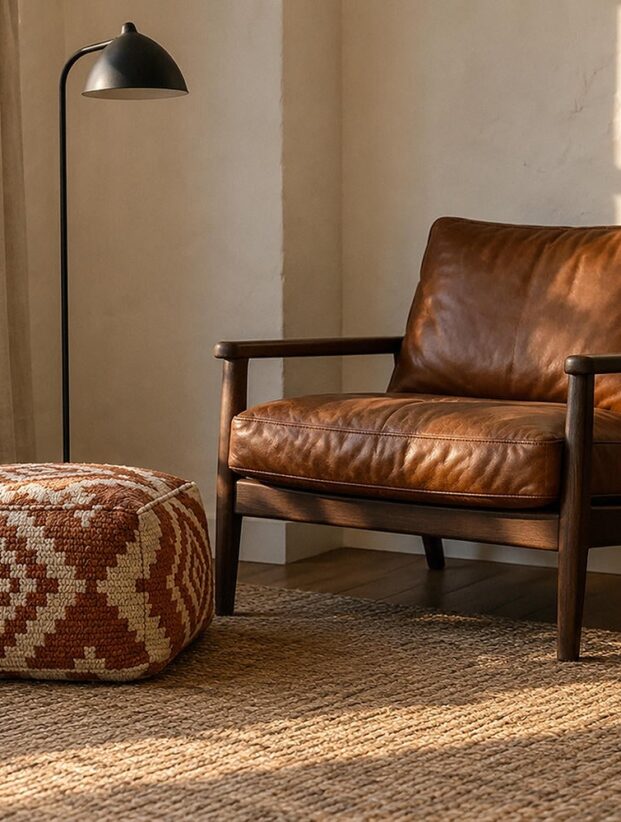
A Berber patterned floor pouf can pull a textile note into a reading corner or living room without adding another large rug. Look for a firm fill if it will serve as a footrest or occasional table. Place a tray on top only if the surface is stable and drinks are unlikely to tip.
The pouf should relate to the room through one color, not necessarily through an exact match. A rust-and-cream pouf can warm a black-and-ivory rug, while a faded red flatweave pouf can make a neutral room feel less cautious.

One is usually enough. Several small patterned ottomans create visual traffic and can become literal traffic obstacles.
Combine Patterns Without Losing the Plot
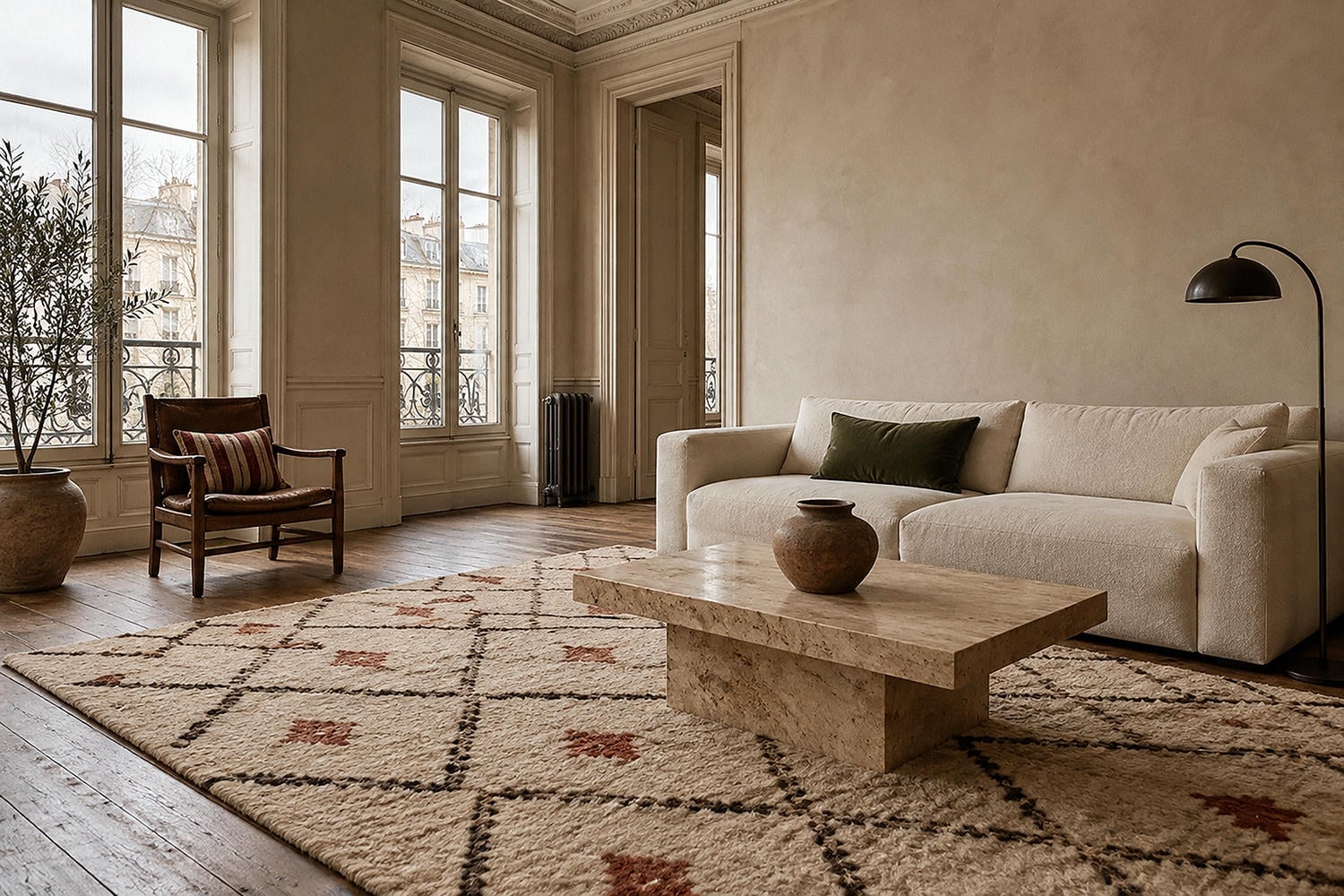
How do you use Berber patterns without overdoing it? Change scale, construction, and role. Let a large rug carry the dominant geometry. Add a tiny stripe on a cushion and a solid woven curtain. If you introduce another patterned tradition, connect it by palette and allow enough distance between the pieces.
Count visual voices. A geometric rug, floral chair, striped curtain, veined stone table, and gallery wall may each be attractive, but together they are all speaking at once. Remove the least meaningful layer.
A useful limit is one dominant pattern, one minor pattern, and several solid textures. It is not a law, but it is a good place to stop and look.
Choose a Decor Style That Supports the Textile
What decor style goes best with Berber patterns? Modern, mid-century, rustic, Mediterranean, eclectic, and restrained bohemian rooms can all work. The textile is flexible because geometry and wool are not tied to one Western furniture period.
Choose based on the piece you own. A colorful Azilal-style rug might energize a white modern room. A deep-toned flatweave can ground rustic furniture. A pale, high-pile rug softens severe contemporary architecture.
Do not strip away its origin to make it fit. Name the type accurately when known, preserve seller and maker information, and avoid describing a generic machine-made copy as an authentic Moroccan weaving.
How to Clean an Authentic Berber Rug
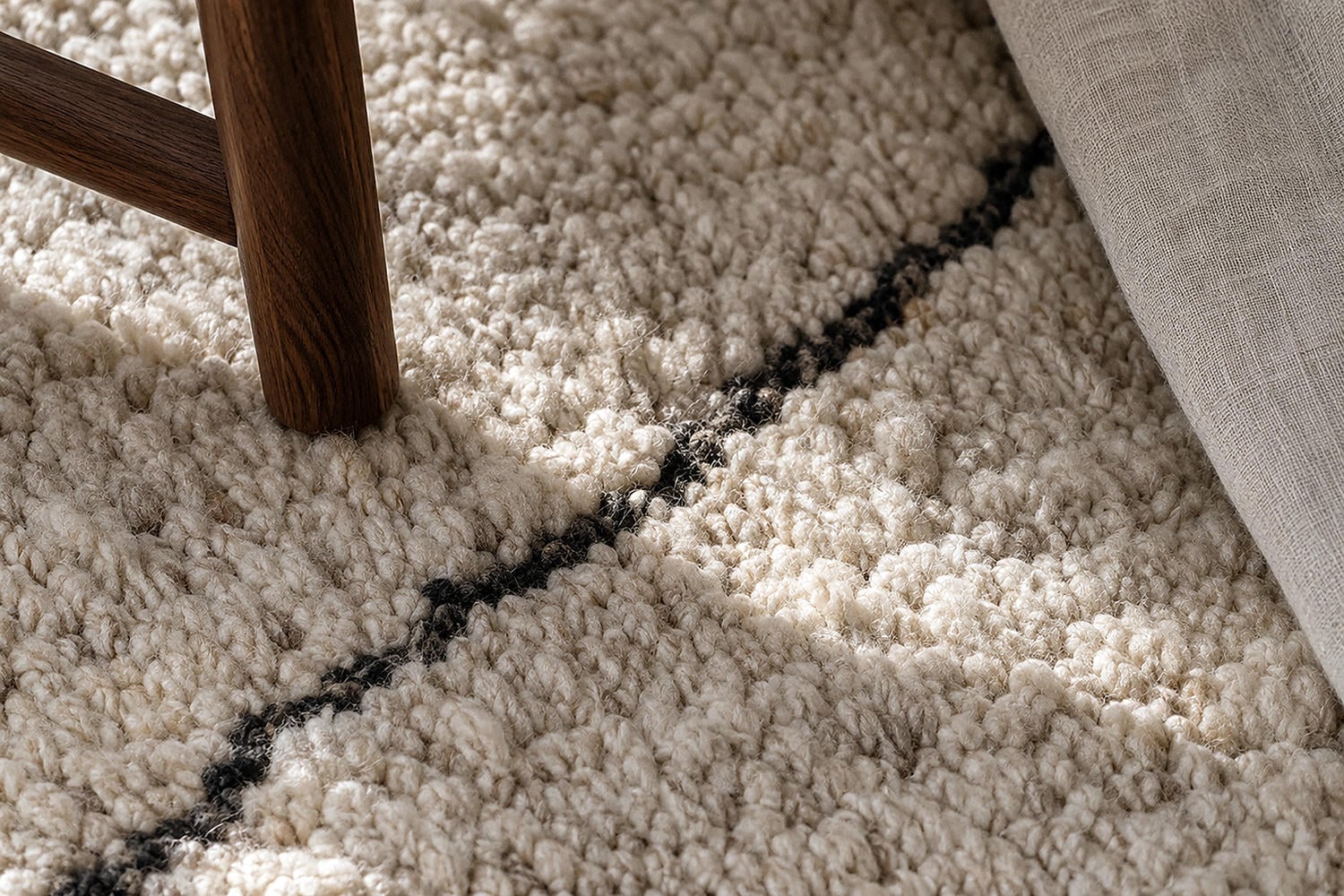
Start with the care instructions for that exact rug. Fiber, dyes, pile, age, and construction can change what is safe. Vacuum gently when dry, using low suction and avoiding aggressive beater bars or fringes. Rotate the rug periodically to balance wear and light exposure.
For a spill, blot rather than rub with a clean white cloth. WoolSafe guidance also begins with dry vacuuming and blotting liquid, which reduces the chance of driving soil deeper. See WoolSafe's cleaning and maintenance guide.
Do not soak a handmade rug or improvise with bleach, enzymes, hot water, or a rental machine. For deep cleaning, color run, pet contamination, or an older valuable piece, use a professional experienced with handmade wool rugs.
Frequently Asked Questions
Where do Berber patterns originate?
The term covers varied Amazigh traditions across North Africa, including Morocco. Patterns and weaving methods differ by region, community, and maker, so a single origin story is too simple.
Are Berber patterns timeless or trendy?
The weaving traditions long predate current interiors. Particular commercial versions may cycle through fashion, but handmade geometry, wool texture, and regional craft are not recent inventions.
Can I mix a Berber rug with patterned upholstery?
Yes. Change the pattern scale, share at least one color, and leave quiet surfaces between them. If both pieces are bold, let one occupy much less visual area.
How can I tell whether a Moroccan rug is authentic?
Ask for specific origin, materials, construction, production date, and maker or cooperative information. Look for transparent sourcing rather than relying on irregularity alone, which can be copied by machine.
Is "Berber" the best term to use?
It remains widely recognized, but many people prefer "Amazigh." When you know the specific community or rug type, use that name. When you do not, describe the piece accurately without inventing provenance.
The room does not need to imitate Morocco to honor a Moroccan textile. Give the piece space, learn what you can about its making, and let it remain more than a pattern.