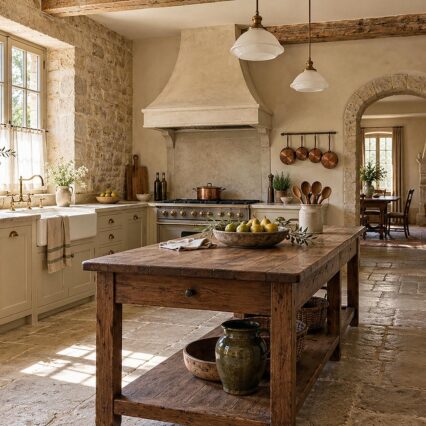
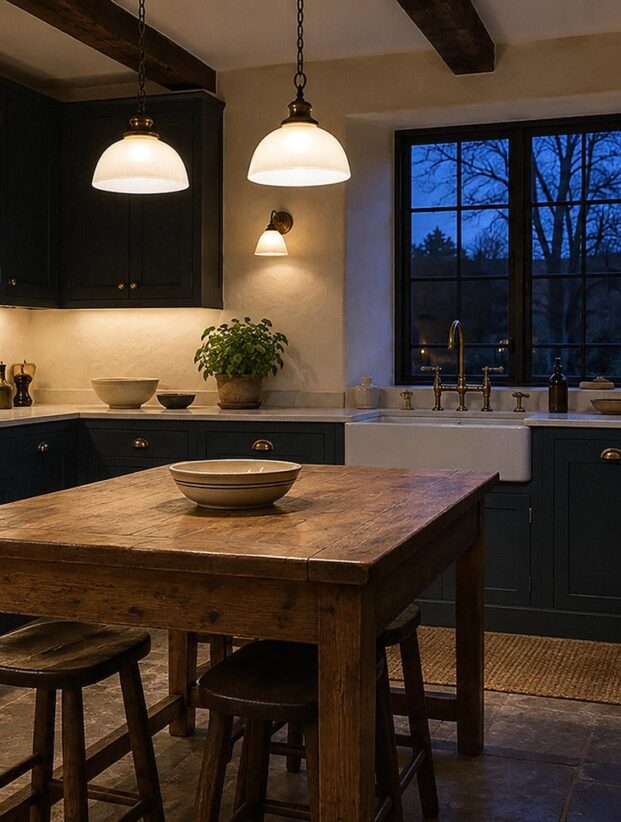
Dark Cottagecore Kitchen Ideas With Depth, Warmth, and a Little Mischief
Dark cottagecore kitchen ideas work best when the room feels storied, useful, and just a little shadowy. The goal is not to turn the kitchen into a theatrical dungeon with a fruit bowl. It is to borrow the comforting bones of an old cottage - painted cupboards, honest wood, worn metal, florals, handmade pottery - and give them a deeper palette.
The rule that keeps the look livable is simple: dark, not dim. Deep green cabinets can sit beside a creamy worktop. Blackened wood can frame pale plaster. A burgundy floral can occupy one wall while the ceiling, sink, and window surround keep reflecting light. Darkness supplies the mood; contrast lets you cook in it.
1. Start With a Working Definition, Not a Costume
What is dark cottagecore aesthetic? It is the pastoral, handmade quality of cottagecore interpreted through low, earthy colors and aged materials. Think moss after rain, damson fruit, soot, ink, tobacco-brown wood, tarnished brass, copper, linen, and stone. The room should suggest use and age, not a Halloween display left up until spring.
That distinction affects every choice. A genuine iron hook is more convincing than a row of novelty bats. A dark floral print has more staying power than a wall covered in faux potion labels. One odd antique can be charming; twelve props start auditioning for roles.
Choose three ideas to repeat throughout the room: perhaps deep green, warm cream, and aged copper. Then allow natural wood and black to behave as supporting neutrals. A limited set of materials gives all the irregular cottage details a shared language.
2. Let Dark Cottagecore Kitchen Cabinets Carry the Color
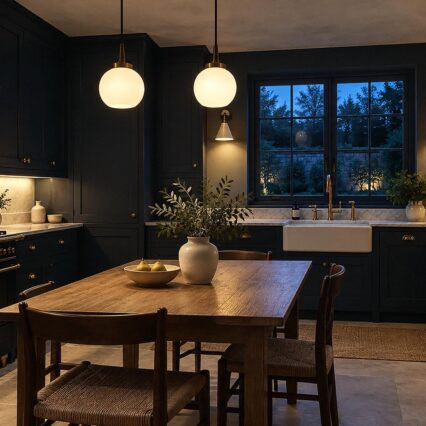
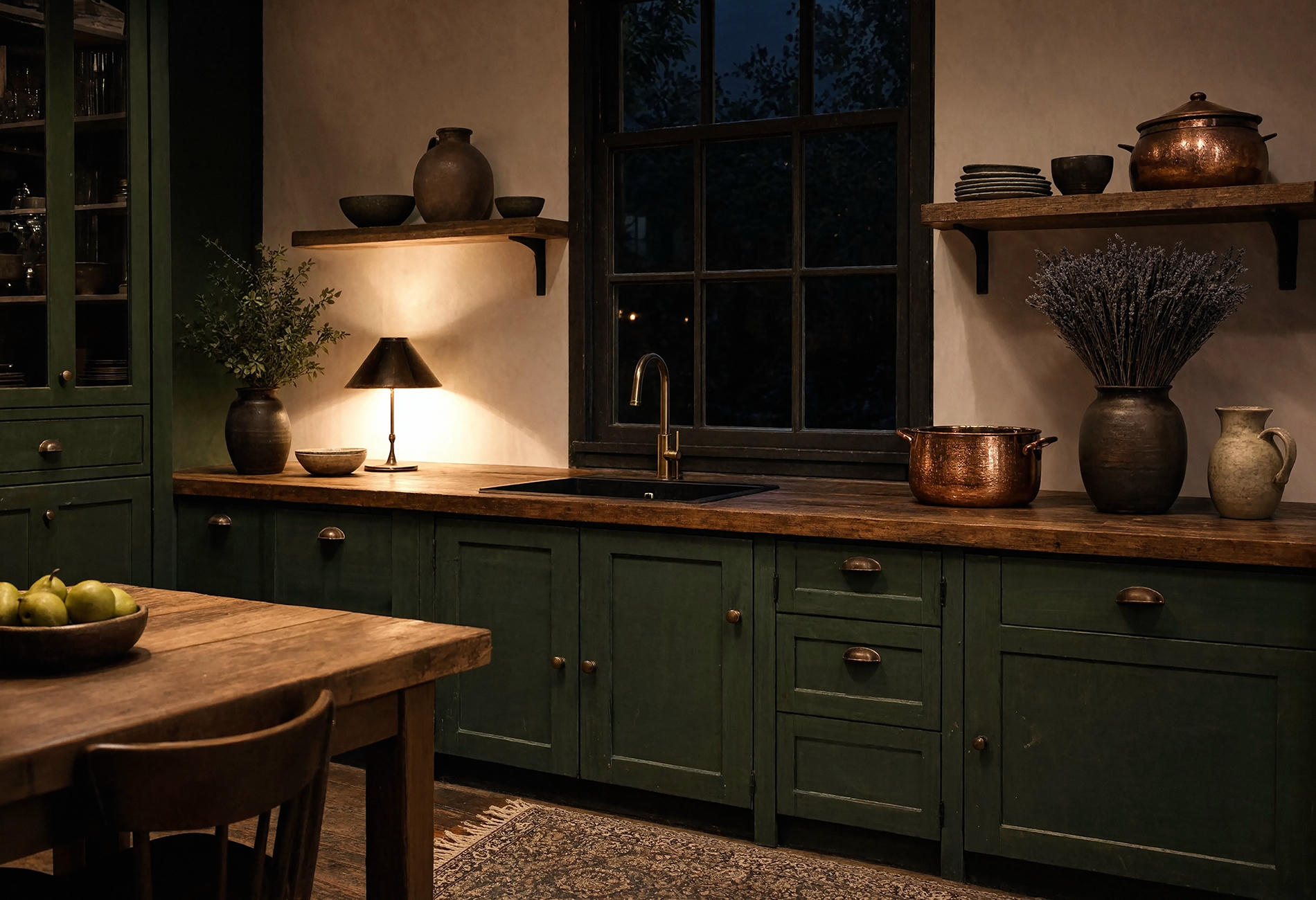
Cabinetry is the cleanest place to make a dark statement because it already forms a large, connected block. Green-black, muddy olive, soot blue, deep aubergine, oxblood, and warm charcoal all have more life than flat jet black. Their undertones change through the day and look especially good beside old brass and wood.
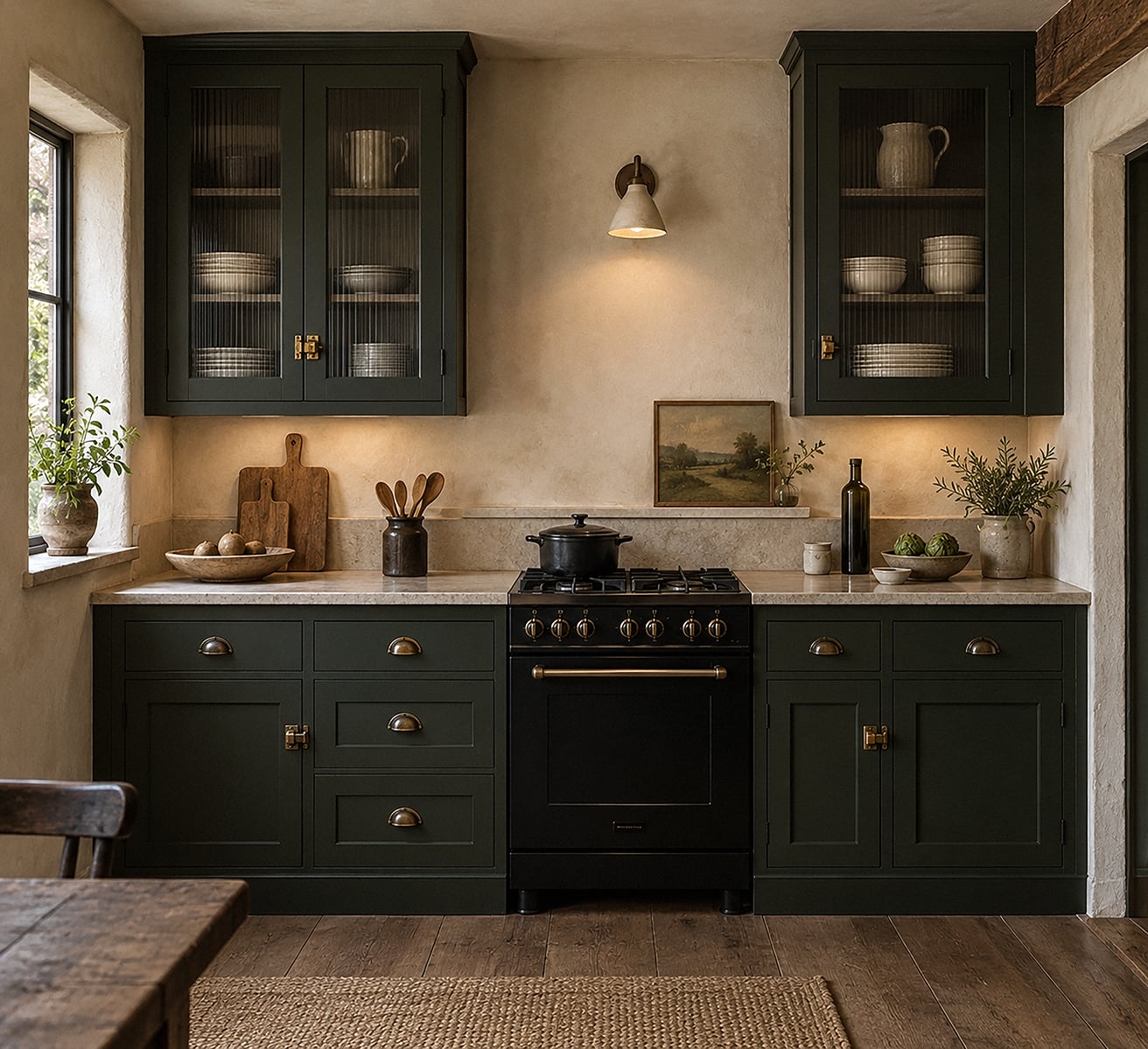
If the room is small or short on windows, do not automatically paint every upper cabinet dark. Use the deepest color on lower cabinets and a tall pantry, then keep some upper wall visible. Another good arrangement is dark cabinets on one run with a warm off-white dresser opposite. The eye reads the contrast as deliberate architecture rather than a room closing in.
Sample cabinet colors vertically, beside the worktop, flooring, and wall finish. A nearly black green that looks refined on a bright paper swatch may turn swampy beside yellow pine or surprisingly blue beneath cool LEDs. Test it in morning light, at dusk, and under the actual bulbs you plan to use.
3. Build Moody Cottage Kitchen Colors Around Undertones
The safest answer to what colors work in a dark cottagecore kitchen is not a list of fashionable shades. It is a relationship: one deep color, one softened light color, one warm natural material, and one aged metal.
A black-green cabinet can meet limewashed cream walls, honey oak, and copper. Aubergine works with mushroom, walnut, and antique brass. Soot blue likes putty, terracotta, and unlacquered brass. Burgundy settles down beside warm gray stone and blackened timber.
Avoid stark optic white unless the house already uses it successfully. Against earthy colors, hard white can look newly installed in the least flattering sense. Chalk, oat, plaster, bone, and pale mushroom provide contrast without making the darker surfaces look dirty.
The ceiling is often the best source of visual breathing room. Keeping it pale helps bounce window and fixture light, particularly when the cabinetry and floor are both deep.
4. Use Dark Floral Kitchen Wallpaper as a Concentrated Note
Dark floral kitchen wallpaper can do a great deal of storytelling in a small area. Choose a pattern with an inky ground and botanical colors already present in the room: olive leaves, faded rose, ochre petals, or cream stems. The repeat should be legible from across the kitchen; tiny busy florals can turn into visual grain when surrounded by paneled cabinets and open storage.
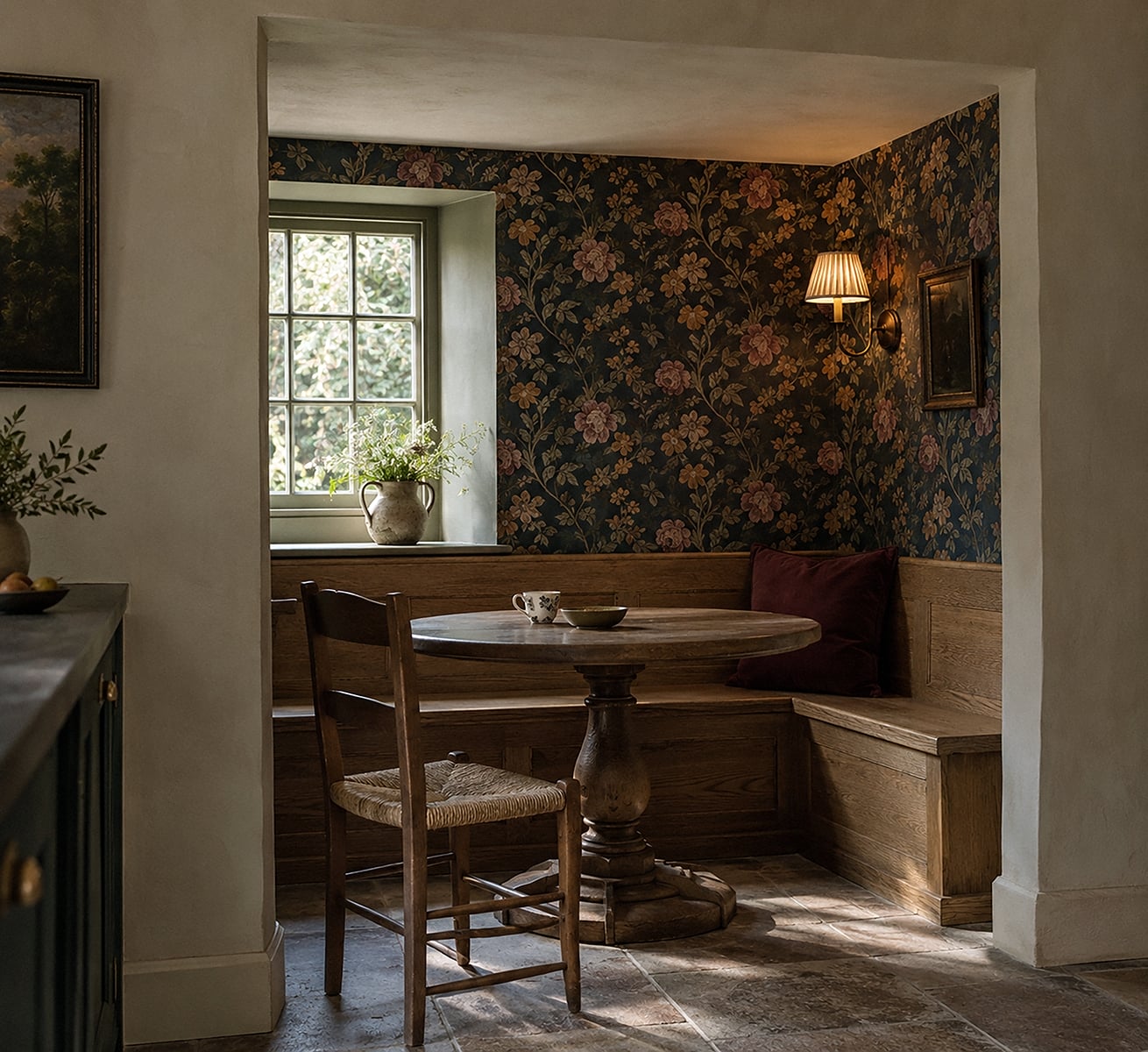
Use it on a breakfast alcove, dresser wall, pantry interior, or the upper section of a dry wall. Behind a range or sink, ordinary wallpaper faces heat, steam, grease, and repeated cleaning. Follow the wallpaper and appliance manufacturers' clearance guidance, and use a properly specified protective surface where the location demands one. A beautiful print is not improved by asking it to impersonate tile.
If the kitchen already has patterned flooring, let one pattern lead. Pair a large floral wall with a quiet stone or wood floor; pair a patterned floor with a simpler botanical stripe or sparse vine.
5. Give Antique Brass Hardware and Copper Different Jobs
Antique brass hardware for dark kitchens works because it catches light without looking polished enough to belong in a jewelry case. Latches, cup pulls, simple knobs, and small shelf brackets are all suitable, but use one family of shapes. Mixing five historically inspired styles can make the cabinets resemble an architectural salvage bin.
Vintage copper pots bring a second, redder metal into the palette (and make you look like a background character in Julie & Julia). They do not need to match the brass. Let brass handle the fixed details while copper belongs to cookware, a kettle, or one utensil rail. Their shared warmth is enough.
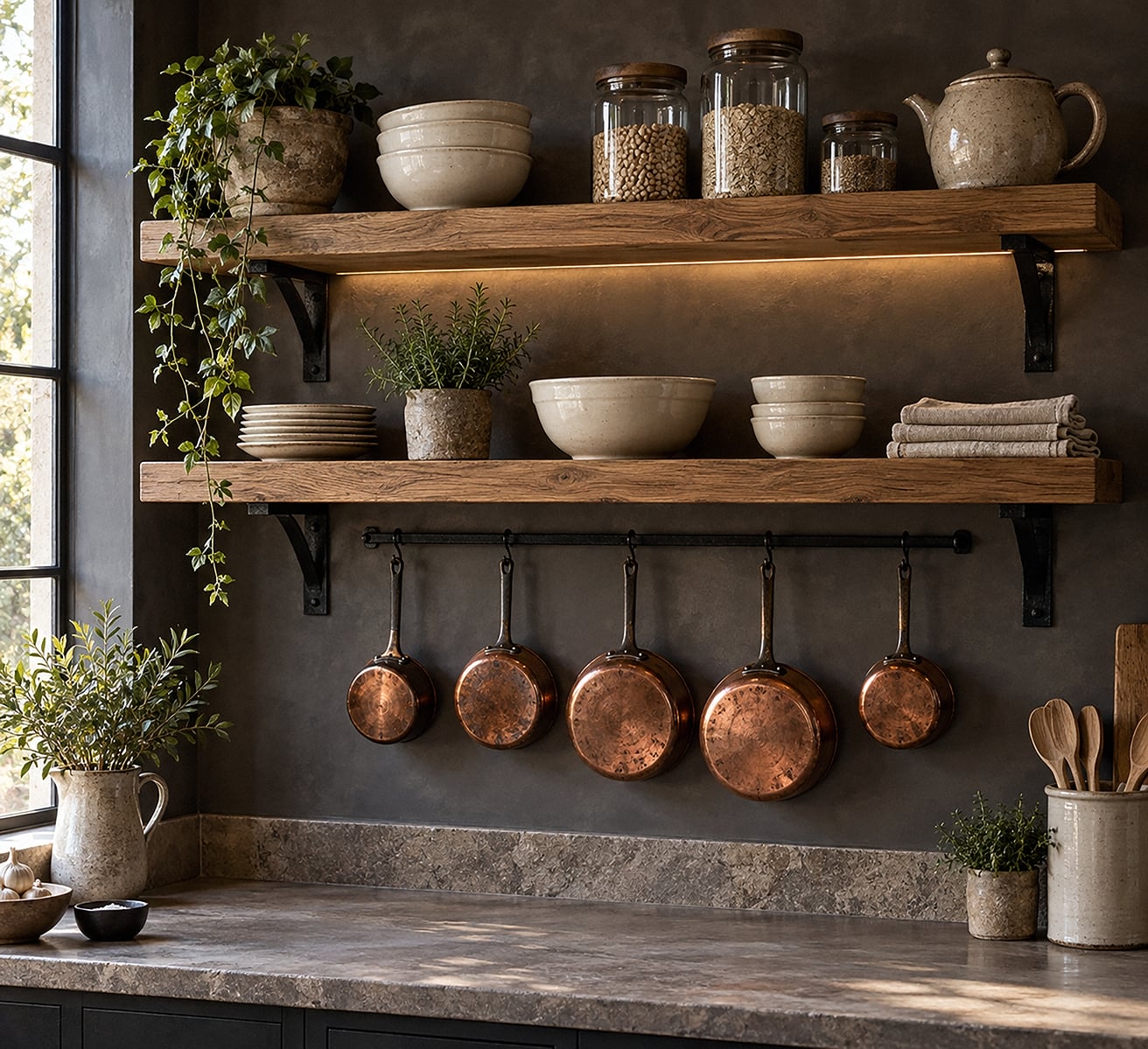
Hang heavy cookware only from hardware and wall construction rated for the load. If the pots are mainly decorative, three or five readable silhouettes make a stronger display than a crowded ceiling rack. Keep frequently used pieces within reach and the prized, thin antique above the splash zone.
6. Make Rustic Wood Open Shelving Look Useful
Rustic wood open shelving should show things the kitchen actually uses: bowls, plates, jars without busy labels, a teapot, and perhaps one trailing herb. It is not a stage that needs to be reset after every breakfast.
To understand how to style dark wood in a cottage kitchen, vary value rather than piling dark on dark. Put cream pottery, clear glass, pale linen, and copper against walnut or stained oak. Leave small gaps between groups so the outline of the objects remains visible. If the shelf and wall are both deep, paint the shelf brackets a warm metal or add a slim pool of light beneath the shelf.
New timber can still suit the room. Choose a matte or low-sheen finish and a believable grain rather than distressing every edge on purpose. A plain solid shelf that ages naturally will usually outlast factory-made scratches pretending to be history.
7. Use a Farmhouse Sink as a Pale Pause
A farmhouse sink in a moody cottage kitchen gives the eye one substantial light shape. Fireclay, enameled cast iron, or a pale composite basin can break a long run of dark cabinets, especially beneath a window. Add a bridge faucet or restrained gooseneck in antique brass, aged nickel, or dark bronze.
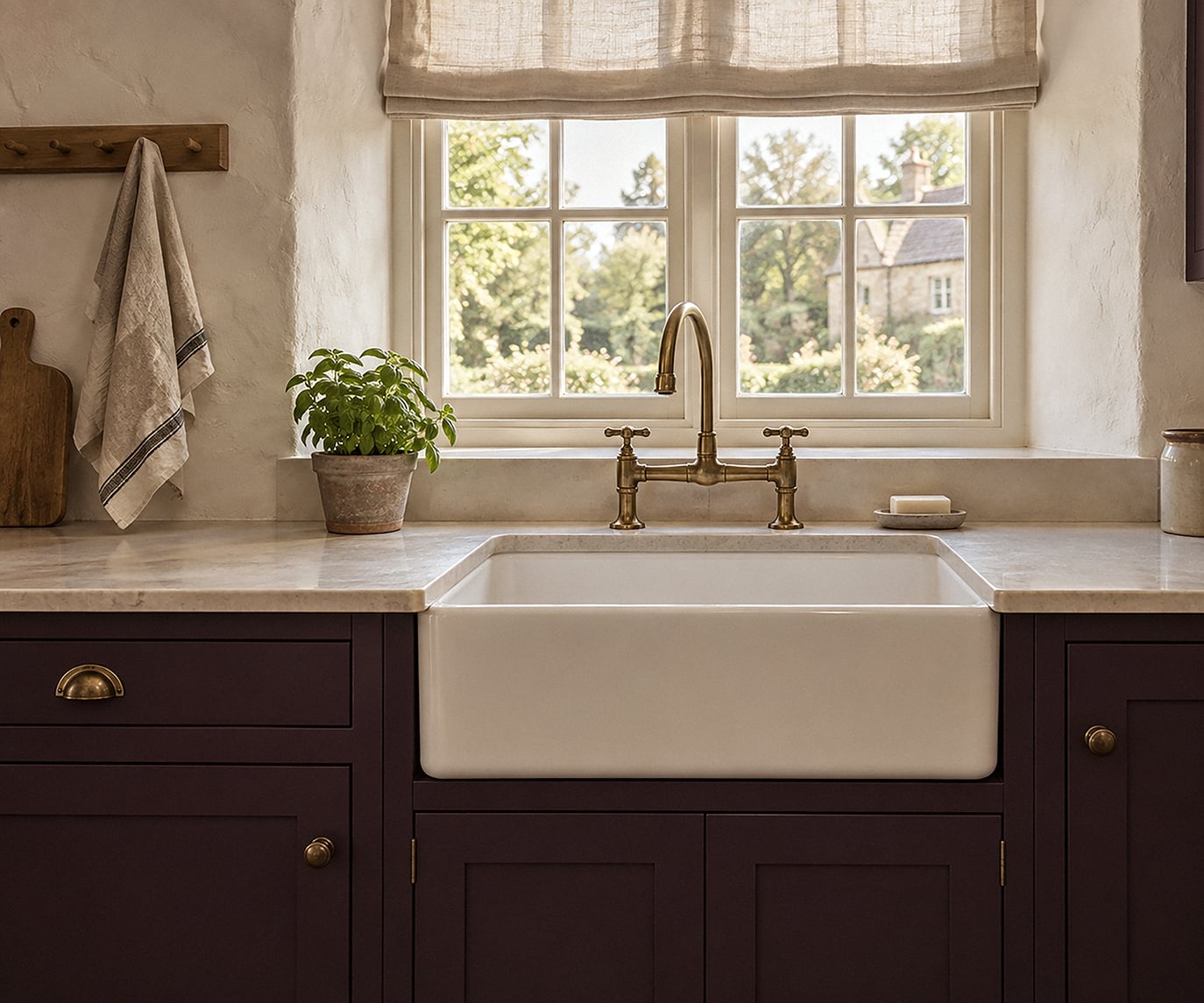
Apron-front sinks vary in weight, mounting, cabinet requirements, and countertop details. Choose the sink early and have the supporting cabinet designed or modified to its manufacturer's instructions. This is not the place to discover that romance has a shipping weight.
Keep the sill and immediate work area practical. A washable roman shade, one pot of herbs, and a small soap dish are enough. Too many objects around a working sink turn cottage charm into a daily obstacle course.
8. Layer Cottage Kitchen Lighting Ideas
Dark surfaces absorb more light, so cottage kitchen lighting ideas need to work harder than one central pendant. Use three layers: ambient light for the room, task light on counters and the sink, and smaller accent light for a dresser, shelf, or art-free architectural detail. Lutron's guide to layered lighting likewise identifies under-cabinet fixtures as useful task lighting for kitchen work.
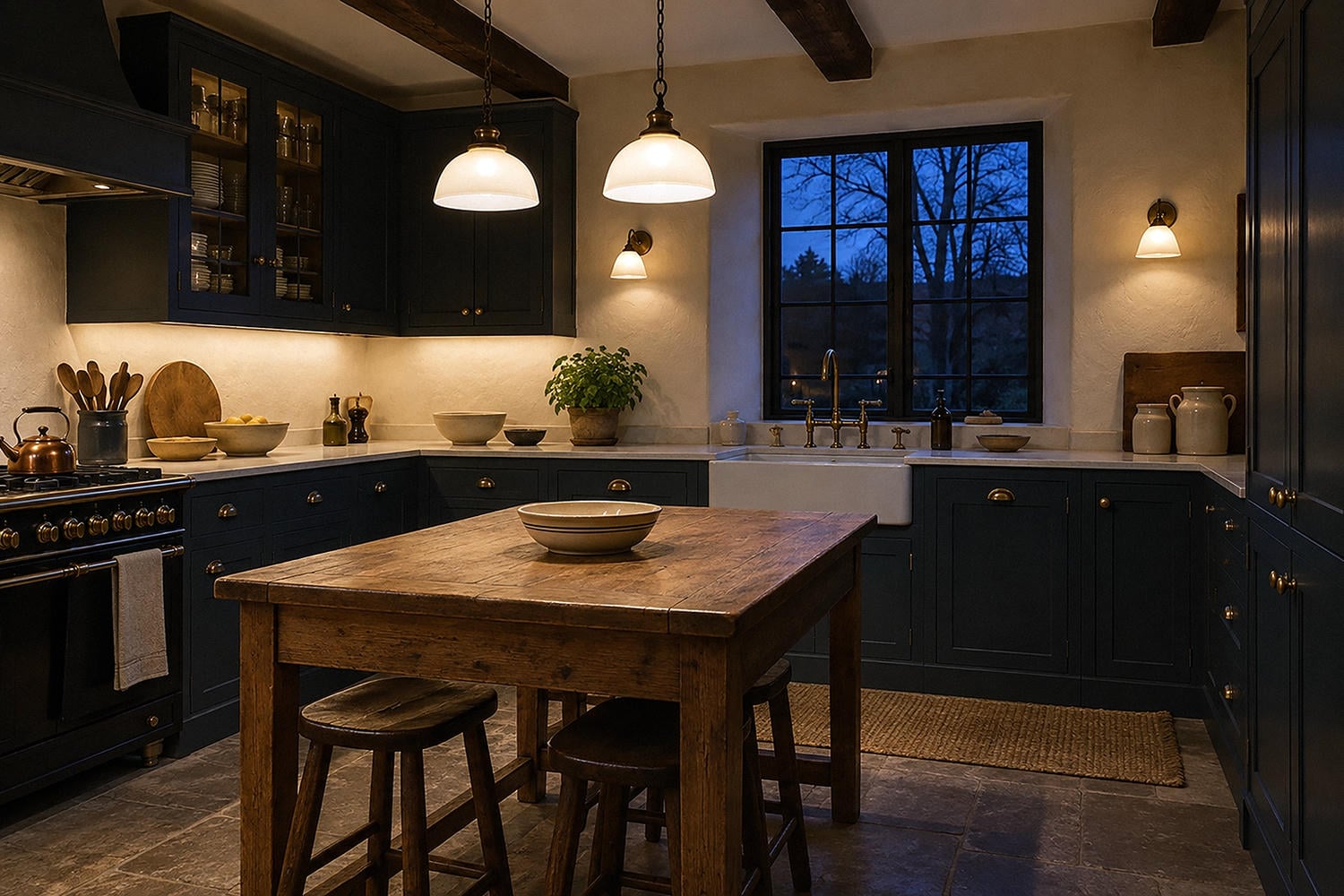
Milk-glass pendants, pleated shades, small opal globes, ceramic sconces, and simple aged-brass picture lights all suit the style. The shade should direct useful light, not merely glow decoratively while the chopping board remains in witness protection.
For warmth, 2200K to 3000K lamps can mimic the yellow-white character of incandescent light; ENERGY STAR's fixture guidance explains that lower Kelvin values appear warmer and higher values look progressively whiter or bluer. In a kitchen, let decorative lighting be warm while giving food-prep surfaces bright, clear task illumination. Dimmers help the same room move from cooking to supper without surrendering visibility.
9. Choose Countertops That Return Some Light
What countertops look best in dark cottagecore? Honed cream or softly veined stone, warm white quartz, pale butcher block, soapstone, and muted terrazzo can all work. The choice depends on how much contrast, maintenance, and patina you actually want.
A pale honed surface is the easiest way to keep dark cabinetry from becoming a single heavy block. Soapstone takes the opposite route: it continues the shadowy palette but gives it a soft, tactile surface. If both cabinets and counters are dark, make the backsplash or wall behind them noticeably lighter and strengthen the task lighting.
Marble suits an old-world room, but it develops marks. Acidic foods can etch the surface, and sealing does not prevent etching. Use Natural Stone notes that marble scratches and etches more readily than granite and that a honed finish can make developing patina easier to live with. For routine natural-stone care, the Natural Stone Institute recommends a neutral cleaner, stone soap, or mild dish detergent with warm water, followed by rinsing and drying.
If every lemon ring will feel like a personal attack, choose a lower-maintenance counter that only looks softly mineral. A cottage kitchen may welcome age, but its owner is allowed boundaries.
10. Keep the Darkness From Shrinking the Room
How do you keep a dark cottage kitchen from feeling small? Preserve contrast where the room needs to function. A pale counter improves visibility. A light ceiling reflects illumination. Glass cabinet doors or open shelves interrupt solid runs. Warm metal gives small flashes of reflected light. A continuous floor prevents the room from being chopped into patches.
Also protect the window. Dark floral curtains can be lovely, but not if they remove half the daylight. Mount a simple shade inside the frame or hang curtains so the glass remains mostly clear when open.
Do not confuse coziness with crowding. Keep counters mostly available, group tools, and choose one place for the copper display rather than repeating it on every wall. The most convincing dark cottagecore rooms have evidence of life and enough space to perform it.
Frequently Asked Questions
What is dark cottagecore aesthetic?
Dark cottagecore aesthetic combines rural cottage forms, handmade materials, botanical motifs, and practical vintage objects with deeper colors such as moss, soot, aubergine, burgundy, and dark wood. It should feel warm, aged, and usable rather than themed around fantasy props.
What colors work in a dark cottagecore kitchen?
Green-black, muddy olive, aubergine, soot blue, charcoal, and burgundy make strong base colors. Balance one of them with chalk, oat, plaster, mushroom, warm stone, aged brass, copper, or honey-toned wood.
How do you keep a dark cottage kitchen from feeling small?
Keep the ceiling and at least one major work surface light, protect the window, add under-cabinet task lighting, and interrupt dark cabinet runs with open shelving, glass doors, or a pale sink. Limit countertop clutter so useful negative space remains visible.
How should you style dark wood in a cottage kitchen?
Place light pottery, clear glass, linen, and warm metal against the wood. Use a low-sheen finish, vary object heights, and leave gaps between groups. Pair dark wood with a wall color that is either distinctly lighter or intentionally deeper, not a muddy near-match.
What countertops look best with dark cottagecore cabinets?
Honed cream stone, warm white quartz, pale butcher block, and softly patterned terrazzo add useful contrast. Soapstone creates a moodier look. Marble is handsome but can etch, so choose it only if you are comfortable with maintenance and visible patina.
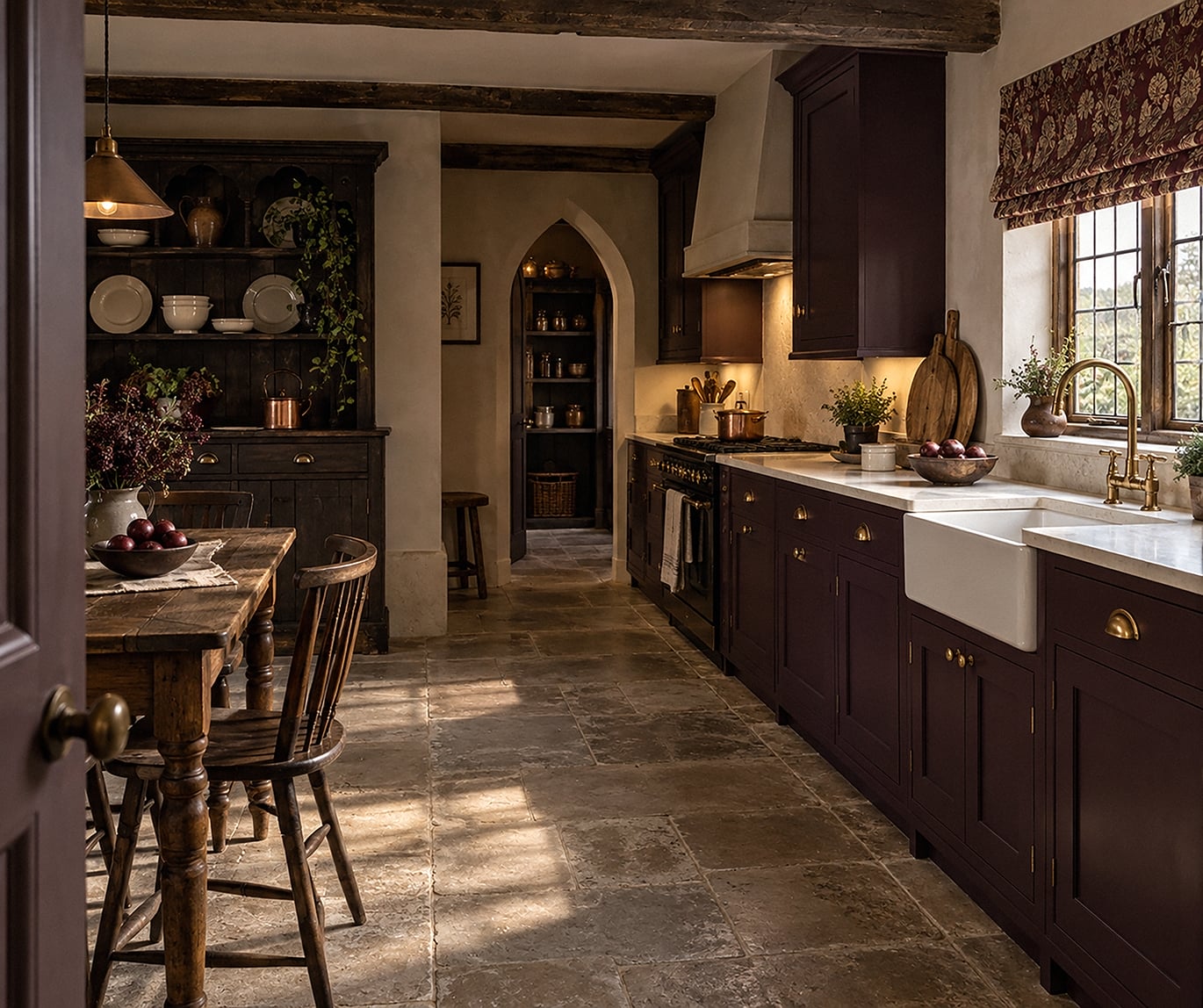
A dark cottagecore kitchen becomes convincing through restraint: one enveloping cabinet color, one pale place for light to land, a few metals that improve with age, and objects that earn their shelf space. Let the shadows provide character, then make sure the chopping board can still be found.