Aubergine is what happens when purple grows up, buys a good coat, and stops asking whether everyone likes it. The color can read as plum in daylight, brown beside oak, nearly black at night, and unexpectedly warm beneath brass.
That shape-shifting quality is the attraction. It is also the reason an aubergine kitchen should begin with samples, not confidence. A color that looks like velvety eggplant on a screen may turn grape, wine, or cold charcoal in your room.
The best designs give the dark color a clear job. Let it form a grounded cabinet base, one strong island, or a tall pantry wall, then build deliberate light around it. Aubergine does not need to be diluted; it needs contrast in the right places.
Find the Brown Inside the Purple
Before you choose counters or metal, decide whether your aubergine leans red, blue, brown, or black. A red-violet version feels lush beside cream and copper. A cooler blue-purple becomes sharper with pale grey and nickel. A brown-based eggplant is the easiest to pair with natural timber.
Paint large movable boards with the exact cabinet finish and stand them vertically. View them beside the floor at breakfast, under cloud cover, and after sunset. Dark paint exaggerates differences in light, and the part of the kitchen farthest from the window may look like an entirely different color.
For aubergine shaker style kitchen cabinets, keep the door profile controlled. A slim frame gives the color enough shadow to feel architectural; deep bevels and ornate molding can make a saturated finish look busier than it is. Matte aubergine kitchen cabinets are especially handsome, but confirm the finish is formulated and cured for kitchen cleaning and wear.
Do not approve the color in isolation. Put the sample against the actual stone, timber, tile, and metal contenders. The combination is the design, not the paint chip.
Concentrate the Color on the Island
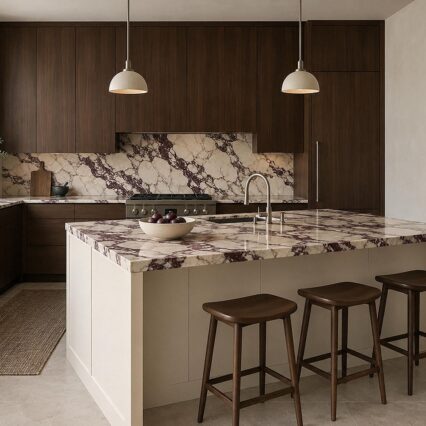
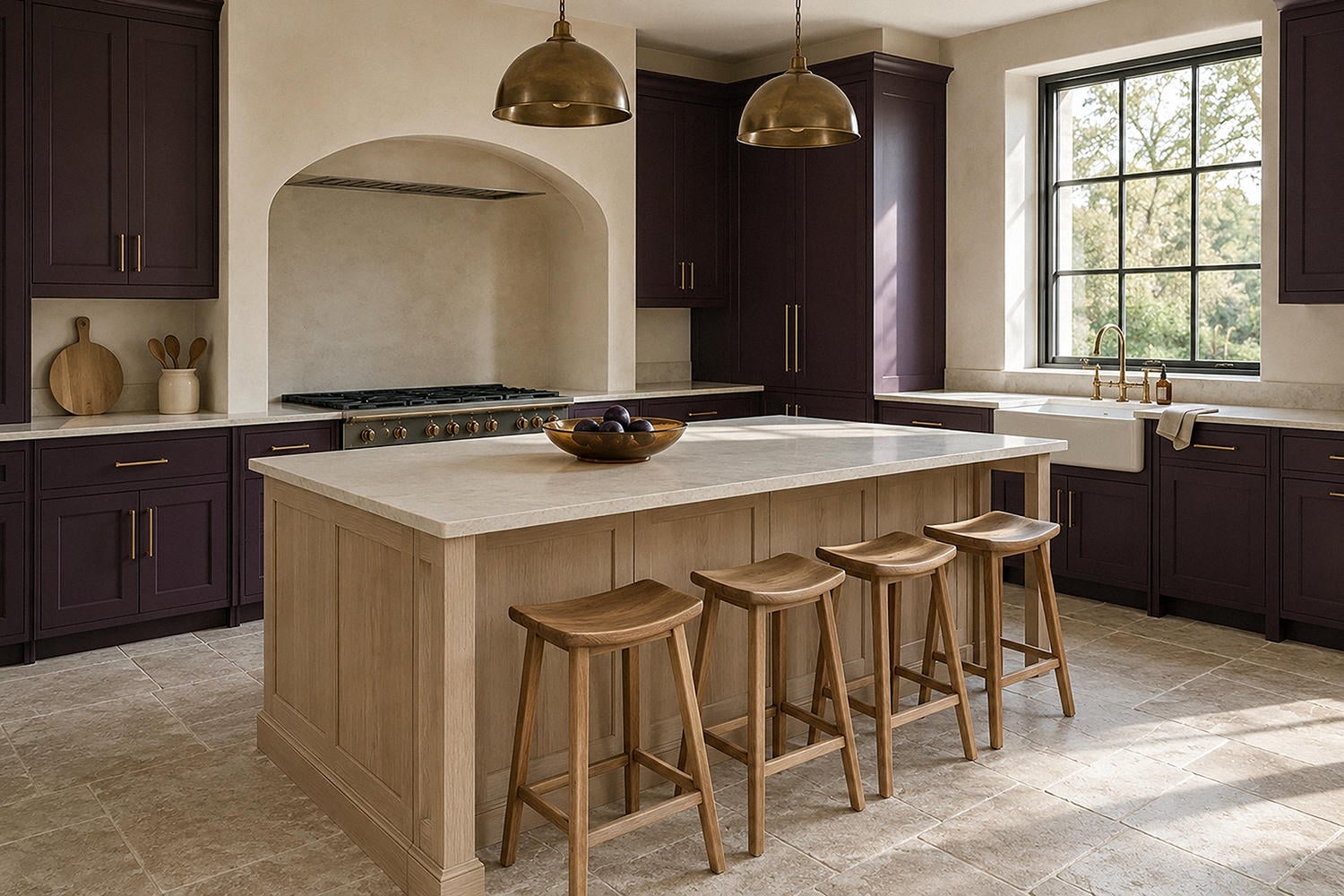
A purple kitchen island is the useful halfway point for anyone who loves aubergine but is not ready to commit every cabinet. It gives the room a dark center while the perimeter can stay cream, pale wood, or soft grey.
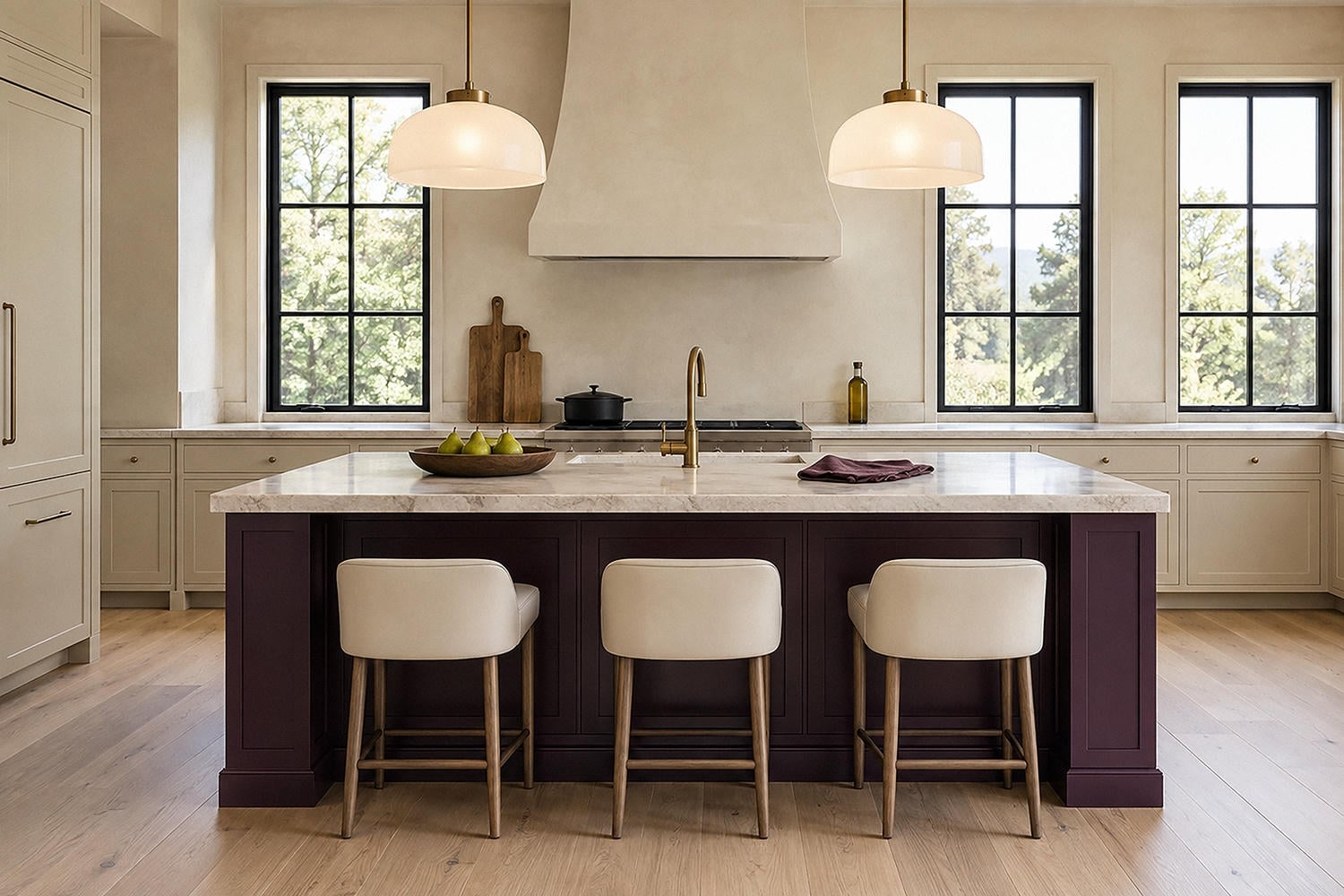
This placement works because an island is already a single object. Aubergine makes it read more like furniture, particularly with a thick pale counter and warm metal pendants above. Keep the stools quieter than the base; too many competing jewel tones turn one confident decision into a committee meeting.
The NKBA's 2026 kitchen trends report found that respondents expected new statement colors to be incorporated in islands, backsplashes, and wallpaper. That does not make a purple island mandatory, but it confirms the practical logic of placing adventurous color on one visually contained element.
Repeat the aubergine once elsewhere in a small dose -- a pantry door, a tile edge, or the dark thread in a runner. One echo makes the island belong. Six matching purple accessories make it nervous.
Use Brass to Reveal the Warmth
An aubergine and brass kitchen can feel almost edible: dark fruit, burnished metal, warm cream. Brass pulls catch enough light to articulate the cabinet grid, which matters when the doors are close to black.
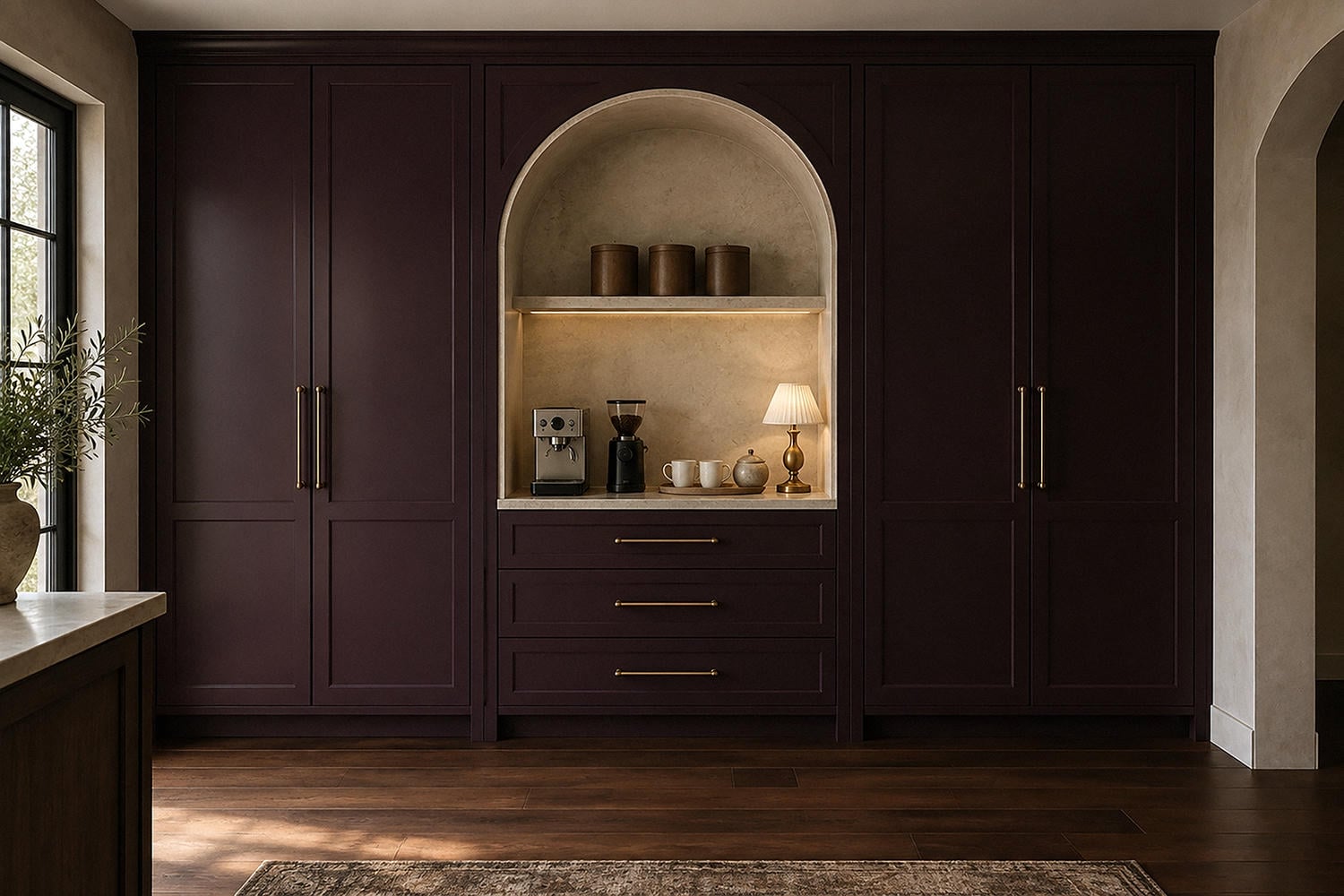
Long bars emphasize width; small knobs keep a traditional door light on its feet; a cup pull adds a vintage note. Choose one main hardware language rather than assigning a different personality to drawers, doors, pantry latches, and the appliance panels.
Brass does not need to appear on every fixture. If the cabinet hardware and pendants are warm metal, a dark faucet can provide relief. Or let the faucet carry the brass while the lighting uses plaster or opal glass.
The same restraint applies to an aubergine kitchen with copper hardware. Copper leans redder and looks particularly strong with brown-based eggplant, pale oak, and cream stone. Expect many living metal finishes to change with touch and time, and verify cleaning guidance before using one around water and cooking splatter.
Choose a Counter That Separates From the Cabinets
What countertop goes with aubergine cabinets? Start with value contrast. A pale surface outlines the cabinet silhouette and helps the worktop remain readable, while a dark counter creates a continuous, moodier block.
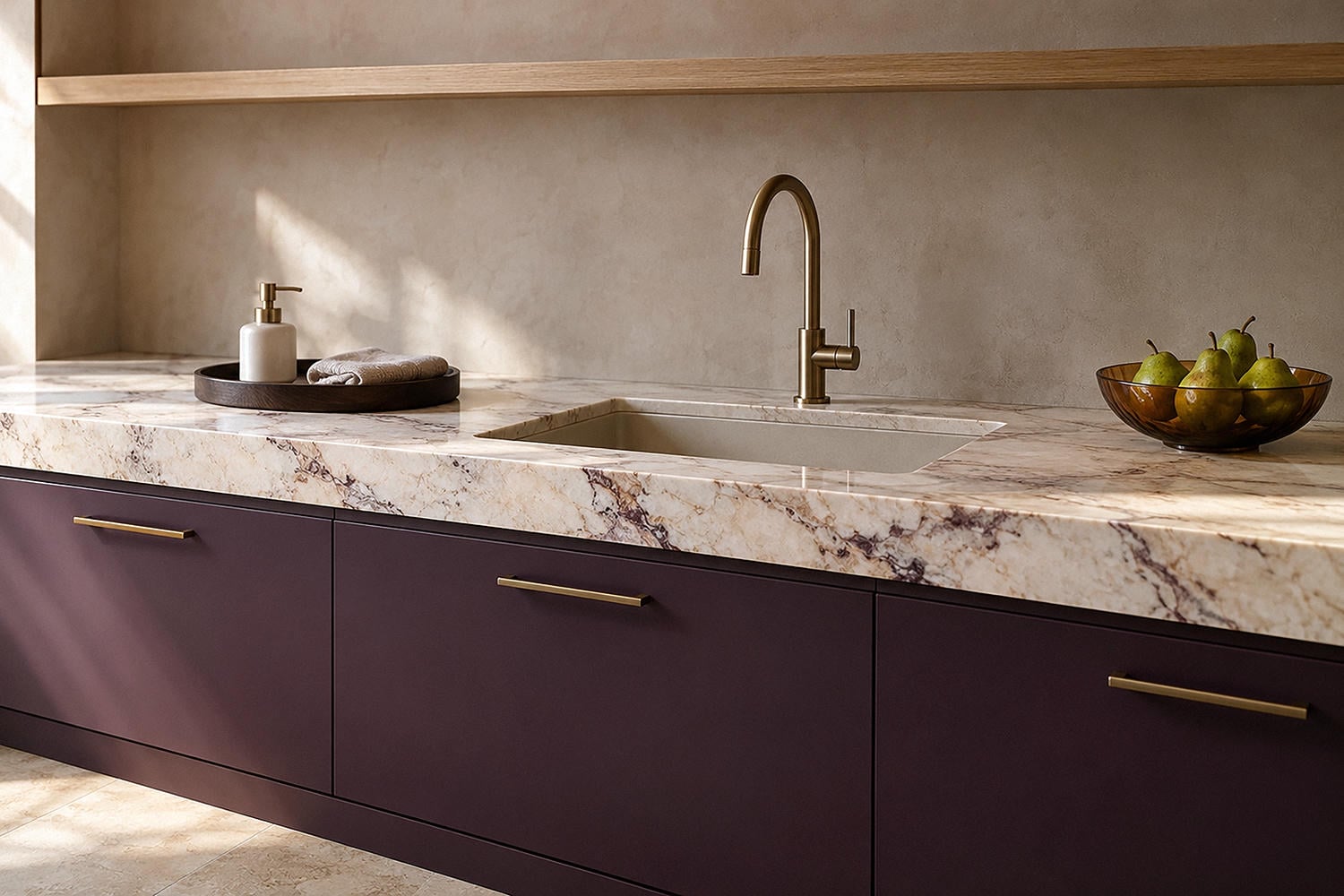
Creamy stone with restrained plum or brown movement is an easy bridge. Warm off-white composite can be quieter and more uniform. Pale terrazzo adds texture, while honed soapstone produces a dramatic near-monochrome effect when the room has excellent task lighting.
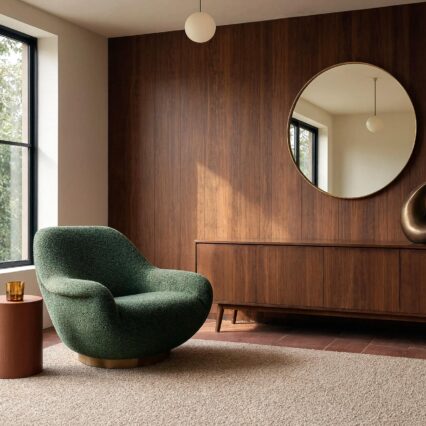
Wood is an option too, especially on an island. Oak pulls aubergine toward earthiness; walnut makes it feel more formal. Confirm any surface's heat, stain, scratch, cleaning, and maintenance requirements with the fabricator or manufacturer rather than choosing on color alone.
Avoid a counter whose veining introduces an unrelated cool blue-grey if the cabinetry is warm brown-purple. It may look fine under showroom lighting and strangely disconnected at home. Bring the cabinet sample to the slab or request a large counter sample before ordering.
Let the Backsplash Either Whisper or Commit
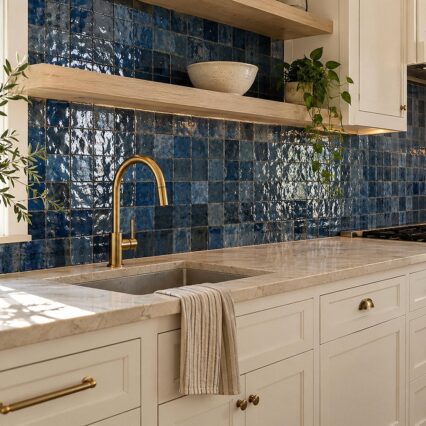
Aubergine backsplash ideas fall into two useful camps. The quiet version uses cream handmade tile, pale stone, or lightly mottled plaster-look surfaces. The committed version repeats eggplant in glossy tile, creating depth through reflection rather than another color.
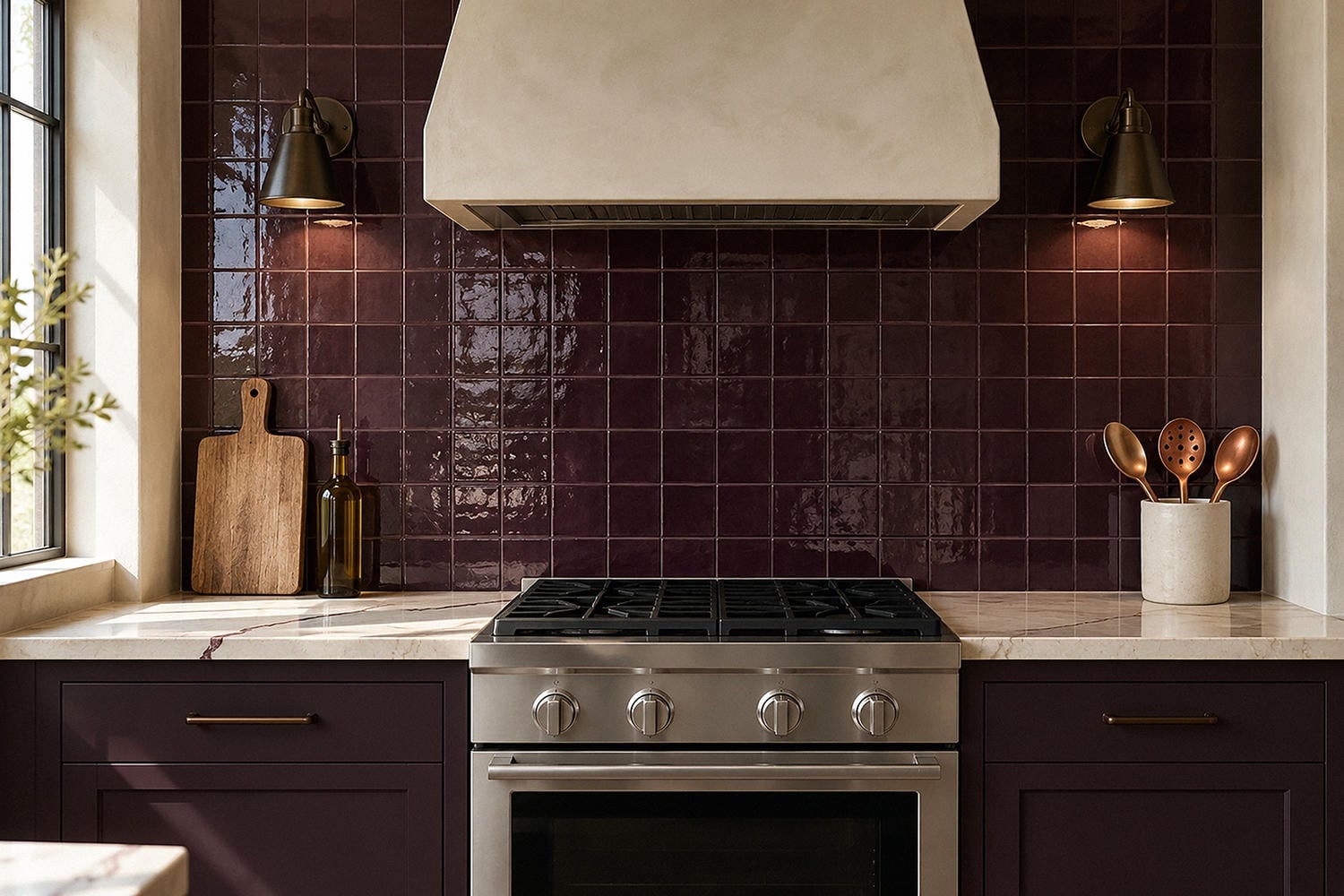
If cabinets and tile are both aubergine, change the finish. Matte doors beside lustrous square tile give the eye two readings of the same hue. Keep grout close to the tile color for a continuous field, or choose warm grey to reveal the pattern gently.
On a single range wall, dark tile can make the cooking zone feel carved into the cabinetry. Under-cabinet lighting becomes important because a deep backsplash absorbs more light than a pale one. Use a continuous diffused source so the glaze reads softly rather than reflecting a row of bright dots.
For a small or dim room, keep the dark backsplash to one focal section and use a paler surface around the sink. That is not timidity. It is a value plan.
Pair Aubergine With Grey Carefully
A modern aubergine and grey kitchen can become elegant or lifeless depending on the grey. The safest partner is not necessarily the palest one; it is the one that shares an undertone with the purple.
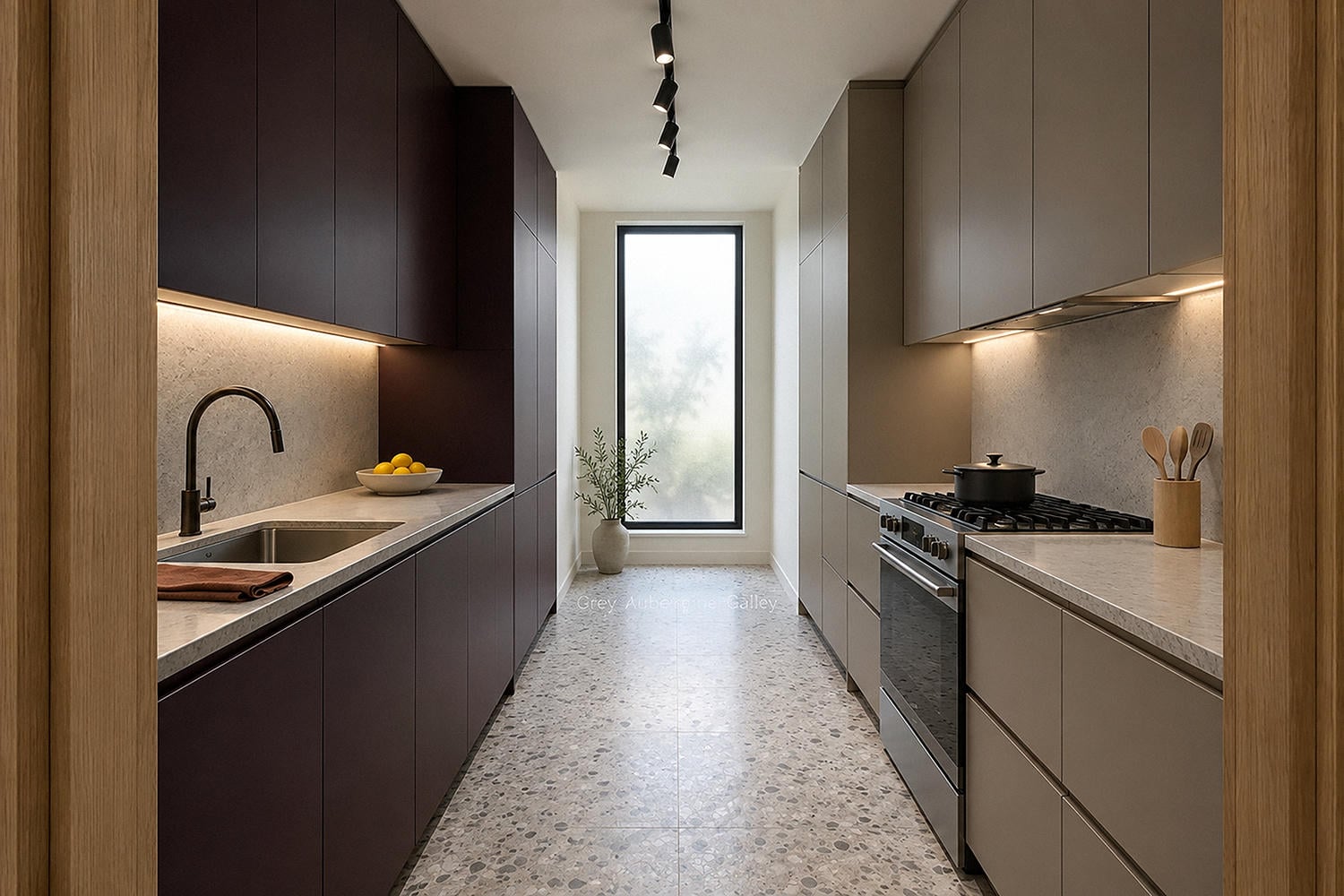
Warm mushroom grey keeps red-brown aubergine soft. Blue-grey sharpens a cooler violet and can suit stainless steel, but it may make natural oak look orange by comparison. Put every finish under the same light before deciding which material is misbehaving.
Use grey on a large quiet plane: the floor, a wall of tall cabinets, or the counter. Then bring in one warm element such as oak, bronze, or linen-colored plaster. Without that warmth, a dark purple and grey room can look like an expensive conference suite.
In a galley, I prefer aubergine on one side and pale grey or timber on the other. Two dark parallel runs may create a dramatic corridor, but they also ask for excellent daylight and task lighting.
Choose Flooring That Gives the Cabinets an Edge
What color flooring goes with purple cabinets? Pale oak, smoked oak, warm limestone, muted terracotta, and soft grey terrazzo can all work. The important thing is a visible boundary between floor and cabinet base.
Very dark timber under near-black aubergine can erase the toe kick and make the lower half of the room feel like one solid mass. That may be desirable in a large, bright kitchen. In a small room, a medium or pale floor usually gives the cabinetry more definition.
Terracotta pulls out aubergine's red side and makes brass feel at home. Grey stone cools it down. Patterned flooring adds energy, but I would keep the backsplash quieter if the floor already has a strong geometry.
Evaluate practical flooring requirements separately from the palette. Water resistance, slip resistance, cleaning, subfloor compatibility, and installation method deserve specific answers from the product manufacturer and installer.
Brighten Aubergine With Surfaces, Not Trinkets
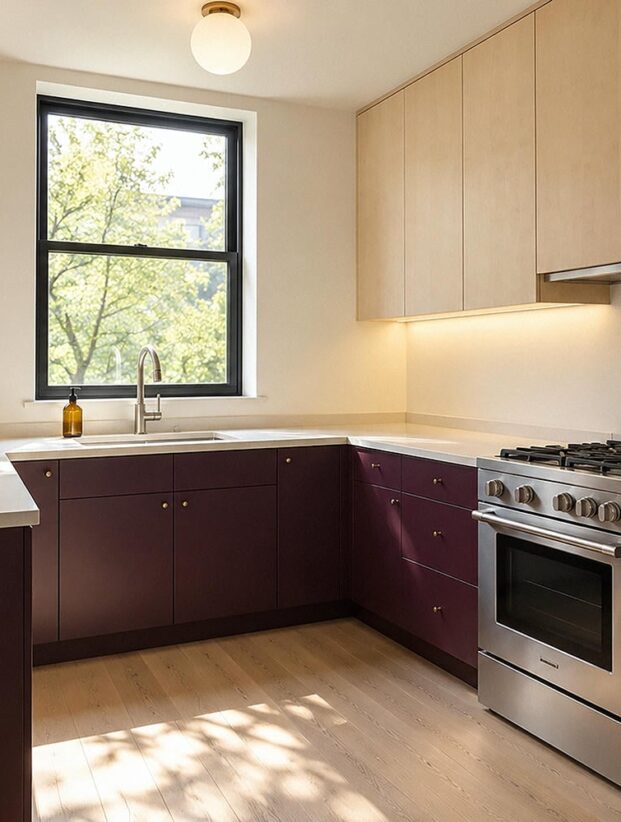
Is aubergine too dark for a small kitchen? Not automatically. A compact room can carry deep color when the counters remain clear, upper surfaces reflect light, and the darkest finish is placed deliberately.
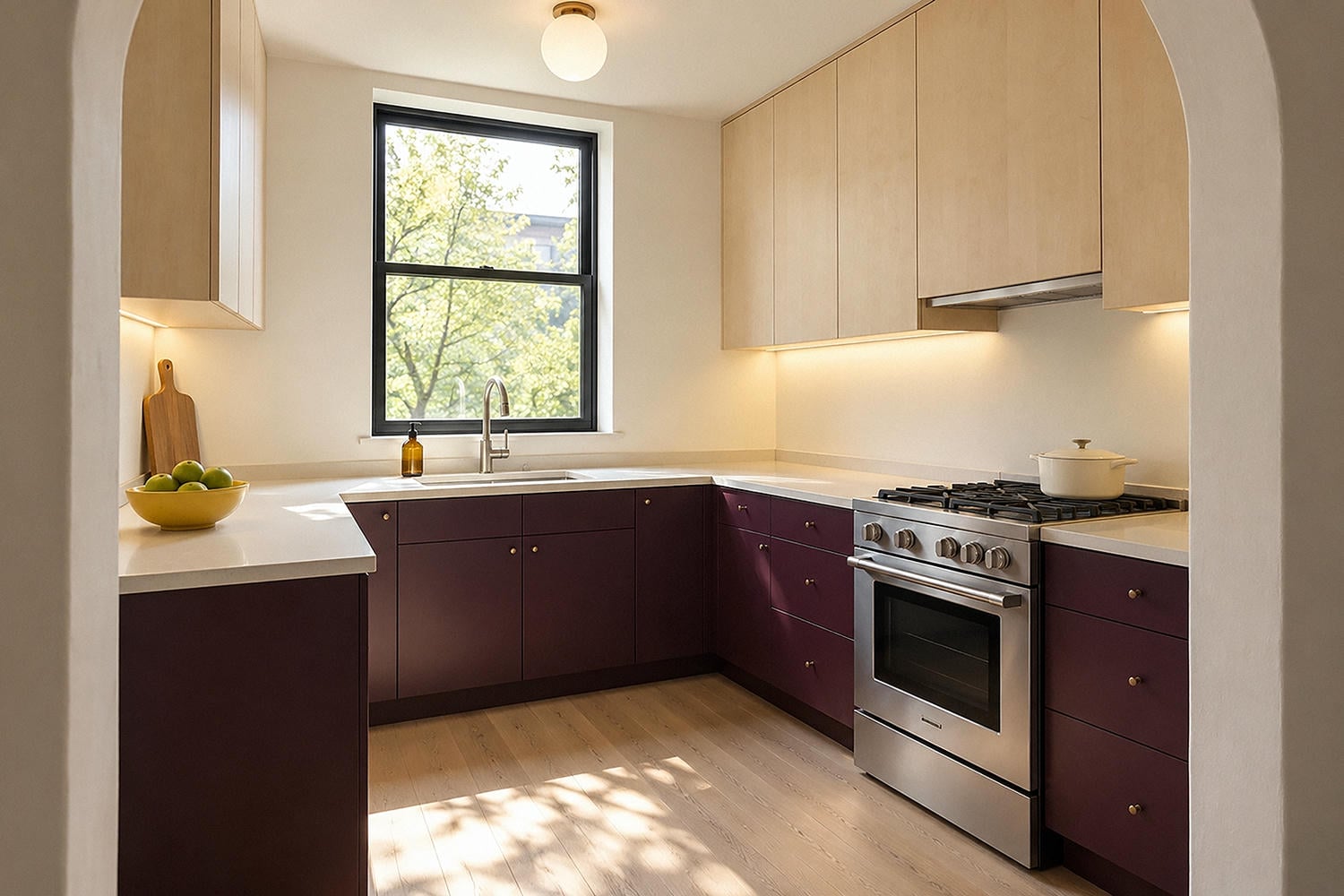
Keep at least one broad pale plane in view: a cream ceiling, light counter, large window wall, or pale upper cabinets. Add under-cabinet task light and make sure the sink and primary prep area are illuminated from in front of you, not only by a downlight behind your shoulders.
Glass-front cabinets are not required. They can introduce dozens of little shapes and reflections, which often makes a small dark kitchen feel busier. Closed pale uppers, one open shelf, or no uppers at all may create more visual relief.
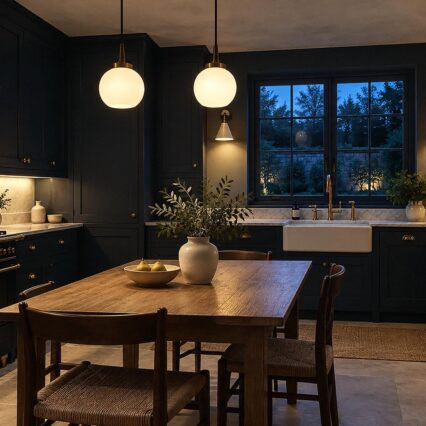
For lighting, I would test warm-white lamps around 2700K and 3000K against the cabinet sample after dark. A very cool source can pull aubergine toward blue-purple; a heavily amber source can flatten it into brown. Use separate ambient and task layers, and leave hardwired changes to a licensed electrician who can assess the fixtures, controls, circuit, and local requirements.
The color does not make a kitchen smaller by itself. Unbroken darkness, weak task light, crowded counters, and no material contrast do that work. Give aubergine a clean edge, a warm partner, and one pale plane, and it can make even a modest kitchen feel unusually composed.
Aubergine Kitchen Q&A
What colors go with aubergine cabinets?
Warm cream, mushroom grey, pale oak, walnut, muted terracotta, olive, brass, copper, and soft blue-grey can all work. Match the partner to the cabinet color's red, blue, brown, or black undertone.
Does aubergine make a kitchen look smaller?
It can make the boundaries feel closer if every surface is dark and poorly lit. Keep a pale counter, ceiling, window wall, or upper-cabinet plane visible, then add direct task lighting and uncluttered surfaces.
What countertop works best with aubergine kitchen cabinets?
Creamy stone or warm off-white composite is the easiest high-contrast option. Pale terrazzo, wood, or dark soapstone can also work, but compare large samples in the room and confirm the material's care requirements.
How do you brighten an aubergine kitchen?
Use light-reflective surfaces where they matter, especially counters, ceilings, and upper walls. Layer window light, under-cabinet task light, and soft ambient fixtures instead of adding many small pale accessories.