Trinket Shelf Ideas That Make Tiny Collections Look Intentional
A tiny ceramic cat is charming. Twelve tiny ceramic cats lined up shoulder to shoulder can start to look like they are waiting for a bus. The difference is not the collection; it is the display.
Good trinket shelf ideas give small objects boundaries, rhythm, and enough empty space to be seen. They also solve the less photogenic problems: dust, wobbly miniatures, weak wall fixings, and lighting that turns a sweet collection into a cave exhibit.
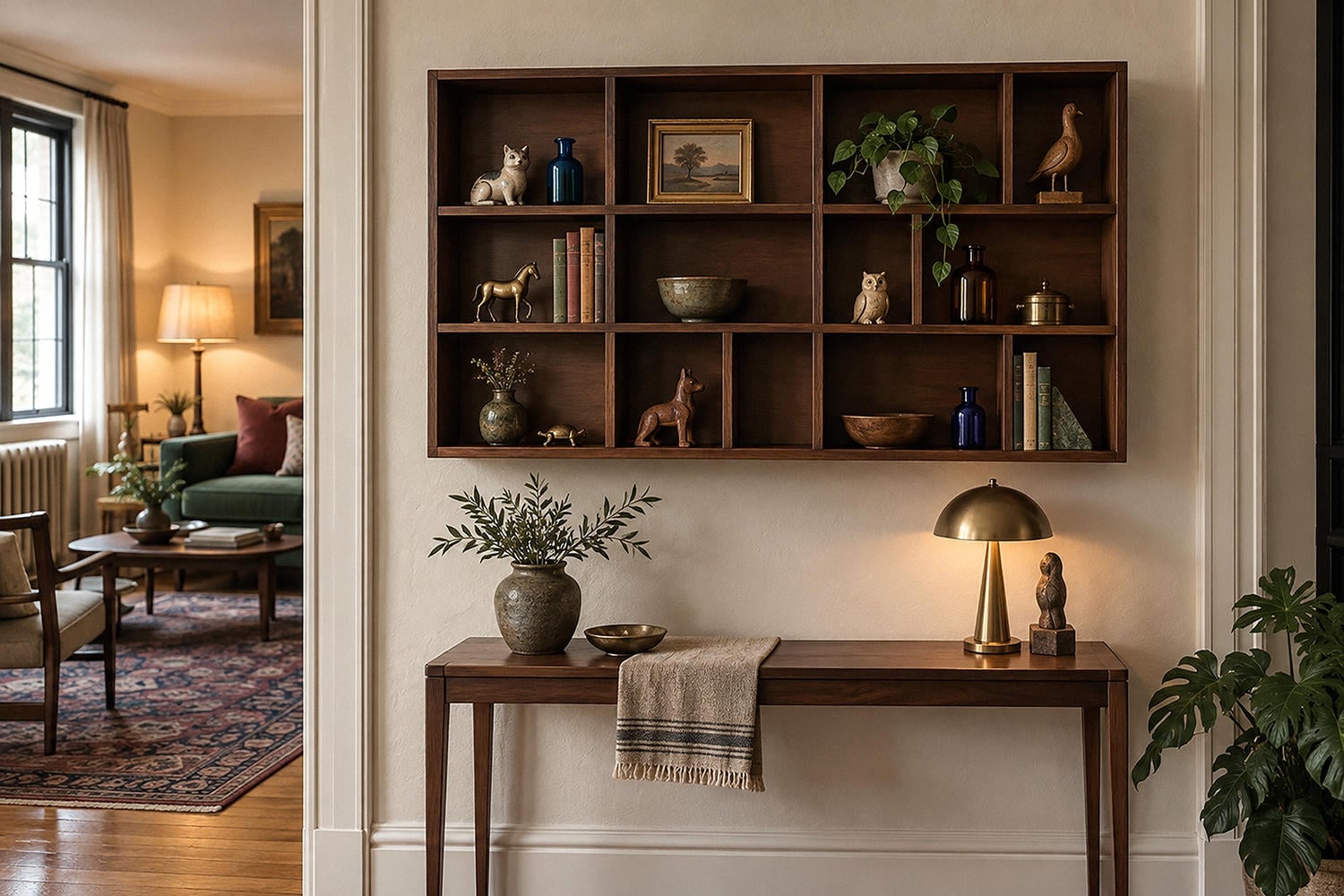
The aim is not to make your home resemble a museum gift shop. It is to let a collection tell its story without every object speaking at once.
Decide What the Shelf Is Collecting
Before buying a wall mounted curio shelf, give the display a sentence. "Tiny animals found on trips" is a sentence. "Everything too small to put elsewhere" is a cry for help.
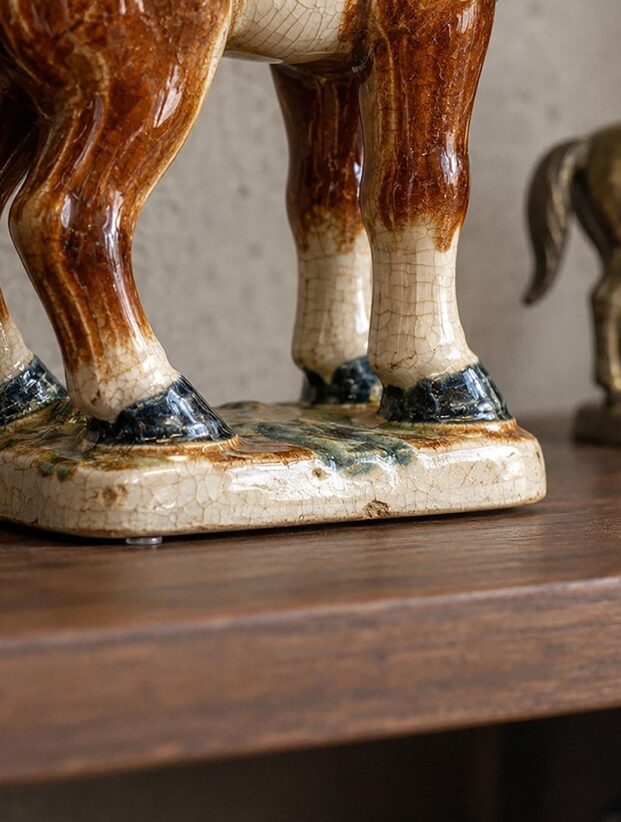
A simple rule makes mismatched objects feel related. The connection might be material, color, origin, scale, or subject. A brass bird, a carved camel, and a painted wooden horse can live happily together because their shared animal theme does the organizing.
If your collection has no obvious theme, use color as the editor. Choose two dominant tones and one small accent. Clear glass, warm wood, and touches of red, for example, can turn an eccentric assortment into a readable composition.
Let a Vintage Trinket Shelf Be Part of the Collection
A vintage trinket shelf carries its own history, which is precisely why it works so well with flea-market miniatures and inherited keepsakes. Look for carved edges, little drawers, divided cubbies, or the old typesetter-tray proportions that make each object feel like a specimen.
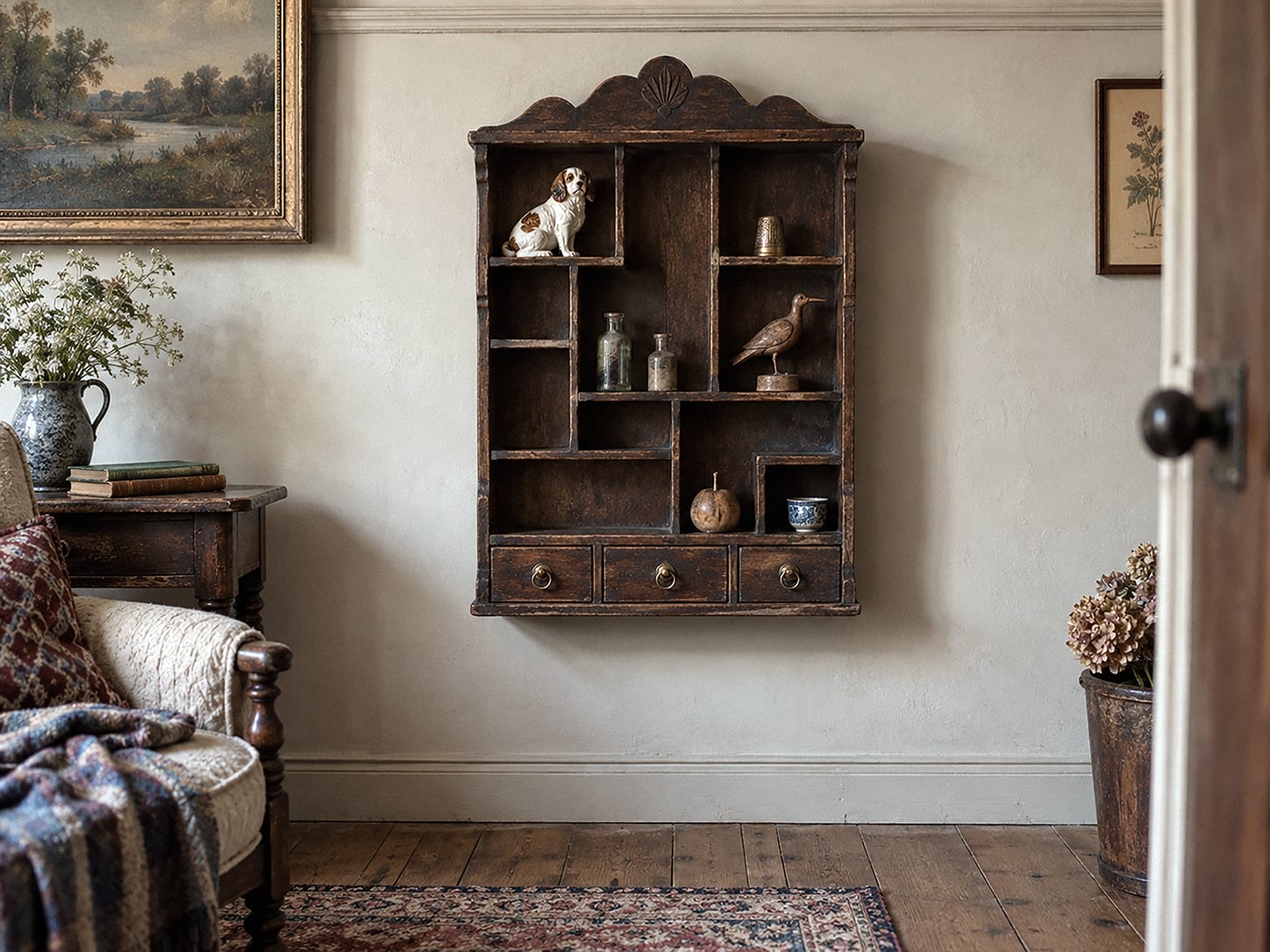
Do not automatically refinish every nick. A darkened edge or worn patch can make a shelf look convincing, while a failing bracket or split back panel needs actual repair. Character and structural weakness are not the same thing, despite what optimistic marketplace listings may suggest.
Keep the objects slightly simpler when the shelf itself is ornate. On a plain shelf, the opposite works: sculptural and patterned pieces provide the interest.
Arrange Small Objects With a Visual Beat
The most useful answer to how to arrange a trinket shelf is to stop thinking in rows. Build little groups of one, two, or three objects, then leave a pause before the next group.
Vary height, but not mechanically. A tall-short-tall pattern repeated across every ledge looks like a picket fence. Instead, let one shelf hold a single strong object, another hold a close pair, and a third carry a low cluster with more air above it.
Turn some objects slightly rather than facing everything straight ahead. A miniature profile, the back of a small carved figure, or a handle angled toward the viewer can make the arrangement feel observed rather than processed.
One more rule earns its keep: put the visually heaviest piece near the lower center. Dark color, bulky shape, and solid material all create visual weight. If every heavy object climbs to one side, the whole shelf can appear to be listing even when the level says otherwise.
Use a Thrifted Shadow Box for Tiny Stories
A thrifted shadow box display is especially good for collections with paper, pins, keys, shells, or objects too shallow to hold their own on a ledge. The depth creates a scene without requiring a lot of floor or wall space.
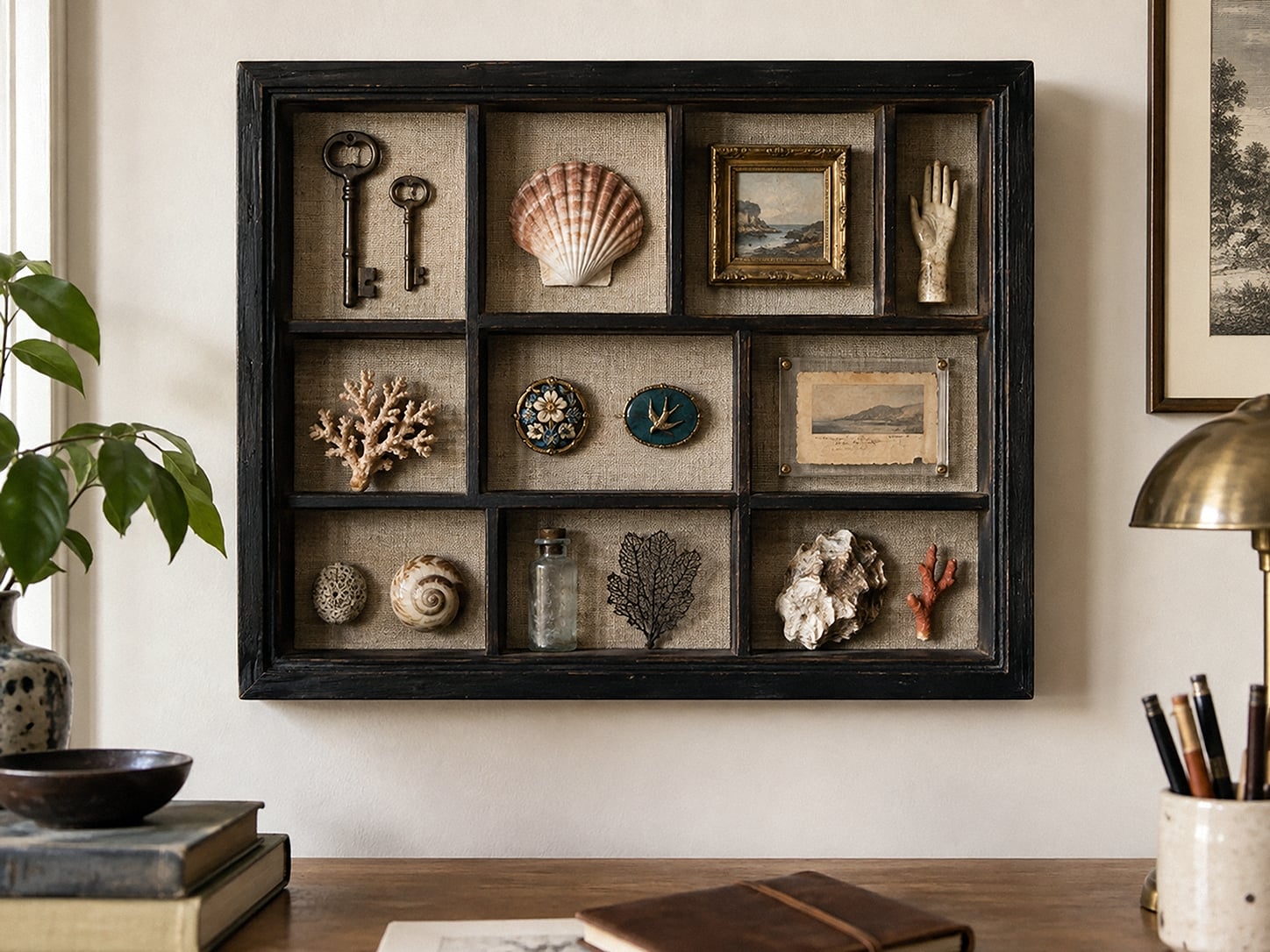
Line the back with linen, painted card, archival-quality paper, or a remnant of quiet wallpaper. Skip busy patterns if the pieces are already detailed. The background is supporting cast, not a surprise second collection.
For anything valuable, fragile, or historically important, do not guess at adhesives. The Smithsonian notes that exhibition mounts should support an object without adding stress, and that materials need to suit the piece being displayed. A conservator or specialist framer is the right call when an object cannot be replaced.
Try Acrylic Shelves When the Objects Should Float
Acrylic knick knack shelves almost disappear, which makes them useful in modern rooms or narrow passages where wood cubbies would feel heavy. They are also a clever match for colorful toys, enamel pins in stands, miniature perfume bottles, or bright glass.
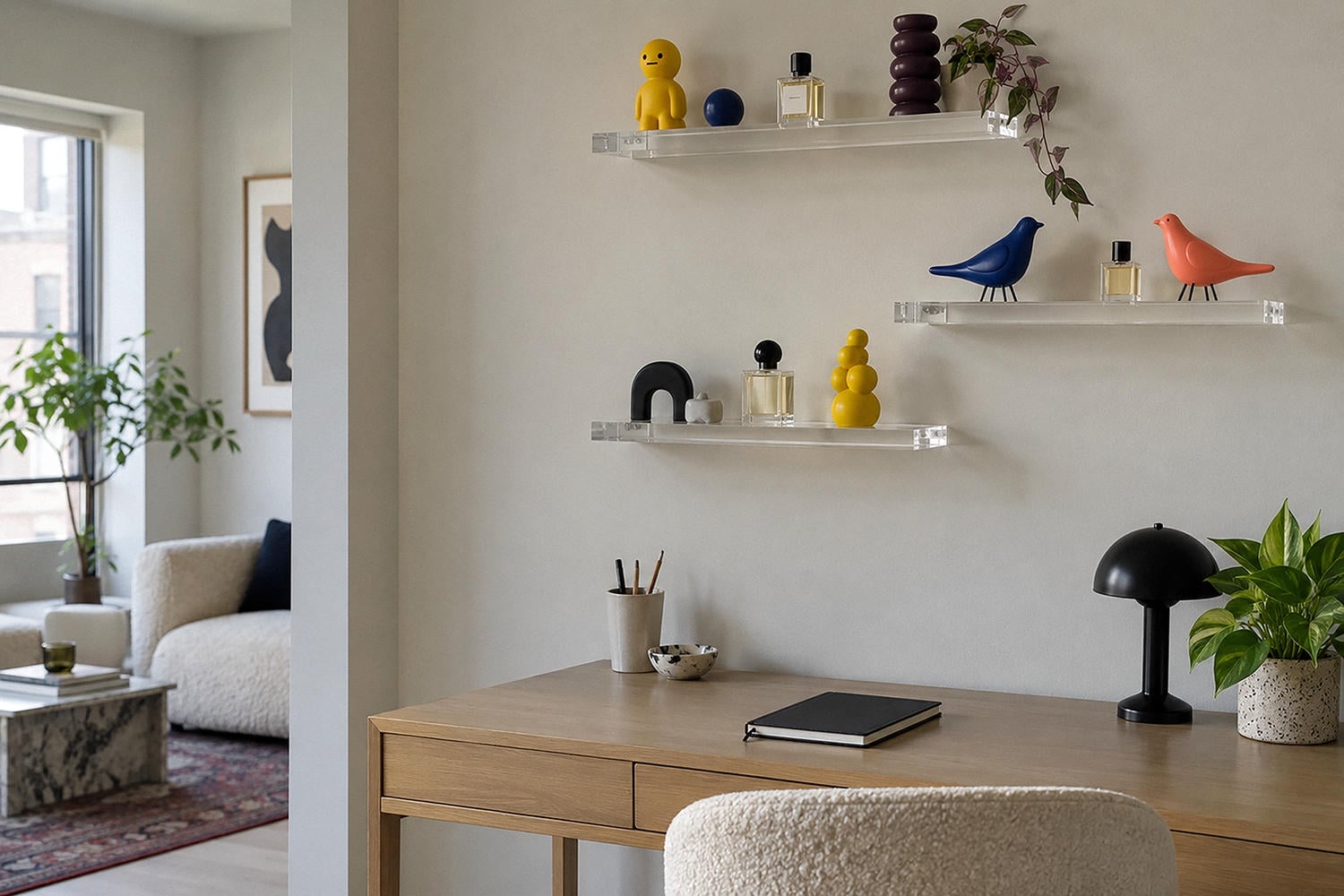
Use several short ledges rather than one very long strip. Small gaps create zones, while the clear material keeps the wall quiet. Check the shelf maker's load limits and fastener instructions; clear does not mean weightless.
Fingerprints will be more visible than on painted wood. A soft microfiber cloth and a cleaner approved for acrylic will keep the surface clear without creating a haze of scratches.
Put an Awkward Corner to Work
A corner trinket shelf can rescue a slice of wall that is too shallow for furniture and too enclosed for large art. It is best when the shelf follows the architecture instead of projecting into a busy walkway.
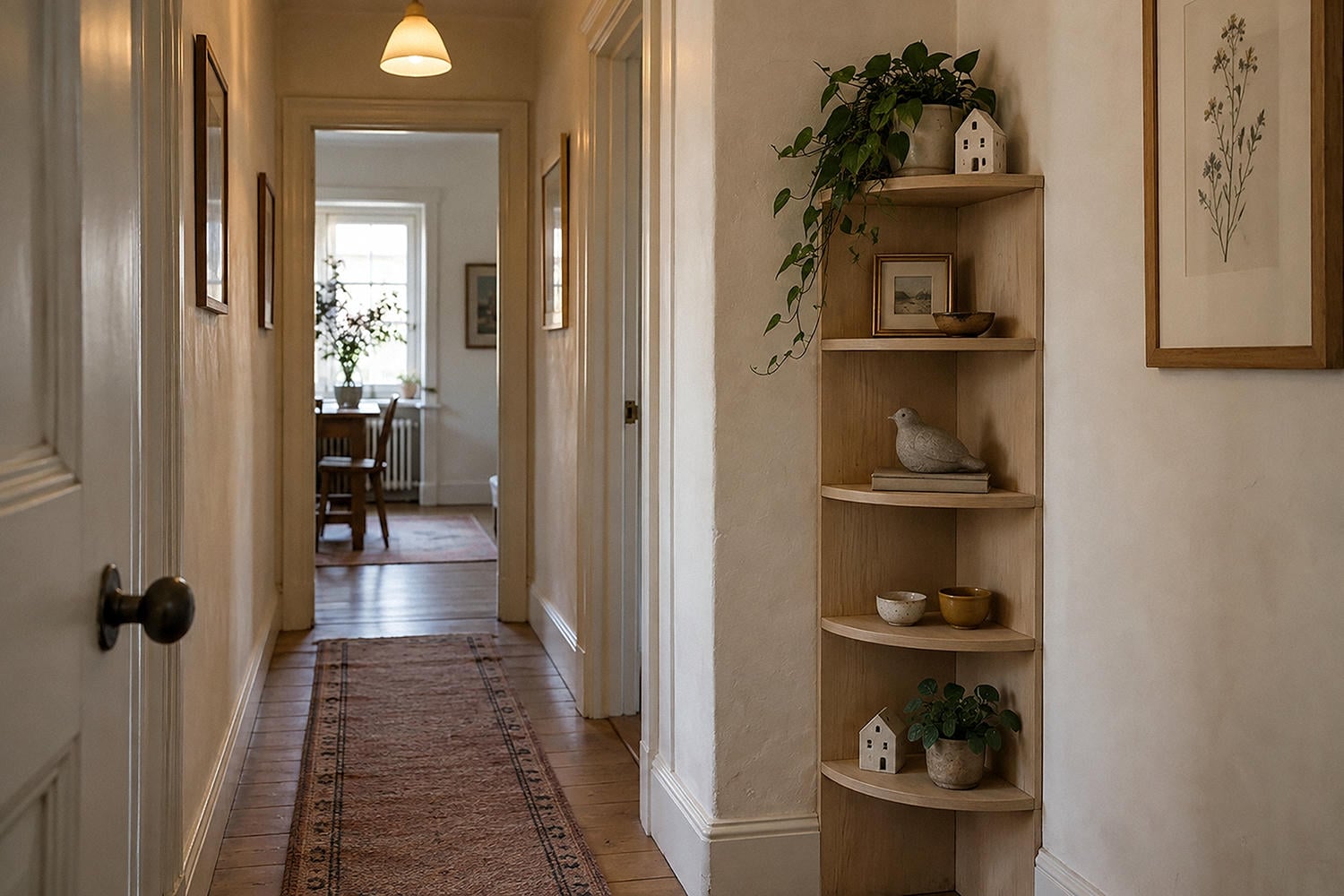
Choose rounded outer corners in a tight hall or beside a door. The arrangement should be visible from the room's main approach, not only from the exact spot where you installed it. Set a few objects on paper templates first and walk past them several times; your shoulder will offer a brutally honest design review.
Keep the top shelf below the point where dusting requires acrobatics. A display you cannot comfortably reach becomes an archaeological site surprisingly quickly.
Give Geometric Shelves One Strong Shape
Geometric display shelves work because the outline provides order before a single object arrives. Hexagons, offset boxes, and asymmetrical grids can all look sharp, but mixing three different systems on one wall usually creates visual static.

Repeat either the shelf finish or the object palette elsewhere in the room. A black metal hexagon might echo a lamp base; pale oak boxes might pick up the floor. That small repetition helps the display belong to the room rather than hovering over it like a late amendment.
Resist filling every compartment. Empty cubbies are not unfinished. They make the occupied ones more noticeable and leave room for the collection to grow without immediate shelf sprawl.
Choose Dust-Proof Storage for Fussy Collections
Open shelves suit hardy ceramics and objects you handle often. Delicate miniatures, intricate carvings, feathers, textiles, and anything with a thousand microscopic ledges are better candidates for dust-proof trinket storage.
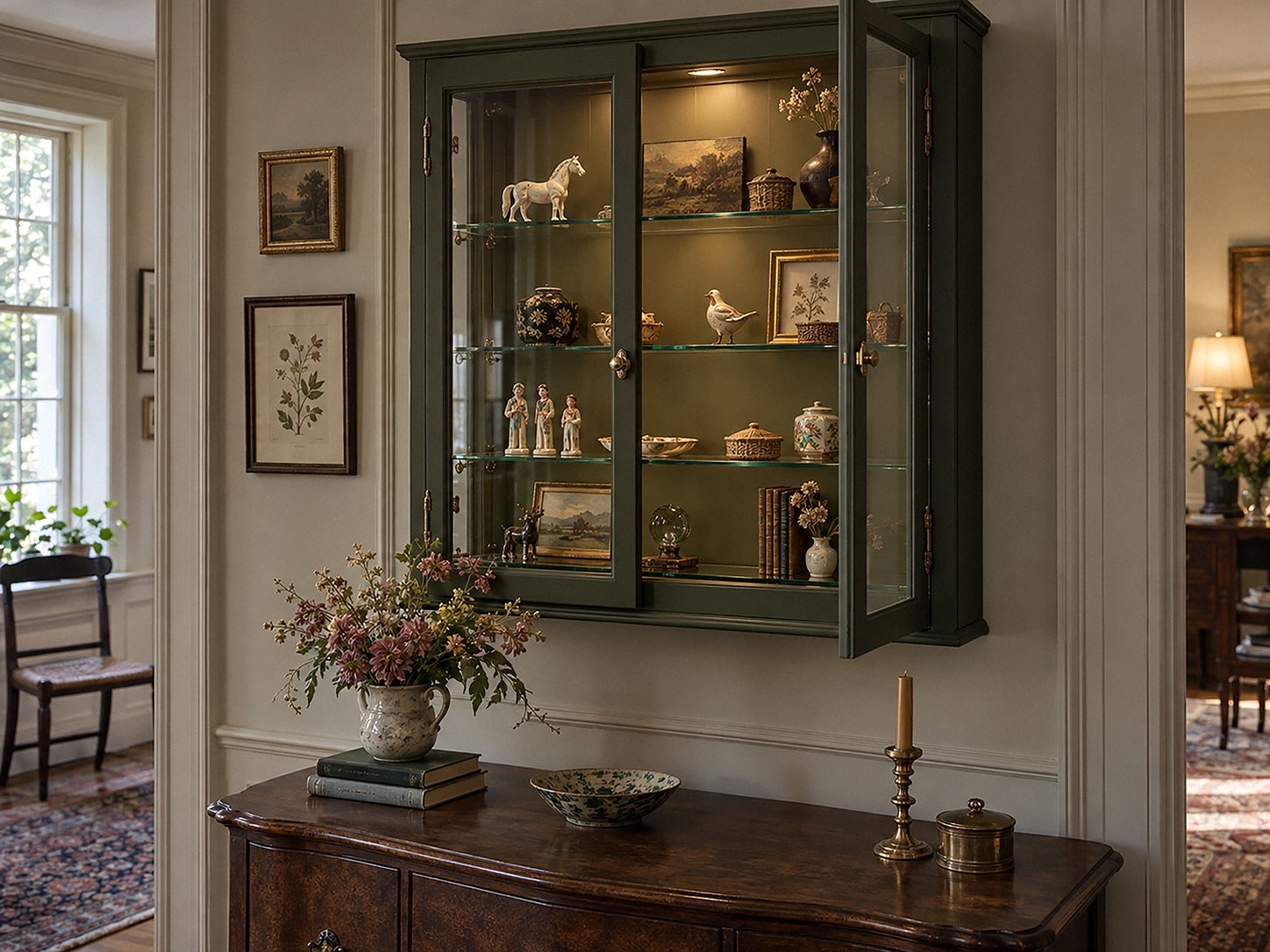
A glass-front wall cabinet gives the charm of a shelf while greatly reducing routine dusting. Check that the door opens fully without striking nearby trim, and leave enough clearance to remove the deepest object. A removable acrylic cover can serve the same purpose for a tabletop display.
Dust is not just unsightly around sensitive pieces. The Smithsonian National Air and Space Museum describes cleaning and inspection as important to collection care because dust can affect an artifact's condition.

Secure Small Trinkets Without Making Them Look Glued Down
Museum wax, museum putty, and quake gel are common ways to give a small object discreet resistance to knocks. The right choice depends on the object's weight, porosity, finish, and value. Always test the product on an inconspicuous area and follow its material restrictions; oils and residues can mark unfinished wood, paper, porous stone, and some painted surfaces.
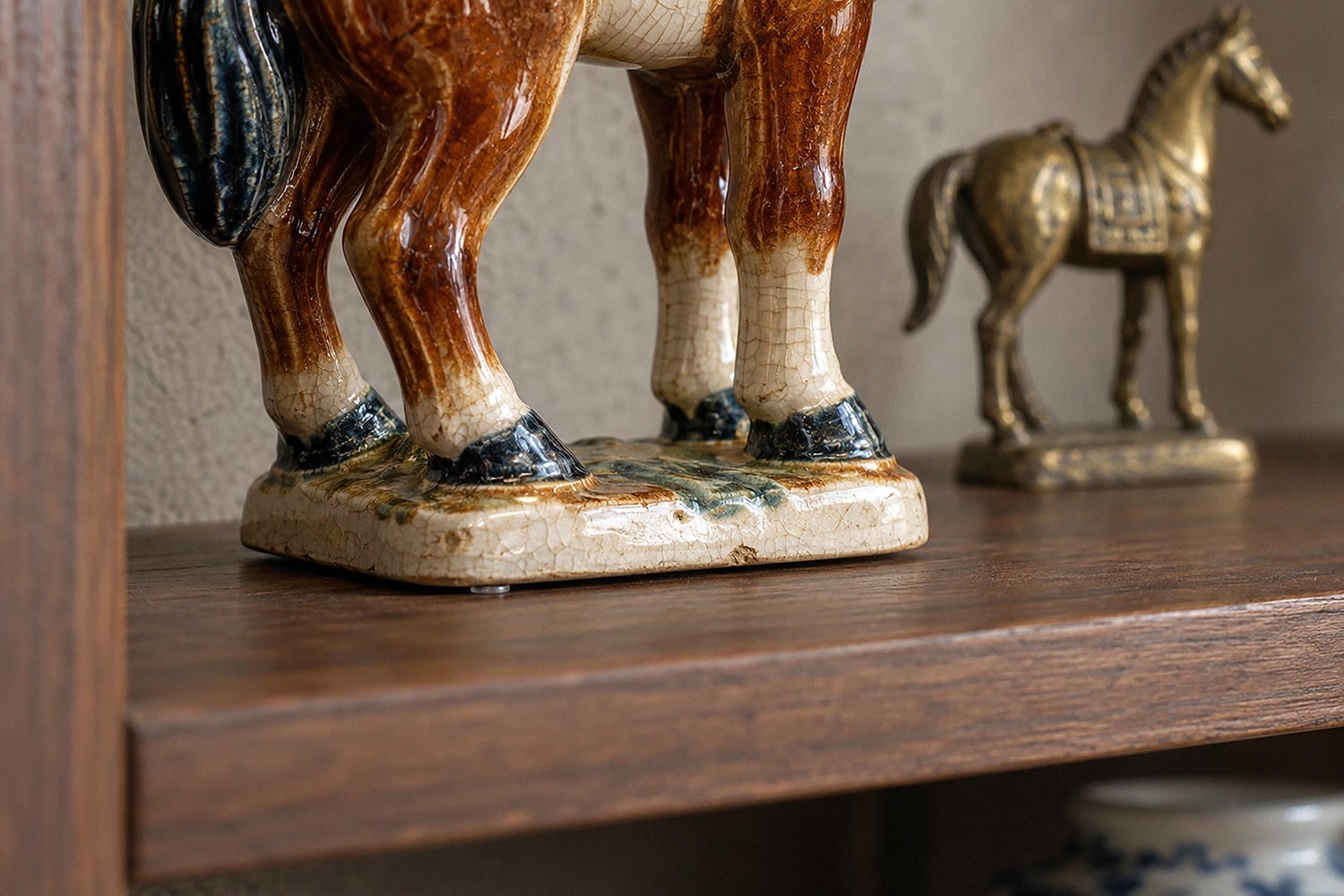
Use only a tiny amount, and never treat putty as permission to overload a shelf. For precious objects, unusual materials, or old painted surfaces, ask a conservator before attaching anything.
The shelf itself matters more than the blob beneath the figurine. Secure tall furniture and cabinets to the wall, especially in homes with children or in earthquake-prone areas. The U.S. Consumer Product Safety Commission recommends anchoring furniture to help prevent tip-over injuries. CPSC Anchor It
Light the Display, Not the Entire Postal Code
To light a dark curio display, use a concealed, dimmable LED strip or small low-voltage puck lights with a diffuser. The diffuser is important: visible LED dots make a vintage collection look as though it has been admitted to a nightclub.
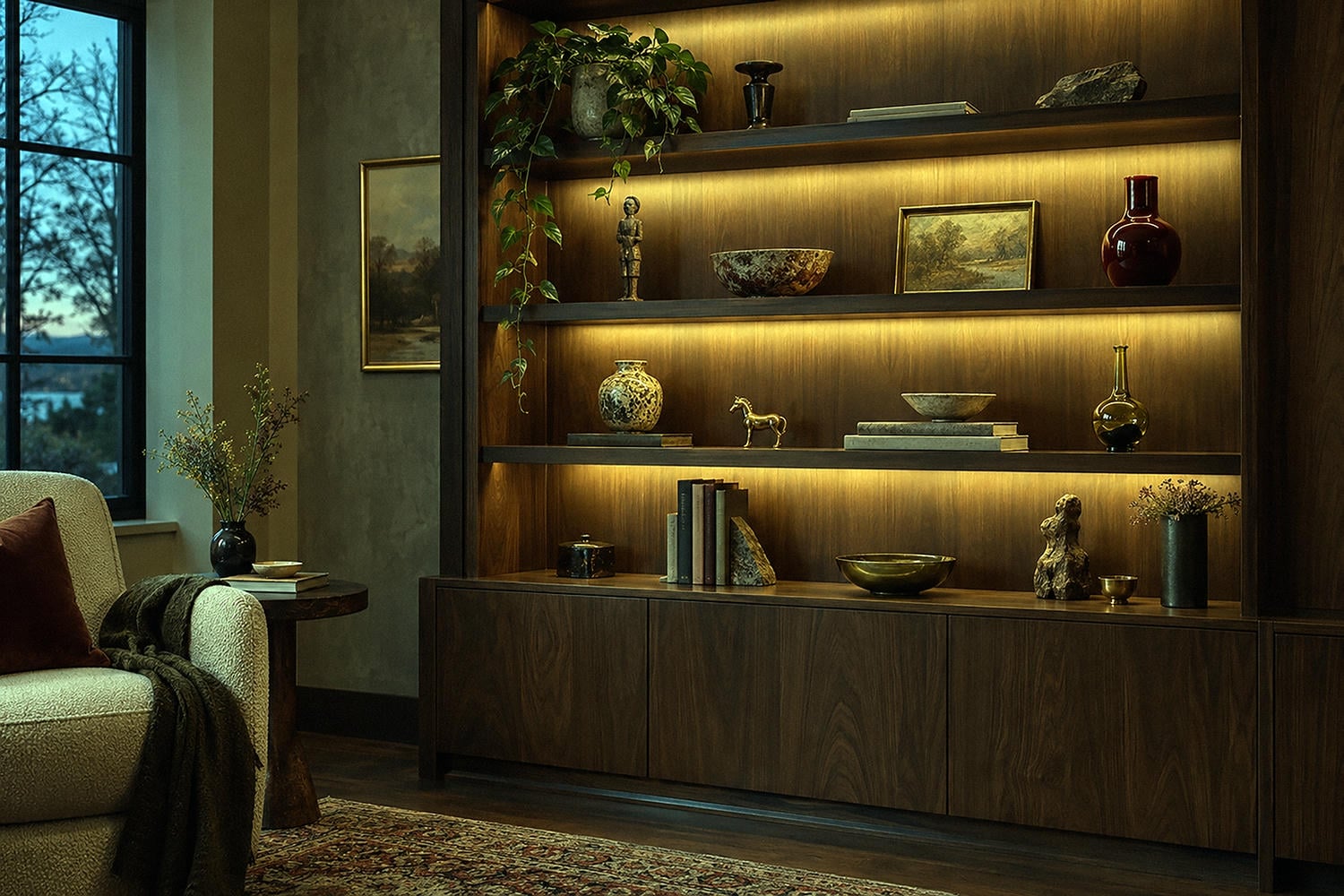
Aim for warm, soft light around 2700K to 3000K in most living spaces. Place the source toward the front underside of a shelf so it washes the objects rather than throwing their faces into shadow. Hide both the wire and the power supply before styling; camouflage becomes harder once fifteen tiny horses are involved.
Light can fade paper, textiles, photographs, and some pigments. The Library of Congress explains that light damage is cumulative and recommends limiting exposure for sensitive collection items. Use timers, keep fragile pieces away from direct sun, and display a reproduction when an original is especially vulnerable. Library of Congress
Build a Simple Wooden Trinket Shelf
A basic DIY wooden trinket shelf needs a back, two sides, a top and bottom, and several shallow dividers. Plywood gives the back stability; solid wood or furniture-grade plywood can form the visible frame. Sand the edges, predrill near board ends, and finish every piece before assembly if the cubbies will be too tight for a brush later.
Depth is the decision that determines whether the shelf feels graceful or clumsy. Measure your largest object and add just enough room for fingers. Many miniatures need far less depth than a paperback, so a four-inch shelf can be plenty.
Mounting method depends on wall construction, shelf weight, and expected load. Fasten into studs where the design allows, or use wall anchors specifically rated for the wall type and total loaded weight. If you cannot identify the wall, the fastener, or what may be running behind it, pause and bring in a qualified installer.
The final edit is simple. Fill the shelf, photograph it straight on, then remove the three objects your eye cannot stop tripping over. Tiny collections become memorable when every piece has a reason to be there and enough room to mind its own tiny business.
Trinket Shelf Questions
How do you display small collections without clutter?
Limit the display by theme, material, or color, and arrange objects in small groups with visible gaps between them. Rotate extra pieces seasonally instead of trying to show the full collection at once.
What is the best way to secure small trinkets on a shelf?
For ordinary, nonporous objects, a small amount of material-compatible museum wax, putty, or quake gel may help resist bumps. Test first, follow the product guidance, and consult a conservator before attaching anything valuable, porous, painted, or fragile.
How do you light a dark curio display?
Use a concealed dimmable LED source with a diffuser, mounted near the front of the shelf to wash light over the objects. Add a timer and keep light-sensitive paper, textiles, and pigments away from prolonged bright light.
How do you build a simple trinket shelf?
Build a shallow rectangular frame with a stable back, then add dividers sized around the collection. Use fasteners suited to the wall and the fully loaded shelf, and get professional help if the mounting conditions are uncertain.
How should you arrange a trinket shelf?
Start with the largest or darkest object near the lower center, then add uneven groups of one to three smaller pieces. Vary height and orientation, preserve some empty compartments, and edit until the display reads clearly from across the room.